Water coming through the ceiling: signs it can't wait
A drip during rain is the obvious one. Other signs show up before water reaches the floor, and they matter just as much.
- A brown ring that grows between one rain and the next, or drywall that feels soft when pressed.
- Ceiling paint bubbling or a panel bellying downward.
- Water at a light fixture, smoke detector or ceiling fan.
- Drips from a skylight well or a wet stripe running down an interior wall.
- A musty smell or soaked insulation visible from the attic hatch.
An old, dry stain that hasn't changed in months deserves a scheduled look, not an emergency call. And not every stain is the roof: indoor humidity, a bath fan venting into the attic or a plumbing line can leave similar marks. If that is what we find, we'll say so.
Roof leaking now: what should you protect first?
- Electricity first. If water is near a fixture, fan or outlet, turn that circuit off at the panel. Don't touch wet switches.
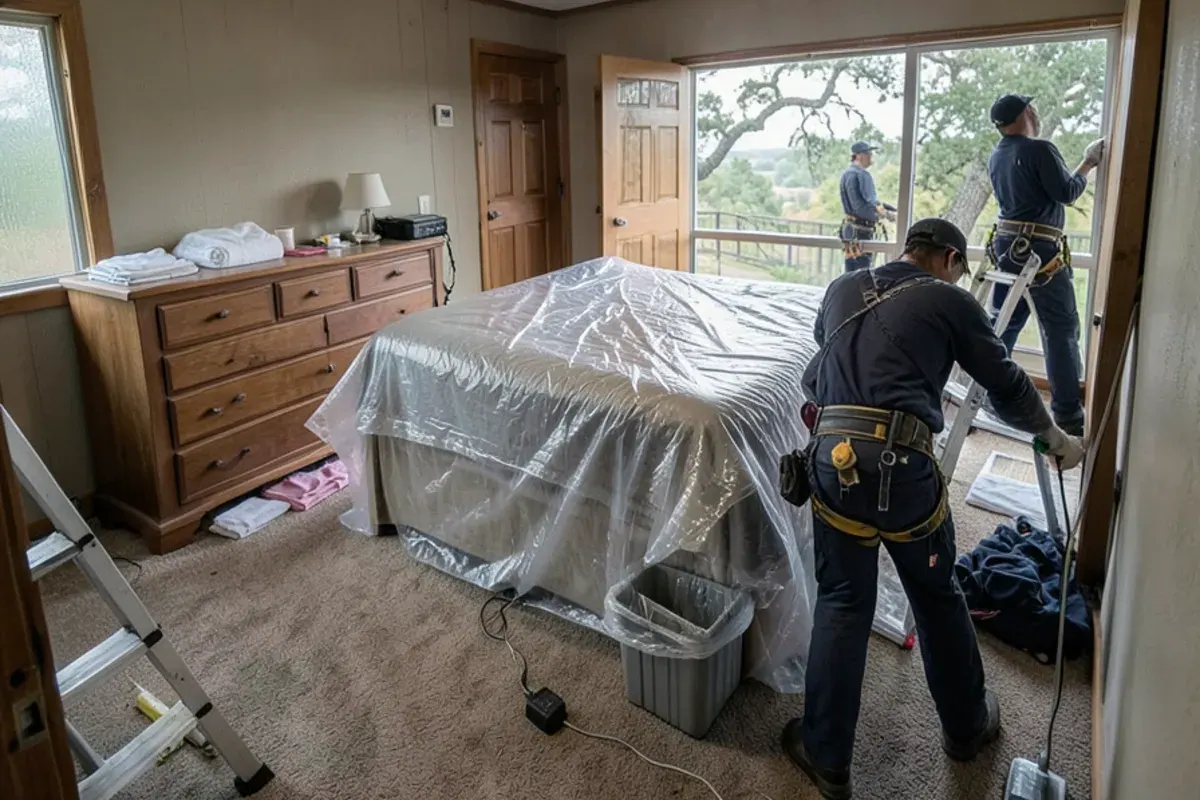
- Clear the drip zone. Electronics, rugs, bedding, papers and wood furniture go to a dry room. Cover a piano or a built-in bookcase where it stands with plastic.
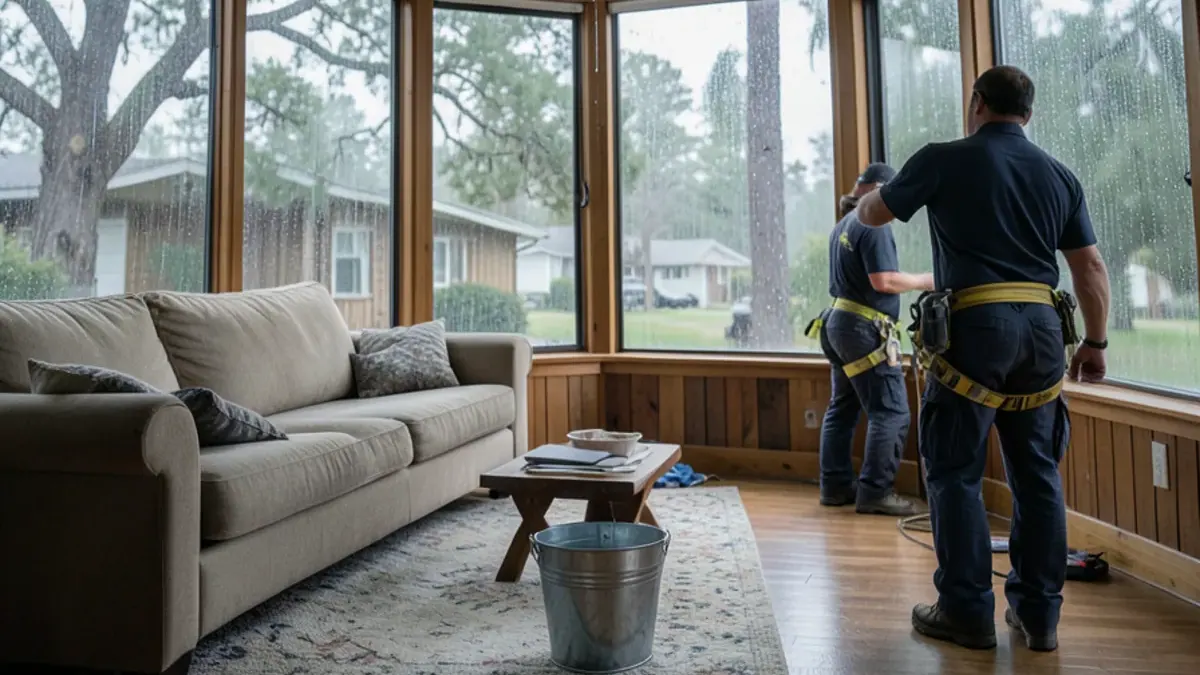
- Catch every drip. One bucket or storage tote per drip, with a rag in the bottom to stop splashing, and towels around it.
- Relieve a water-filled ceiling. If paint is bulging, set a bucket under the lowest point, stand to the side and pierce the bulge with a screwdriver. One controlled drain beats the whole panel letting go. If it sags more than a little, or sits near a fixture, keep everyone out.
- Record it. Photos and a short video of the ceiling, the wet items and the outside of the house, with the date and time.
- Leave the roof alone. Never climb onto a wet roof or up a ladder in storm wind. If you can safely shine a flashlight into the attic from the hatch, note where the wood looks wet, but don't crawl across ceiling joists in the dark.
Questions about emergency roof leak repair?
Call first for the quickest answer, or request a free written estimate below.
Request a free written estimate
Fastest answer: call (725) 745-8803. Or send the details below and we will call you back.
Can a roof leak during rain be stopped right away?
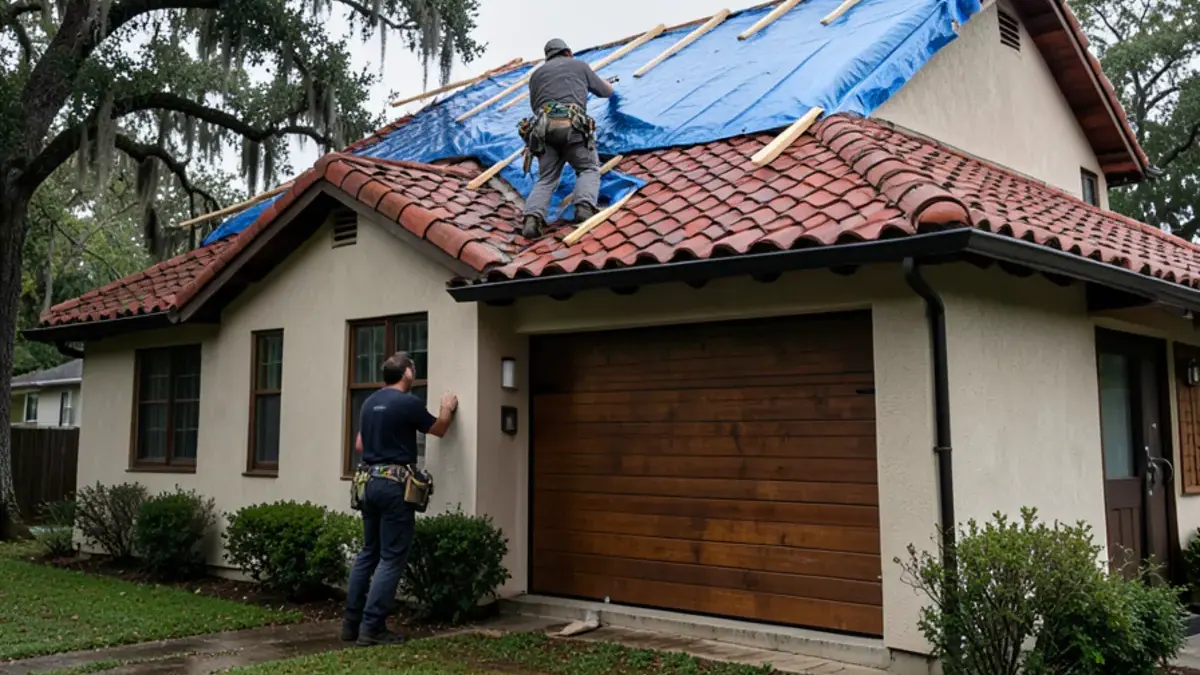
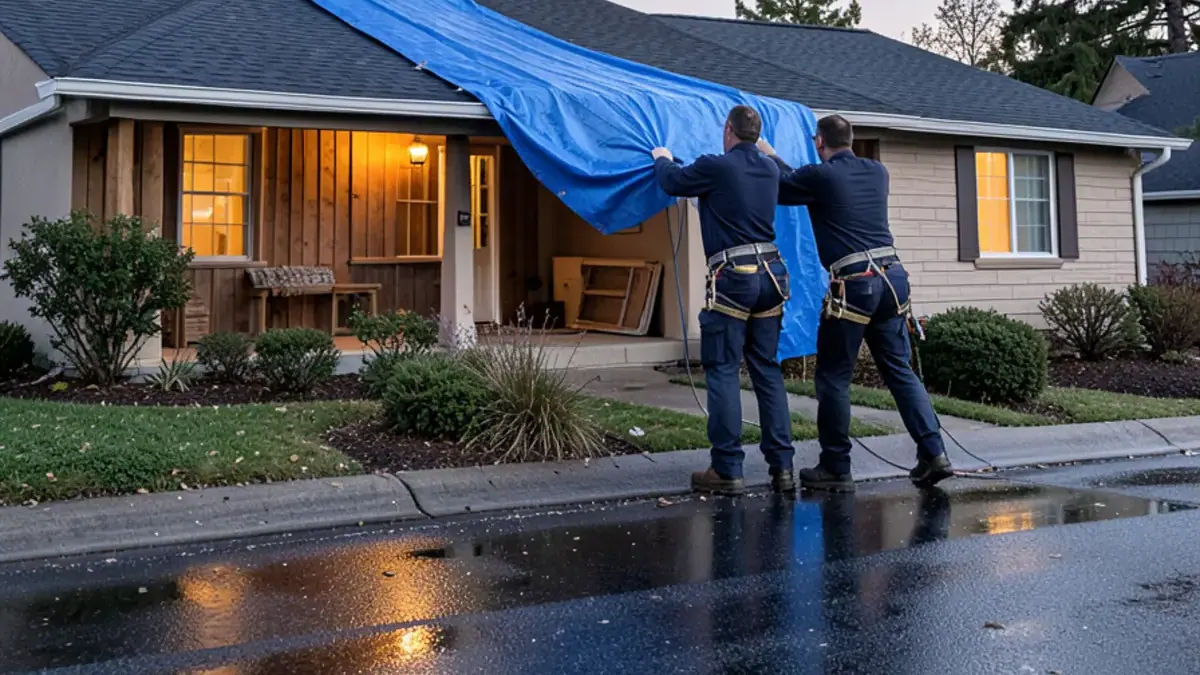
Often, yes, at least for now. A tarp or a temporary patch can go on in light or steady rain if the roof surface is safe to walk with fall protection. What changes the answer is lightning, strong gusts, a steep or mossy roof, or brittle tile that breaks underfoot. On those days we may control water from the attic side, by diverting it into a container or covering the opening from inside, and return when conditions allow.
Rain has one advantage: an active leak shows exactly where water is moving. A wet trail on the decking or a drip hanging from a nail is far easier to follow while it is running than a dry stain a week later.
What an urgent leak call covers, start to finish
An emergency leak visit is deliberately narrow: keep water out today and leave you the facts needed to fix the cause properly. The rest is quoted in writing once the roof is dry.
- Water control: a tarp, a temporary flashing cover or sealant at the opening, whichever fits the roof and the weather.
- Interior check: which ceilings are wet and whether insulation needs pulling.
- Attic look: wet decking, rafters and the drip trail, followed back toward the source.
- Photos of the cause: before and after the temporary work, shared with you.
- A written plan: what failed, what the permanent repair involves, and whether the rest of the roof has life left.
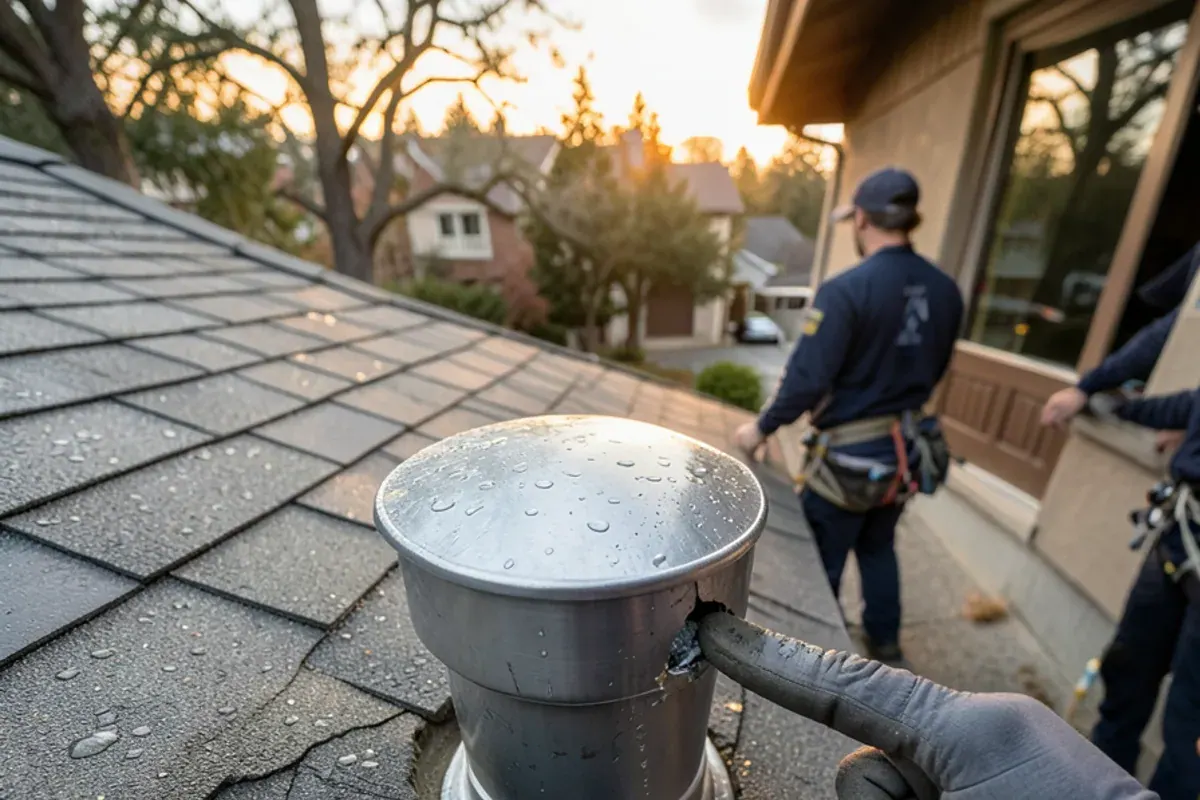
Emergency roof leak repair in Campbell, CA: tracing the entry point
Water rarely drips straight below where it enters. It runs along decking, rafters and the top of the drywall before it falls, so a stain over the dining table can start several feet uphill. The crew follows that trail from the attic and from the roof surface back to the source.
- Start inside, at the stain or drip, and mark it.
- Go into the attic and follow the wet trail uphill along decking and rafters.
- Match that point to the roof surface: a vent boot, valley, wall, chimney or skylight.
- Lift or probe the suspect area where it is safe, and photograph what is under it.
- Cover the entry point for now, then confirm from inside that the drip has stopped.
| Where water gets in | What it often looks like inside |
|---|---|
| Chimney flashing | A stain on the ceiling or wall beside the fireplace |
| Plumbing vent boots | A small round stain in a bathroom or hallway ceiling |
| Valleys where two roof planes meet | A long stain along a room corner or wall line |
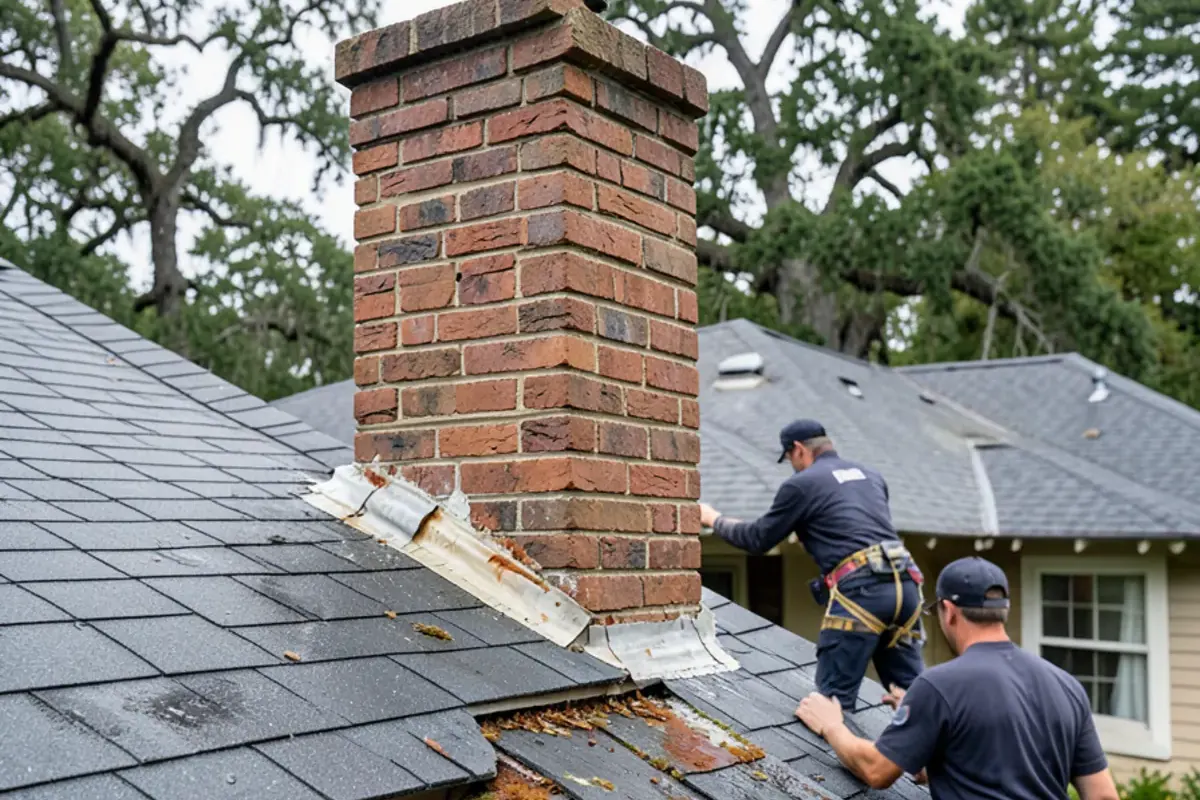
| Skylight curbs and flashing | Drips in the skylight well or around the frame |
| An earlier patch done poorly | A leak that returns in the same spot after every storm |
From emergency leak fix to permanent repair
The first visit controls the water. The second removes the cause.
| During the storm | In dry weather | |
|---|---|---|
| Goal | Stop water entering the house | Fix what let the water in |
| Typical work | Tarp, sealant, a temporary cover over flashing | New flashing or vent boots, underlayment, decking and roofing |
| How long it holds | Until the next dry spell, not for seasons | As long as the surrounding roof |
| Paperwork | Photos and a note of what was done | A written, itemized estimate before work |
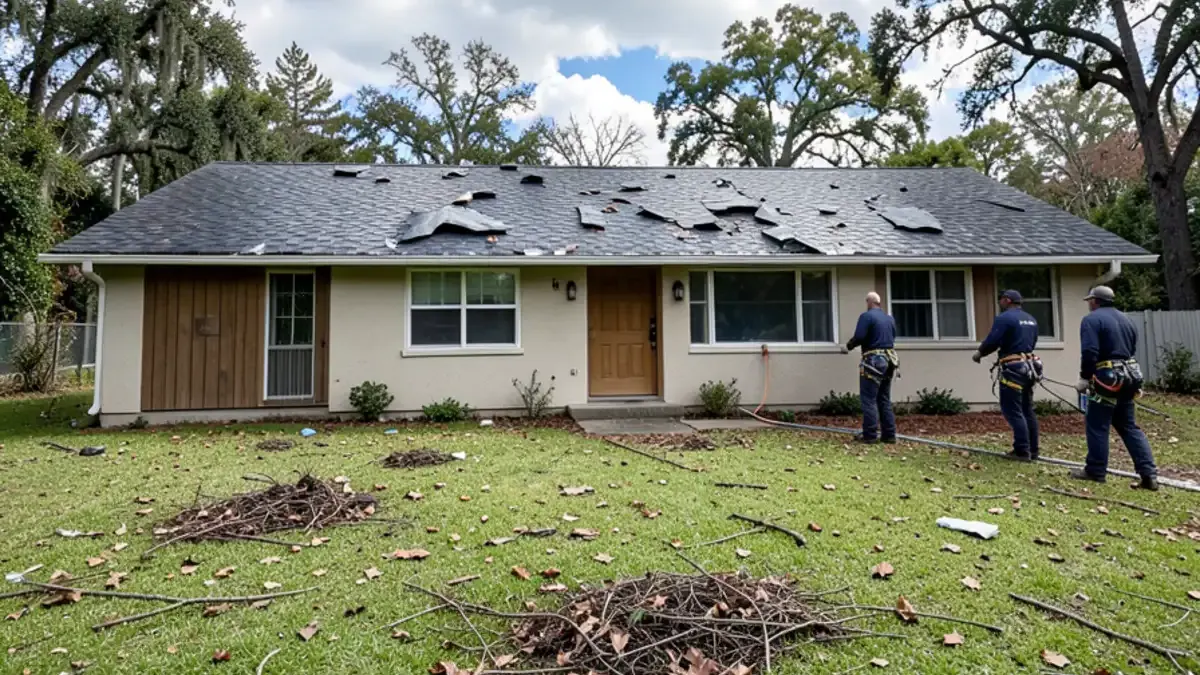
Large openings call for a full tarp; see emergency roof tarping. If the leak arrived with wind damage across the roof, storm damage roof repair covers the wider inspection.
What does an urgent leak repair visit cost?
No two leaks cost the same, so we don't quote blind over the phone. What you can count on is this: any trip charge or temporary-cover charge for the urgent visit is explained before the work begins, and you decide whether to go ahead. The permanent repair comes with a free written estimate, itemized, with photos of the cause.
The price moves with roof type and pitch, how far the water traveled, and whether decking or underlayment has to be replaced. Interior ceiling repair can sometimes be added to the job; ask when the estimate is written.
- Entry point: a pipe boot is a small part; a chimney or skylight curb needs new flashing.
- Roof material: tile has to be lifted and reset, and old tile profiles can be hard to match.
- Soaked decking is replaced, not dried and reused.
- Several leaks at once can point toward a planned replacement.
Does a leak repair need a permit in Campbell?
The City of Campbell Building Division can tell you whether a small flashing fix needs a permit; a tarp is temporary protection, not the repair. Once a leak repair grows into new sheathing or reroofing a section, expect a permit and inspections, and California Title 24, Part 6 cool-roof rules may apply depending on slope and how much roof is replaced. For unincorporated addresses, ask the County Planning and Development Department. Check any roofer's CSLB license at cslb.ca.gov before work over $1,000 begins.
Where we answer roof leak calls
Our base is on E Mozart Ave in Campbell, so homes in Campbell, west San Jose, Los Gatos and Saratoga are the shortest drive. We also take leak calls across Santa Clara County and up into the Santa Cruz Mountains, where long winter storms and heavy tree cover make leaks common. Farther addresses and mountain roads take longer, especially in the middle of a storm series, and you'll hear that on the call rather than after a no-show.
Why call a family-run roofer for a leak? A straight diagnosis: photos of the cause, a free written estimate, daily cleanup, and an honest word when a stain is humidity rather than the roof. One torn vent boot is worth our trip.
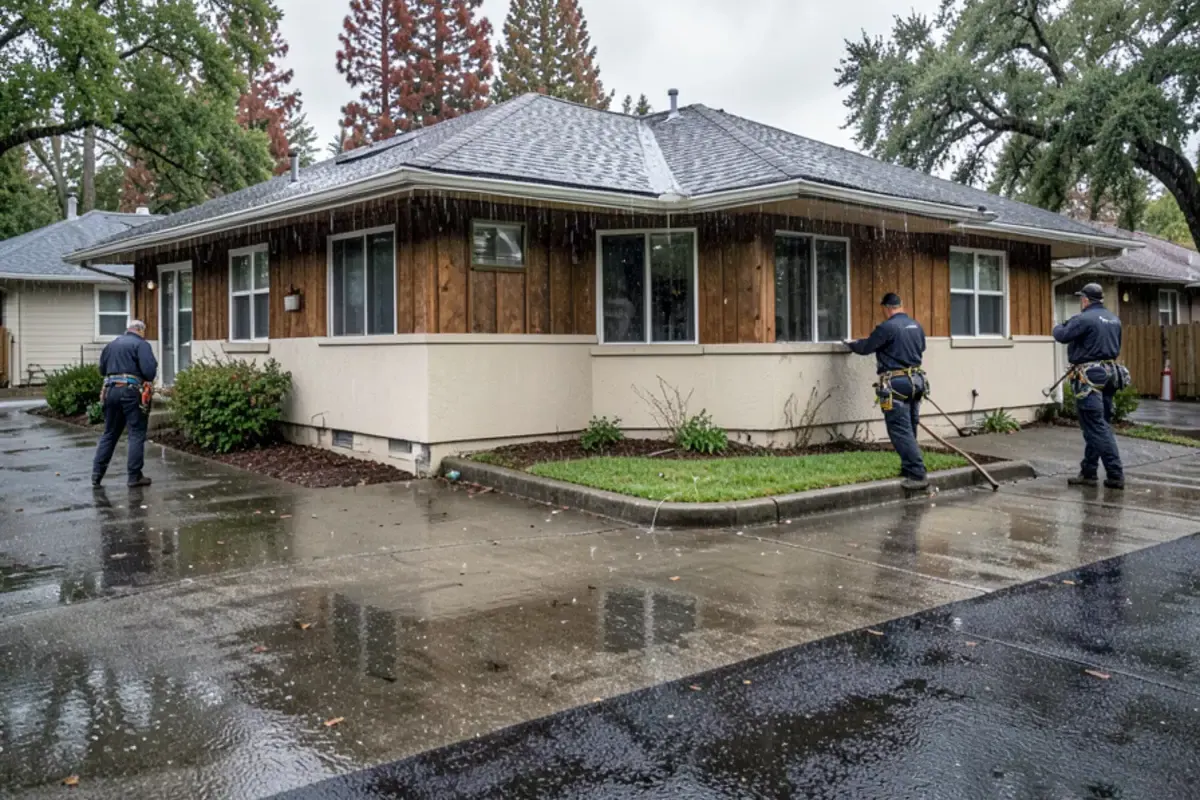
Water dripping through the ceiling? Call (725) 745-8803 and describe what you see.
Call (725) 745-8803