How a Campbell attic is supposed to breathe
Most homes here have a vented attic: a cold, unconditioned space between the ceiling and the roof deck. Air should move through it in one direction.
- Intake at the low end, through screened soffit vents or eave blocks between the rafters.
- Flow up the underside of the roof deck, carrying heat and moisture with it.
- Exhaust at the high end, through a ridge vent, box vents near the ridge or gable-end vents.
Under California's residential code, the required net free vent area is a set fraction of the attic floor area, with a lower requirement when intake and exhaust are balanced between low and high positions. In practice, the balance matters as much as the total. A roof with plenty of exhaust and painted-over soffits simply pulls conditioned air up through ceiling gaps.
Hot attic fix for South Bay summers
From June through September, a dark roof in the afternoon sun can heat the attic far above outdoor temperatures. In many 1950s-1970s Campbell ranch homes, the air-conditioning ducts run through that attic, and the ceiling insulation is thin, so the heat reaches the rooms below and the AC works harder.
- Open blocked soffit vents and add baffles so insulation does not choke the intake
- Add or enlarge ridge exhaust so hot air leaves at the peak
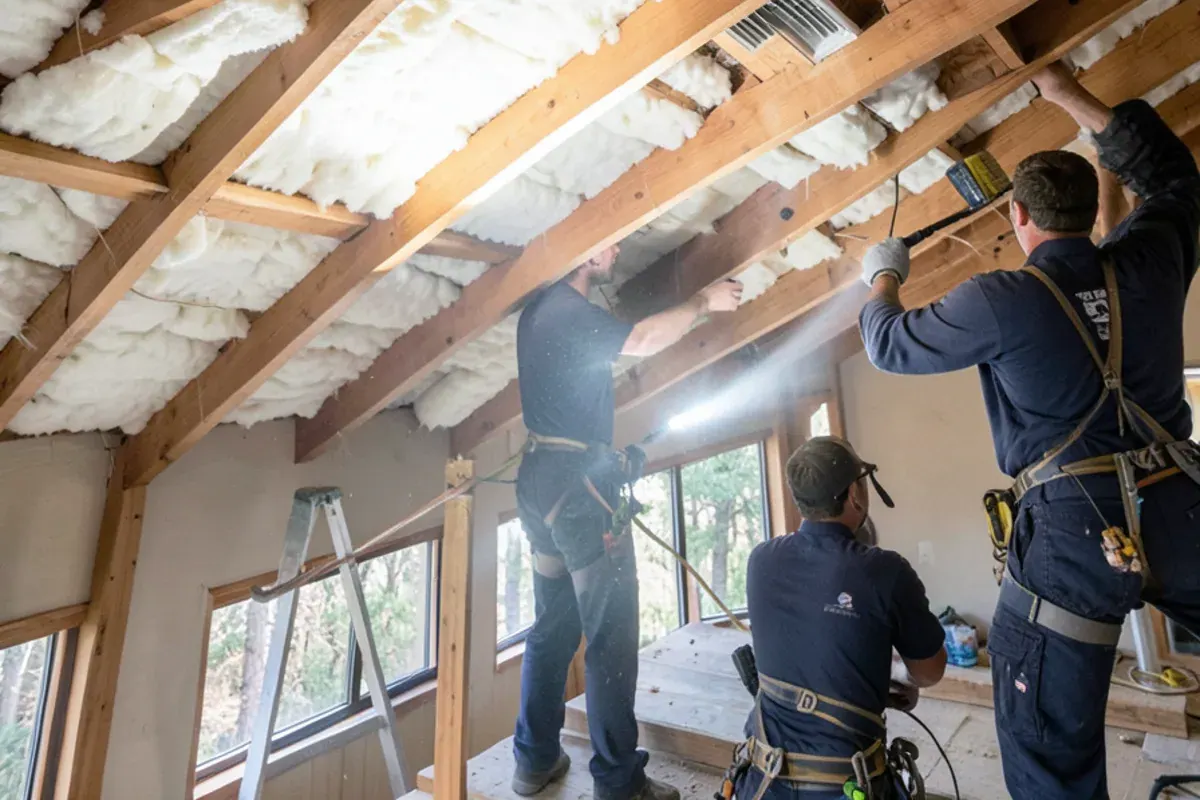
- Top up or replace worn insulation, and consider a radiant barrier
- At reroof time, choose a cool-rated roof surface
Each of these helps on its own; together they make the biggest difference. The reroof is the easiest time to change roof vents, which is one reason our roof replacement estimates always include a ventilation check.
Questions about attic ventilation & insulation?
Call first for the quickest answer, or request a free written estimate below.
Request a free written estimate
Fastest answer: call (725) 745-8803. Or send the details below and we will call you back.
Winter moisture, mildew and the leak that isn't a leak
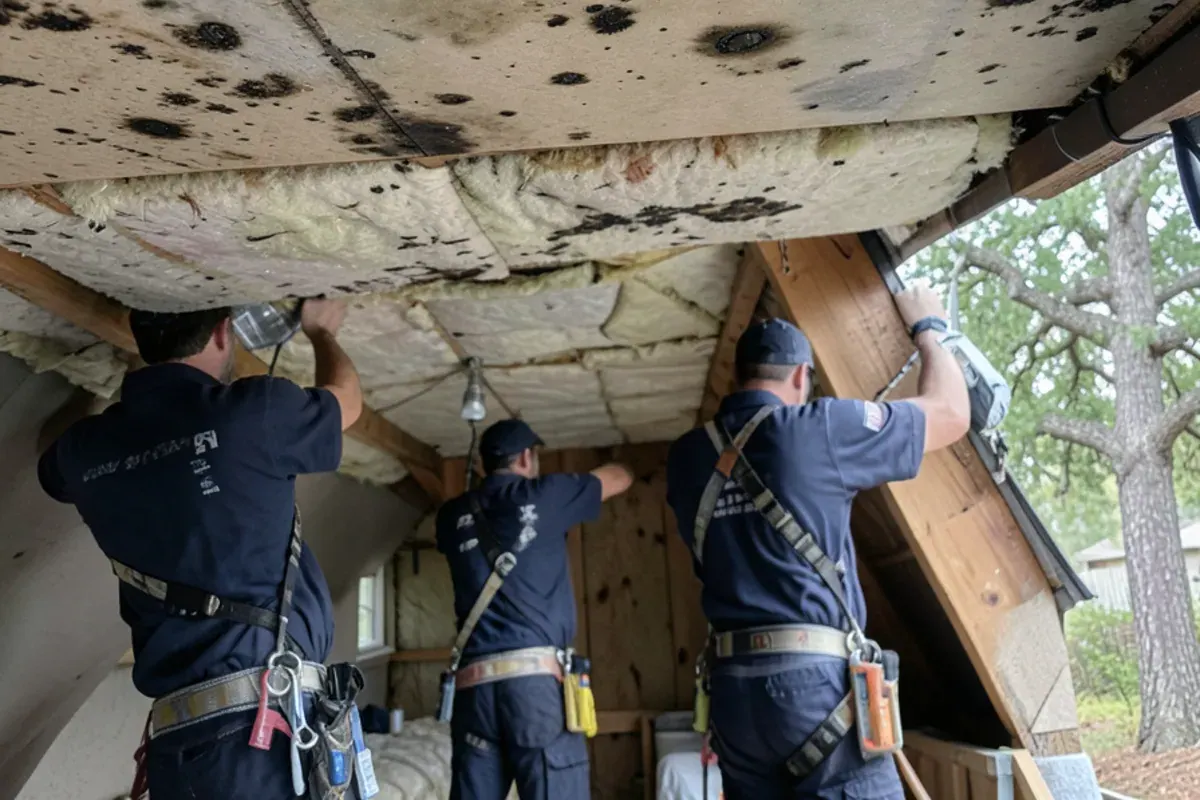
Nearly all of Campbell's rain falls between November and March. During those months, warm indoor air carrying moisture from showers, cooking and humidifiers can rise into a poorly vented attic and condense on the cold underside of the roof deck. The result looks like a leak: damp spots, dark mold on sheathing near the eaves, or mildew on a bedroom ceiling corner.
We have found ceiling mildew that traced back to indoor humidity rather than the roof. Telling the two apart means checking the roof surface and the attic space, and sometimes the honest answer is that no roof work is needed. Our article on whether a ceiling stain is a roof leak or humidity explains the clues.
What happens during an attic ventilation check?
The check covers both sides of the roof deck, because the vents you can see from the street tell only half the story.
- Roof-side look. We count and photograph the exhaust vents, check the ridge, and note any gable louvers competing with it.
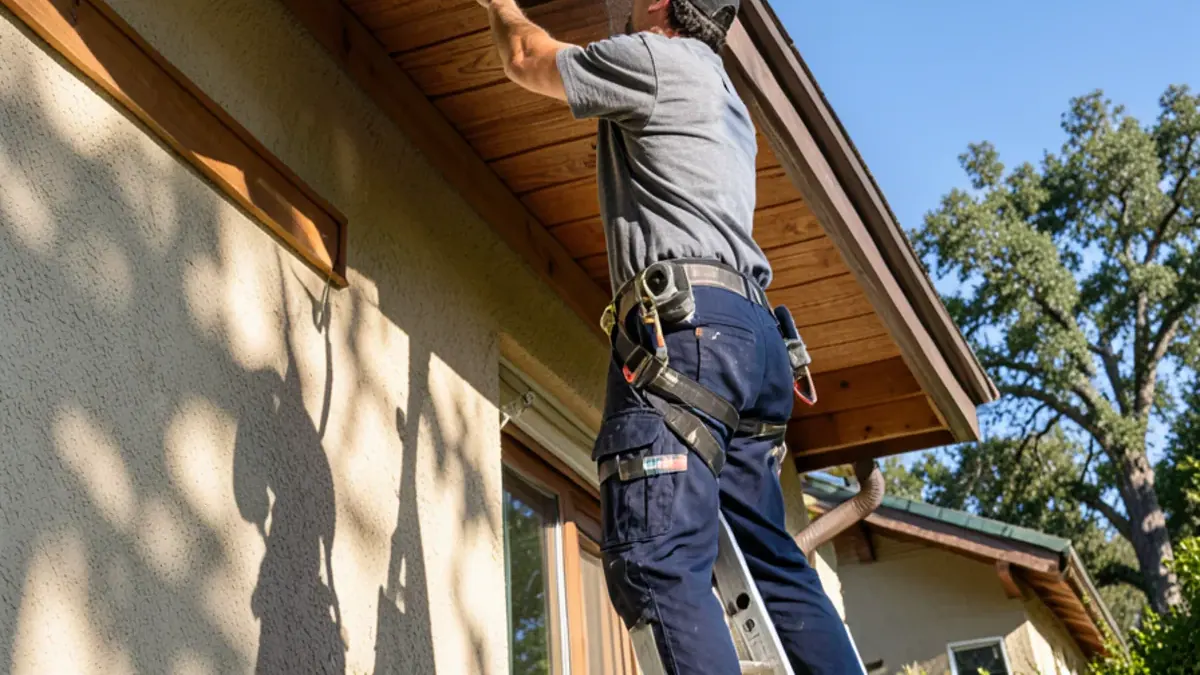
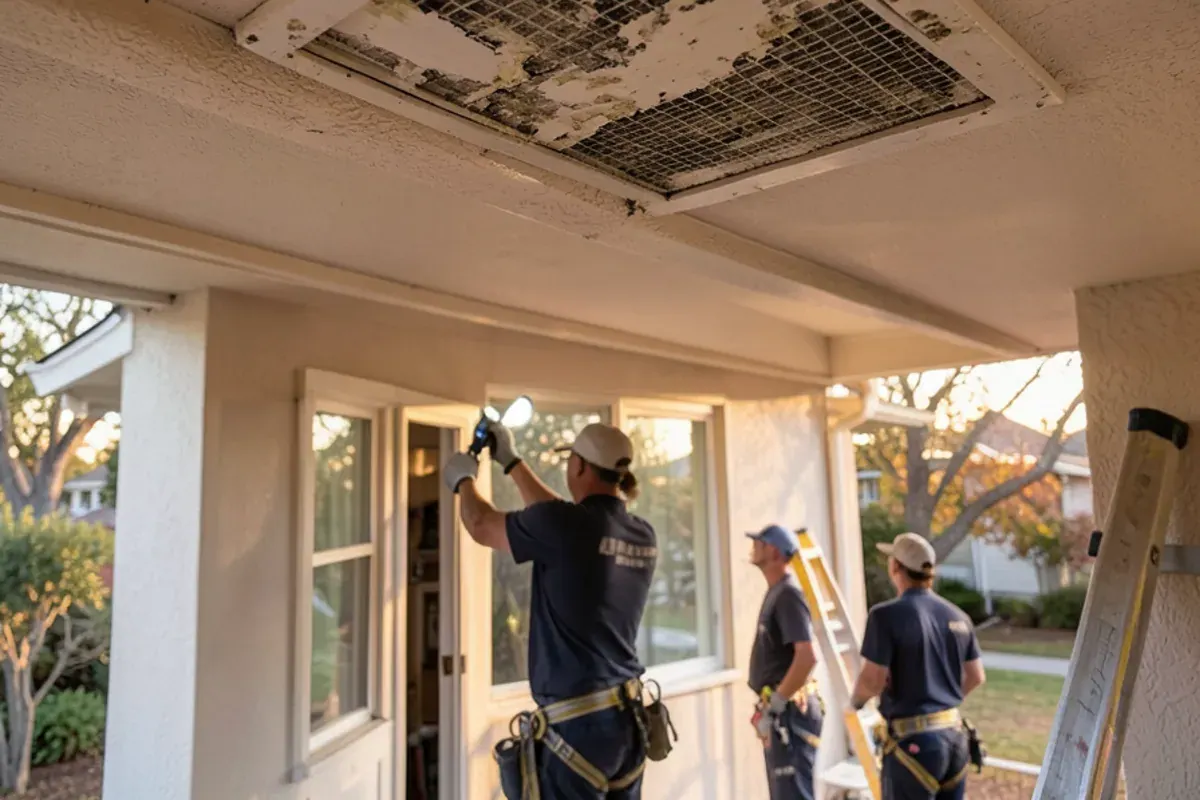
- Eave check. From a ladder we look for painted-over soffit screens, blocked eave holes and rotted soffit boards.
- Attic entry. Inside, we look at insulation depth, baffles, where bath and dryer ducts end, and any staining on the sheathing.
- Vent math. We compare the net free area of intake and exhaust against the attic floor area and against each other.
- Written plan. You get photos and an itemized estimate listing each vent to add, close or replace, with insulation as a separate option.
- The work. Vent changes are made from the roof and eaves, the intake is confirmed clear from inside, and debris leaves with us that day.
Ridge vents or attic fans: which suits your roof?
| Vent type | How it works | Where it fits |
|---|---|---|
| Continuous ridge vent | Passive exhaust along the full peak | Gable and hip roofs with a usable ridge length; usually installed at reroof |
| Box (static) roof vents | Passive exhaust through openings near the ridge | Hip roofs with short ridges, or repairs between reroofs |
| Gable-end vents | Passive vents in the end walls | Older ranch homes; can short-circuit a ridge vent if both are open |
| Powered attic fan | Motor pulls air out | Specific cases; can draw conditioned air from the house if intake is short |
| Soffit and eave vents | Intake at the low edge | Every vented attic; often blocked by paint, debris or insulation |
Passive, balanced systems are what we recommend in most cases. An attic fan in Campbell can help on a roof that has no practical ridge, but only when there is enough intake to feed it.
Attic ventilation cost factors in Campbell
Attic jobs range from one cracked vent to rebuilding the airflow of a whole roof, so we price from what the check finds. The main variables:
- Timing: cutting in a ridge vent during a reroof costs far less than retrofitting one into a sound roof.
- Access: low-pitch attics crowded with ducts and old insulation are slow to work in.
- Vent count and type: box vents, ridge length, gable louvers, and ember-resistant replacements in fire zones.
- Soffit condition: rotted soffit or fascia boards must be rebuilt before new intake can work.
- Duct terminations: taking a bath fan through the roof adds a flashed cap.
- Insulation and baffles: clearing or replacing insulation to reopen the eaves.
What are ember-resistant vents, and who needs them?
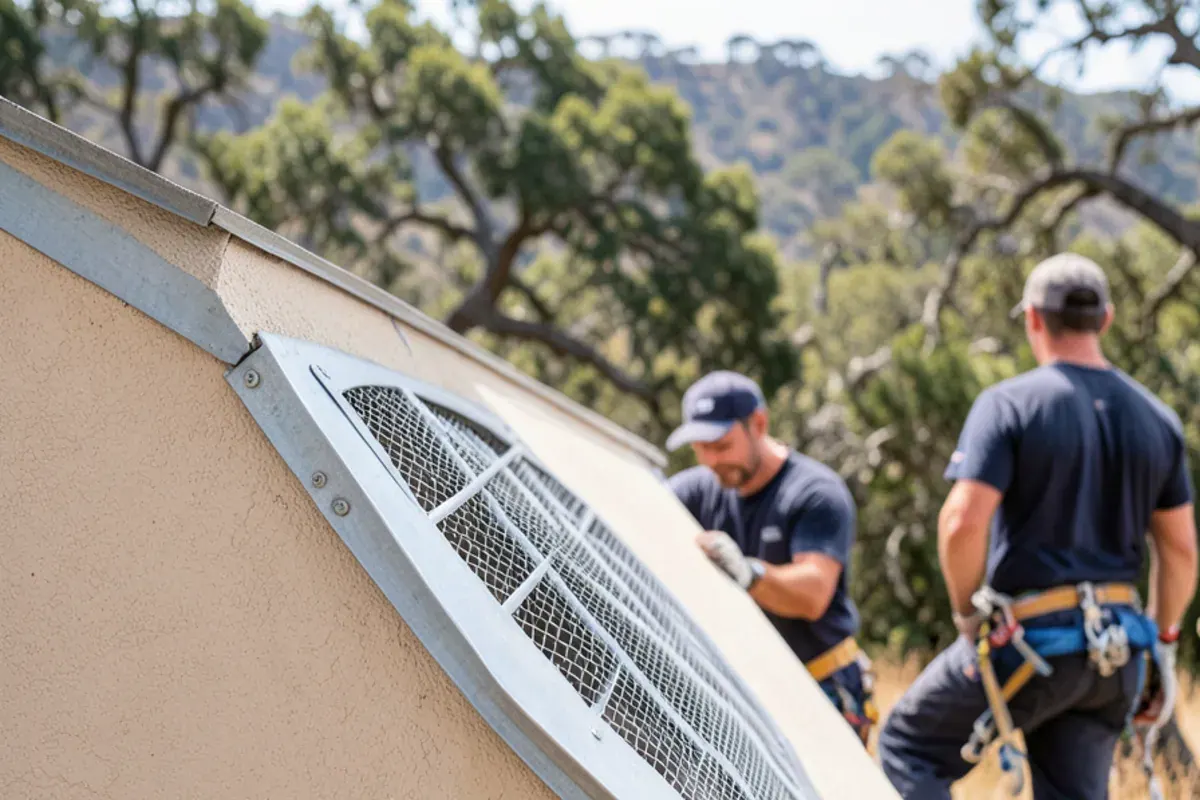
Wind-blown embers are a main way houses ignite during wildfires; they enter through attic vents and land on dry insulation and framing. In the Fire Hazard Severity Zones mapped by CAL FIRE, the state's wildland-urban interface building standards (Chapter 7A) require ember-resistant venting as well as a Class A rated roof.
Those maps take in the hillside neighborhoods of Los Gatos, Saratoga and Monte Sereno, plus much of the Santa Cruz Mountains. Ember-resistant vents use listed baffle designs or fine noncombustible mesh. Swapping them in is a contained job on most homes, and a smart one even just outside a mapped zone.
Code and permit points for attic venting
The California Residential Code sets attic vent area at 1/150 of the vented floor area, dropping to 1/300 when 40 to 50 percent of it sits high in the attic and the rest low, which is the code's own case for balance. Bath and dryer exhaust must discharge outdoors, never into the attic. During a reroof, vent changes ride on the City of Campbell reroof permit; for stand-alone vent work, ask the city's building division, or the County for unincorporated parcels, whether a permit applies. Whoever does the work, confirm their license on the CSLB site once the job reaches $1,000.
Attic venting repair and insulation: our two attic services
Attic work splits into two related jobs, each with its own page:
- Attic venting repair handles the hardware: painted-over soffits, split or corroded box vents, flattened ridge vents, ripped screens, bath fans dumping into the attic, and the condensation that follows.
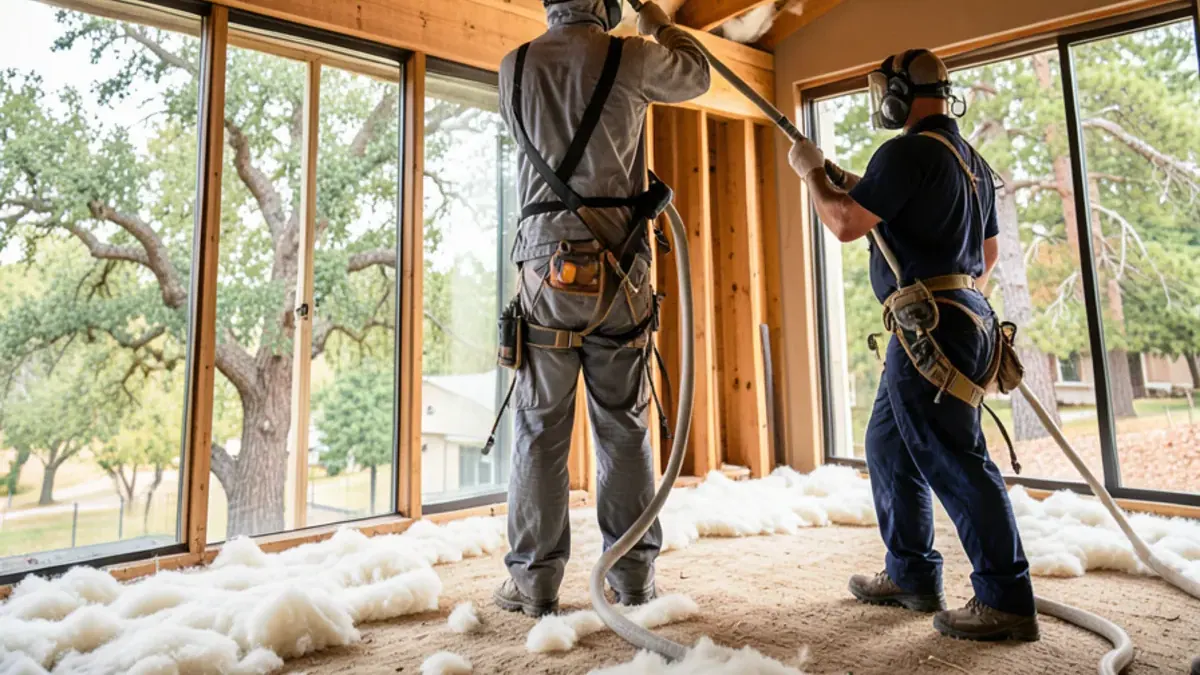
- Attic insulation and radiant barrier covers removing old or rodent-soiled insulation, air sealing the ceiling, blowing in new insulation and adding a radiant barrier, often during a reroof.
Ventilation also connects to the edge of the roof. Rotted fascia and soffit boards close off intake, so we often coordinate with gutter and fascia work on the same visit.
Why Campbell homeowners call us about attics
Attic problems are easy to oversell, and we work hard not to. We are family-run, the check is free, and you get photos of your soffits, vents and attic sheathing with a written, itemized estimate. When a stain turns out to be indoor humidity rather than the roof, we tell you, and small fixes such as one replacement vent or a new screen are welcome jobs.
Hot upstairs rooms or a musty attic? Call (725) 745-8803 to have the roof and attic checked in one visit.
Call (725) 745-8803