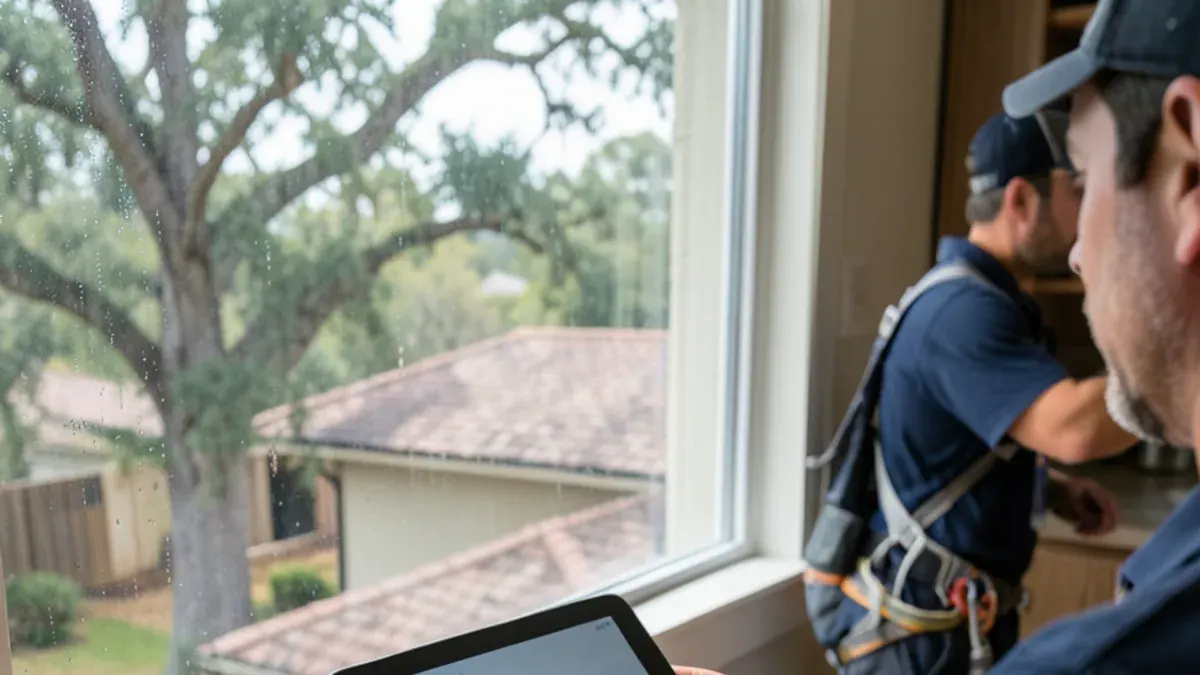
What counts as a roof leak emergency, and what can wait?
A roofing emergency is any damage that lets water, wind or debris into the house now, or will the next time it rains. In Campbell that usually means the wet months, November through March, when one storm can turn a loose shingle into a ceiling stain by morning.
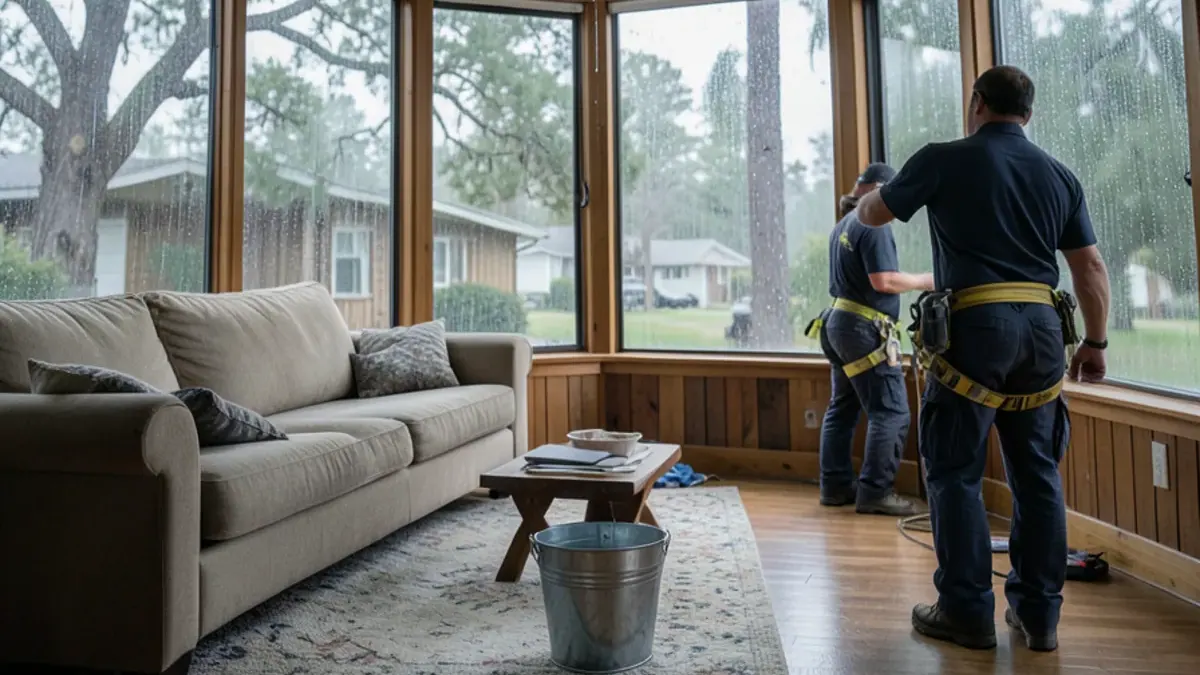
- Water coming inside: dripping from a ceiling, light fixture, skylight well or wall during rain.
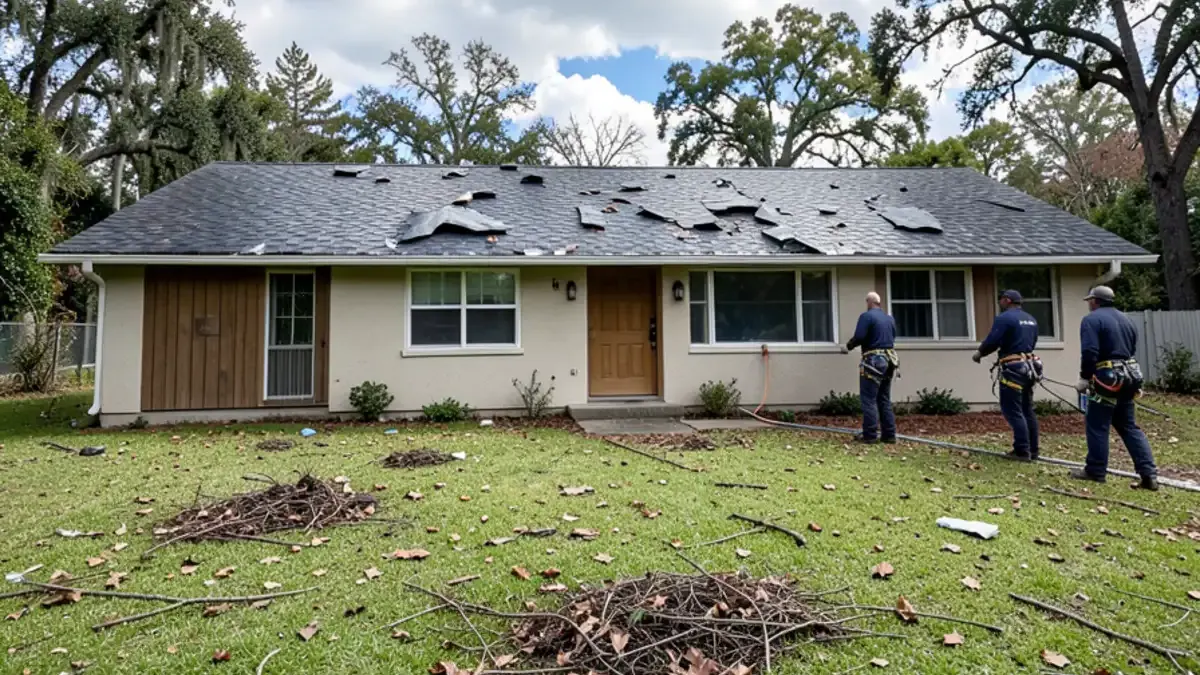
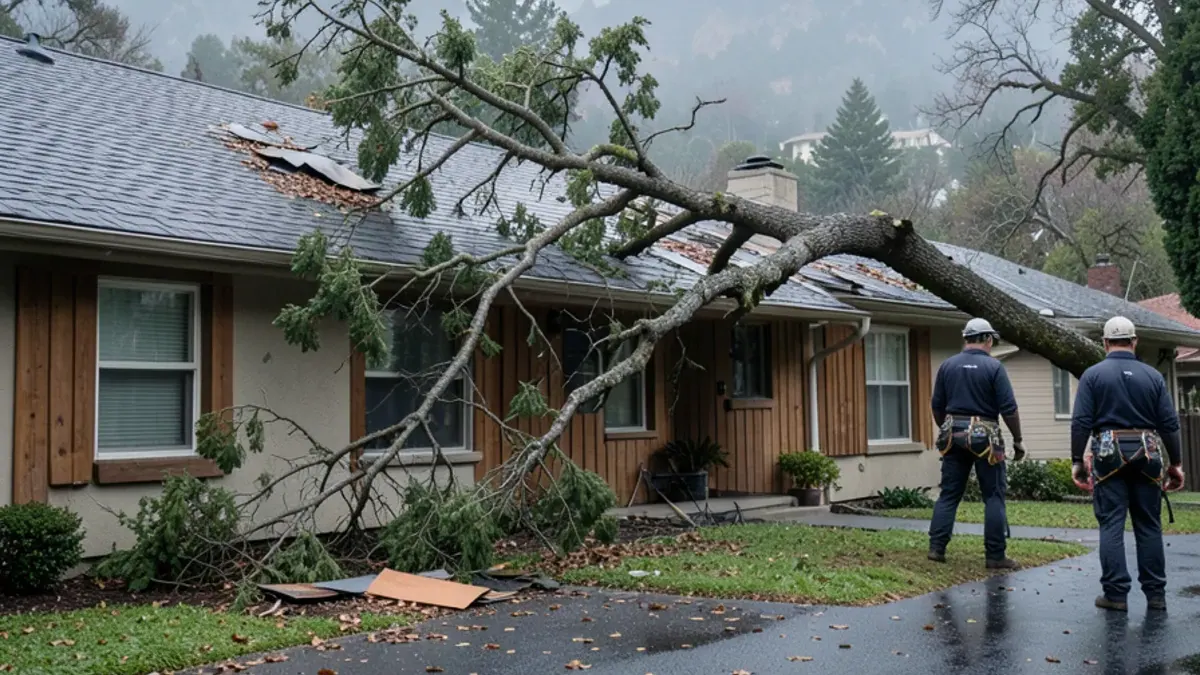
- An open roof: a branch through the roof, missing sections of shingles or tiles, or bare wood decking showing.
- A ceiling holding water: drywall bellied downward over a room.
- Storm damage with more rain forecast: torn flashing, a lifted ridge or tiles that slid off, even if nothing leaks yet.
- Water near electrical: wet light fixtures, outlets or a damp attic around wiring.
Some problems feel urgent but can wait for a regular visit: a few granules in the gutter, one cracked tile with dry underlayment beneath it, an old stain that hasn't grown, or moss. If you are unsure, call and describe what you see. We will tell you whether it needs emergency attention or a scheduled roof repair.
The first hour: urgent roof repair steps you can take safely
Everything below is done from inside the house or from the ground. None of it needs a ladder.
- Stay off the roof. Wet shingles, tile and moss are slick, and storm gusts make ladders unstable.
- Cut power to wet fixtures. If water reaches a light, fan or outlet, switch that circuit off at the breaker panel and keep people out of the room.
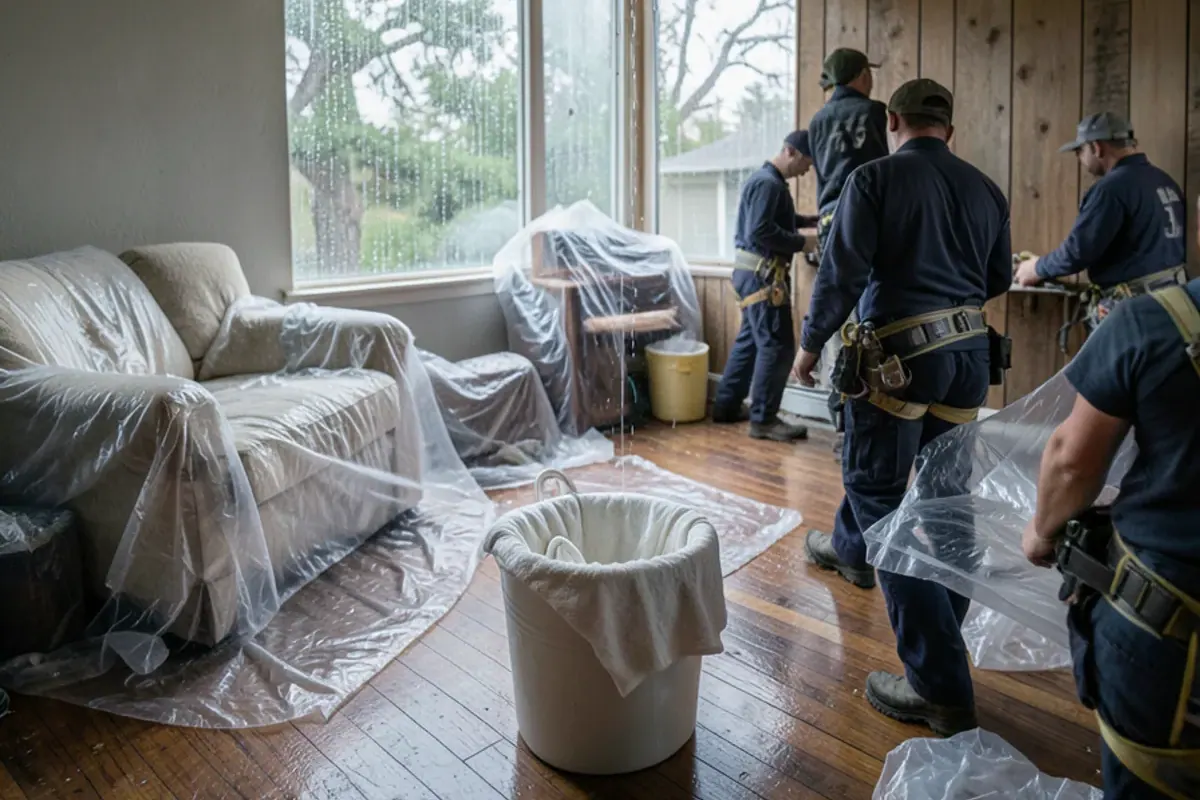
- Move what you can. Carry electronics, rugs, papers and furniture out of the drip zone; cover anything too heavy to move with plastic sheeting.
- Catch the water. Buckets, pots and towels under each drip. A rag in the bottom of the bucket stops splashing.
- Handle a bulging ceiling with care. If drywall is bellied with water, put a bucket underneath, stand to one side and push a screwdriver through the lowest point so it drains in one place. If the ceiling sags badly or sits near a fixture, leave the room and close the door.
- Take photos and video of the ceiling, the wet belongings and, from the yard, any visible roof damage. Your insurer will want the date and time.
- Call us and describe what you see, including the roof type if you know it.
Questions about emergency roof repair?
Call first for the quickest answer, or request a free written estimate below.
Request a free written estimate
Fastest answer: call (725) 745-8803. Or send the details below and we will call you back.
How an emergency roofer from Campbell handles your call
We are a family-run roofing company in Campbell, based at 16135 E Mozart Ave. We don't publish set hours, run a night shift or promise a response time we can't keep. What you get instead is a straight answer: we ask what is happening, tell you plainly when a crew can reach you, and talk you through safe steps for the meantime.
Our Google reviews describe the rest: free written estimates with photos, daily cleanup and help documenting storm damage for insurers. One torn pipe boot gets the same care as a roof opened by a limb.
Calls are sorted by risk. Water entering living space, an open roof after a limb strike and ceilings holding water come ahead of a lifted shingle on a dry day. During a big storm series, when roofs all over the valley are hit in the same few days, that order matters most, and we will tell you if the wait is longer than you'd like.
We work from Campbell across Santa Clara County, including homes in San Jose, Santa Clara, Cupertino, Los Gatos and Saratoga, and into parts of Santa Cruz, San Mateo and Alameda counties. Mountain addresses on narrow, wet roads take longer to reach, and we say so up front.
Emergency roof repair in Campbell, CA: what the crew does on arrival
The first visit is about control, not a full rebuild. Rain, wind and failing light limit what can be done well on a roof, so the work is split in two.
- Triage by phone: sorted by risk, with an honest arrival estimate.
- Photos first: roof and interior damage recorded before anything is covered; you get copies.
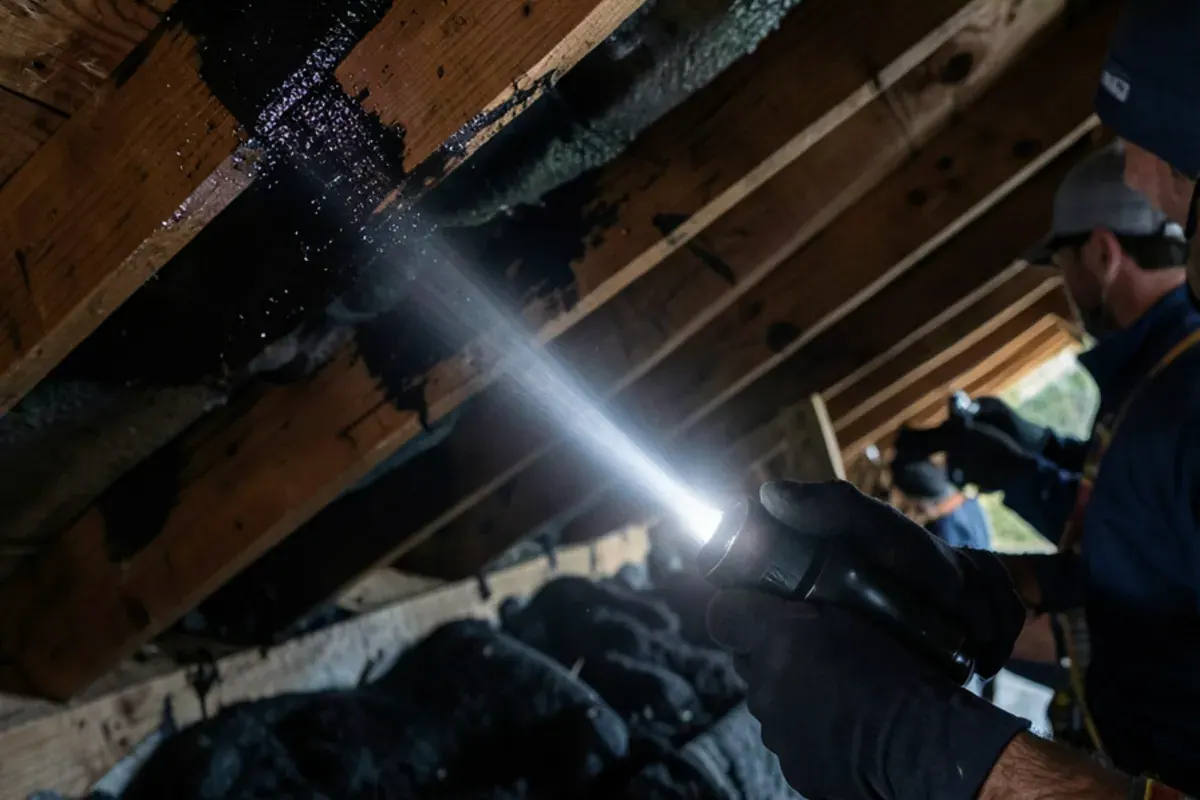
- Find the entry point, often from the attic, which is safer than a wet roof surface.
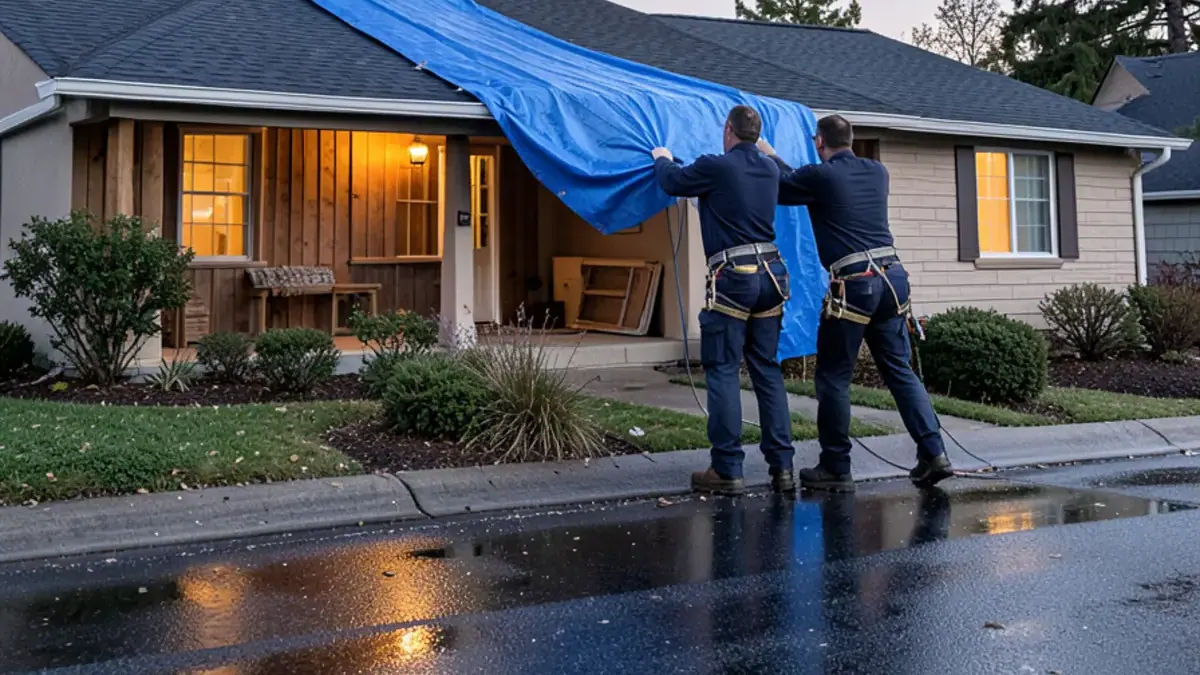
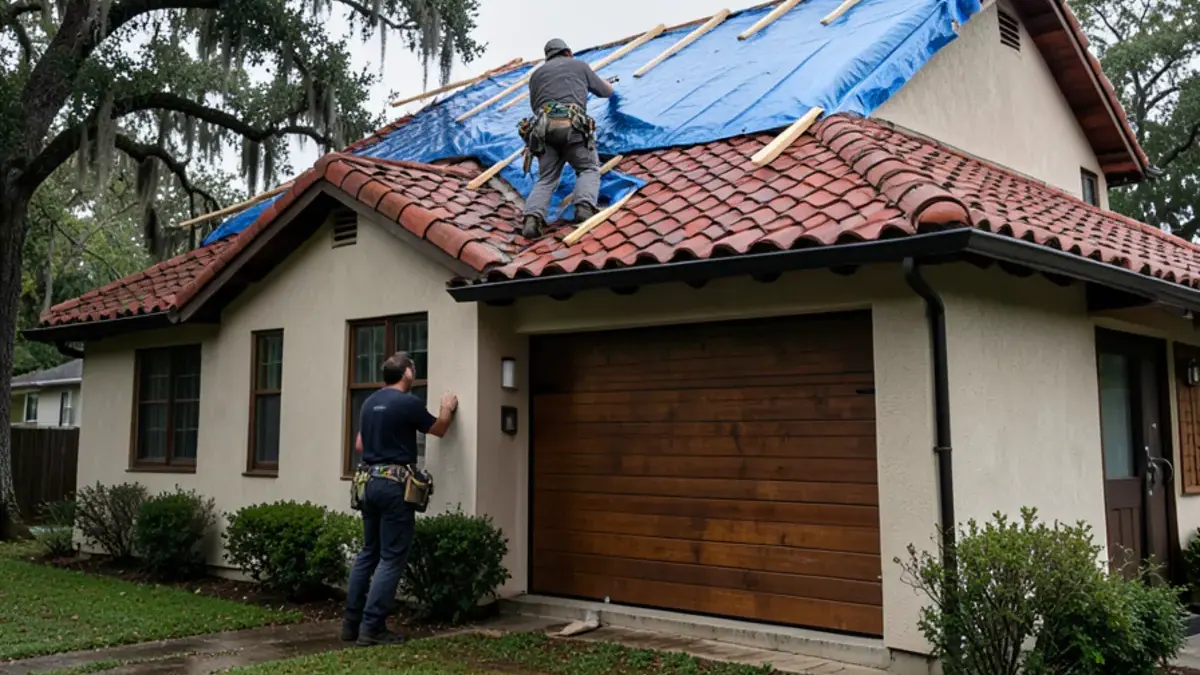
- Control the water with a secured tarp or a temporary patch at torn flashing. If the roof is unsafe to walk, we protect what we can from inside and return.
- Dry-weather inspection and a free, itemized estimate for the lasting repair.
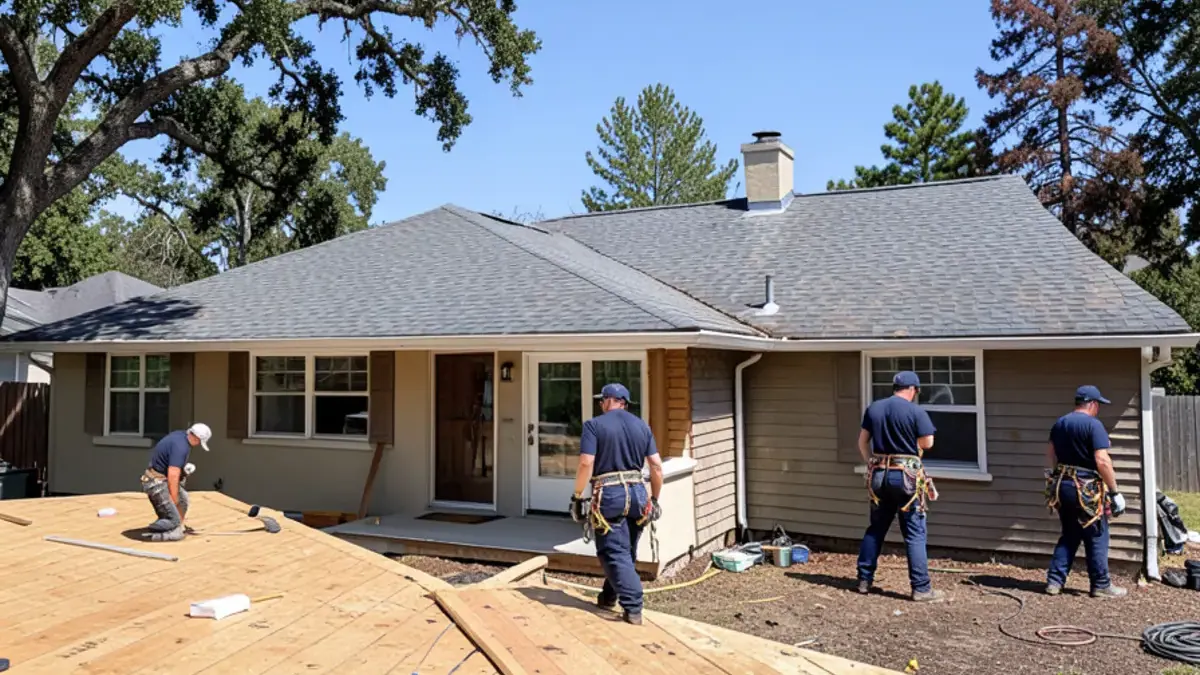
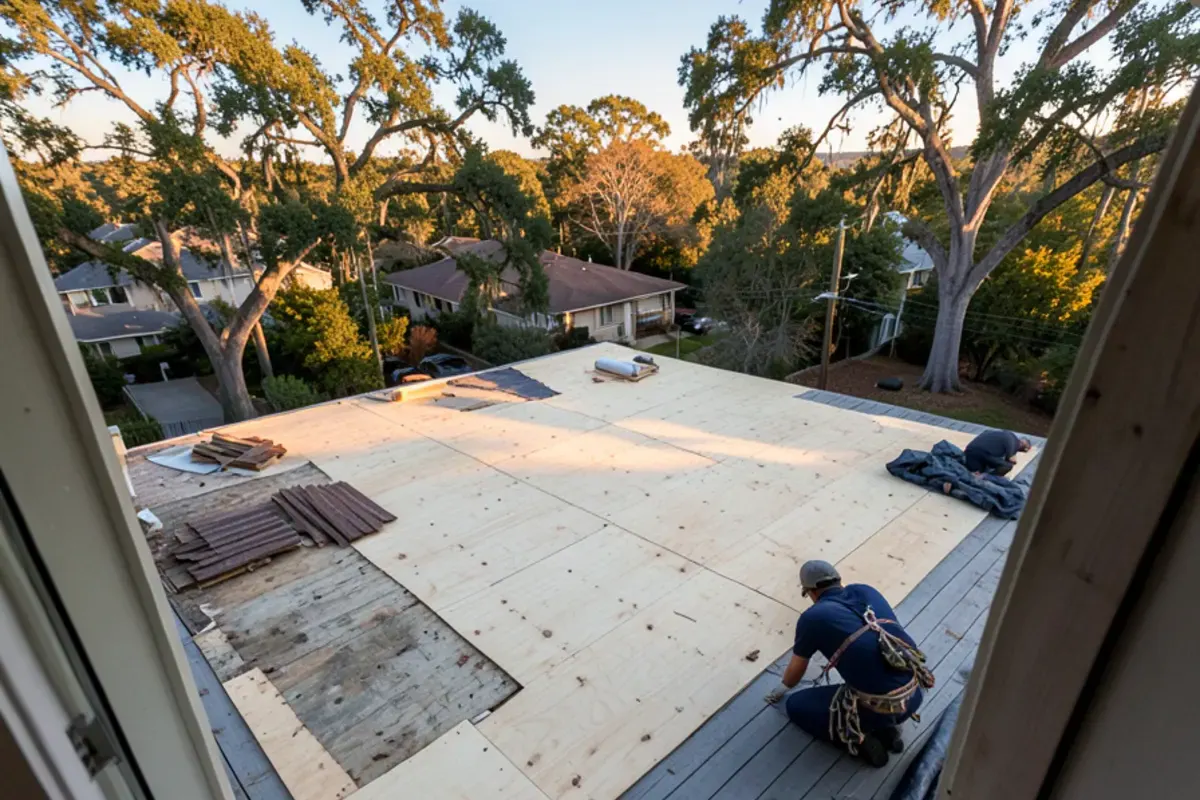
- Permanent repair: decking, underlayment, flashing and roofing replaced to match as closely as materials allow, then a sweep for nails and debris.
Which emergency roof service fits your damage?
Most calls fall into one of five situations. Each has its own page with the details.
- Water inside right now: emergency roof leak repair covers finding the entry point and protecting ceilings.
- An opening that needs covering: emergency roof tarping explains how a tarp is secured on shingle, tile and flat roofs.
- Wind or rain damage after a storm: storm damage roof repair deals with lifted shingles, slipped tiles and torn flashing.
- A tree or limb on the house: fallen tree roof damage repair walks through safety, tree removal and decking repair.
- A claim to file: roof insurance claim help shows what documentation insurers usually ask for.
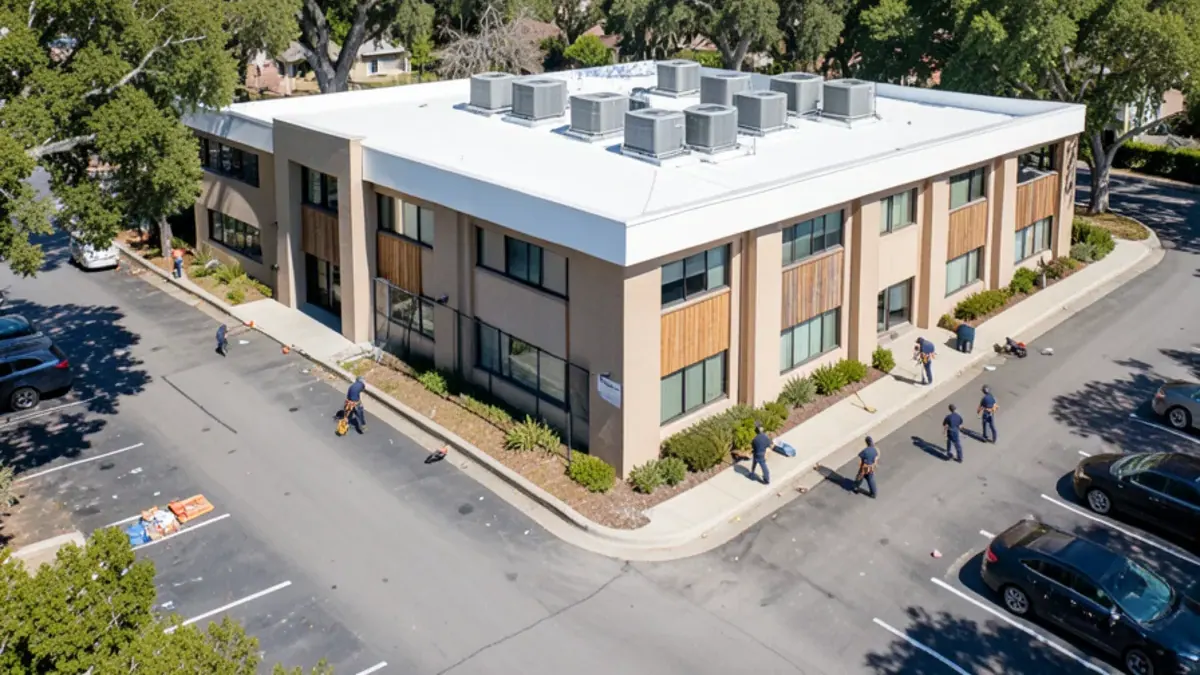
If the damage turns out to be age rather than a single event, the answer may be a planned roof replacement, and we will say so. Leaks on flat-roofed offices and medical buildings are handled under commercial roofing.
How is emergency roof work priced?
There is no fixed emergency price list, because no two calls are alike. Here is how the money side works:
- Before work starts, we explain any trip charge or tarping charge for the emergency visit, so you can say yes or no.
- Temporary work is billed as temporary work. A tarp or patch is priced for what it is, separately from the permanent repair.
- The permanent repair gets a free, written, itemized estimate, with photos of what we found.
- Cost depends on roof type and pitch, how much decking or framing is damaged, access, and the materials needed to match.
- Matching: discontinued shingle colors or old tile profiles may need ordering or salvage.
- Return trips, such as re-securing a tarp after wind, explained before they happen.
Permits, CSLB rules and hiring help after a disaster
A tarp stops water; the permanent repair is ordinary construction. The City of Campbell takes permits online through MyGovernmentOnline, issues reroof permits only to C-39 roofing contractors or owner-builders, and dry rot has to be gone before the reroof inspection. Unincorporated addresses go to the County Planning and Development Department.
Storm roof repair in Campbell: why winter brings the calls
Campbell gets nearly all of its rain from November to March, with January usually the wettest month. Long dry summers bake shingles and sealants, so the first heavy storm of the season finds every weak spot at once.
Atmospheric rivers make it worse. The storm series from late December 2022 into January 2023 brought down trees across Santa Clara and Santa Cruz counties, and many South Bay roofs took limb strikes, wind damage and leaks within days of each other. Mature oaks, sycamores and redwoods over older neighborhoods drop limbs in that kind of wind. Hail, by contrast, is rare here, so we don't go looking for hail damage that isn't there.
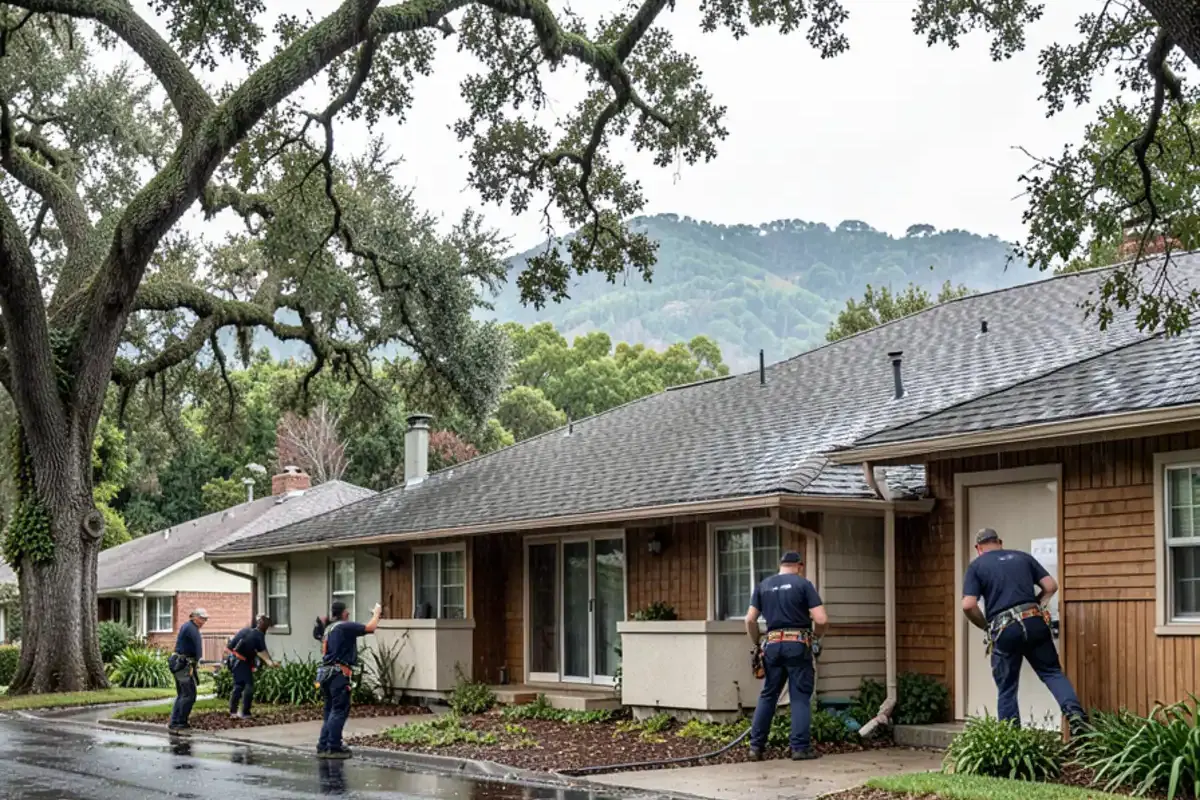
Water coming in or a roof opened up? Call (725) 745-8803 for a straight answer on timing.
Call (725) 745-8803