
The first hour: what to do when your roof leaks during rain
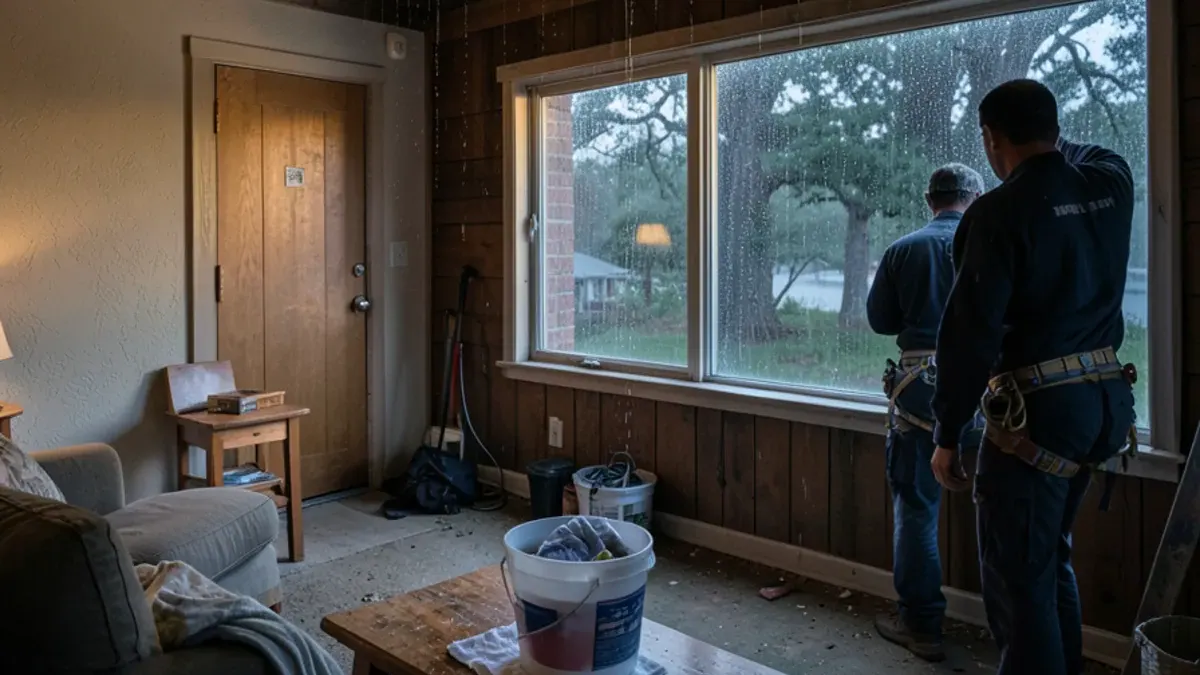
Work from the room outward. The goal for the first hour is to keep a small roof problem from becoming a drywall, flooring and electrical problem.
- Clear the area. Move electronics, rugs and furniture away from the drip. Cover what cannot move with plastic sheeting.
- Catch the water. Set a bucket or storage tote under the drip with a towel inside to stop splashing.
- Check for a bulge. If the ceiling is sagging, water is pooling above it. Push a screwdriver through the lowest point of the bulge so it drains into the bucket in a controlled stream.
- Shut off power to wet fixtures. If water is running through a light fixture or ceiling fan, turn that circuit off at the panel.
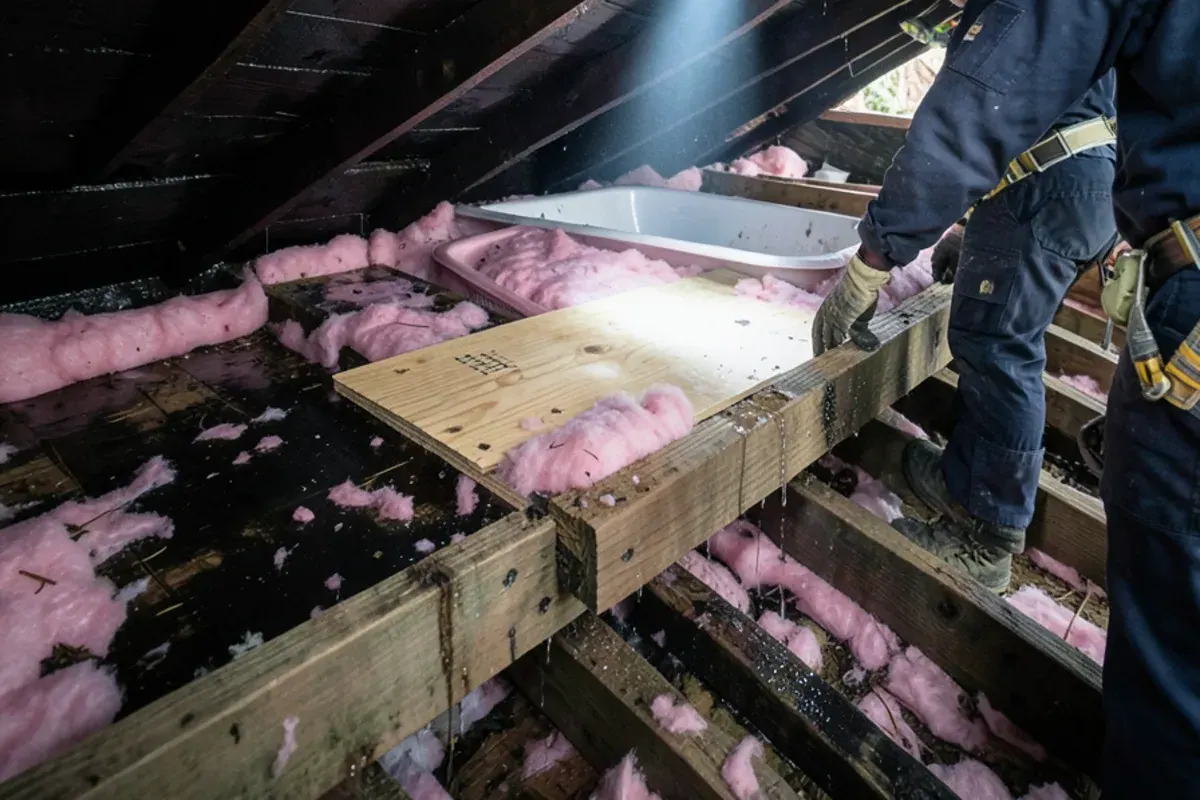
- Look in the attic if you can do it safely. Walk only on joists, use a flashlight, and note where the wet wood or insulation is.
- Write down the time and the weather. Heavy wind from the south, a long downpour or the first storm of the season all help a roofer narrow the cause.
Water coming through the ceiling right now? Call (725) 745-8803 and we'll tell you when a crew can get there.
Call (725) 745-8803How can you slow a ceiling leak without going on the roof?
Most of what helps during a storm happens inside the house or from the ground. These steps buy time until a roofer can work safely.
- Attic catch tray: a sheet of plywood or a shallow tub laid across joists under the wet spot keeps water off the ceiling below.
- Pull soaked insulation: wet batts hold water against drywall. Bag them and set them aside for the roofer and adjuster to see.
- Clear downspouts from the ground: a downspout clogged at the elbow can back water up under the first course of shingles. Clear the bottom opening with a gloved hand or a hose from a stable spot.
- Run a fan and dehumidifier: drying the room early limits swelling in baseboards and subfloor.
Four storm-night mistakes that make leaks worse
- Caulking from a ladder in the rain: standard sealant barely grips wet shingles or flashing, and a ladder footed on soggy lawn in gusty wind is how falls happen.
- Standing directly under a sagging ceiling: soaked drywall is heavy. Drain it from the side at arm's length, never from underneath.
- Running a wet-dry vacuum near live outlets: turn off the circuit for that room first, then pick up standing water.
- Throwing out wet carpet pad or insulation right away: an adjuster may want to see the actual material, so photograph it and set it aside in bags.
Where is the water actually coming from?
Water enters at one point, runs along rafters or sheathing, then drips wherever gravity wins. The spot on your ceiling is a clue, not an answer. Use the table to describe the leak when you call; it speeds up roof leak detection once the rain stops.
| Where you see water | Roof area to check | Why it matters |
|---|---|---|
| Near an exterior wall | Eaves, gutters, fascia | Overflowing gutters can push water behind the drip edge |
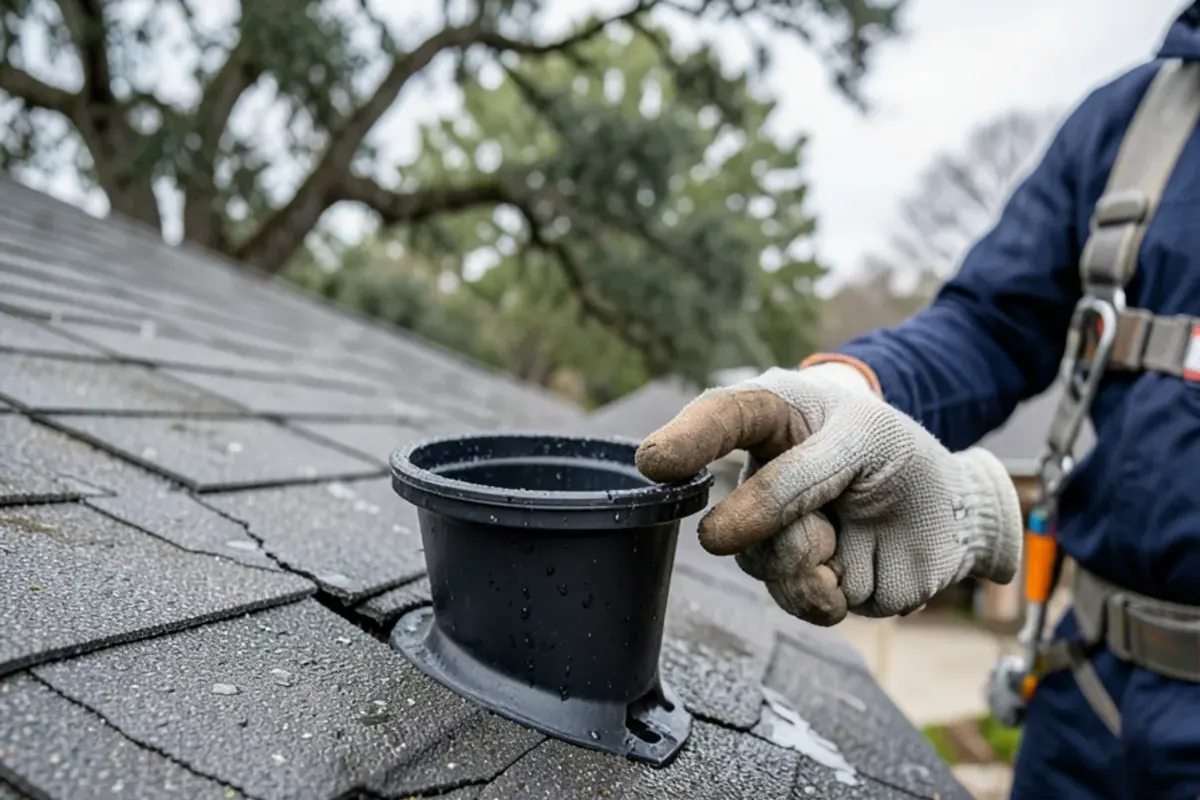
| Around a bath fan or light | Vent jacks, pipe boots | Rubber boots crack after years of summer sun |
| Beside the chimney | Step and counter flashing, crown | Masonry moves and old sealant splits |
| Along a line in the ceiling | Valley where two slopes meet | Valleys carry the most water in a downpour |
| At a skylight frame | Skylight curb and flashing kit | Condensation can mimic a leak, so note whether it is raining |
| Middle of a room, far from anything | Higher on the slope | Water may travel several feet along a rafter first |
Stopgap or real fix: what can be done in wet weather?
Homeowners often ask why the storm crew does not simply fix the roof. A permanent repair means removing shingles or tile, checking the plywood deck and installing new underlayment and flashing, and none of that should happen while water pours in. Storm work stops water; repair work removes the cause.
| Measure | When it works | What it cannot do |
|---|---|---|
| Bucket, attic tray and drained ceiling | Any time, from inside the house | Protects rooms only; the roof is still open |
| Secured tarp over the damaged area | Once wind and footing let a crew work safely | Lasts weeks rather than seasons; sun and wind wear it out |
| Wet-surface roof cement on a small gap | A defined spot such as a split pipe boot or lifted flashing edge | Hides the problem; it is not a repair and often fails by spring |
| Permanent repair | A dry window long enough to open the roof and inspect the deck | Cannot be rushed into a rainstorm |
Between winter storms there is usually a dry window of a day or more, and that is when permanent work gets scheduled. If the damage is large or the forecast stays wet, emergency roof tarping bridges the gap so the house stays dry while the roof waits.
What should you photograph before the cleanup?
Pictures taken during the storm show the damage at its worst, and they cannot be recreated later. Whether any of it is covered depends on your policy, so record first and sort out coverage after.
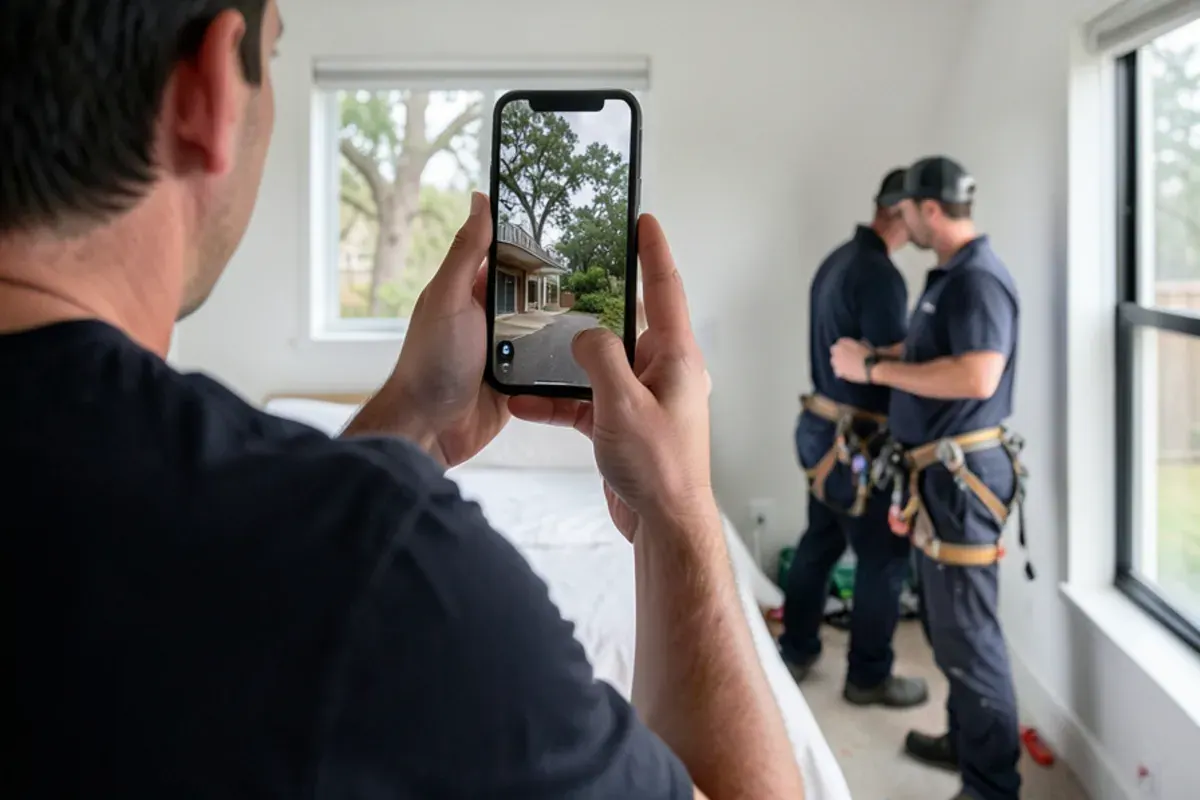
- Wide shots of each wet room, then close-ups of stains, bulges and drips
- The attic: wet sheathing, rafters and insulation, with a flashlight for scale
- Anything visible outside from the ground, such as missing shingles or a gutter pulled loose
- Damaged belongings before you throw them out
- A short video of active dripping, with your phone's timestamp on
From our roof visits: what storm leaks usually turn out to be
On many Campbell homes built in the 1950s through the 1970s, the first big storm of the season exposes problems that formed quietly over a dry summer. A few patterns come up again and again.
Cracked rubber pipe boots and dried-out sealant at flashing are common, because months of sun bake them before any rain arrives. Gutters packed with summer leaf drop overflow on the first heavy night. Low-slope patio covers and room additions tied into a pitched roof often leak at the joint where the two meet.
Not every wet ceiling is a roof leak. Bathroom humidity, an attic vent duct that ends short of the roof, or condensation on a cold skylight can all leave stains. That is why we photograph what we find and show it to you before recommending a fix. The same patterns show up in older neighborhoods when we are roofing in San Jose.
The trade-offs we talk through on site
Draining a ceiling bulge saves the room but leaves a hole that needs a drywall patch later; we think that trade is worth it every time. A tarp keeps water out, but every tarp anchor is a potential new hole, so we fasten along edges and ridges that will be replaced or sealed during the permanent repair. And on a roof near the end of its life, paying for a third emergency patch can be money that would do more as part of a replacement. If one cracked boot caused the leak on an otherwise healthy roof, we will say that too; one bad storm is not a reason to reroof.
Drying out the house in the first two days after a roof leak
The U.S. EPA advises drying water-damaged materials in 24 to 48 hours to keep mold from taking hold. A roof leak rarely soaks a whole house, but water hidden in insulation, inside a wall cavity or under a floating floor can stay wet long after the ceiling looks dry.
- Remove what holds water. Bag soaked insulation, lift wet rugs and pull carpet pad that sits in standing water.
- Move air across the wet area. Fans aimed at the ceiling and a dehumidifier with the doors closed dry drywall faster than an open window on a damp day.
- Check behind baseboards and under flooring. Water runs down wall cavities. A musty smell or swelling at the base of a wall means it got further than the ceiling.
- Have wet fixtures looked at. If water came through a light or fan, keep the circuit off until an electrician confirms it is safe.
- Keep every receipt. Fans, tarps, buckets and emergency labor are part of the record.
Standard homeowners policy forms list protecting the property from further damage among the owner's duties after a loss, and they ask for records of what you spent doing it. Your policy's wording controls, so read its "duties after loss" section or ask your agent, and do not assume any expense will be paid.
When to call a roofer, and what happens after the rain stops
Call as soon as you have the room under control. Our emergency roof leak repair work usually happens in two stages: first a temporary measure such as a secured tarp or a sealed boot to stop water when conditions allow, then a permanent repair once the roof is dry enough to open up and inspect the decking.
After the inspection you get a written, itemized estimate along with photos of the problem. If the storm caused the damage, we can help you document it for your insurer. Homeowners near our base can read more about roof repair in Campbell and the neighborhoods we cover.
Room under control? Call (725) 745-8803 to book a leak inspection and get a written estimate with photos.
Call (725) 745-8803