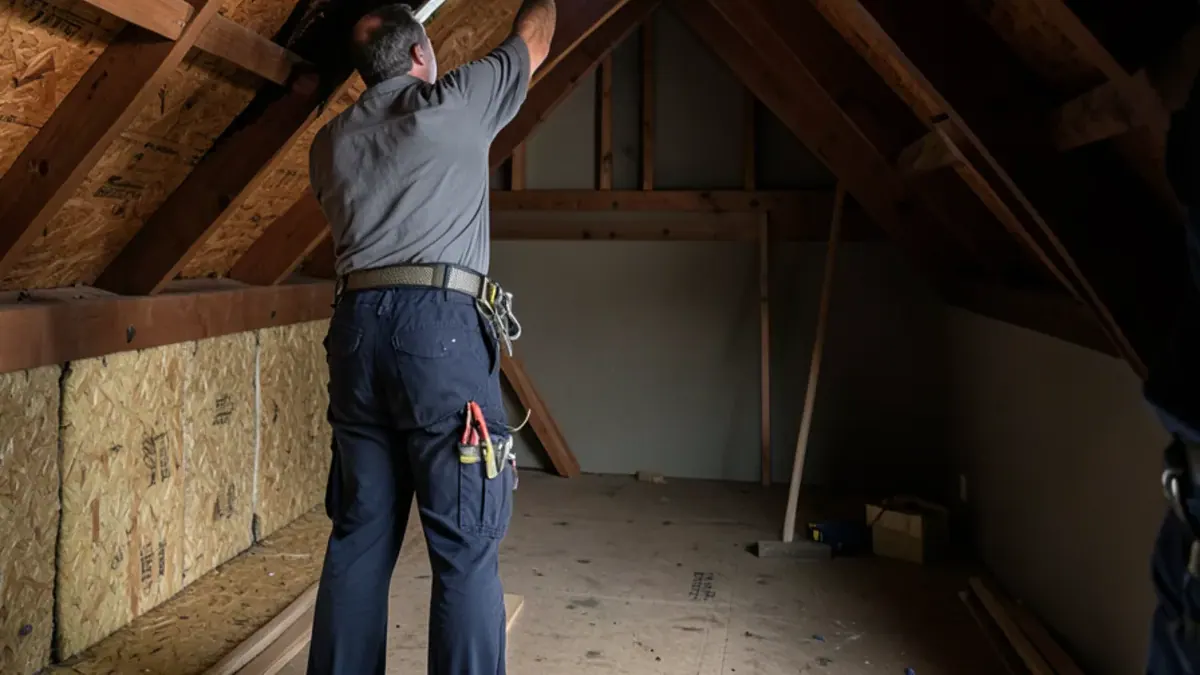
Why does the drip show up so far from the leak?
Water almost never falls straight down. Once it slips past a shingle or tile, it runs along the underlayment, then along the underside of the decking, a rafter or a run of wiring, and lets go at the first low point. On a long, low ranch roof that can be well downhill from the entry, sometimes on the far side of a hallway wall.
Additions make this harder. Plenty of Campbell homes gained a family room or enclosed patio in the 1970s or 1980s with a shallower pitch than the original roof. The seam between the two is a classic entry point, and water from it can travel inside the wall before it shows up beside a window or along a baseboard.
Roof leak detection in Campbell, CA, step by step
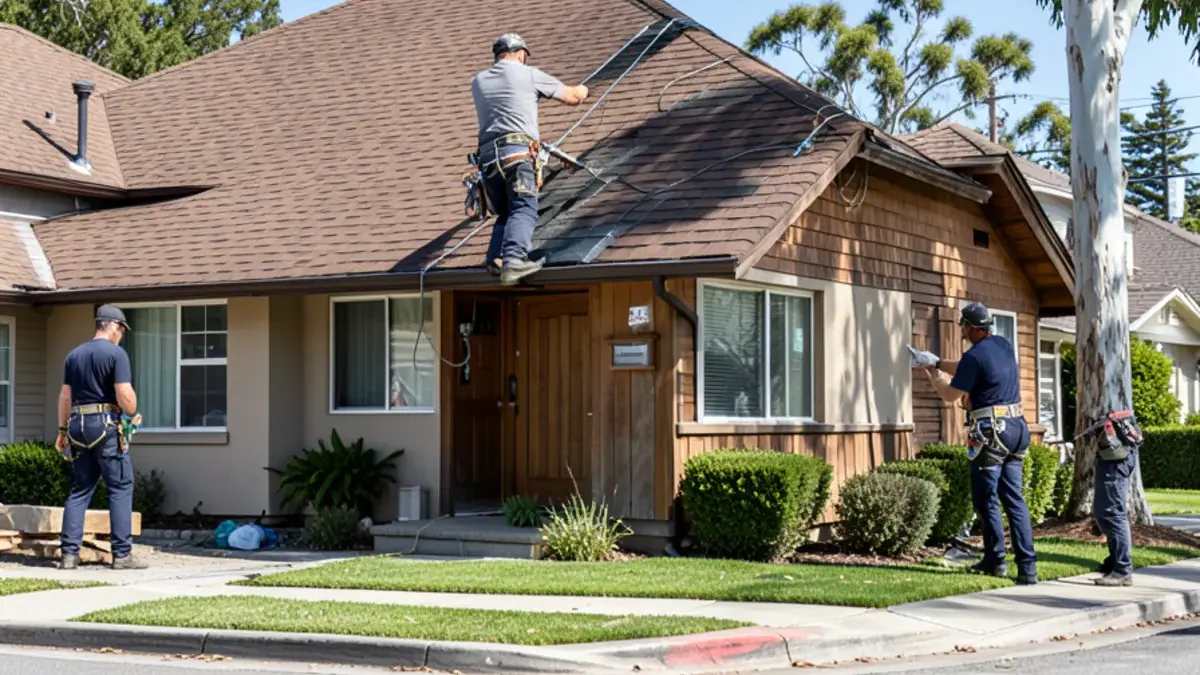
A leak trace covers the whole water path, and the visit includes:
- Interior reading of the stain, its timing and the rooms around it.
- Attic tracking along decking, rafters and insulation.
- Roof-surface checks of every detail above the trail.
- Controlled water testing when the dry evidence is not conclusive.
- Photo record and written repair estimate for the entry point found.
- Read the inside first. Stain shape and size, whether it grows only in hard rain or any rain, and whether it changes on dry days. Those answers rule out half the suspects before anyone climbs a ladder to find the roof leak.
- Get into the attic. Dark rings around nails, stained rafters and matted insulation show the water's route. We follow that route uphill with a flashlight until it stops.
- Inspect the roof above the route. Every penetration, flashing, valley and old patch along that line gets checked by hand, not just by eye.
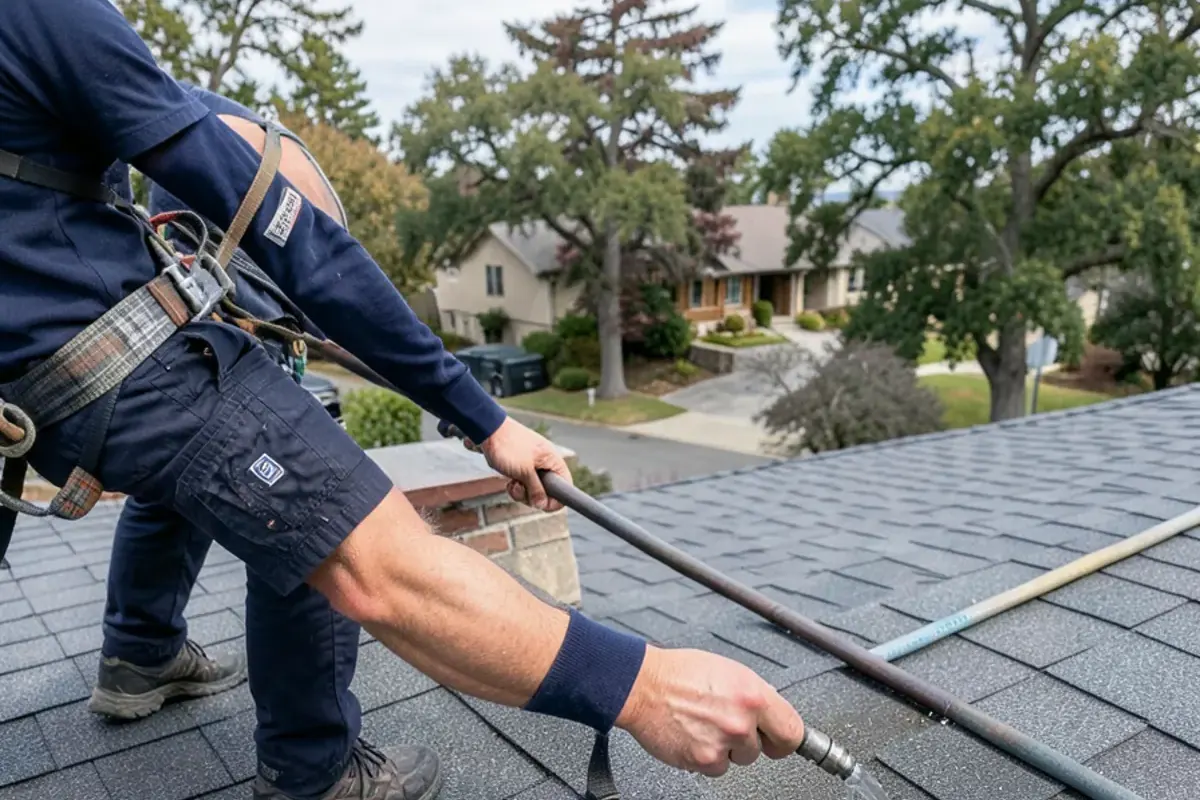
- Run a roof water test if needed. A garden hose works one small section at a time, starting low and moving upslope, while a spotter inside watches for the first drip. It is slow on purpose.
- Show you the cause. You see photos of the entry point, and sometimes video of the test, before we write the repair estimate.
Questions about roof leak detection & repair?
Call first for the quickest answer, or request a free written estimate below.
Request a free written estimate
Fastest answer: call (725) 745-8803. Or send the details below and we will call you back.
Common entry points: vent pipes, chimneys, valleys and walls
Leak around a vent pipe
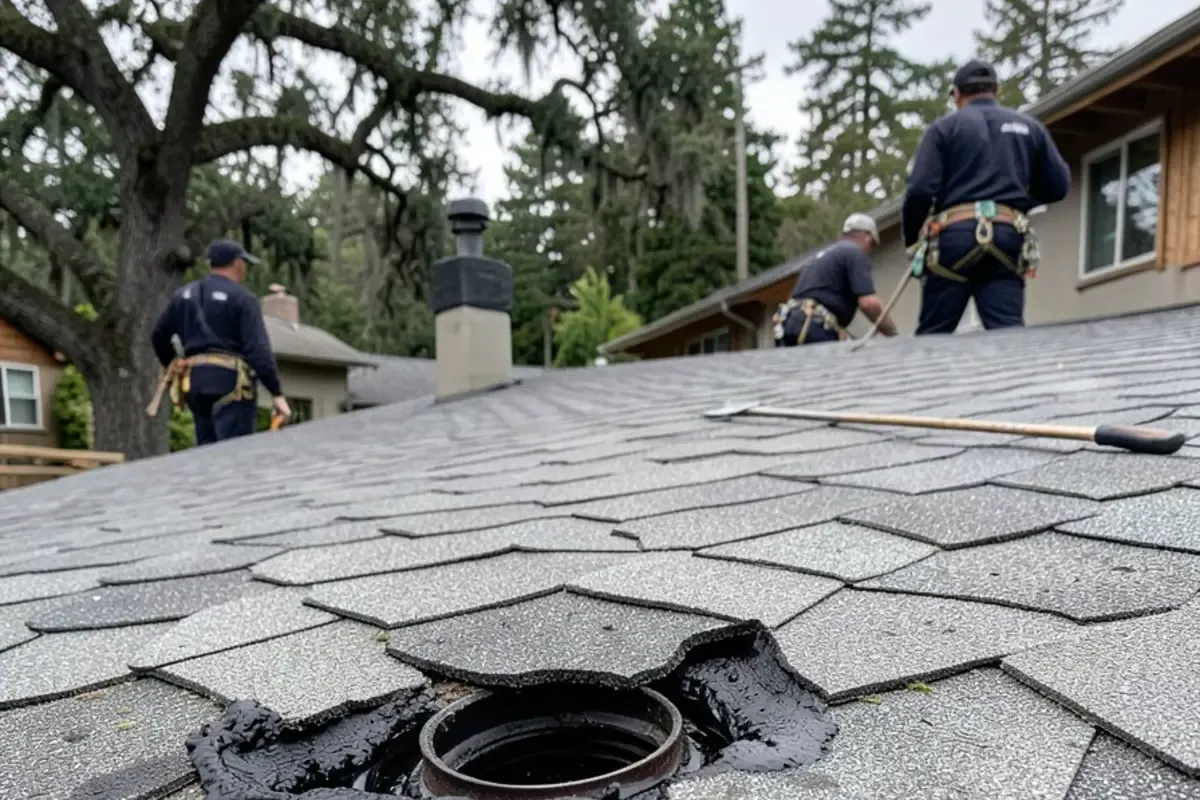
Rubber collars on plumbing vents crack in the summer sun, usually on the uphill side where nobody sees it from the yard. Rats also chew the soft lead jackets on older vents. This kind of leak tends to leave a small round stain near a bathroom, laundry or kitchen.
Leak around a chimney
Failed counterflashing, cracked mortar and a missing cricket behind a wide chimney are the usual causes. Brick chimneys on 1950s and 1960s houses have shifted with decades of settling and with the 1989 earthquake, opening gaps the original metal never covered.
Valleys
Valleys carry more water than any other part of the roof. Leaf dams from oaks and sycamores push that water sideways under shingle edges, and a valley trimmed short at the bottom can feed it straight into the eave.
Walls and skylight curbs
Where a roof meets a second-story wall or a skylight, step flashing has to be woven in with each course. A missing kick-out at the bottom of a wall sends water behind stucco or siding, where it can rot framing for years before a stain appears.
Ceiling stain: roof leak or something else?
Not every brown ring on a ceiling is a roof problem. Bathroom humidity, attic condensation, a sweating duct or a slow plumbing drip can look identical from below. A few clues help sort them out:
| Clue | Points to the roof | Points somewhere else |
|---|---|---|
| When it appears | During rain or a day after | On dry days, or after showers and cooking |
| Where it sits | Below a valley, vent, chimney or wall junction | Below a bath fan, attic furnace or water line |
| What the attic shows | One wet trail on the decking running downhill | Droplets on many nails, damp insulation everywhere |
| Season | Only November through March | Worst on cold mornings with fogged windows |
When the cause turns out to be humidity or condensation rather than the roof, we tell you so and point you toward the fix, which may be venting or a bath fan rather than roofing.
Why does a recurring roof leak keep coming back?
Most leaks we see for the second or third time share one trait: the earlier repair treated the symptom. The repeat offenders:
- Sealant over a cracked boot instead of a new boot. It holds for a season, then the sun splits it again.
- A guessed nail hole. Someone spotted an exposed nail near the stain and sealed it, while the water was coming in at a flashing higher up.
- New shingles over old metal. A past reroof reused rusted step flashing or a worn chimney apron.
- Patching only the wet spot when the decking around it has been damp for years and no longer holds a nail.
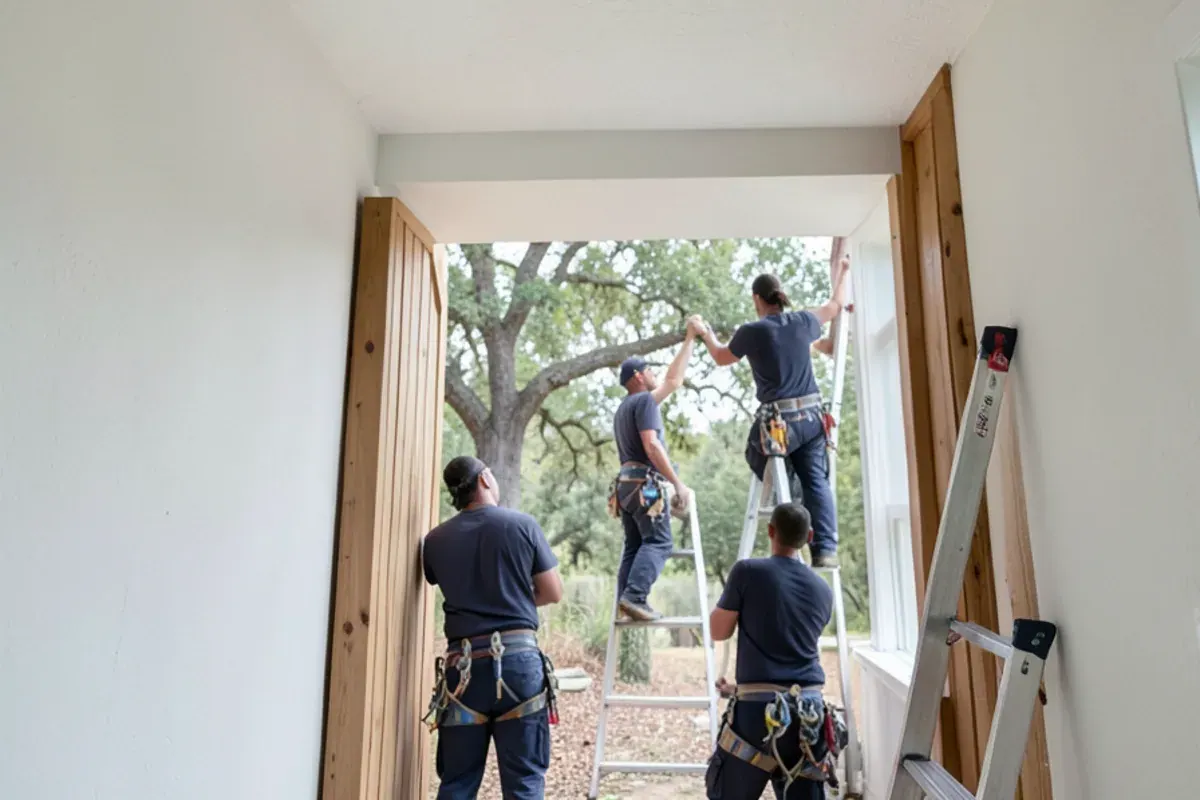
We take old patches apart, follow the trail past them, and fix whatever we find. You get photos either way, including when the trail leads somewhere you did not expect. That is how our family-run crew works on every trace: free written estimates, an honest call when the stain is humidity rather than the roof, daily cleanup, and small jobs taken as seriously as big ones.
What to do while you wait for a roof leak specialist
- Catch the water with a bucket and a towel inside it to stop splashing.
- Relieve a bulging ceiling by poking a small hole at its lowest point so water drains into the bucket instead of dropping the drywall.
- Move what matters: electronics, rugs, papers and anything under the stain.
- Write down the timing. Note when the drip starts relative to the rain and the wind direction; it narrows the search later.
- Look at the gutters from the ground. An overflowing gutter above the leak is a useful clue.
- Stay off the roof. Wet shingles and tile are slippery, and stepping on tile breaks it.
Stain spreading or a drip that won't quit? Call (725) 745-8803 to set up a leak trace.
Call (725) 745-8803Leak trace cost factors, permits and the hire
No two traces take the same time, so we price after seeing the house. What moves the estimate:
- Attic access: a walkable attic is quick; a low crawl or a flat roof with none shifts the work to the surface.
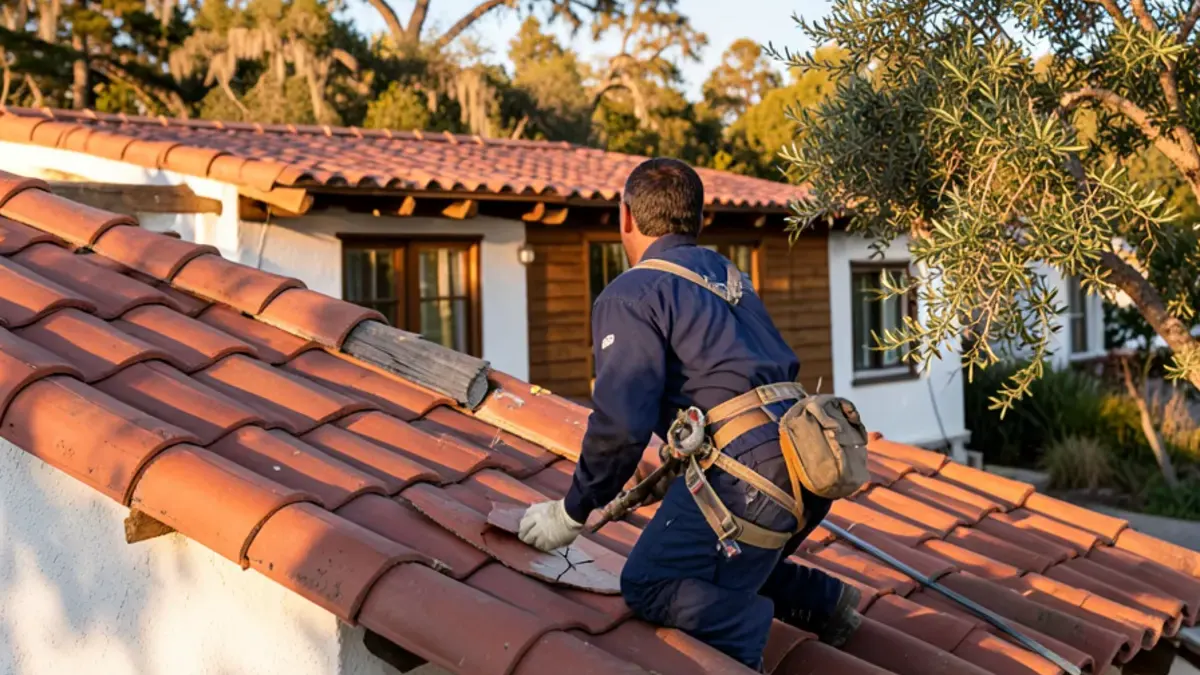
- Roofing type: tiles must be lifted and relaid, and old shakes split if handled carelessly.
- Water testing: each tested section adds time with a spotter inside.
- What the source needs: a boot swap is small; rotted decking under a valley is not.
Most leak repairs need no permit, but if the fix grows into reroofing, Campbell requires one through MyGovernmentOnline, and unincorporated parcels go to the County. Repairs of $1,000 or more call for a contractor with an active CSLB license.
Roof leak repair in Campbell once the source is found
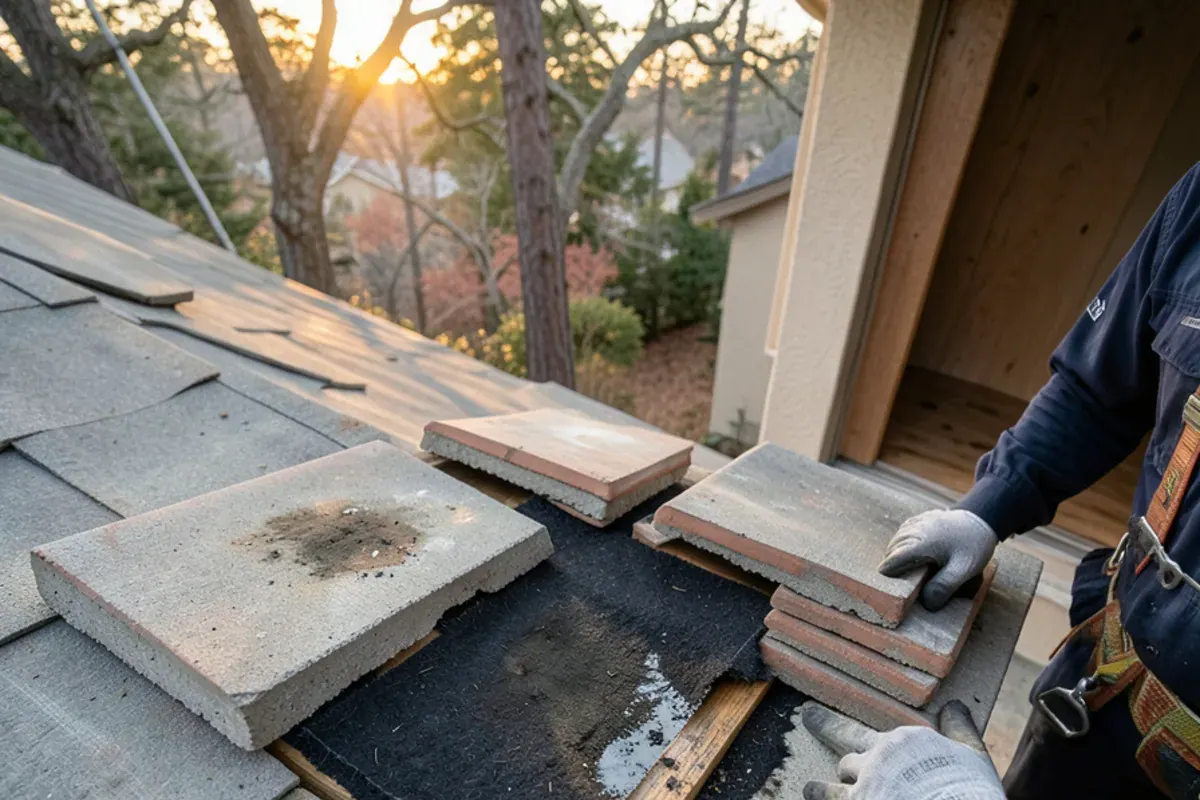
The repair follows what the trace found. A vent leak gets a new boot or flashing. A chimney leak may need new step and counterflashing, sometimes cut into the mortar joints. Damaged composition shingles get replaced through shingle roof repair, and leaks under clay or concrete tile are handled through tile roof repair. Soaked decking is cut out and replaced so the new materials fasten into solid wood.
Interior repairs wait until the roof has seen a real rain and the stain has stopped growing. Painting over a stain before then just hides whether the fix worked.