
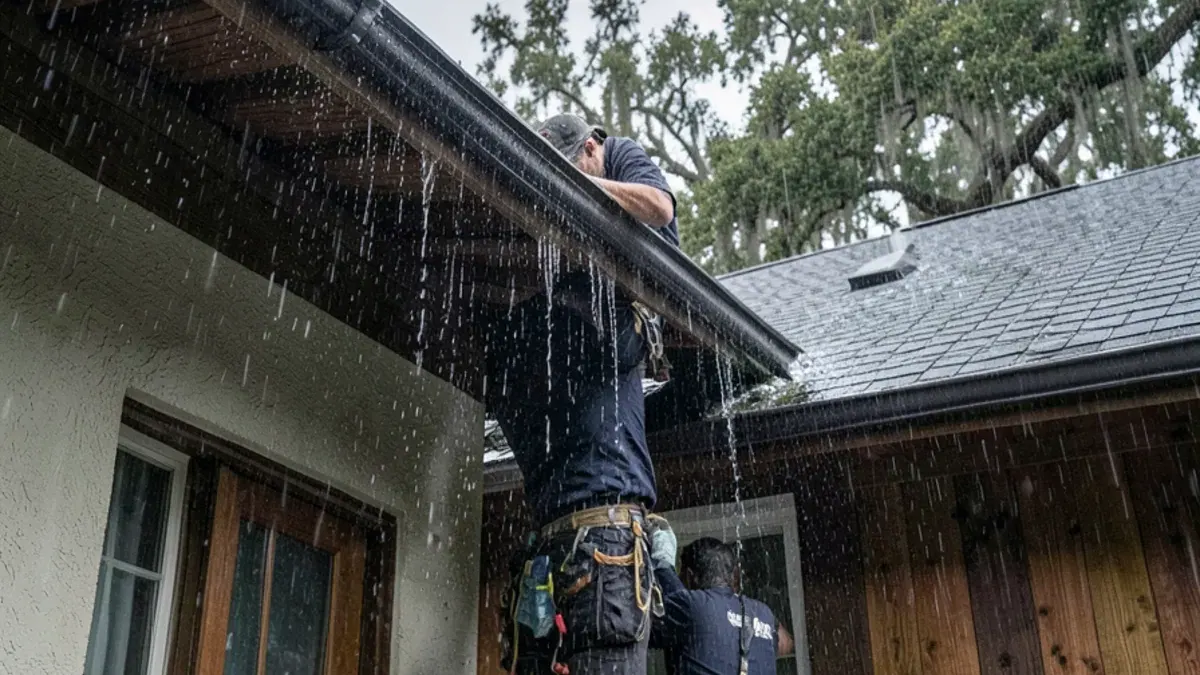
Why does a roof leak only in heavy rain and not in a drizzle?
A roof is built in overlapping layers. In a light rain, water runs down the top layer and off the edge, and small gaps never see enough flow to matter. In a downpour, three things change at once: volume rises, wind pushes water sideways or even uphill, and drainage paths such as valleys and gutters fill up.
That combination exposes defects that may have existed for years. It also explains why a leak can seem to fix itself between storms. Nothing healed; the conditions just stopped reaching the gap.
Leak that only shows up in the big storms? Call (725) 745-8803 to set up an inspection while the timing is fresh in your mind.
Call (725) 745-8803Five causes that stay dry until the downpour
1. Wind-driven rain at walls and chimneys
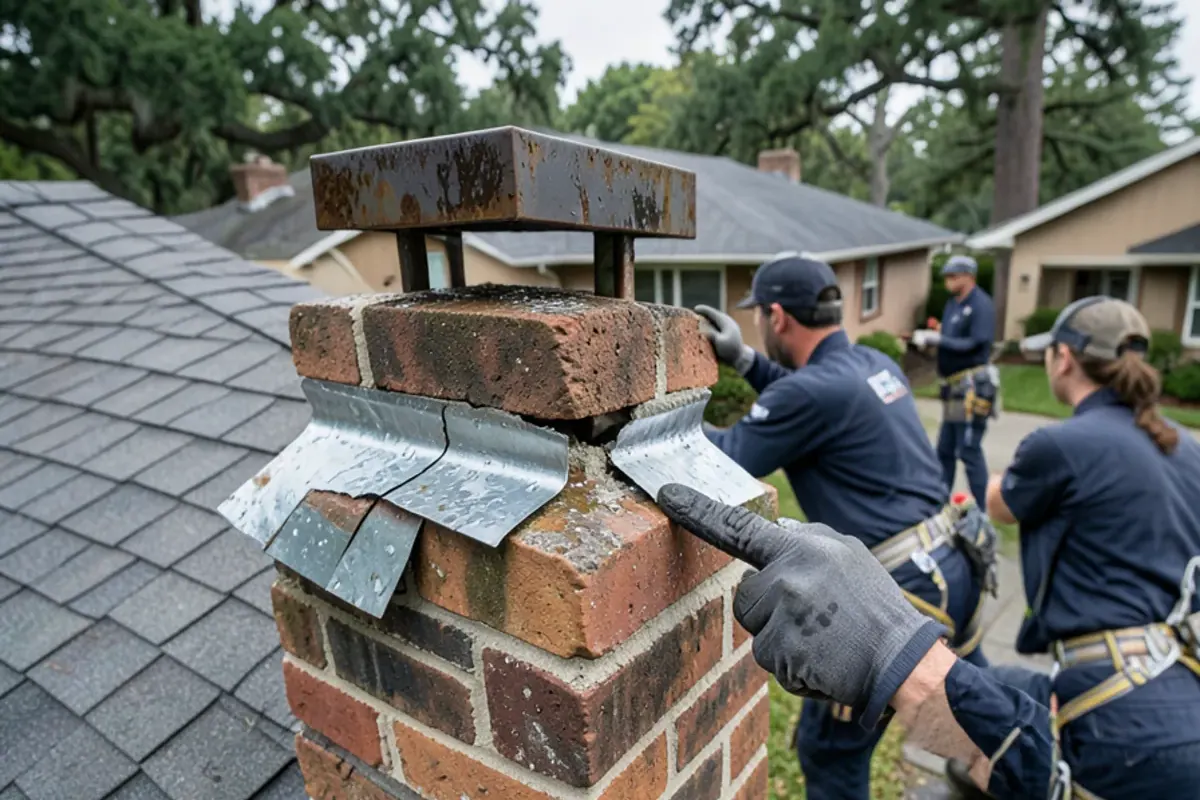
Step flashing and counter flashing are designed for water running down the roof. Gusts can drive rain sideways behind a loose counter flashing or a cracked mortar joint, and the leak appears only when the wind comes from one direction.
2. Valley overflow
Valleys collect water from two slopes. In heavy rain, a valley narrowed by debris or by shingles cut too wide can overflow sideways under the shingle edges.
3. Gutters that back up
A gutter that can handle a shower may fill completely in a cloudburst. When it does, water can rise behind the drip edge and soak the eave sheathing and the top of the wall.
4. Low-slope transitions
Patio covers, porch roofs and additions with a shallow pitch drain slowly. Where they meet the main roof, water can build up and work under laps that would stay dry on a steeper slope.
5. Pipe boots and roof vents near their limit
A rubber boot with a hairline crack lets in a few drops during a long downpour and none during a drizzle. Vent flashings with dried sealant behave the same way.
Which clue points to which cause?
Keep notes each time the leak appears. These patterns help narrow the search before anyone climbs a ladder.
| What you notice | Likely cause |
|---|---|
| Leak only when wind blows from one direction | Wall or chimney flashing on that side |
| Leak starts an hour or more into a storm | Valley or gutter filling up and overflowing |
| Wet spot along an exterior wall or above a window | Gutter backup or drip edge problem |
| Drips where an addition meets the house | Low-slope transition |
| Small, slow drip near a bathroom or kitchen | Pipe boot or vent flashing |
| Stain grows in winter even with no storms | Condensation or ventilation, not rain |
Keep a leak diary for the next three storms
Intermittent leaks are hard to find because the evidence is gone by the time anyone is on the roof. A simple diary fixes that. Fill in one row each time the leak appears; the National Weather Service posts hourly observations, including wind direction and rainfall, for stations such as San Jose's airport, so you can fill in the weather columns the next morning.
| Record this | Example entry | What it tells the inspector |
|---|---|---|
| Date and time the drip started | Jan 9, 7:40 pm | Lines the leak up with hourly rain totals |
| Hours since rain began | About 3 hours | Late starts point to overflow or saturation |
| Wind direction and strength | South, gusty | Points to flashing on the windward side |
| Where the water appeared | Hall ceiling near the bath fan | Narrows the search area on the roof |
| How much water | One drip every few seconds | Separates a seep from a full entry point |
Three entries usually show a pattern. One entry often does not, which is why the diary matters more than the first stain.
How is an intermittent leak found on a dry day?
Our roof leak detection process recreates the conditions in a controlled way:
- Inspect the attic first to find the lowest point of staining and trace it upslope along rafters and decking.
- Inspect the roof surface above that area: flashing, laps, fasteners, sealant and the valley line.
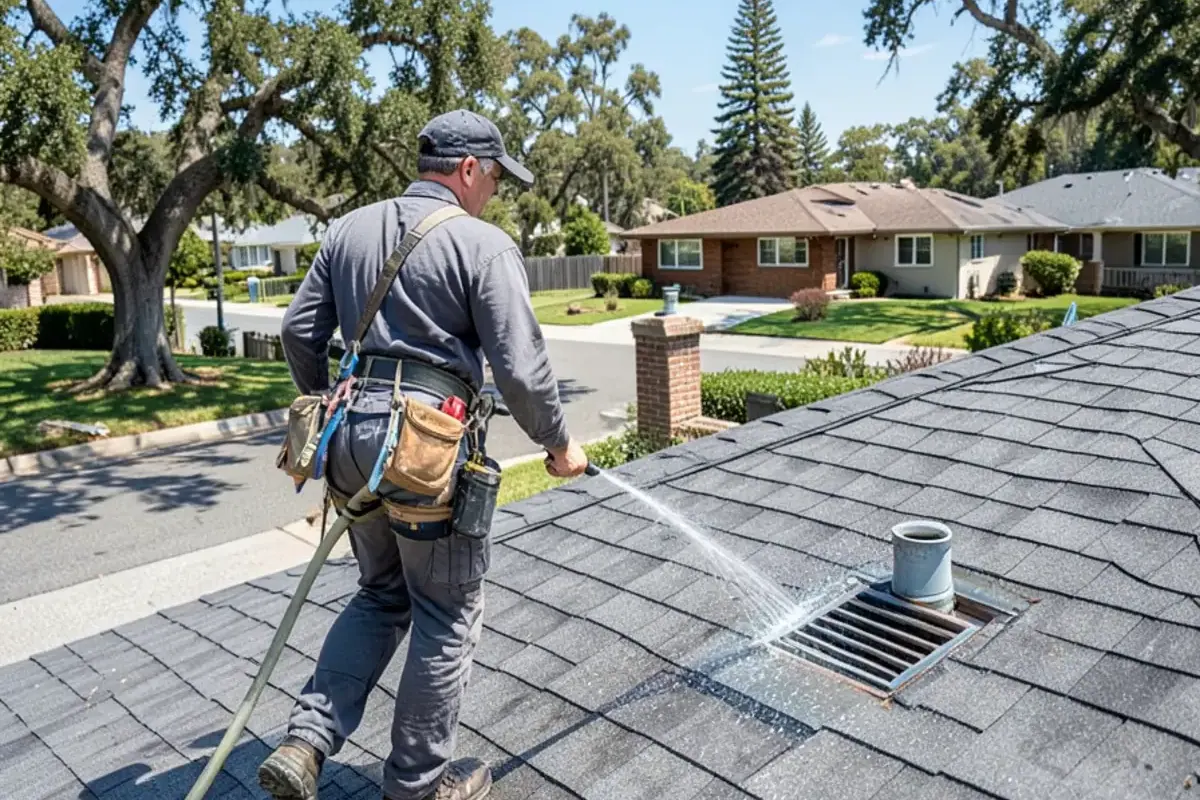
- Run water with a hose on one small section at a time, starting low and working up, while someone watches inside.
- Move to the next section only after enough time has passed to rule out the first.
- Photograph the entry point when water appears, and share the photos before any repair is quoted.
Building details that decide whether a downpour gets in
Several of the heavy-rain weak points are details the California Residential Code addresses directly. Older roofs often predate them, and patch jobs often skip them.
- Minimum slope for shingles: the code allows asphalt shingles only where the pitch is at least 2:12 and calls for double underlayment from 2:12 up to 4:12. Shingles carried down onto a shallower patio cover will leak in a downpour no matter how carefully they are nailed; that area needs a low-slope membrane, covered under flat roof repair.
- Drip edge: required at eaves and rakes on shingle roofs, it keeps water that backs up from a full gutter from wicking into the sheathing edge.
- Kick-out flashing: where a roof edge ends against a wall that keeps going, a kick-out diverter steers water into the gutter instead of down the siding. Missing kick-outs are a classic heavy-rain wall leak.
- Valley lining: a properly lined valley, whether open metal or closed-cut with underlayment beneath, carries water from two slopes without letting it spill sideways under the shingles.
From our roof visits: low-slope joints and tired flashing
Leaks that show up only in big storms tend to concentrate at transitions. On ranch homes, the joint where a later patio cover or family-room addition ties into the original roof is a frequent suspect. On Eichler and mid-century modern homes with flat or nearly flat roofs, common around Cupertino roofing neighborhoods, ponding water and edge details matter more than shingles.
We also find counter flashing that was caulked over rather than properly cut into the masonry. Caulk works for a season or two, then shrinks away from the brick and lets sideways rain through. Around Campbell, where many homes date from the 1950s through the 1970s, chimney and wall flashing is often original or patched.
Trade-offs in chasing an intermittent leak
A thorough water test takes time, and time on a roof costs money. The cheaper path is to reseal every suspect spot at once and wait for the next storm, but if the leak returns you have paid for work that missed and you still do not know the entry point. We prefer to test and confirm, then repair the one or two details that actually failed. Sometimes confirming means lifting a few shingles or opening a small section of ceiling; we explain that before we do it. Caulk over a flashing gap is the other shortcut we push back on: it is quick and inexpensive, but in our experience it rarely survives more than a couple of rainy seasons.
Fixing it so the next big storm stays outside
The right repair depends on the cause. Common fixes include:
- Resetting or replacing step and counter flashing, cutting a proper reglet into masonry where needed, through roof flashing repair
- Re-cutting or re-lining a valley so it carries full storm flow
- Replacing cracked pipe boots and resealing vent flanges
- Adding or resizing downspouts, or correcting gutter pitch
- Rebuilding a low-slope transition with a membrane that suits the pitch
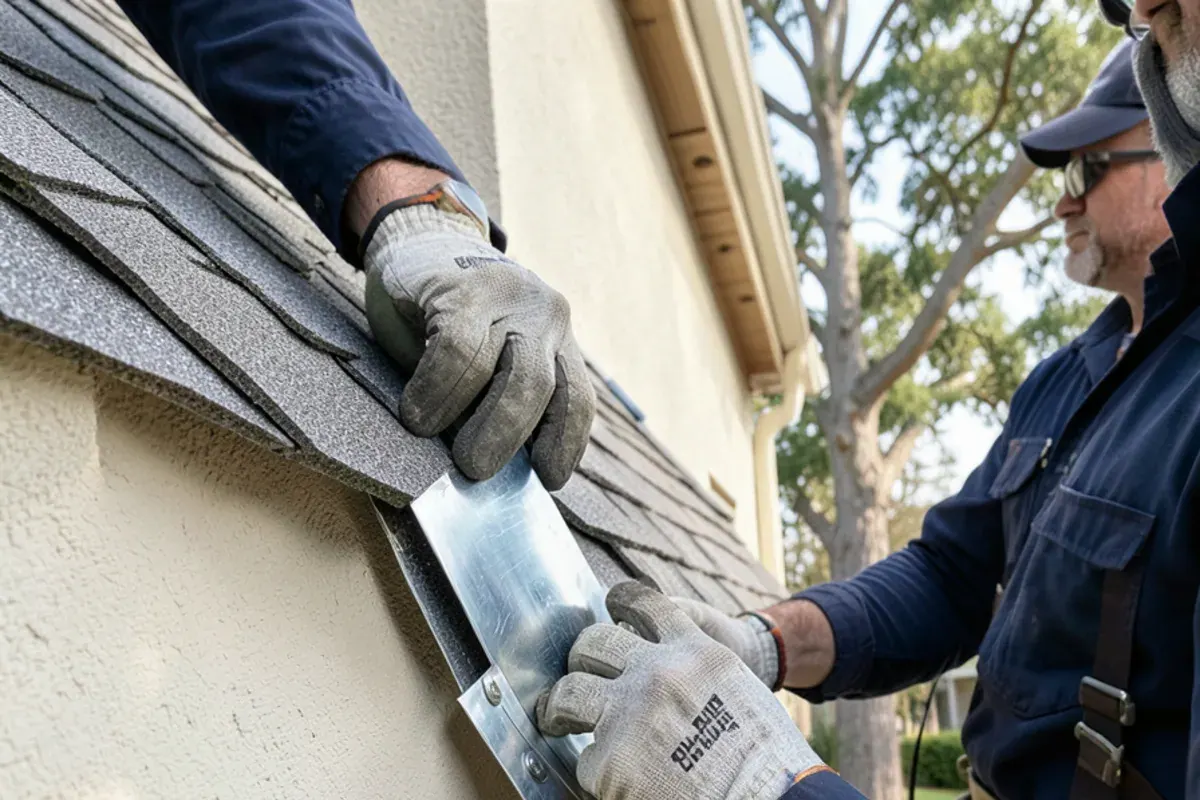
Whatever the cause, the repair should match the conditions that exposed it. A flashing fix that only holds against straight-down rain, or a gutter that only handles a shower, just moves the leak to the next big storm.
Storm-only leak back again? Call (725) 745-8803 and bring your leak diary to the inspection.
Call (725) 745-8803