Symptoms that point to a venting problem, not a roof leak
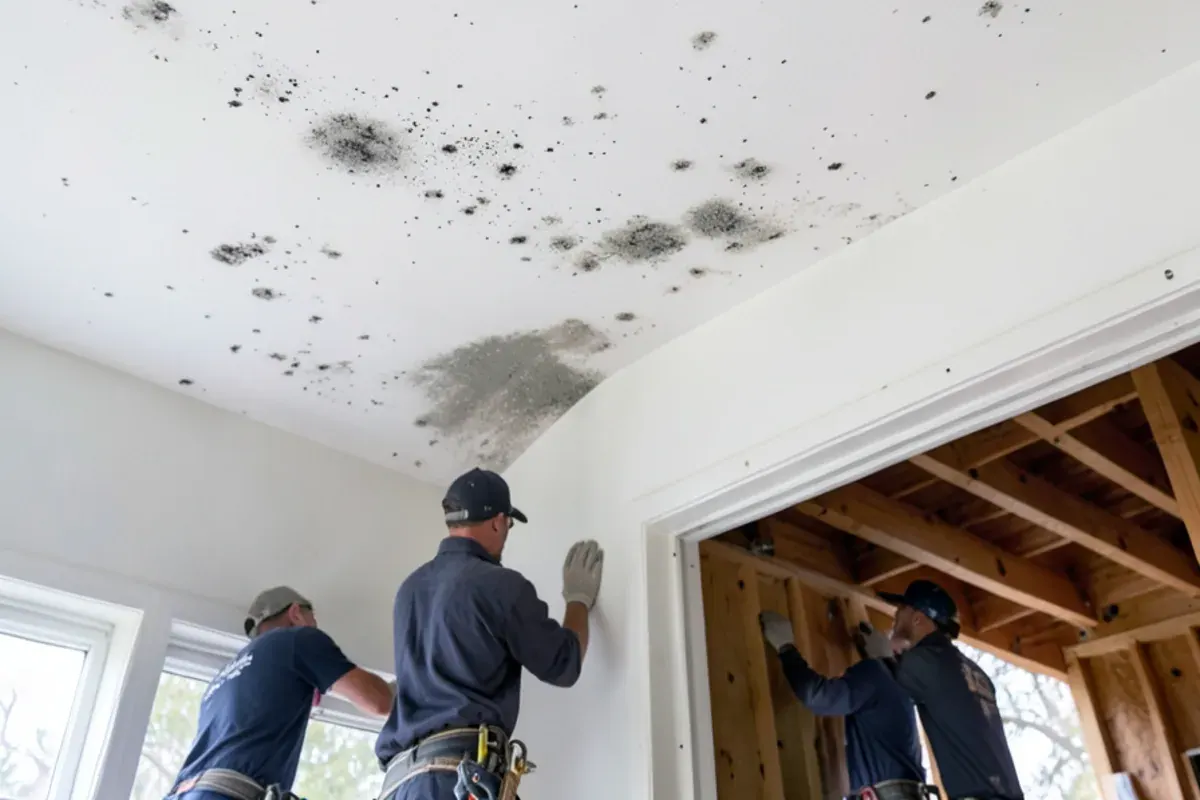
Venting failures often get mistaken for leaks. The pattern of the damage usually tells them apart.
| What you notice | More likely a roof leak | More likely venting or moisture |
|---|---|---|
| Timing | During or right after heavy rain | Chilly winter mornings, or right after showers and cooking |
| Location | Below a pipe, chimney, valley or skylight | Ceiling corners and along exterior walls; widespread on the deck |
| Look | Ringed brown water stain | Gray or black mildew spots, damp insulation, rusty nail tips |
| Smell | Wet wood after storms | Musty attic most of the winter |
Not every stain needs roof work. Sometimes the fix is a humidifier setting or a bath fan, and we will say so.
Blocked soffit vents: the most common fault we find
Intake vents under the eaves are easy to forget and easy to block. On older Campbell ranch homes we regularly see:
- Paint over the screens from decades of exterior repaints
- Insulation stuffed into the eave bays during a past upgrade, with no baffles to hold it back
- Wood blocking with no vent holes at all on some additions and garage conversions
- Screens packed with debris, wasp nests or spider webs
- Rotted soffit boards patched with solid plywood
Repair means opening or replacing the vents, installing baffles between rafters so air can pass above the insulation, and replacing damaged boards. Where insulation is the problem, see our attic insulation page for how we reset it without covering the eaves again.
Questions about attic venting repair?
Call first for the quickest answer, or request a free written estimate below.
Request a free written estimate
Fastest answer: call (725) 745-8803. Or send the details below and we will call you back.
Roof vent repair and ridge vent repair
Exhaust vents sit on the roof surface and take the full force of sun, wind and rain. Typical failures:
- Cracked plastic box vents after years of UV; rain blows in through the split hood.
- Rusted or seized turbine vents that squeal, stop turning or lose their flashing seal.
- Crushed or clogged ridge vents, where the filter fabric has filled with dust and pollen or someone has walked on the ridge.
- Lifted vent flashing with exposed nails, letting water track under the shingles.
- Missing vents after a past repair covered an opening rather than replacing it.
We replace damaged units with matching or better vents, reflash them into the roofing, and check that exhaust area still balances the soffit intake. If the roof itself is near the end of its life, we will tell you the venting fix can wait for the reroof.
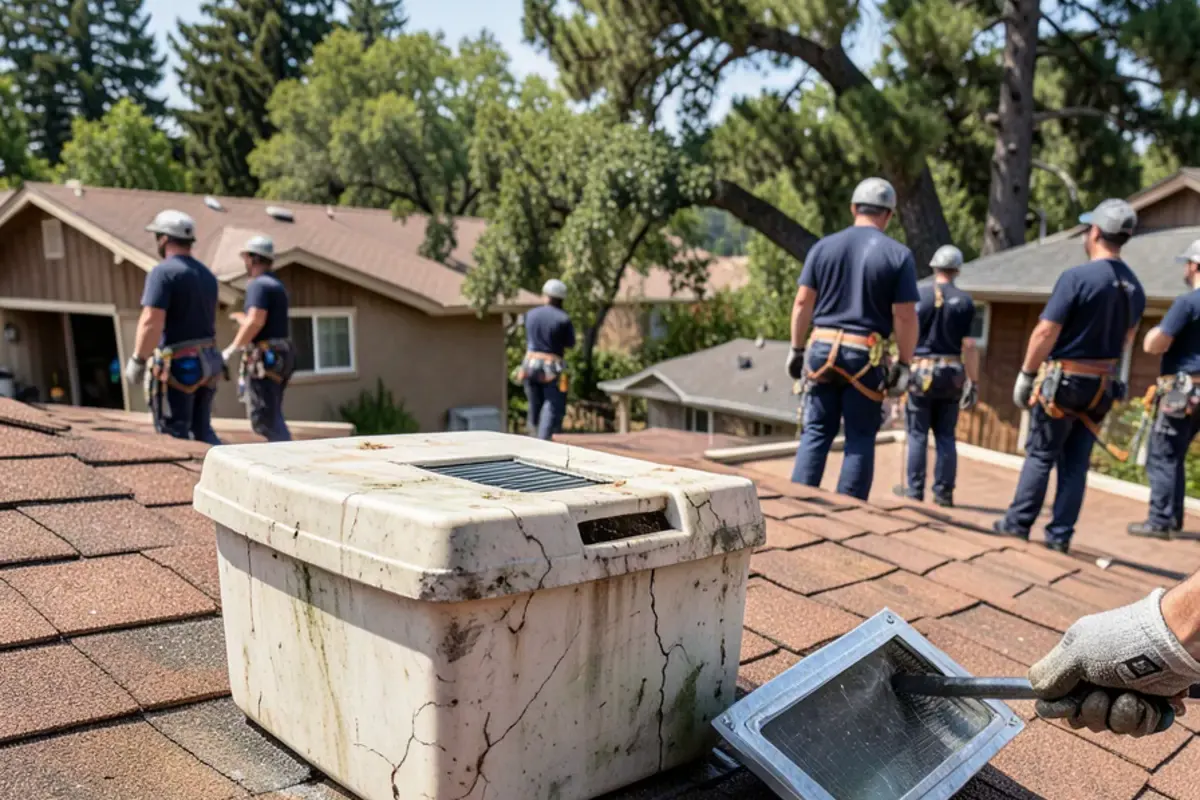
Our venting repair visit, in order
A venting repair follows the air: find where moisture enters, open the way in at the eaves, then make sure it can leave at the top.
- Trace the moisture. We match the stain pattern against the roof surface, the attic and every fan or dryer duct, so a leak is not treated as a vent fault or the reverse.
- Photograph and price. You see each blocked screen, cracked hood or loose duct, and the written estimate lists them one by one.
- Open the intake. Paint is cleared or vents replaced, baffles go in between rafters, and rotted soffit boards are rebuilt.
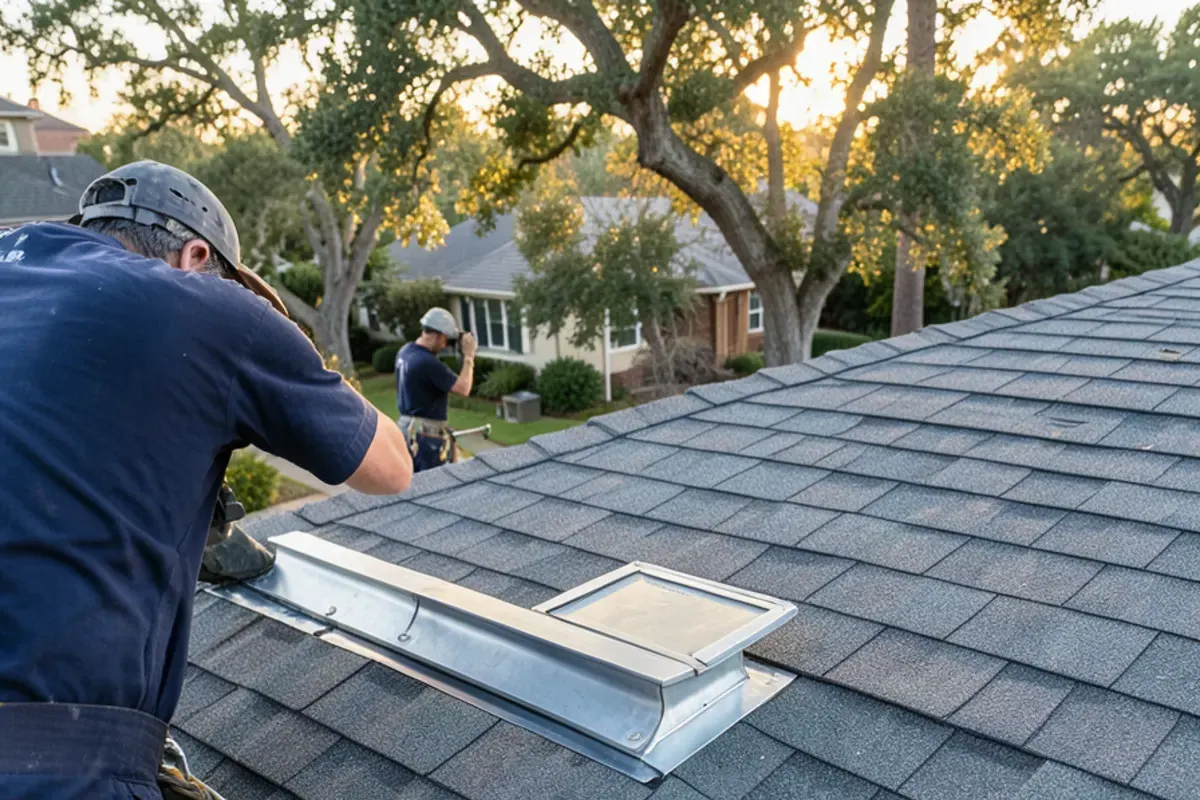
- Fix the exhaust. Cracked or rusted roof vents are swapped and flashed into the shingles or tile, and crushed ridge vent sections are replaced.
- Route ducts outdoors. Bath, kitchen and dryer lines get dedicated jacks or wall caps with dampers.
- Check the balance. We recount net free area so intake still matches exhaust, and suggest a look at the attic after the first big storm.
Where should a bathroom fan vent through the roof?
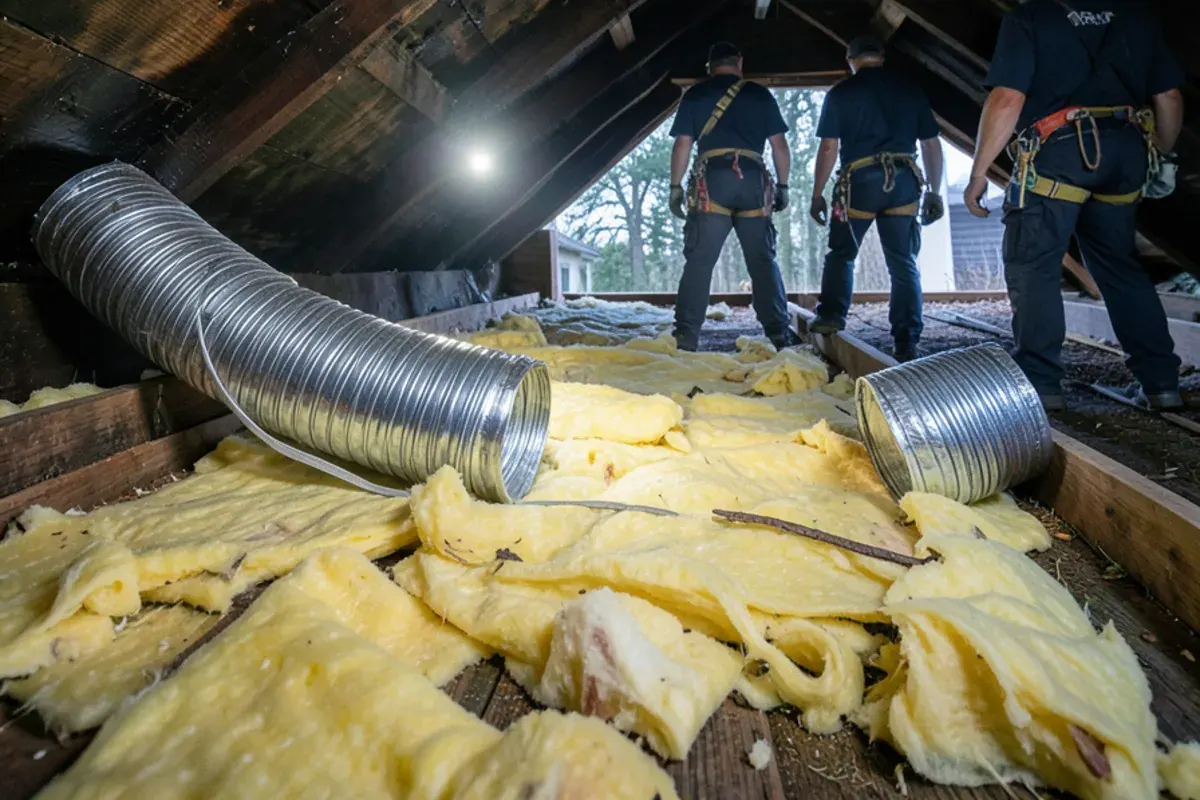
Outside, every time. A surprising number of South Bay homes have bath fans that end in the attic, sometimes with the duct simply lying on the insulation, or aimed at a soffit vent and hoping. Each shower then sends a cloud of warm, wet air into the attic, and in winter it condenses on the roof deck.
California's residential code requires bath exhaust to discharge to the outdoors. A proper fix uses insulated duct run as short and straight as possible to a dedicated roof jack or wall cap with a damper. A roof jack must be flashed into the shingles or tile like any other penetration. Kitchen hoods and dryer vents need the same treatment.
Attic condensation and mildew during the rainy season
Once the moisture source and the airflow are fixed, the existing damage still needs attention:
- Sheathing with surface mildew is cleaned and treated if sound; soft or delaminated panels are replaced from above.
- Wet, matted insulation is removed, since it no longer insulates and holds moisture against the drywall.
- Rusted nail tips are a sign of repeated condensation; they usually stop once airflow is restored.
- Ceiling mildew in rooms below is cleaned once the source is gone; stubborn stains may need primer and paint.
For homeowners comparing symptoms, our article on signs your attic ventilation is failing lists what to look for between visits.
What sets the price of an attic vent repair?
Most venting repairs are modest jobs, priced from the parts actually failing. What moves the number:
- How many vents fail, and whether they are plastic box vents, turbines or a run of ridge vent.
- The roofing around them: shingle vents swap quickly, while tile vents mean lifting and resetting pieces.
- Duct distance from a bath fan or dryer to the nearest good exit through roof or wall.
- Soffit carpentry where rotted boards or solid blocking must be rebuilt with vented panels.
- Cleanup inside the attic, such as removing wet insulation or treating mildewed sheathing.
- Ember-resistant upgrades if you choose them or your parcel requires them.
Steep two-story slopes add safety setup, and on a worn-out roof the vent work may be better folded into a reroof. We say which applies.
Vent screen repair: rodents, birds and embers
Torn or rusted screens on gable and soffit vents let roof rats, squirrels and birds into the attic, and they let in embers during wildfires. Repairs range from new mesh in an existing frame to full vent replacement.
Where a home sits inside a CAL FIRE hazard zone, which covers many hillside streets above Los Gatos, Saratoga and Monte Sereno, state fire-area building rules expect ember-resistant vents. Replacement units that meet that standard cost little more than standard vents, so we often suggest them when screens fail.
Rules that shape a venting repair
Ember-resistant vents for mapped zones are tested to ASTM E2886 or fitted with noncombustible mesh no coarser than 1/8 inch, under Chapter 7A of the California Building Code, so we check the listing before ordering. New roof jacks are flashed into the roofing like any penetration, and the residential code's outdoor-discharge rule for bath and dryer exhaust is not optional. Small vent swaps often need no permit, but before larger soffit or duct work, confirm with Campbell's building division (or the County, outside city limits). Confirm any contractor's license on the CSLB site.
Does adding more roof vents always help?
Adding vents is not always the answer. Mixing ridge vents with gable vents or powered fans can short-circuit airflow so the lower attic never clears. Our process is to measure the attic floor area, count the net free area of every existing vent, and then adjust toward a balanced layout that meets California's residential code.
Why homeowners call us for vent repairs
We are a family-run roofer that welcomes small jobs, so one cracked vent hood or a single bath fan duct gets the same attention as a reroof. The free visit includes photos of what we found on the roof and in the attic. We have traced a ceiling stain to indoor humidity rather than the roof and said so, and when the honest fix is a fan timer or a dehumidifier setting, you hear that from us.
Musty attic or mildew on the ceiling? Ask us to inspect the roof and attic and show you photos.
Call (725) 745-8803