
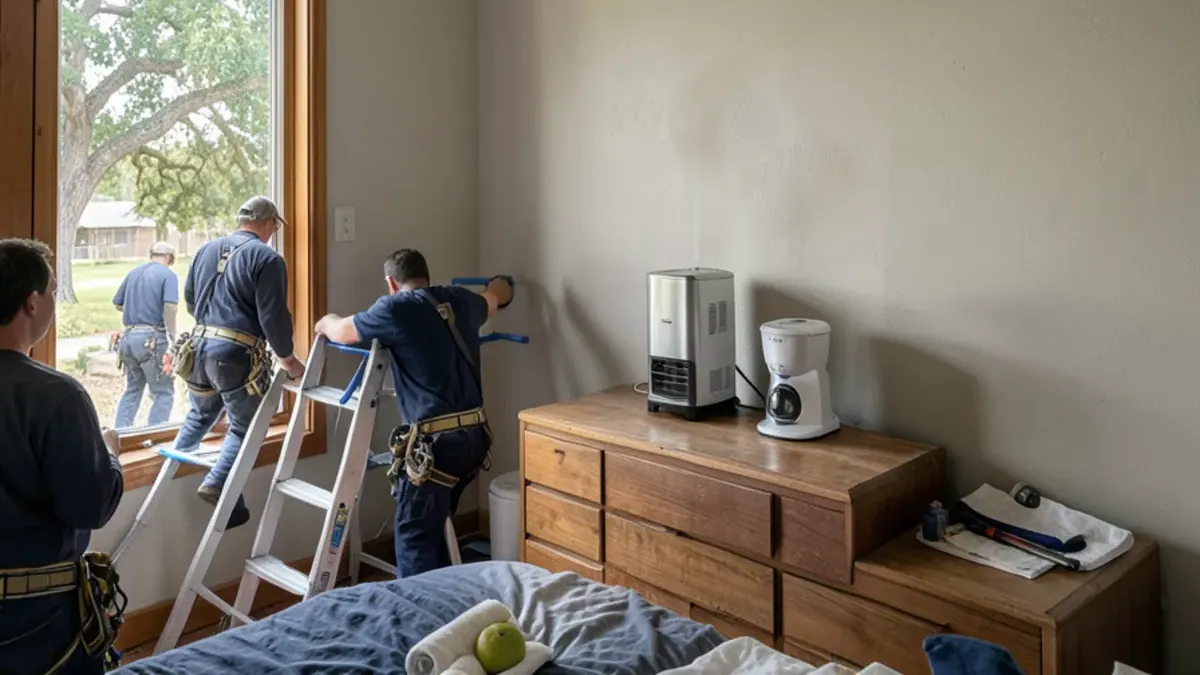
Ceiling stain: roof leak or condensation? Read the clues
The shape, color, location and timing of a mark say a lot. Compare what you see against both columns before booking a repair.
| Clue | Points to a roof leak | Points to condensation or humidity |
|---|---|---|
| Timing | Appears or darkens during or right after rain | Appears in dry weeks, often on cold mornings |
| Look | Brown or yellow ring with a tide line | Gray, green or black speckles; fuzzy mildew |
| Location | Under a vent pipe, skylight, chimney or roof-to-wall joint | Exterior corners, closets, above showers, near a humidifier |
| Size | Grows from one spot outward | Spread thinly across a cold area |
| Attic above | Wet wood or insulation in one place, tracing uphill | Damp sheathing broadly, rusty nails, fans venting into the attic |
| Season | Wet-season storms, November through March | Winter heating season with windows closed |
Not sure which column your stain fits? We check the roof, the attic and the ceiling together and explain what we find.
Call (725) 745-8803Where does the moisture come from if it is not the roof?
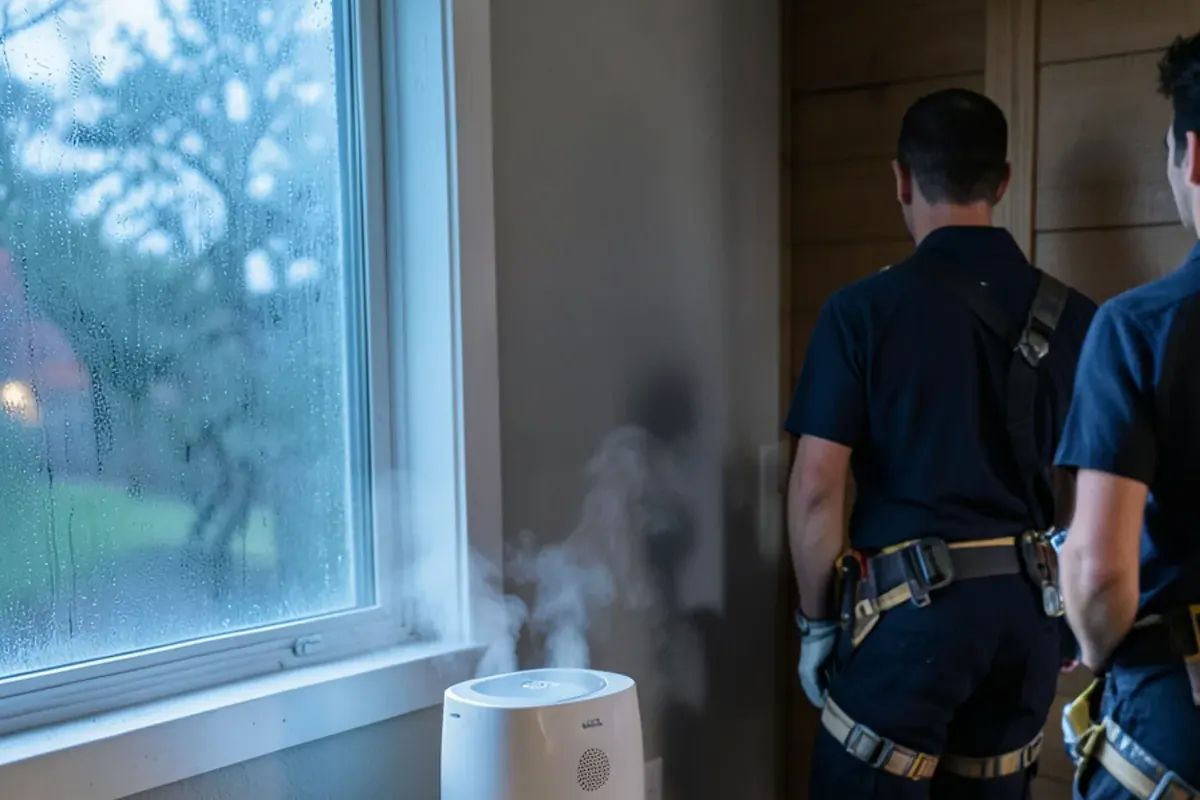
Indoor air carries more water than most people expect. Every shower, pot of pasta and night of a running humidifier adds moisture. When that warm air touches a cold surface, it condenses. Ceiling corners on exterior walls, closet ceilings and spots where attic insulation is thin are the coldest surfaces in the house.
- Humidifiers: set high through winter, especially in bedrooms with closed doors.
- Bathrooms without working fans: or fans that run for a minute and shut off.
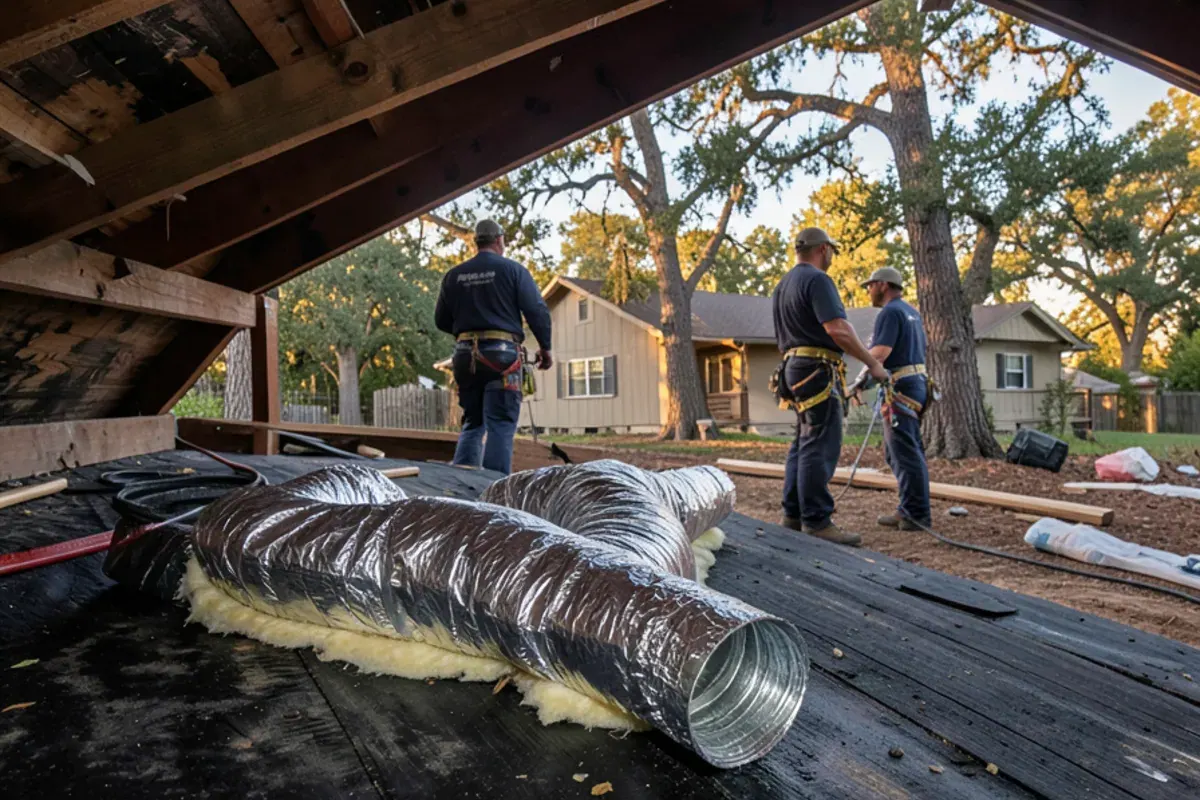
- Bath fans ducted into the attic: they push wet air straight onto the underside of the roof.
- Missing insulation: a bare patch above a ceiling leaves a cold spot that collects condensation.
- Blocked attic vents: damp air in the attic has no way out, so it condenses on sheathing and drips.
We have been called out to a ceiling stain with mildew that turned out to be indoor humidity, not a roof leak. The roof was in good shape. The fix was turning down the humidifier and cleaning the mildew, not roofing work.
A one-week test you can run at home
- Photograph the stain and trace its outline lightly in pencil, with the date.
- Buy an inexpensive hygrometer and check indoor humidity morning and evening. The U.S. EPA recommends keeping indoor humidity below 60 percent, ideally between 30 and 50 percent.
- Turn the humidifier down or off for the week and run bath fans for 20 minutes after showers.
- Check the outline after any rain, and after dry, cold nights.
- If you can safely reach the attic, look above the stain for wet wood, damp insulation or a fan duct ending loose.
- Compare: a stain that grows only with rain points to the roof; one that grows with humidity and fades when it drops points indoors.
Clean mildew with a mild detergent solution and let the area dry fully. Do not paint over a stain until you know the cause, or you will hide the evidence.
How attic venting ties into ceiling mildew
An attic is supposed to breathe: air comes in at the eaves and leaves near the ridge. When soffit vents are buried in insulation or a reroof covered the exhaust vents, damp air lingers in the attic all winter. It condenses on the cold sheathing, soaks the insulation and can spot the ceiling below in a pattern that looks like a slow leak.
Correcting that is attic venting repair, not roof repair. Baffles at the eaves, a working ridge vent and fan ducts that go outdoors usually stop the cycle.
Dew point in plain numbers: why cold corners get wet
Condensation is predictable once you know the dew point, the temperature at which air of a given humidity starts dropping water. Any surface colder than that point gets damp. Here is what it looks like for a house held at 70°F:
| Indoor relative humidity | Approximate dew point | What it means in a South Bay winter |
|---|---|---|
| 30% | About 37°F | Very little condensation, even on cold glass |
| 40% | About 45°F | Single-pane windows may fog on the coldest mornings |
| 50% | About 50°F | Poorly insulated corners and closet ceilings can turn damp |
| 60% | About 55°F | Cold spots, fan ducts and attic sheathing collect water often |
San Jose's winter nights average in the low 40s, and roof sheathing on a clear night can cool below the outdoor air as it radiates heat to the sky. That is why a humid house can wet its attic and cold ceiling corners in a dry week, with no rain at all. Keeping humidity in the EPA's 30 to 50 percent range pulls the dew point below most of those surfaces.
Thin insulation makes its own cold spots
Where attic insulation has been pushed aside by a cable installer, matted by rodents or never installed over a closet, the ceiling below runs several degrees colder than the rest of the room. Those patches gather condensation first and often show a crisp outline that matches the bare spot above. Topping up attic insulation over that area fixes the stain at its cause.
Ceiling stains that are neither the roof nor humidity
Before blaming the roof or the air, rule out the pipes and equipment that run above many ceilings. Their timing clues are different from both rain leaks and condensation.
| Source | Timing clue | Who usually fixes it |
|---|---|---|
| Air conditioner condensate line in the attic | Hot, dry summer days with the AC running | HVAC technician |
| Bathroom or toilet on the floor above | After showers or flushing, any season | Plumber |
| Water supply line or fitting | Steady growth regardless of weather | Plumber |
| Water heater or furnace flue | Cold mornings when the appliance fires | HVAC technician or roofer for the roof jack |
A stain that appears in July, when it has not rained for months, is almost never the roof. On houses with an attic furnace and air conditioning coil, a clogged condensate drain or an overflowing pan is a common cause, and the fix belongs to an HVAC technician.
When the ceiling water stain really is a roof leak
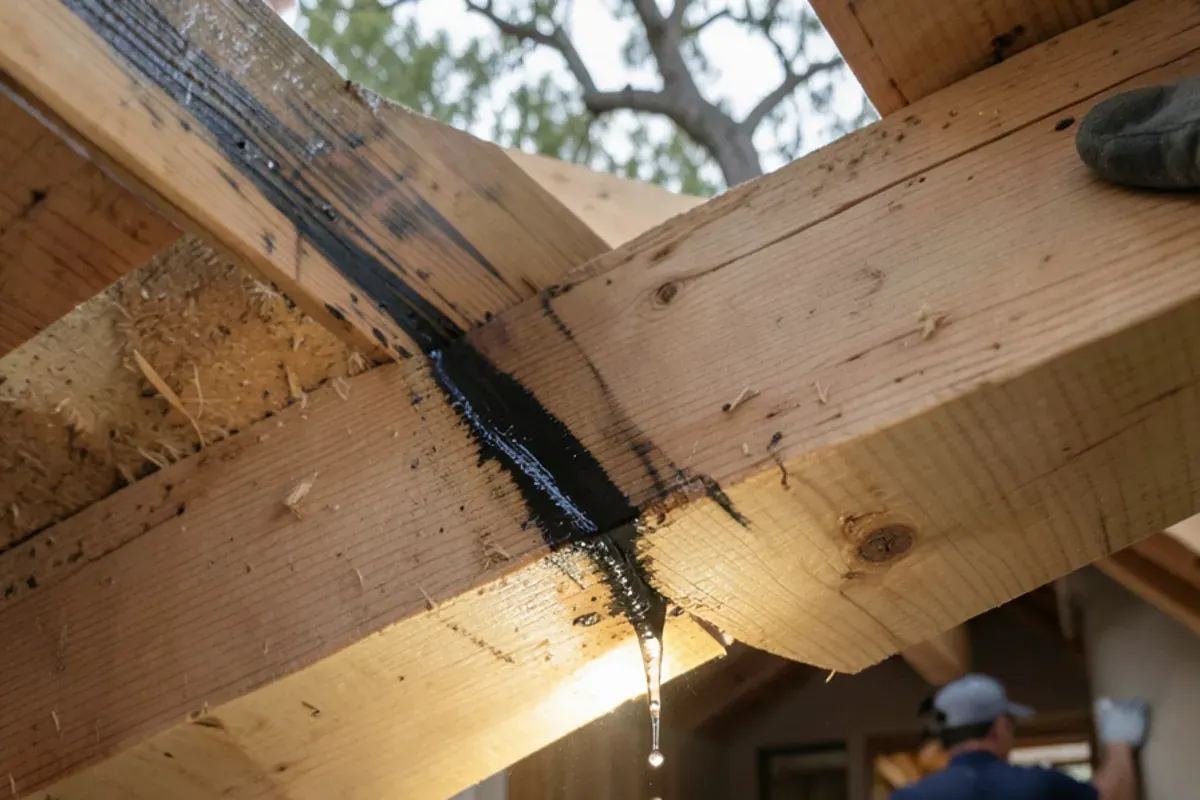
Some signs leave little doubt. A drip during rain, a ring that darkens with each storm, or wet wood in the attic directly uphill from the stain all mean water is coming from outside. The source is often a few feet from the stain, since water runs along rafters before it falls. Pipe boots, flashing at walls and chimneys, and skylight curbs are the usual entry points.
Finding that point is the job of roof leak detection: checking the roof in sections, sometimes with a controlled water test, and confirming the path into the attic before anything is replaced.
From our roof visits: telling the two apart
We look at the attic before we look at the roof. A single wet streak running down a rafter is a leak. Even dampness spread across the sheathing, with rusty nail tips everywhere, is moisture from below.
Corner stains on exterior walls are a frequent false alarm. Those corners are the coldest spots in the room and the hardest for air to reach, so they gather condensation first. Homes with older single-pane windows show it on window frames at the same time.
Homeowners in Campbell and the wooded parts of Los Gatos sometimes see both problems at once: a small leak at a vent and a humid bathroom. We separate them and show photos of each, so you only pay for the fix you actually need.
Our methods have limits, and we say so. An attic check on a dry day can show old staining but cannot always prove whether a leak is still active. Moisture meters read through drywall but can be fooled by metal corner bead or foil-faced insulation. Sometimes the only way to see inside a wet ceiling is to cut a small inspection hole, which costs a drywall patch but beats guessing. We explain those choices before taking them.
Repairing the ceiling once the cause is settled
Whatever the source turns out to be, the ceiling repair waits until the water has stopped and the materials are dry. A sensible order:
- Confirm the source is fixed by watching the outline through a rain or a cold week.
- Check the drywall: firm and only discolored can be cleaned and primed; soft, sagging or crumbling sections get cut out and replaced.
- Replace wet or moldy insulation above the spot rather than letting it dry in place.
- Clean small areas of surface mildew; the U.S. EPA suggests calling a professional when mold covers more than about 10 square feet.
- Seal the stain with a stain-blocking primer before the finish coat, so it does not bleed through.
Can't tell whether your ceiling stain is the roof, the air or the pipes? Book a visit and we'll check the roof and attic together and photograph what we find.
Call (725) 745-8803