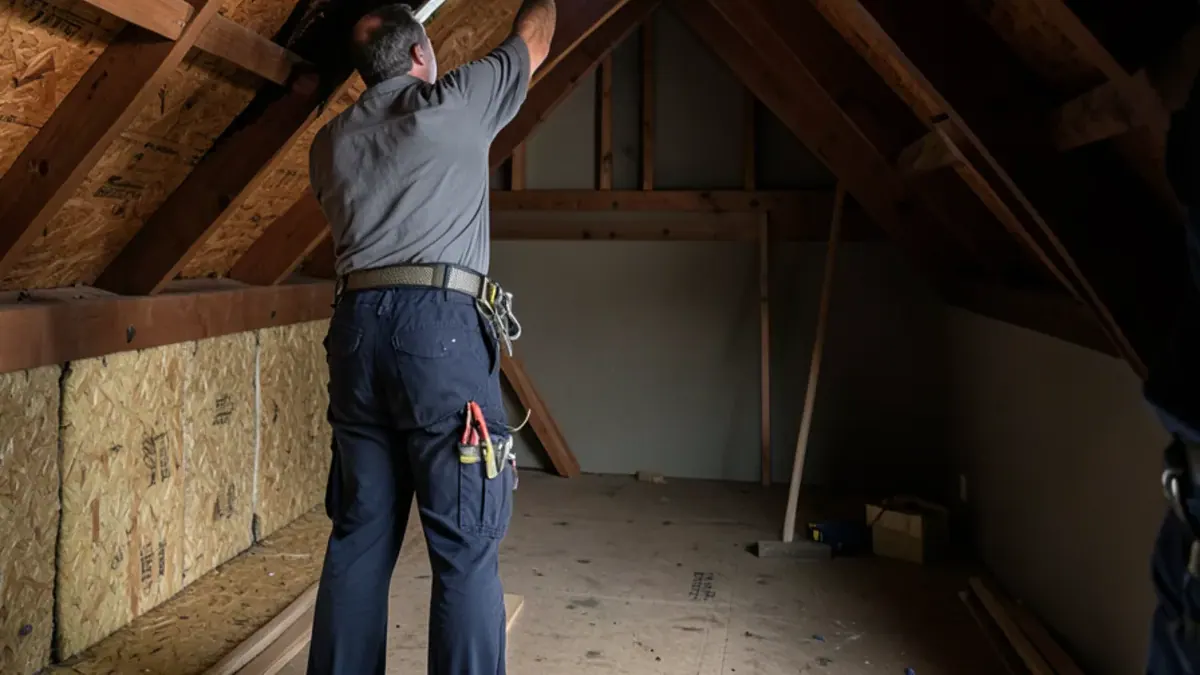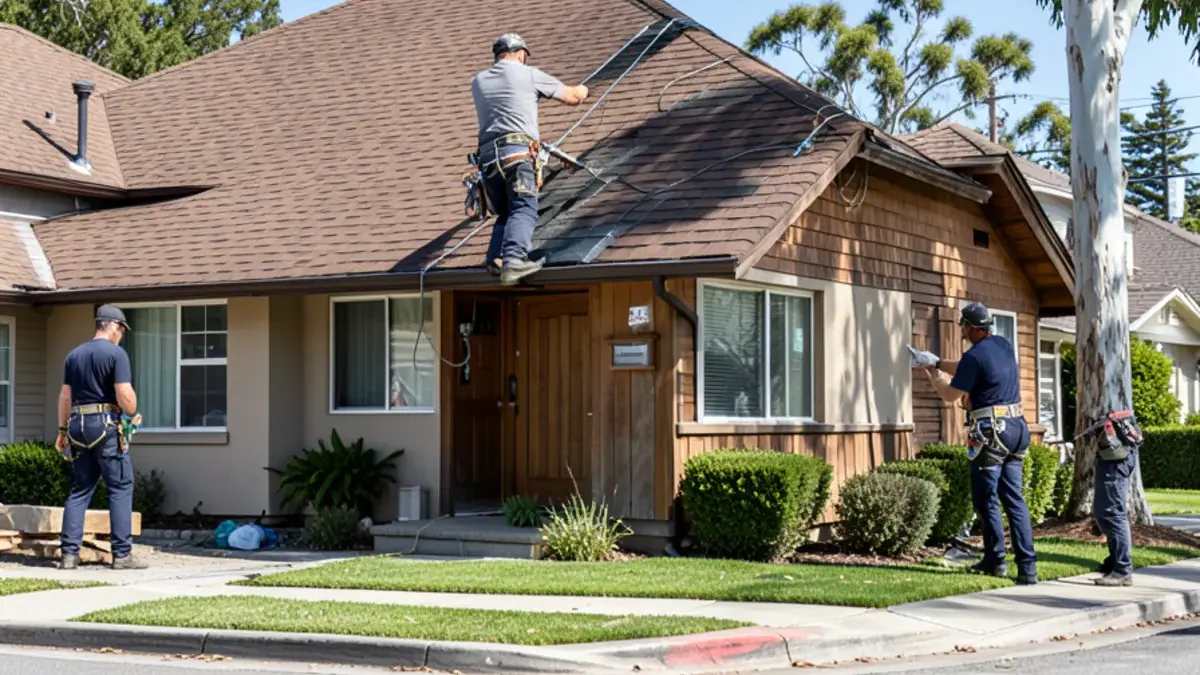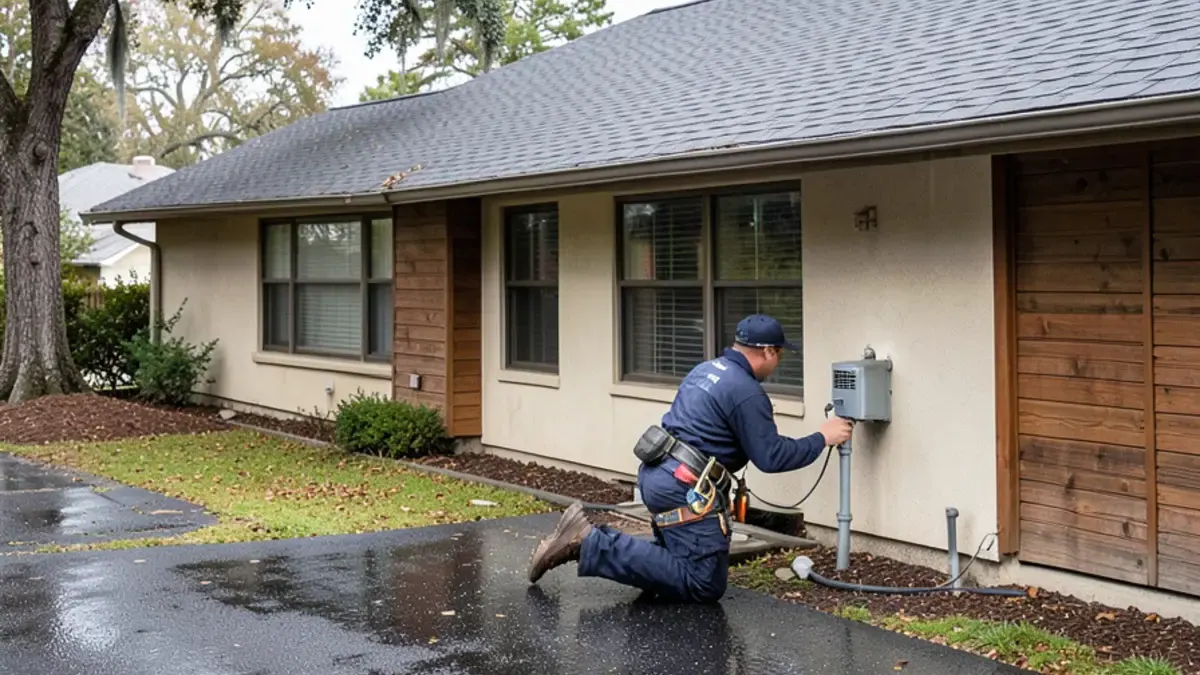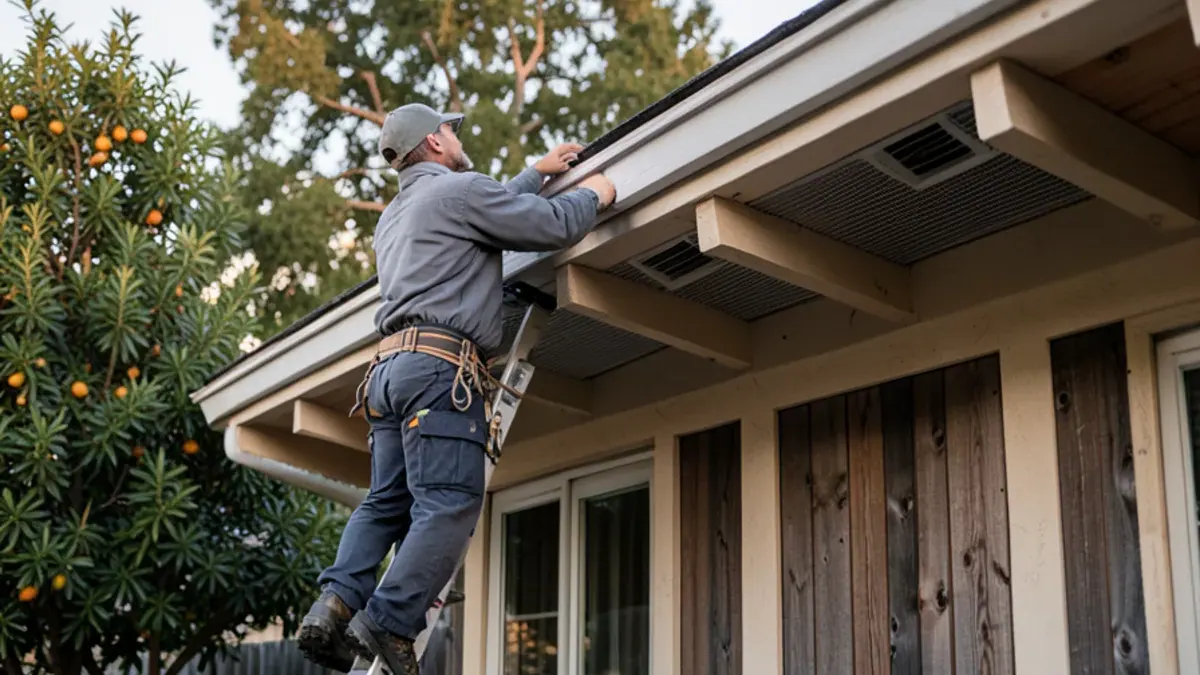
How do animals get into the roof and attic?
A roof rat needs a gap about the size of a quarter; a young rat or mouse, less. Squirrels and raccoons make their own openings by chewing or tearing at anything already loose. The places we find entry points most often on South Bay houses:
- Where the roof meets the fascia. Gaps behind the gutter or under the first course of roofing, especially at corners and rakes.
- Eave and frieze-block vents with torn, rusted or missing screens, common on 1950s–70s ranch homes.
- Gable vents whose louvers have screens pushed in or rotted away.
- Ridge vent ends left open, and roof jacks with damaged screens.
- Plumbing vents and lead jackets that have been chewed loose.
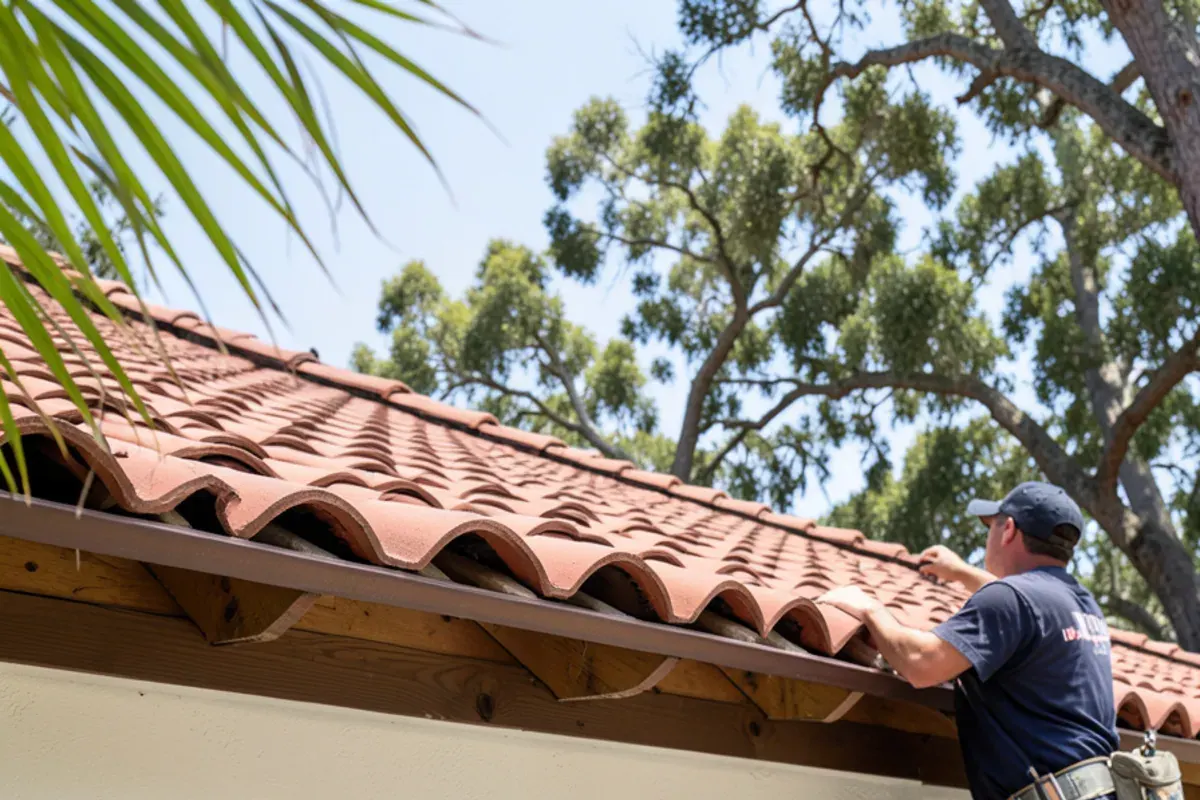
- Open tile eaves where the bird stop is missing or broken, leaving a hollow under each barrel tile.
- Unused chimneys without caps, a favorite for raccoons.
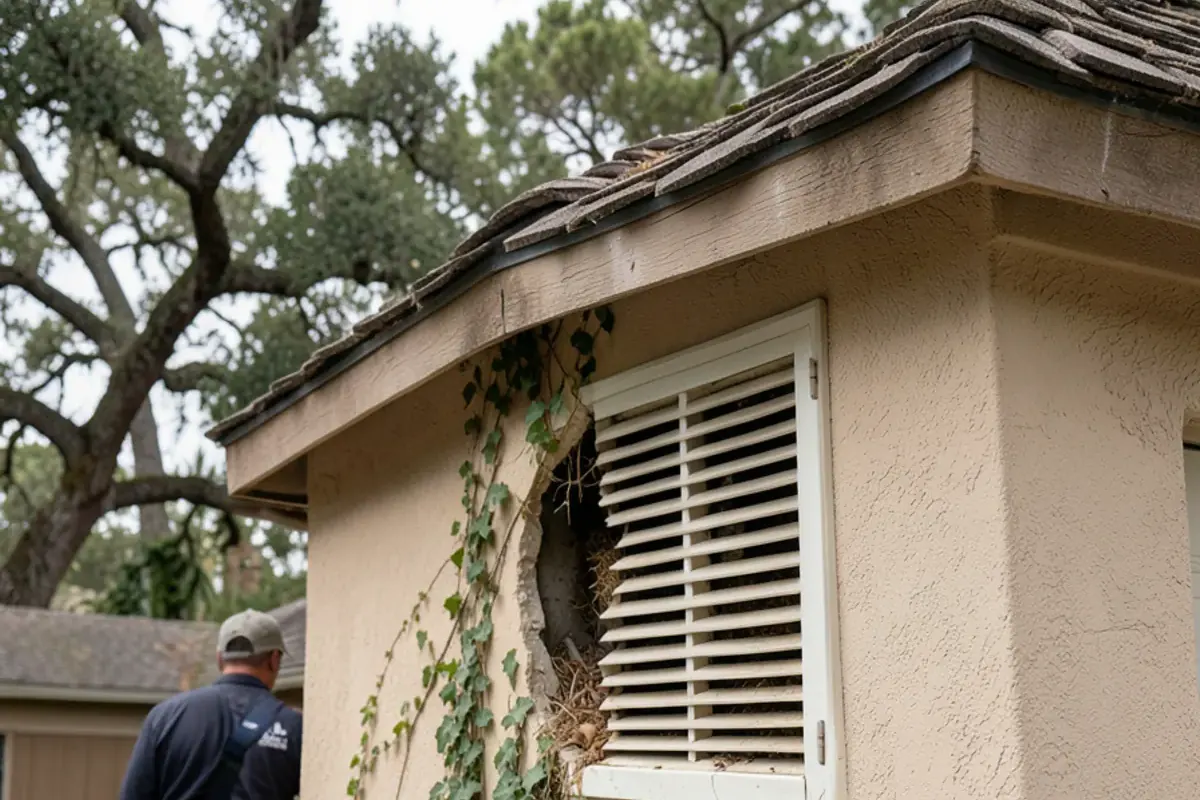
Reading the damage: which animal was it?
| Animal | What you notice | What we usually find on the roof |
|---|---|---|
| Roof rats | Scratching in the ceiling at night, droppings in the attic | Gnawed vent screens, chewed boot collars, small gaps at fascia corners |
| Squirrels | Daytime noise, chewed fascia or rake boards | Enlarged holes in wood trim, torn ridge vent ends, gnawed soffit edges |
| Raccoons | Heavy thumping, torn shingles near the eaves | Ripped-up shingles or vents, bent flashing, a pulled-off chimney cap |
| Birds | Nesting debris in gutters or under tile | Nests in open tile eaves and vents, pecked trim, holes in soft siding or shake |
Roof rats are a frequent culprit in Santa Clara County neighborhoods. Fruit trees, ivy on fences, palms and oak limbs touching the roof all give them a path up, which is why trimming branches back from the roofline is part of most repair plans.
Questions about animal damage roof repair?
Call first for the quickest answer, or request a free written estimate below.
Request a free written estimate
Fastest answer: call (725) 745-8803. Or send the details below and we will call you back.
Do you remove animals or only repair the damage?
We repair; we do not trap or remove animals. The order matters, and getting it wrong causes problems:
- A pest control or wildlife company clears the attic first. Many use one-way exclusion doors so animals can leave but not return.
- We inspect the whole roof edge and every vent, not just the hole you already know about, and document each opening with photos.
- We seal and repair once the attic is confirmed clear, so no animal is trapped inside.
- We flag what gives them a ladder. Branches, ivy and fence lines that touch the roof are pointed out for your gardener or arborist to cut back.
- You get after photos of every sealed opening, and if the pest company sees new activity, call us back to look at the roofline again.
Sealing too early can trap a mother squirrel or a litter in the attic, which brings smell, more chewing and a second visit. If you already have a pest company working on the house, we can coordinate timing with them.
Critter-proof roof vents and screens
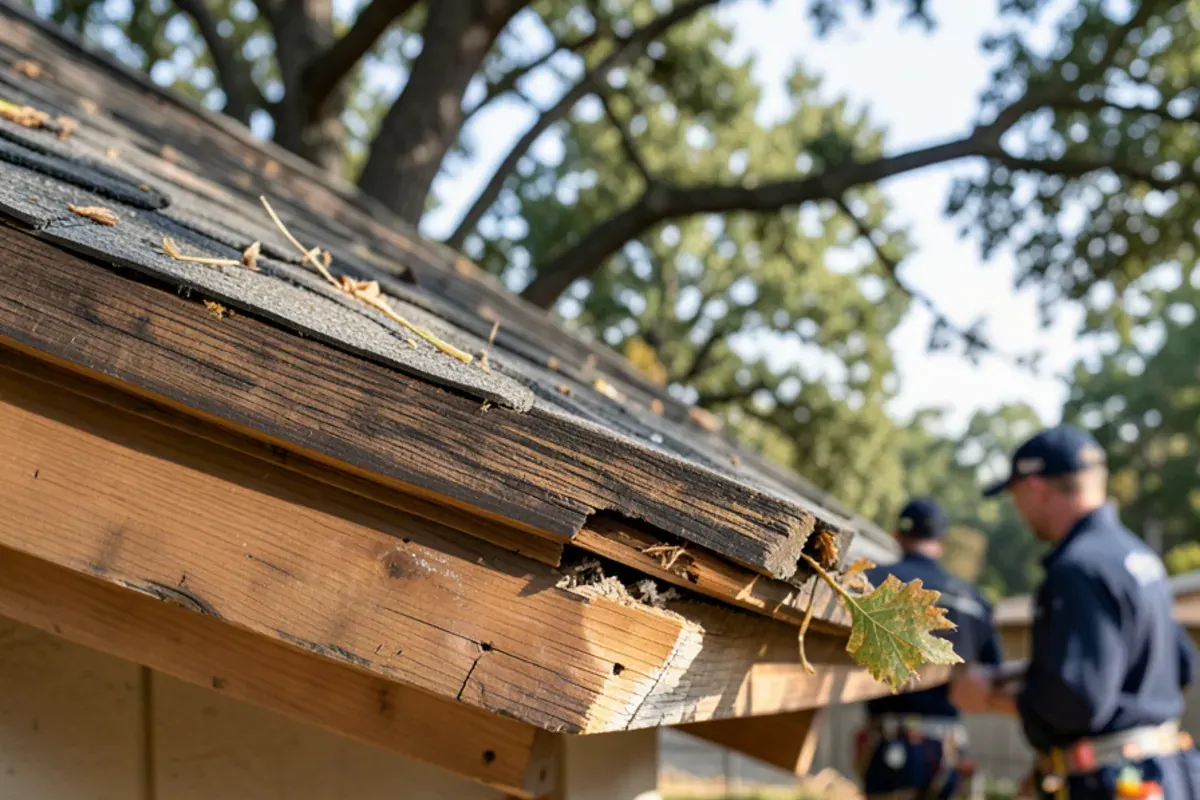
Vents have to stay open for airflow, which is why they are the most common way in. The fix is screening animals cannot chew rather than closing the vent. We replace torn or rusted screens with heavy metal mesh, fit screened covers on roof jacks and the open ends of ridge vents, and rebuild frieze-block vents where the wood holding the screen has rotted.
Bird damage on roofs, trim and coatings
Birds cause slower damage than rodents but plenty of it. Starlings, sparrows and pigeons nest in the hollows of barrel tile eaves when bird stop is missing, and their nests clog the water path under the tile. Woodpeckers drill into soft cedar shakes, wood fascia and rake boards. On flat and low-slope roofs, birds sometimes peck at coatings and loose membrane edges for nesting material.
Repairs here mean installing bird stop at tile eaves, replacing pecked trim and shakes, and recoating or reinforcing damaged coating areas. Gutters full of nesting debris get cleaned while we are there.
Rodent roof damage repair: what gets fixed
- Chewed fascia, rake and soffit boards are cut back to sound wood and replaced.
- Gnawed vent boots and lead jackets are swapped for new ones, since a chewed collar leaks.
- Torn or lifted shingles near the eaves from raccoons are replaced and resealed.
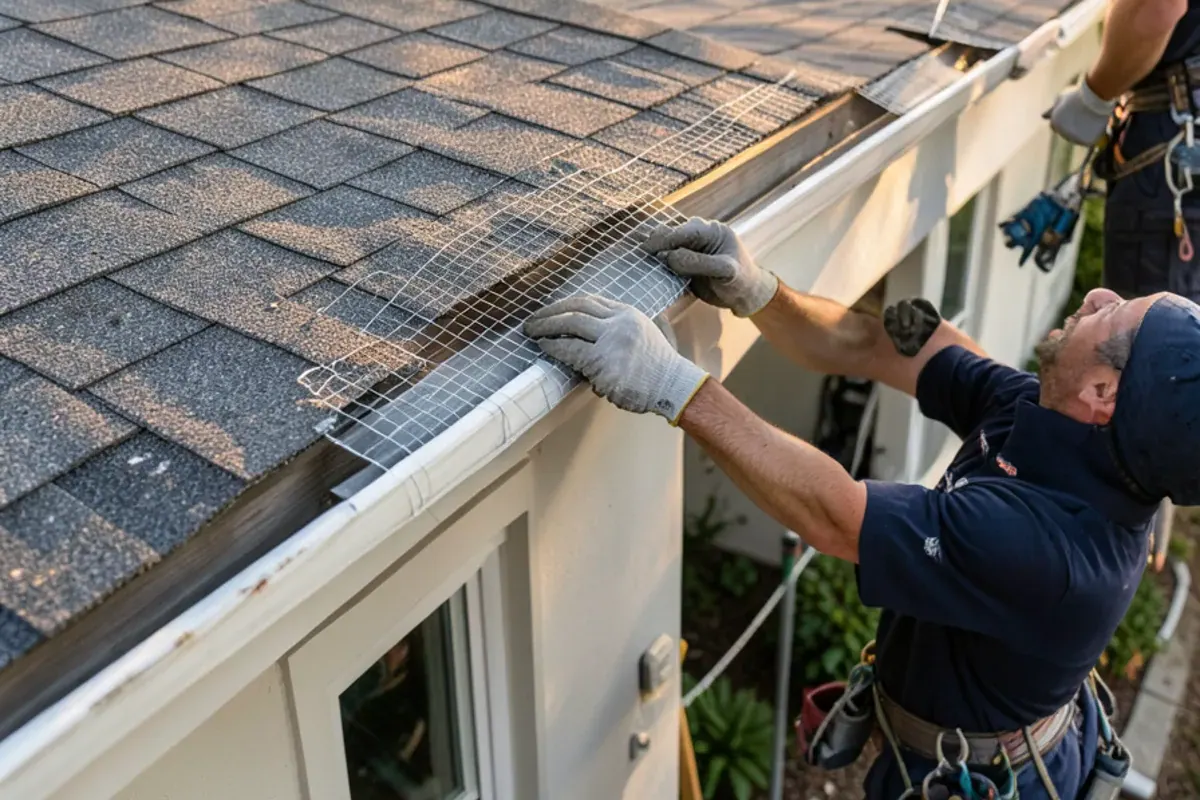
- Gaps at the roof edge are closed with metal flashing or hardware cloth fastened behind the gutter line.
- Damaged underlayment or sheathing at entry holes is cut out and patched before roofing goes back.
Animal holes often become leak points the following winter, and torn underlayment is not visible from the ground. If you have had animals in the attic and now see a stain, roof leak detection will confirm where water gets in. Shingles raccoons tore loose are handled the same way as storm damage under shingle roof repair.
What does animal damage repair cost depend on?
We check the whole roofline before pricing, because the hole you found is rarely the only one. The estimate itemizes:
- Number of openings: a single torn screen versus gaps at every fascia corner.
- Vent count and type: a ranch home can have dozens of frieze-block vents, each needing new mesh.
- Wood replacement: lengths of chewed fascia, rake or soffit, plus primer and paint to match.
- Tile eaves: feet of missing bird stop along barrel-tile edges.
- Hidden leaks: torn underlayment or a chewed boot that has already let water in.
- Height and timing: two-story eaves and visits scheduled around the pest company's all-clear.
Wildlife rules that shape the repair schedule
California's trapping regulations (Title 14, section 465.5) do not allow trapped nuisance wildlife to be relocated, which is why exclusion, letting animals leave and then sealing the way back in, is the common approach. Bats need extra care: the Fish and Game Code treats them as nongame mammals that cannot be taken without state authorization, and wildlife agencies advise against excluding them while young are in the roost through spring and summer, so check with a wildlife professional or the California Department of Fish and Wildlife first. For rats, the Santa Clara County Vector Control District offers residents free home consultations. Roof sealing seldom needs a permit, but a repair of $1,000 or more calls for a roofer with a current CSLB license.
Animal damage roof repair in Campbell, CA, before the rains
Late summer and early fall is a good window to seal roof entry points. Rodents push indoors as nights cool, attic nesting picks up, and any gap left open in October will be letting in water as well as animals by January.
Why Campbell homeowners call us after the pest company
We are a family-run local team that treats the roofline as one system, not one hole. Estimates are free and written, every opening is photographed before and after, the yard is cleaned of old mesh and trim the same day, and a single chewed vent is a job we take.
Scratching in the attic or chewed vents? Call (725) 745-8803 to have the roofline checked and sealed.
Call (725) 745-8803