
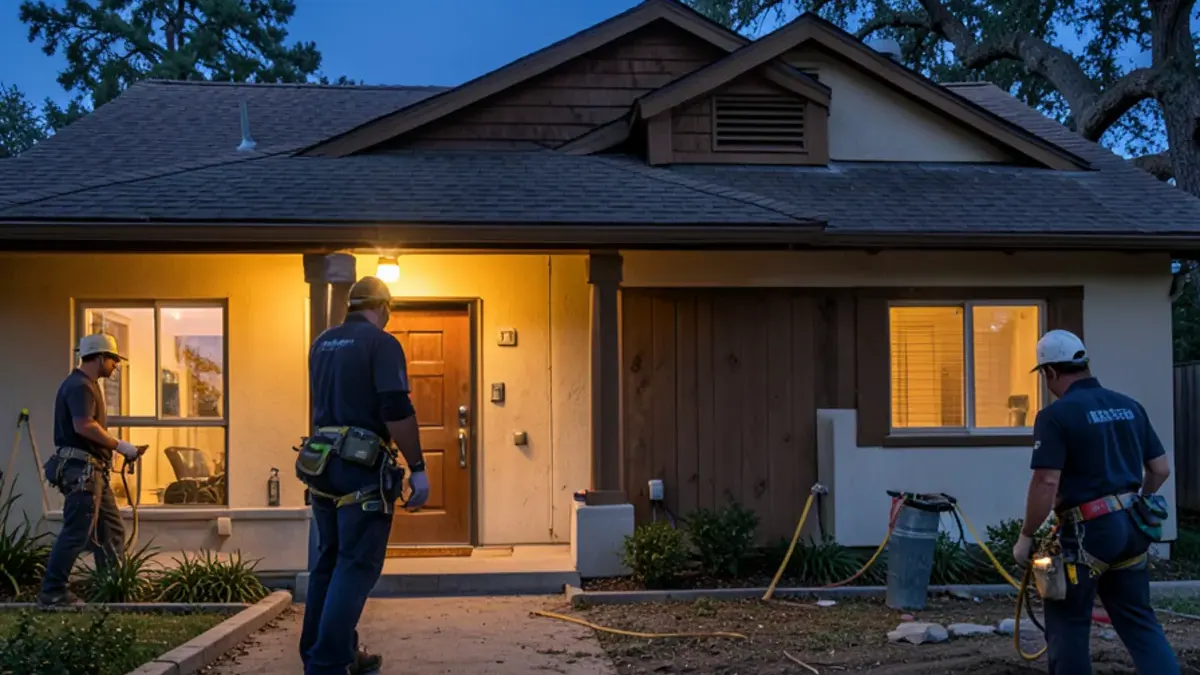
Who is getting into South Bay roofs?
Roof rats
Roof rats are agile climbers common in Santa Clara County. They run along fences, utility lines and tree limbs, and they can squeeze through openings about half an inch across. Fruit trees, ivy and dense shrubs near the house make the job easier for them.
Tree squirrels
Squirrels jump from overhanging branches and chew to widen an opening. They go after soft fascia, the corners where roof planes meet, and plastic or aluminum vent covers.
Birds
Pigeons, starlings and sparrows nest in open tile ends, gable vents with damaged screens, gaps behind gutters and under solar panels. Their nests block vents and hold moisture.
Hearing scratching overhead or seeing chewed vents? Call (725) 745-8803 and we'll find and seal the roof entry points once the animals are out.
Call (725) 745-8803Common roof entry points and how to close them
Most homes have more than one way in. Sealing one hole while leaving others open just moves the traffic, so a full exclusion job walks the whole roof line, eaves and vents before anything is closed.
| Entry point | Who uses it | Typical fix |
|---|---|---|
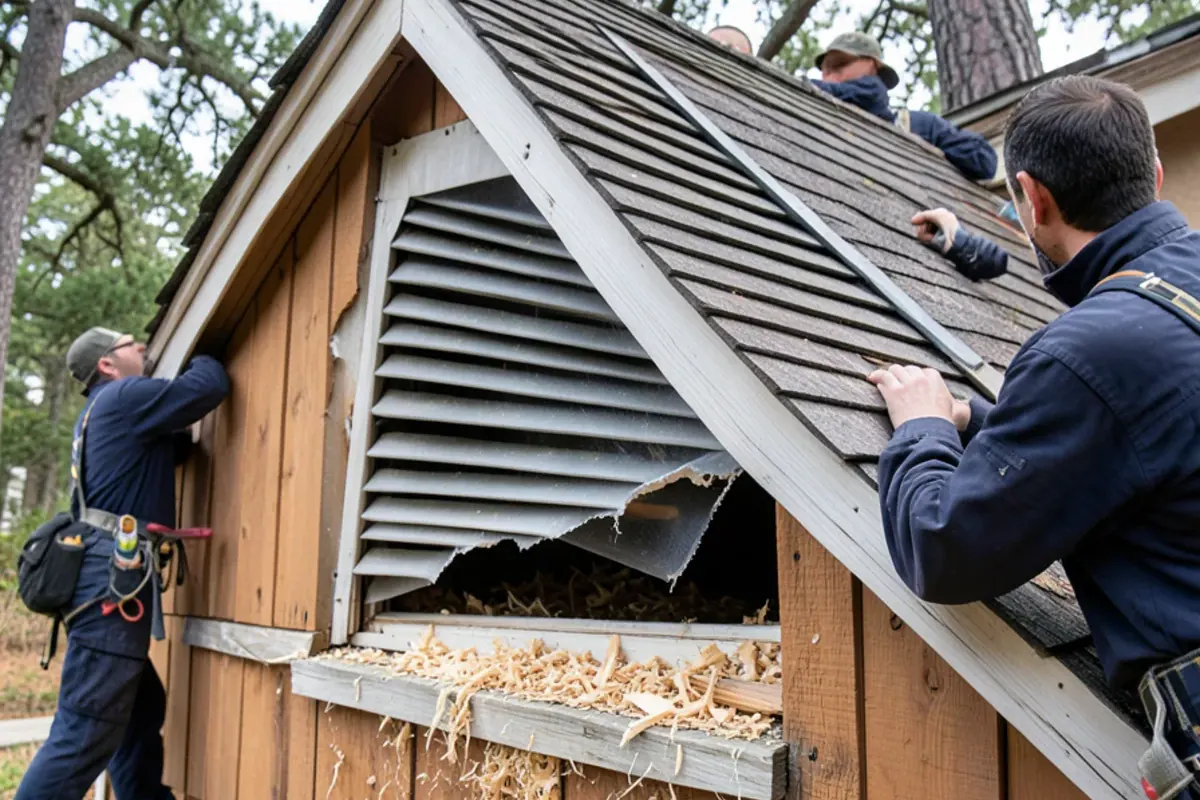
| Gable and soffit vents with torn screen | Rats, squirrels, birds | Replace with heavy metal mesh or a new metal vent |
| Gap between roof deck and fascia at the eave | Rats, squirrels | Repair fascia, add metal flashing or a closure at the gap |
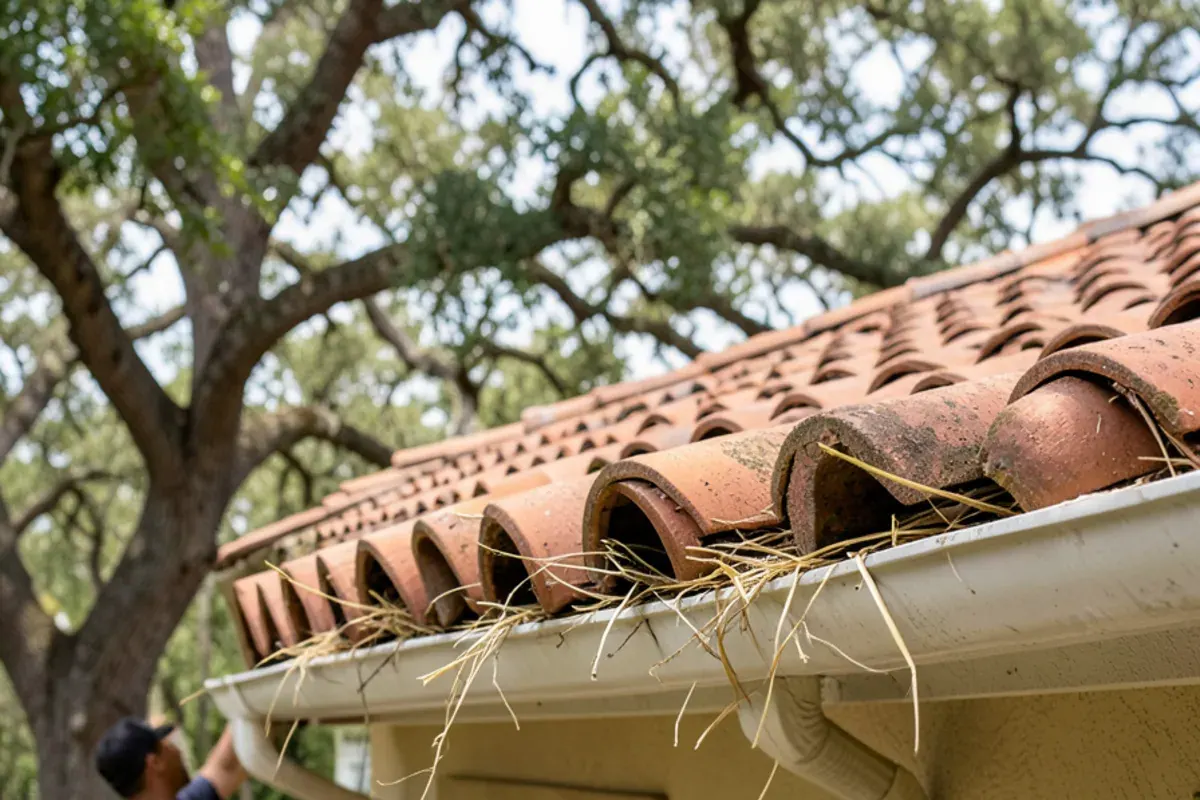
| Open ends of barrel tile at eaves | Birds, rats | Install bird stops matched to the tile profile |
| Roof-to-wall corners and dormers | Squirrels, rats | Close the gap with metal flashing; replace rotted wood |
| Gaps around plumbing vents and pipe boots | Rats | New boot or a metal collar sealed to the roof |
| Under solar arrays | Pigeons | Critter mesh around the array edge, coordinated with the solar owner |
| Ridge vents with wide openings | Wasps, small birds | Replace with a vent that has an internal baffle or screen |
Which materials stand up to chewing?
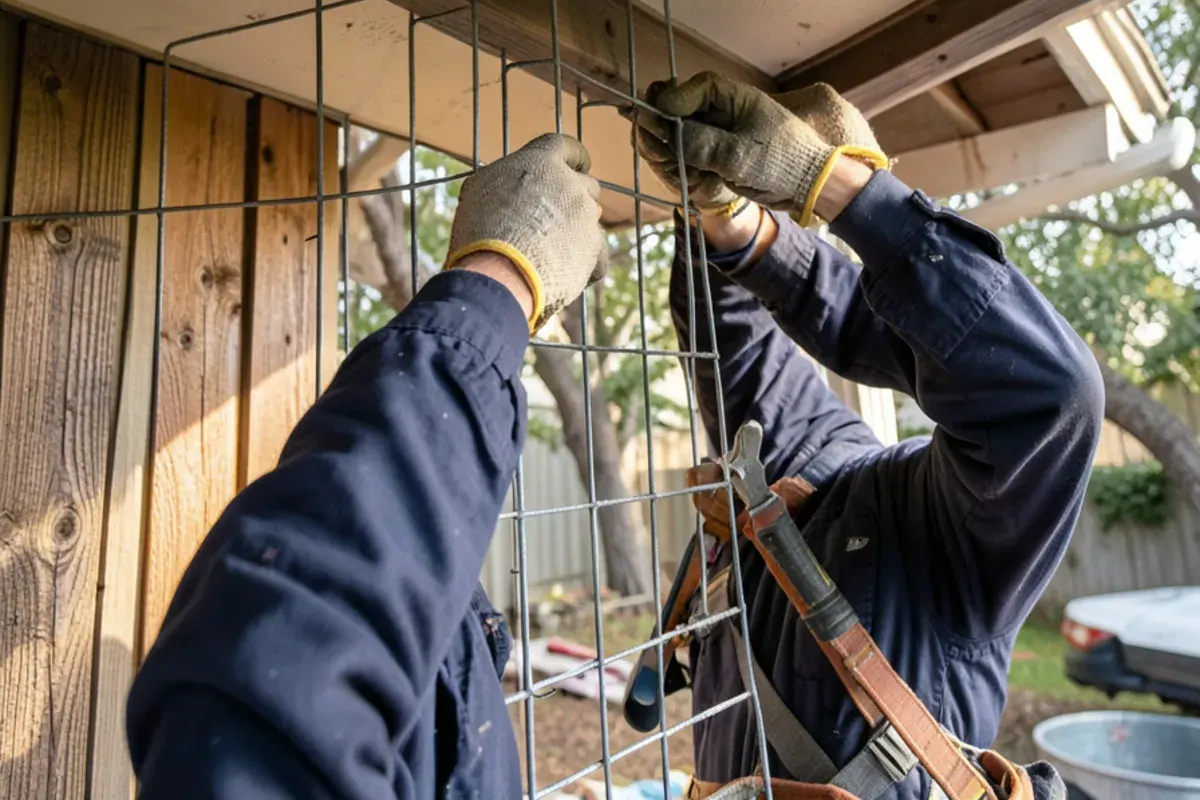
UC Statewide IPM guidance on rats points to quarter-inch hardware cloth and sheet metal for rodent-proofing, and recommends keeping tree limbs at least 3 feet from the roof. The table shows how common patch materials hold up at the roof edge.
| Material | Holds up to chewing? | Where it fits |
|---|---|---|
| Galvanized hardware cloth, ¼-inch, 19-gauge | Yes | Behind vents and over larger gaps, fastened on all sides |
| Sheet metal flashing | Yes | Eave gaps, roof-to-wall corners, chewed fascia edges |
| Copper mesh or stainless steel wool | Yes, when packed tight | Small gaps around pipes and wires, then sealed over |
| Expanding foam on its own | No | Only as a filler behind metal |
| Plastic vent covers and window screen | No | Not suitable where rats or squirrels are active |
Timing around nesting season and the law
Most native birds and their active nests are protected under the federal Migratory Bird Treaty Act, so a nest with eggs or young in a vent has to be left until the birds fledge. Pigeons, European starlings and house sparrows are non-native and not covered. Tree squirrel trapping is regulated by the California Department of Fish and Wildlife. Poison is also more limited than it used to be: California has restricted second-generation anticoagulant rodenticides since AB 1788 took effect in 2021, which is one reason pest professionals lean on trapping and exclusion.
A worked example
Say a 1970s ranch house in Campbell has scratching in the attic at dusk, a chewed plastic gable vent and an orange tree touching the eave. Pest control traps the rats inside first. Then the tree is cut back 3 feet from the roof, the gable vent is replaced with a metal vent backed by hardware cloth, a chewed section of fascia and soffit is rebuilt, and the gap at the eave gets a metal closure. A check a few weeks later confirms nothing new has been chewed.
Which vent screens actually keep animals out?
Window-screen mesh and thin plastic vent covers do not stop a determined rat or squirrel. Metal mesh does, but it has to balance two needs. Openings must be small enough to keep animals out, yet the vent still has to move enough air to keep the attic dry. Very fine mesh blocks more airflow, so a vent may need to be larger or added elsewhere to make up the difference.
In CAL FIRE-mapped fire hazard zones, such as parts of the Saratoga hills, California's wildland-urban interface rules call for ember-resistant vents. Those fine-mesh or tested vents also keep animals out, so one upgrade can handle both concerns. Our attic venting repair work sizes the replacement vents so ventilation stays adequate.
Steps that keep rodents out of the roof for good
- Confirm activity: droppings, chewed wood or vents, noise at dusk and dawn, nesting material in the attic.
- Have a pest control company remove animals inside before any opening is sealed, so nothing is trapped in the attic.
- Trim tree limbs back from the roof so animals cannot jump onto it, and cut ivy away from walls.
- Repair chewed fascia and roof edges with sound wood and metal where needed.
- Replace damaged vent screens and install bird stops on tile roofs.
- Check the roof again after a few weeks for any new chewing or activity.
From our roof visits: animal signs homeowners miss
- Rub marks, dark greasy smudges where rats repeatedly squeeze through a gap at the roof edge.
- Gnawed corners of fascia boards right where an oak or fruit tree branch overhangs the roof.
- Twigs and straw sticking out of tile ends or tucked behind gutters.
- Insulation pulled into tunnels or packed down in one part of the attic.
- Plastic gable vents with a corner chewed off, sometimes patched from inside with cardboard.
When the damage goes beyond vents, our animal damage roof repair service replaces chewed decking, fascia and flashing so the roof is sound before it is sealed.
Exclusion has trade-offs too:
- Quarter-inch hardware cloth keeps rats out but cuts vent airflow, so the vent area may have to grow to keep the attic dry.
- Fitting bird stops on an existing tile roof means lifting the first course at the eaves, and some old tiles break in the process.
- Sealing every opening costs more up front than trapping alone, but trapping without exclusion tends to repeat every season.
- One-way exits take days to clear an attic, so the final sealing cannot happen in a single visit.
What a lasting exclusion job looks like
The homes that stay rodent-free have three things in common: the animals were removed before anything was sealed, every opening along the roofline was closed with metal rather than foam or plastic, and the trees and vines that gave access were cut back. A follow-up look a few weeks later, and a glance at the vents during each fall inspection, keeps it that way.
Need the roofline sealed once pest control is done? We'll walk the eaves, vents and tile ends and list every opening on a free written estimate.
Call (725) 745-8803