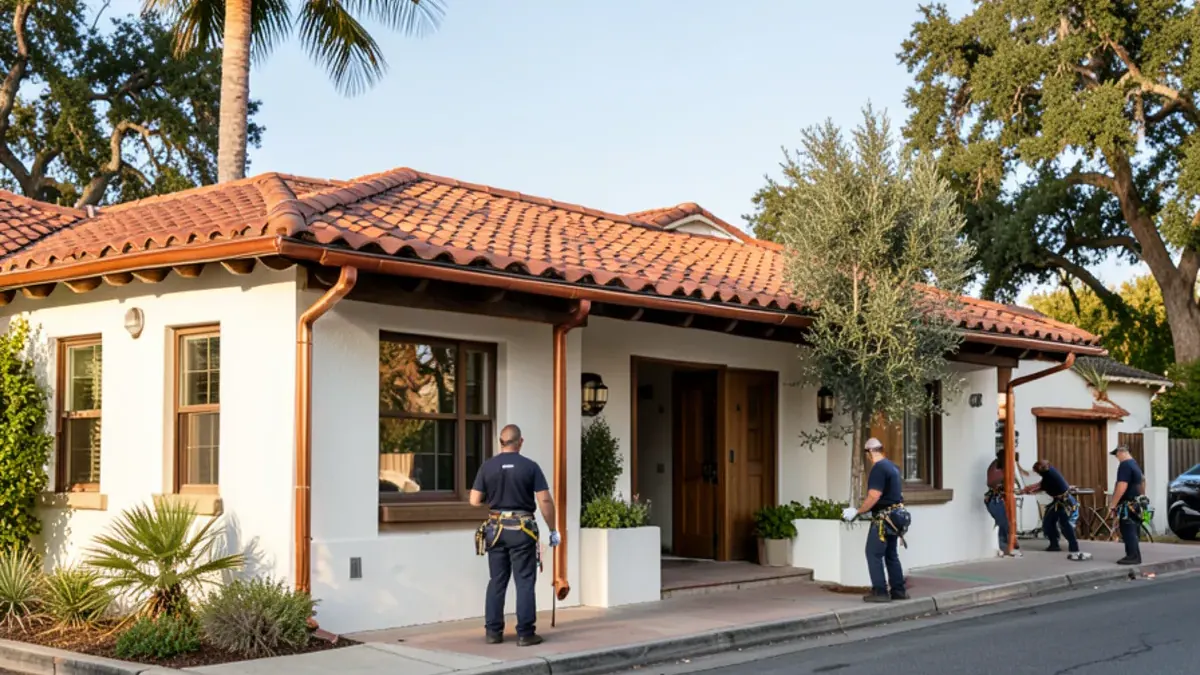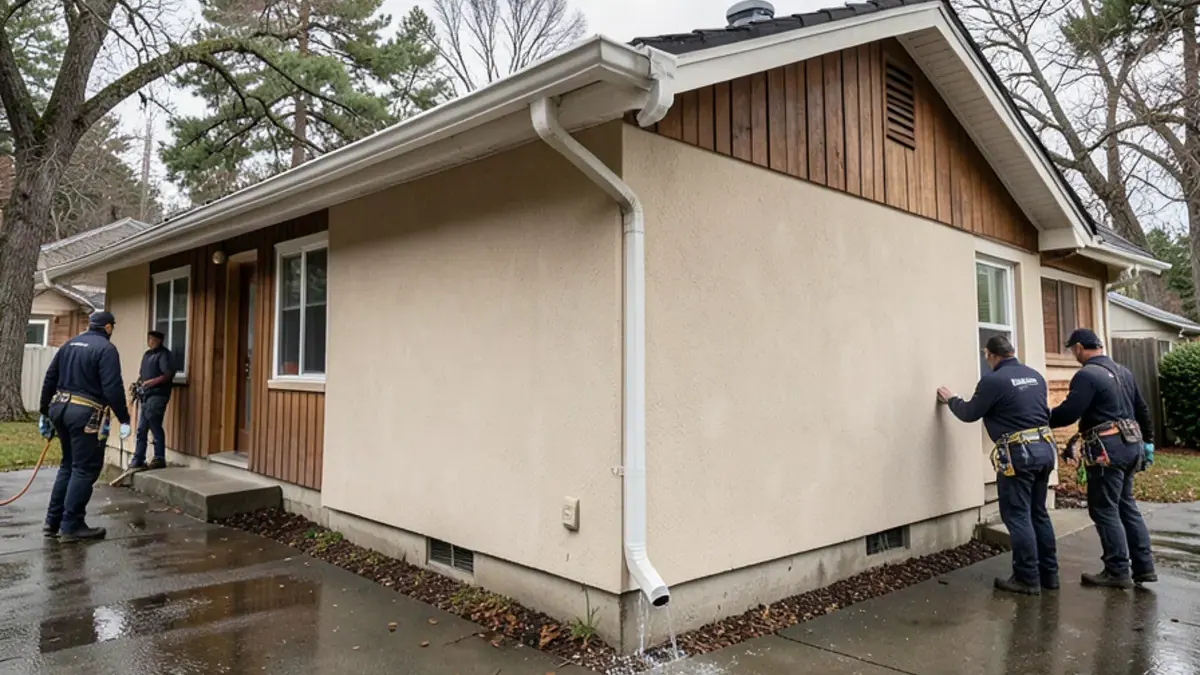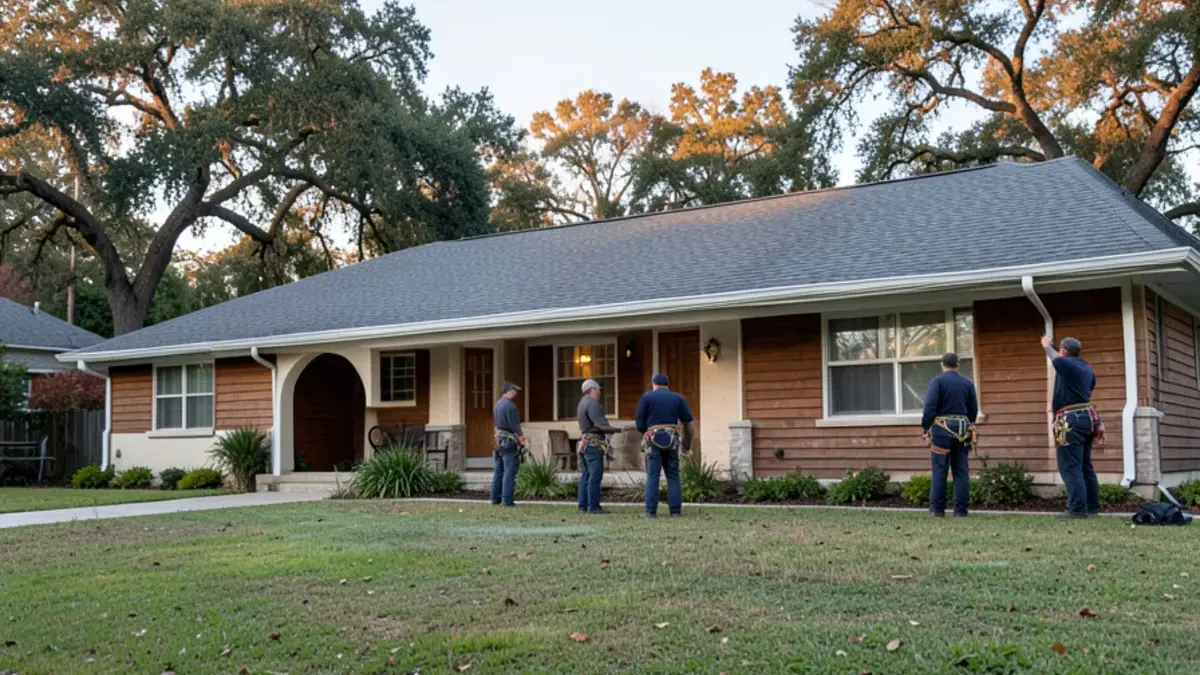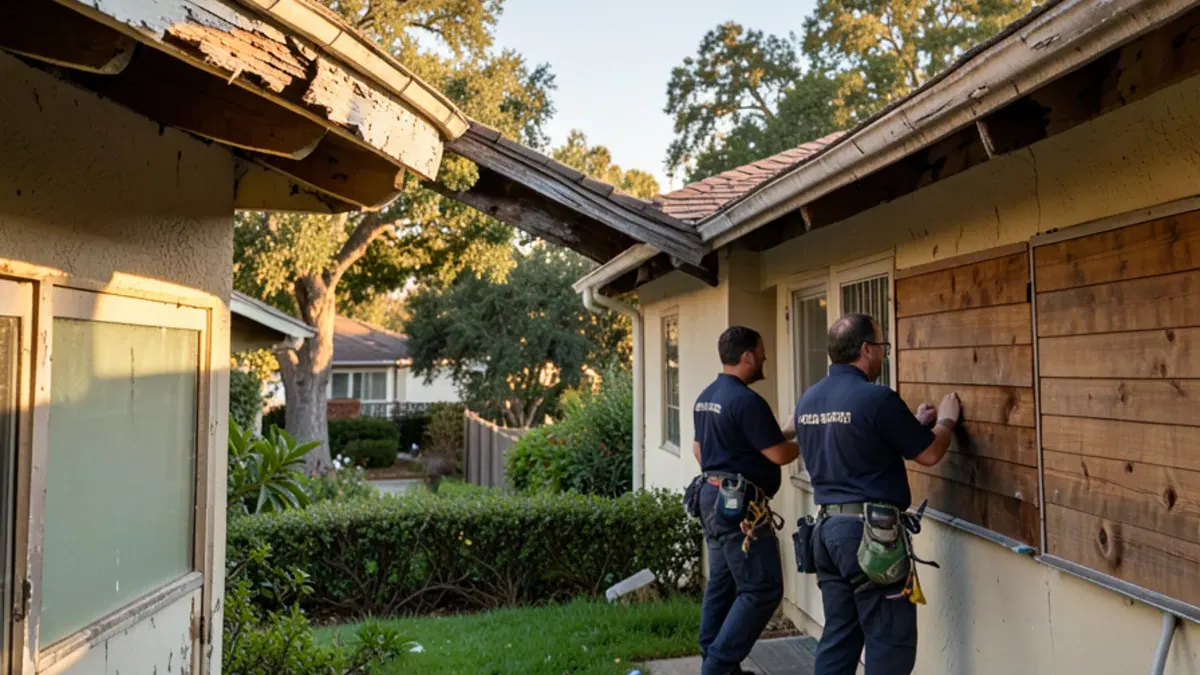
Why does fascia rot on South Bay ranch homes?
Most of the rot we cut out is on homes built from the 1950s through the 1970s, when Campbell and the surrounding West Valley filled in with single-story ranch houses. Their fascia boards are often original, untreated softwood that has been painted many times over. Four things wear it down:
- Gutter overflow. A clogged or undersized gutter spills down the face of the board every storm.
- No drip edge. Older roofs often lack metal at the eave, so water curls under the shingles and soaks the top edge of the fascia.
- Paint failure. Once paint cracks at the joints, water gets into the end grain and stays there.
- Shade and debris. Under oaks and redwoods, wet leaves sit against the wood and it never fully dries between storms.
Dry rot fascia looks fine from the street for years. The first signs are usually bubbling paint, a gutter that sags at one spot, or a screwdriver that sinks into the wood with little pressure.
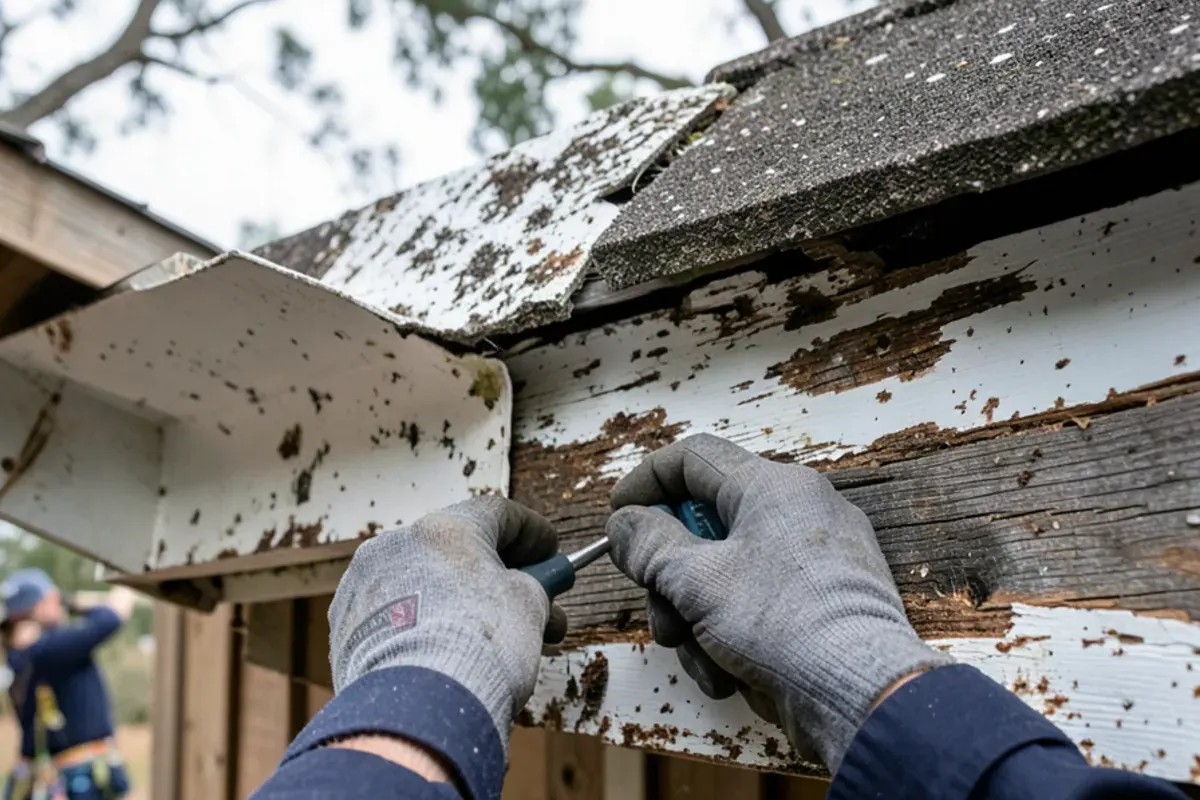
What fascia and soffit repair from us covers
Eave work looks like carpentry, but at a roof edge it is really water management. A repair from us covers every piece of wood and metal between the shingles and the gutter, priced by location on the written estimate:
- Fascia boards cut back to sound wood and replaced with primed lumber matched to the profile.
- Rafter tails consolidated, sistered or spliced where rot reached the framing.
- Soffit panels and blocking replaced, with gaps closed against rats and birds.
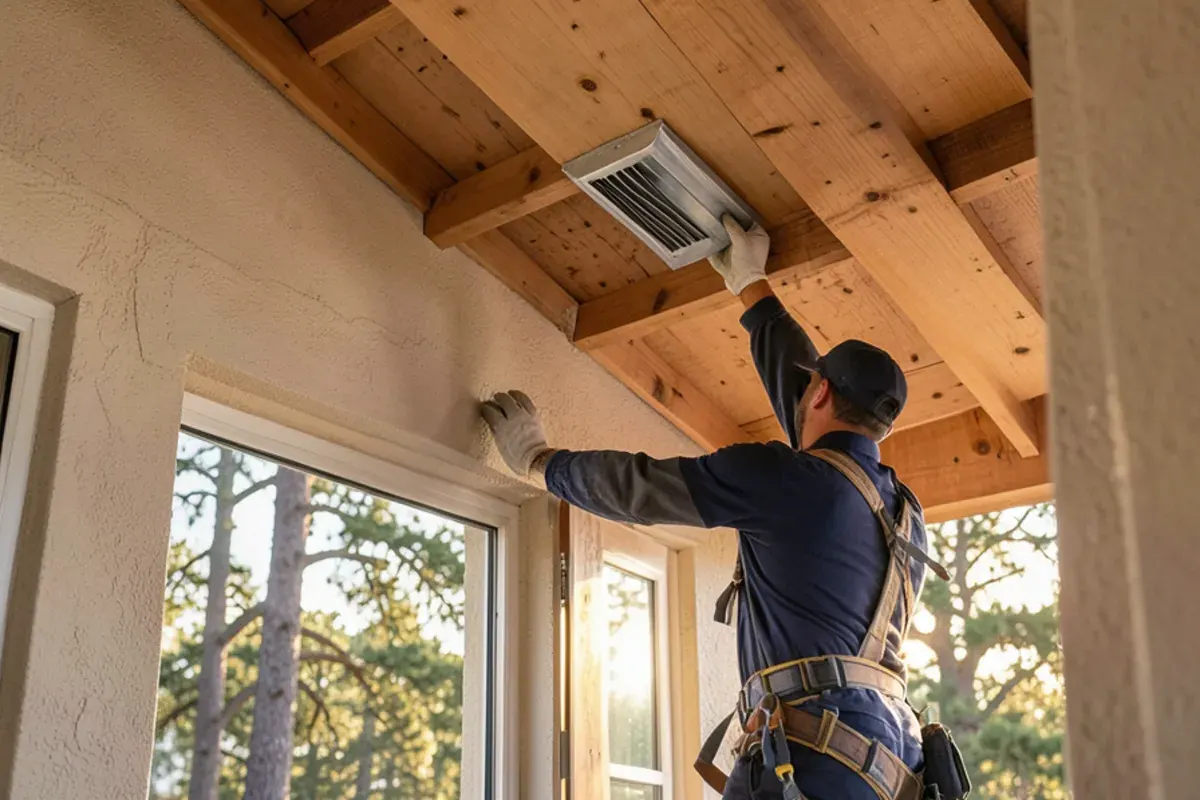
- Soffit vents cleared or replaced, with ember-resistant models in fire zones.
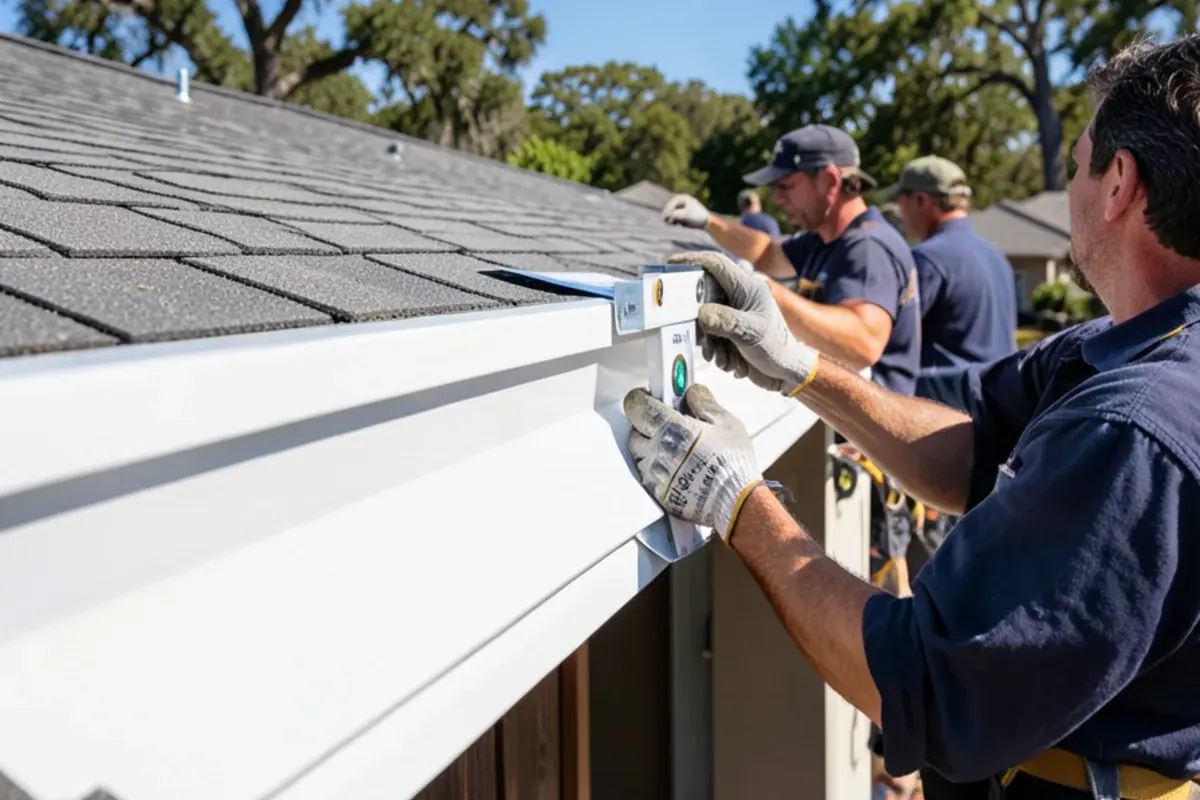
- Drip edge added or corrected so roof water lands in the gutter, not on the board.
- Gutters taken down, set aside and rehung on new hangers, or replaced if worn out.
Questions about fascia & soffit repair?
Call first for the quickest answer, or request a free written estimate below.
Request a free written estimate
Fastest answer: call (725) 745-8803. Or send the details below and we will call you back.
Finding how far the damage goes
Rot spreads along the grain and into connected wood, so the visible soft spot is rarely the whole story. On every visit we:
- Probe the full length of fascia on each affected wall, not just the stained area
- Check rafter tails behind the board, especially at corners and under valleys
- Look at the first row of roof sheathing from below where the soffit is open
- Inspect soffit panels and vents for staining, sagging or animal entry
- Photograph each damaged section so you can see what we see
The estimate lists repair by location and linear foot, so you can see exactly where the money goes.
Fascia repair in Campbell, CA: board replacement step by step
- Take down the gutter along the damaged section and set it aside if it can be reused.
- Cut out rotted fascia back to sound wood, staggering joints so they land on rafter tails.
- Repair or sister any soft rafter tails behind it.
- Install new fascia, primed on all sides and ends before it goes up.
- Add or correct drip edge so roof water clears the board.
- Caulk joints, finish-paint or leave ready for your painter, and rehang the gutter with new hangers.
We match the board profile to the rest of the house where we can. Many ranch homes use a 2x6 or 2x8 fascia; older homes may have rough-sawn or odd-dimension lumber that needs ripping to size.
Rafter tail repair on open-eave houses
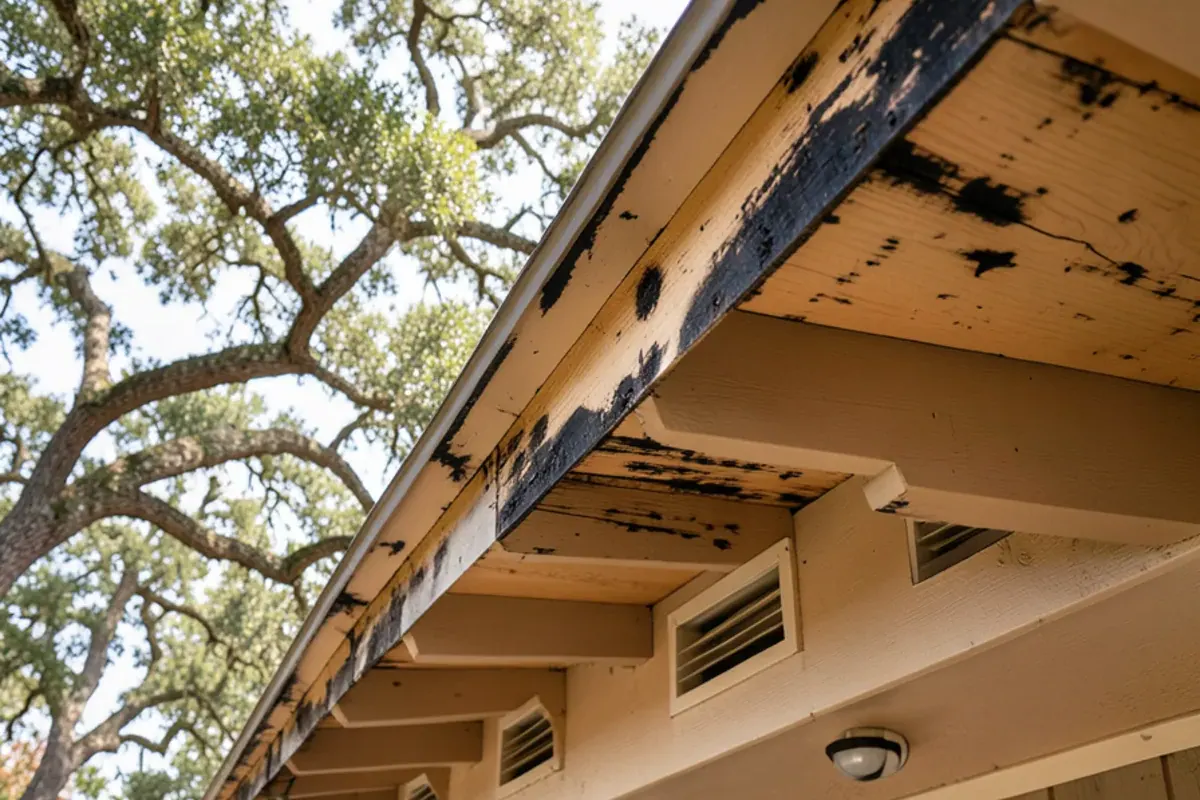
Many mid-century homes in Campbell, Willow Glen and Burbank have exposed rafter tails at the eave instead of a boxed soffit. They look good, but each tail is end grain facing the weather. When a tail rots, the options are:
- Epoxy consolidation: for shallow surface rot, the soft wood is removed and filled.
- Sistering: a new piece is fastened alongside the sound part of the rafter and shaped to match the original tail.
- Tail replacement: the rotted end is cut back and a new tail is spliced in, which is common when a whole run of tails failed together.
Because rafter tails carry the roof edge, the repair has to tie back into solid framing. We show you the cut-back point in photos before the new piece goes in.
Soffit repair and soffit vent repair
Boxed eaves hide a soffit panel under the overhang. Soffit repair covers sagging or water-stained plywood, gaps where rodents and birds get in, and broken or painted-over vents. Those vents are the intake half of most attic ventilation systems; when they are blocked, the attic runs hotter in summer and holds more moisture in winter.
CAL FIRE has mapped parts of the Los Gatos and Saratoga hills as Fire Hazard Severity Zones. There, the state's wildland-urban interface building rules ask for vents that resist embers. When we replace soffit vents on homes in those areas, we can fit ember-resistant models. Check with your building department about what applies to your address.
Should eave repair in Campbell wait for a reroof?
If a reroof is coming soon, it is efficient to do eave repair as part of it. The City of Campbell requires dry rot and damaged sheathing to be replaced before the reroof inspection, so rotted fascia and rafter tails get handled during a tear-off anyway. Doing it then avoids pulling gutters twice.
If the roof has years left, do not wait. Rot keeps spreading, gutters pull loose from soft wood, and the next storm season adds damage. A standalone repair now costs less than a larger one later. After fascia work, we can refit your existing gutters or quote new seamless gutters; for leaking or sagging runs that were part of the cause, see gutter repair.
Permits, lead paint and fire-zone vents at the eave
Board-for-board fascia replacement is repair work; whether a job that cuts back rafter tails needs a permit is for the City of Campbell Building Division to decide, or the County on unincorporated parcels. During a reroof, the City already requires dry rot to be replaced before its inspection.
Homes built before 1978 bring a federal rule: the EPA's Renovation, Repair and Painting Rule covers work disturbing more than 20 square feet of exterior paint, so ask any contractor how old paint will be contained and cleaned up. Where CAL FIRE maps a hazard zone, Chapter 7A of the Building Code restricts vents on the underside of eaves, with an exception for vents listed to the ASTM E2886 ember and flame test. Eave jobs of $1,000 or more, labor and materials together, call for a CSLB-licensed contractor; search the license at cslb.ca.gov.
Roofline trim repair costs: the variables
Your estimate depends on how many feet of fascia and soffit need replacing, whether rafter tails are involved, how high the eaves are, the board size and profile, and whether the gutters can be reused. Painting is listed separately so you can choose to have us finish it or hand it to your painter.
Campbell homes add a few predictable variables. Original 1950s–70s boards are sometimes odd sizes that must be ripped to match. Exposed rafter tails take more labor per foot than a boxed eave because each one is shaped by hand. Second-story eaves and foothill lots need more ladder setup, and old paint on pre-1978 trim adds containment and cleanup steps.
Soft wood behind your gutters? Call (725) 745-8803 and we'll probe it and send you photos.
Call (725) 745-8803Why a roofing crew should handle your eave repair
Rot at the eave almost always traces back to the roof: a missing drip edge, an overflowing valley, a gutter set with no fall. We are family-run roofers, so we fix the wood and the water source in the same visit instead of painting over the symptom. The estimate is free and written, with photos of every soft spot and cut-back point, and small jobs, like one rotted corner, are welcome. Crews protect plantings below the eave and haul away old lumber daily.