Problems we fix most on South Bay gutters
- Gutter seam leak: sealant at a joint or end cap dries out in summer heat and opens up, leaving a drip line on the patio or a streak down the stucco.
- Leaking corners: mitered inside and outside corners take the most stress and fail first.
- Sagging runs: hangers or old spikes loosen in the wood, often because the fascia behind them has softened.
- Pulled-off sections: a ladder, a falling limb or a winter wind gust bends a run off its hangers.
- Crushed or split downspouts: lawn equipment, cars on narrow side yards and root-filled drain lines all take a toll.
- Backward or flat pitch: settling, rehanging or a bad original install leaves water standing in the trough.
Most of these show themselves during the first heavy storm of the season, which is why most gutter faults get noticed between November and February. You do not need to know which fault you have. Tell us where you see water, and we start the search there.
Three local conditions drive most of these faults: expansive clay that shifts splash blocks and buried lines, summer heat that dries sealant, and street-tree litter that weighs troughs down every winter.
A gutter repair visit in six steps
- Start where you saw water. Drip lines, stucco streaks and wet patio spots point us to the failing section.
- Inspect the whole run. Joints, hangers, pitch, outlets and the fascia behind them get checked, not just the obvious leak.
- Photograph and price. Findings and a written estimate come before any work.
- Fix the cause. Joints are resealed or replaced, runs rehung on hidden hangers, slope reset or an outlet added.
- Clear the path down. Elbows and buried lines are flushed or rerouted.
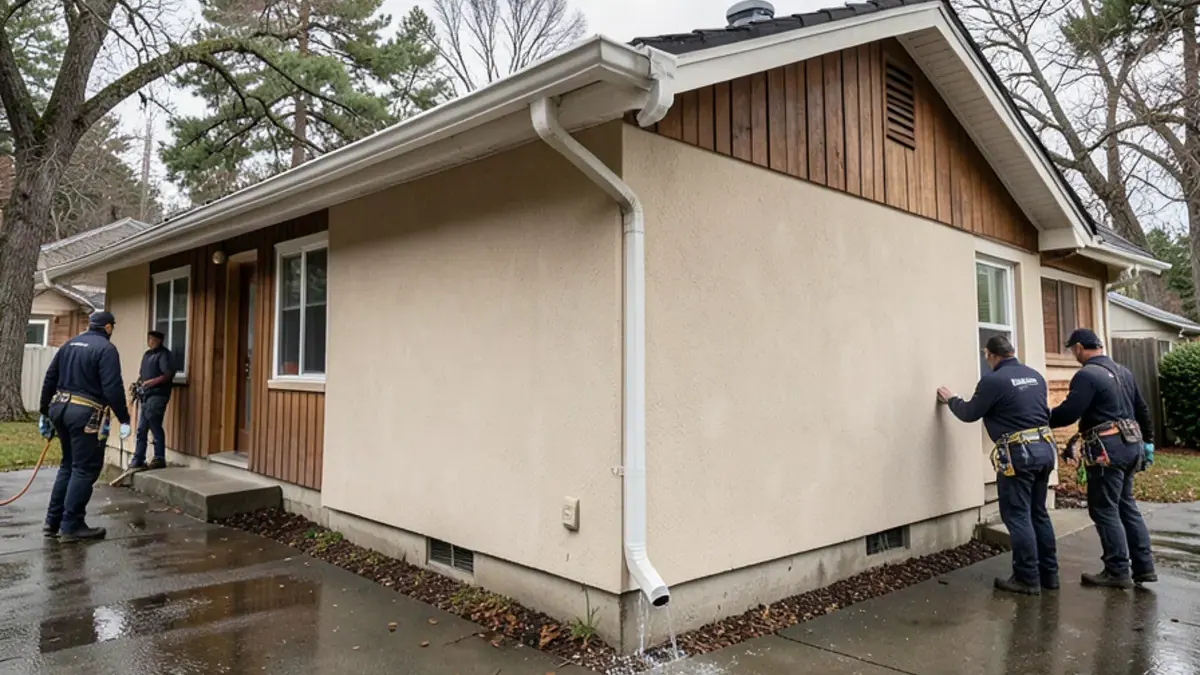
- Prove it. A hose at the high end shows the repair drains, and old parts leave with us.
Questions about gutter repair?
Call first for the quickest answer, or request a free written estimate below.
Request a free written estimate
Fastest answer: call (725) 745-8803. Or send the details below and we will call you back.
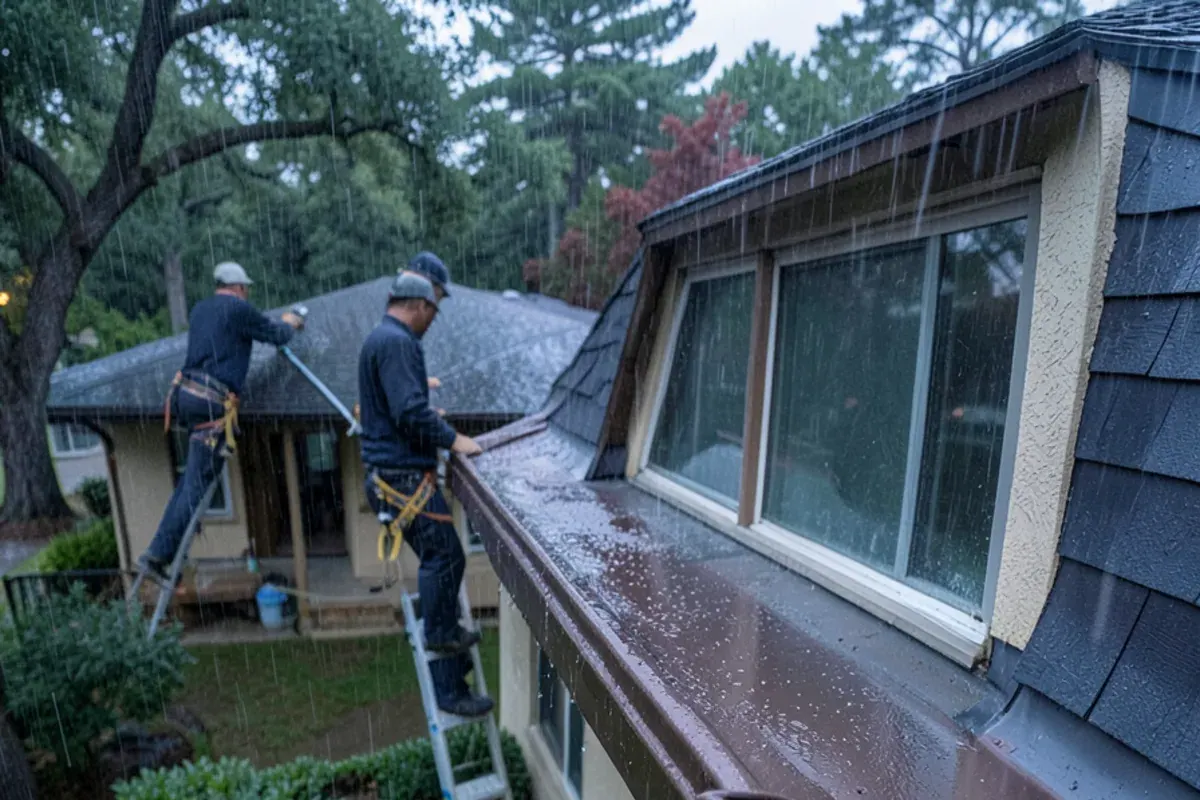
Why does a gutter overflow even when it's clean?
This is one of the most common questions we get, and the answer is rarely debris. A clean gutter overflows for a handful of reasons:
- Not enough outlet. One downspout at the far end of a 40-foot run cannot drain a fast storm. A second outlet near the middle fixes it.
- No fall toward the outlet. A gutter set dead level, or sloped the wrong way, holds water until it spills over the low side.
- A valley aimed at the gutter. Two roof planes meeting over one short section push a jet of water straight over the front lip.
- Water running behind the trough. Missing or short drip edge lets roof water roll under the shingles' edge and down the back of the gutter.
- A blocked downspout. The trough is clear, but the elbow or the underground line below it is packed with silt, needles or roots.
Overflowing gutter repair often costs less than people expect, because the fix is an extra outlet, a rehung section or a cleared line rather than new gutters. Our blog has more on overflowing gutters, their causes and fixes.
Leaking gutter repair at seams and corners
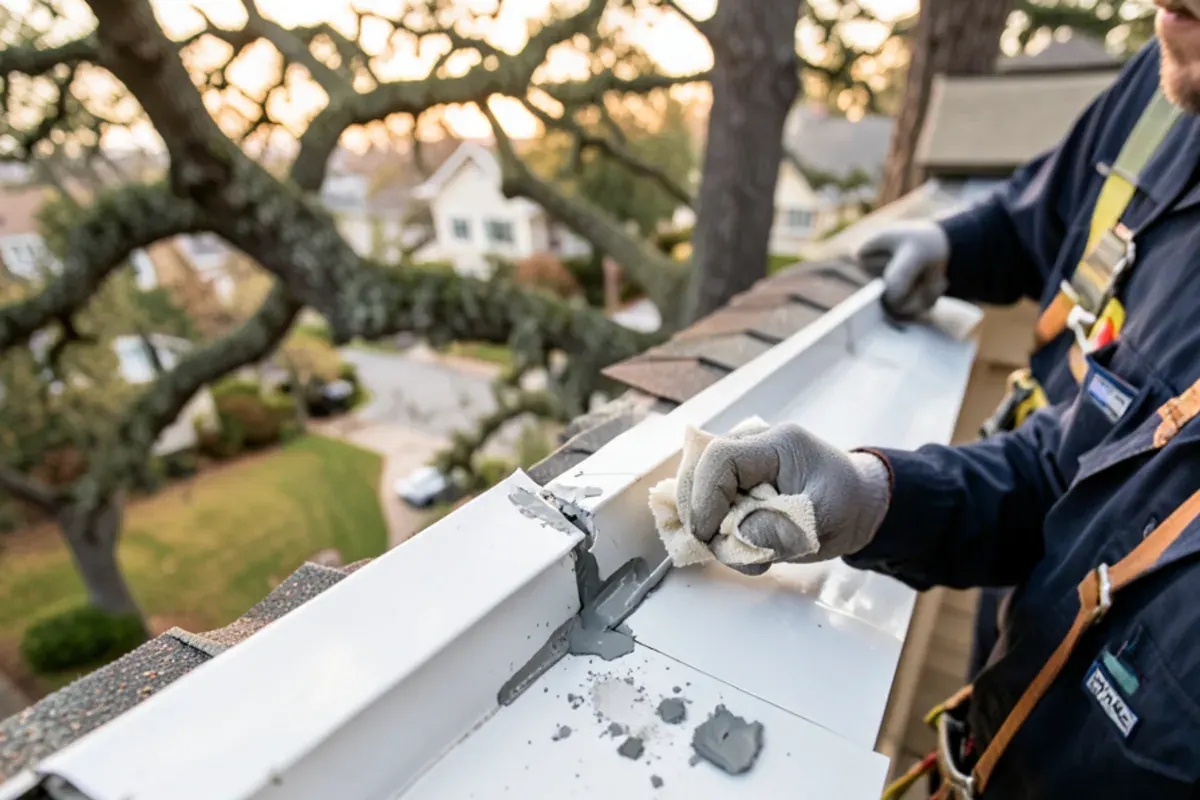
Smearing new caulk over an old joint rarely lasts a season. A proper repair takes the joint back to clean metal:
- Dry the joint and scrape out every bit of old sealant and dirt.
- Check that the miter or end cap still fits tightly; re-rivet or replace it if the pieces have spread.
- Apply a gutter-grade sealant on the inside of the joint, where water pressure pushes it into the seam instead of away from it.
- Let it cure, then run water through the section to confirm it holds.
Where a corner has been patched many times, or the metal is thin and pitted, we replace that corner piece outright. On copper systems, joints are soldered rather than sealed.
Sagging gutter fix: rehanging, reattaching and resetting slope
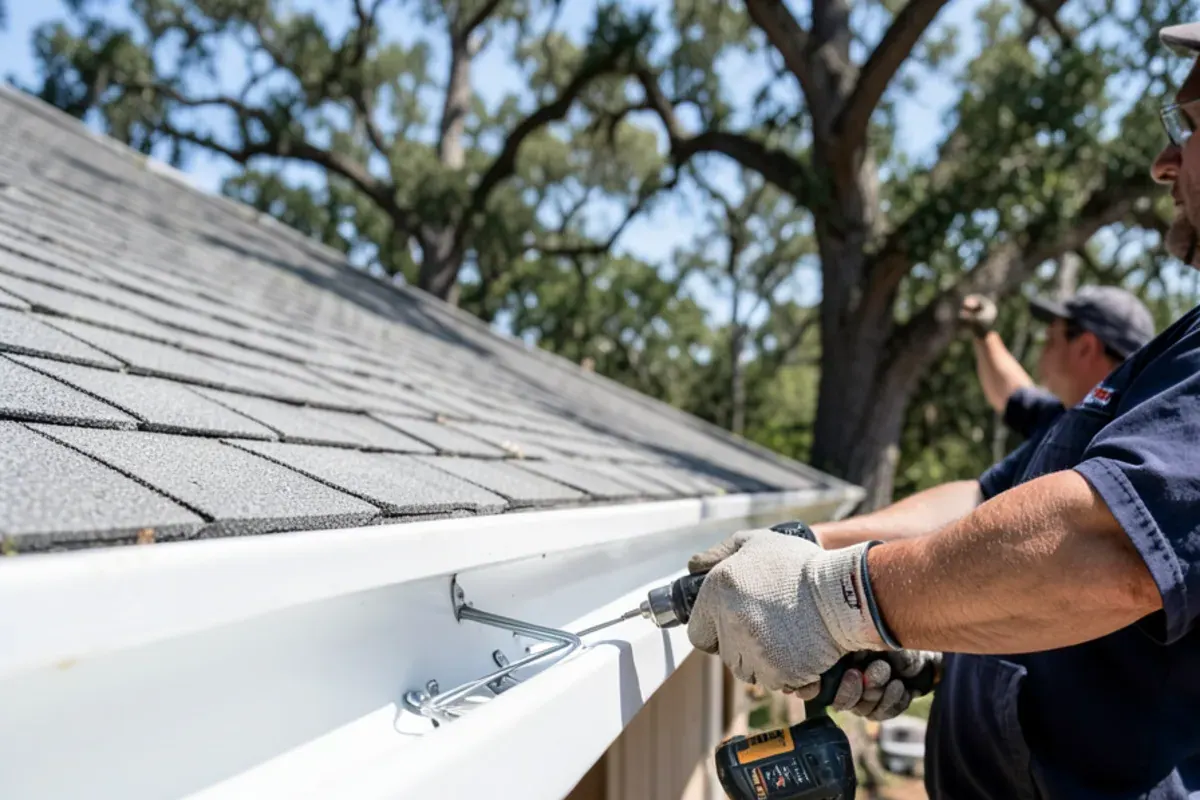
Older Campbell gutters often hang on spikes driven through a ferrule into the fascia. Over decades of heat, rain and the weight of wet leaves, those spikes back out. A gutter reattach job replaces them with hidden hangers screwed into the rafter tails, spaced closely enough to hold a full trough.
While the run is loose, we take the chance to correct the pitch. Gutter slope adjustment means resetting each hanger so the trough falls steadily toward its outlet, typically a small drop over every 10 feet, enough to drain but not enough to look crooked from the street.
Downspout repair from the elbow to the drain line
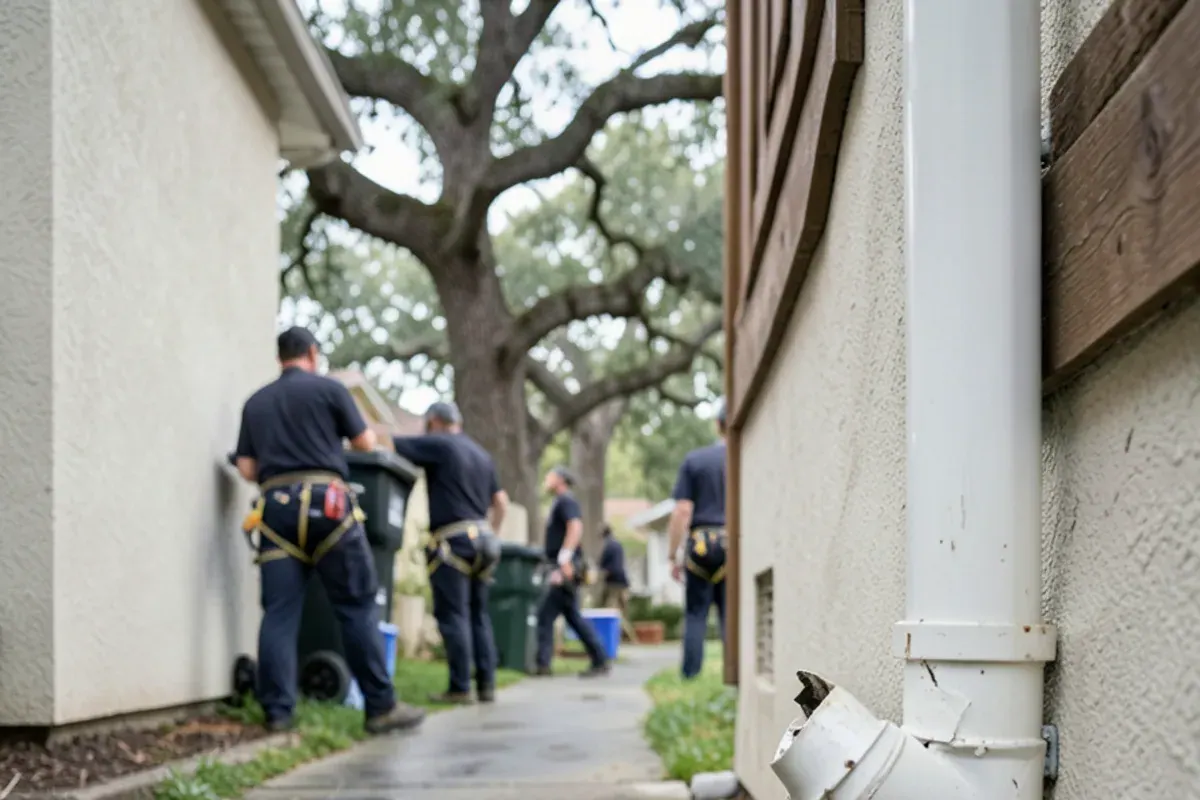
A downspout can fail at three points. At the top, the outlet tube can separate from the trough. Along the wall, straps loosen and sections slide apart. At the bottom, elbows get crushed and underground lines fill with silt or roots, which is common where downspouts run under lawns shaded by liquidambars or redwoods.
We replace damaged sections and elbows, re-strap loose pipe, and clear or reroute buried lines. If a line cannot be cleared, an above-ground extension is a simple fallback that keeps water moving away from the foundation on clay soil.
Is repair still worth it, or is replacement smarter?
| Condition | Our usual recommendation |
|---|---|
| One or two leaking joints, metal sound | Repair |
| One sagging section, fascia solid | Rehang and reset slope |
| Sagging caused by rotted fascia in one area | Fascia repair, then rehang |
| Rust-through in several spots on steel gutters | Replace |
| Sectional gutters leaking at many seams | Replace with seamless |
| Undersized system overflowing on every wall | Replace with larger gutters and outlets |
We would rather fix a small problem than sell a system you do not need. When replacement is the honest answer, the estimate explains why, with photos, and lays out our gutter installation option next to the repair cost so you can compare.
Gutter repair cost: what changes the number
We do not publish prices, but the factors are predictable, and the written estimate lists each one:
- Type of fault: resealing a corner is smaller work than rehanging a full run or adding an outlet.
- Number of problem spots: several joints fixed on one visit share the ladder setup.
- Wood condition: soft fascia behind a sag adds a board repair before the gutter can hold.
- Height and access: second-story eaves, steep side yards and pools below take more setup.
- Material: copper joints are soldered, and rusted steel may need sections replaced rather than sealed.
- Buried lines: clearing or rerouting an underground downspout line is its own item.
On Campbell's 1960s and 70s ranch homes, the fascia is the variable that most often turns a small repair into a bigger one, so we probe and photograph it first.
Permits, CSLB checks and drainage rules for gutter repairs
Most gutter repairs are small, but state rules still apply. Under CSLB rules a licensed contractor is needed once labor and materials total $1,000 or more; below that, on work needing no permit, a handyman may legally take it on. Either way, confirm a contractor's status at cslb.ca.gov. If a repair grows into replacing rafter tails, ask Campbell's Building Division, or the County for unincorporated pockets, whether a permit applies. A rerouted downspout should still discharge onto your property, and any connection to a curb outlet needs a word with City Public Works first.
Booking gutter repair in Campbell, CA and nearby towns
We handle repairs across Campbell, San Jose, Santa Clara, Burbank and the West Valley. Small jobs are welcome; a single leaking corner is worth a visit if it is dripping onto a walkway or staining siding. If debris is the root cause, we can add a gutter cleaning to the same trip, and if it keeps coming back, gutter guards are the longer-term answer.
As a family-run roofing outfit, we check each gutter together with the roof edge feeding it. Estimates are free and in writing, the photos let you see the fault yourself, and crews clean up daily. After a storm, the office can help you put together photos and line items for an insurance claim.
Gutter dripping, sagging or spilling over? Call (725) 745-8803 to book a repair visit.
Call (725) 745-8803