
What drives gutter installation cost?
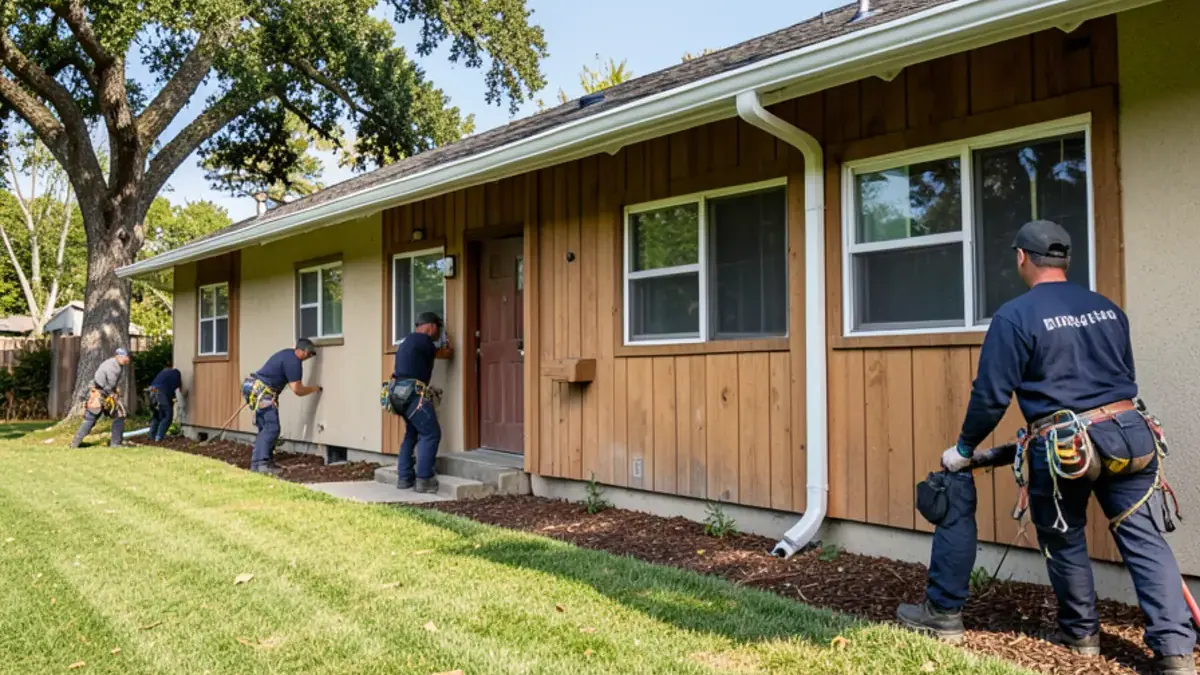
Two houses with the same square footage can get very different gutter quotes. The roofline matters more than the floor plan: every corner, every change in eave height and every downspout adds labor and parts. A single-story ranch home with a simple rectangle roof is the cheapest shape to gutter. A two-story house with hips, a detached garage and a covered patio has more corners, more ladder setups and more drops.
| Factor | Why it moves the price | What to check on the quote |
|---|---|---|
| Material | Aluminum, galvanized steel and copper differ widely in material cost and labor time | Metal named, plus thickness (gauge) for aluminum |
| Gutter size | 6-inch gutters use more coil and wider hangers than 5-inch | Profile (K-style or half-round) and width |
| Linear feet | Most quotes are built on measured feet of eave | Total footage, measured on site, not estimated from a photo |
| Downspouts | Each drop adds an outlet, elbows, straps and labor | Number, size (2x3 or 3x4) and where each drains |
| Corners and stories | Miters and second-story ladder work take time | Count of corners and any two-story runs |
| Fascia condition | Rotted boards must be replaced before new gutters go up | A per-foot or per-board allowance for hidden rot |
| Guards | Screens and micro-mesh are a separate line item | Guard type and footage listed on their own |
| Tear-off and haul-away | Old gutters, spikes and debris have to go somewhere | Removal and disposal included or extra |
Want a measured, itemized gutter estimate instead of a guess? Call (725) 745-8803 and we will set up a free visit.
Call (725) 745-8803Seamless gutter cost vs. copper and steel: how the metals rank
We do not publish our own prices, because every roofline is different, and we have not found a dated, sourced per-foot gutter figure we are comfortable printing. What we can show is how the common gutter types rank against each other and why. Use it to read a quote, then confirm against your written estimate.
| Gutter type | Relative cost | What pushes it higher | Notes |
|---|---|---|---|
| Seamless aluminum, 5-inch K-style | The usual baseline | Second-story runs and many corners | The common choice on South Bay ranch homes |
| Seamless aluminum, 6-inch K-style | Somewhat above 5-inch | More coil per foot, wider hangers, bigger downspouts | Carries more water from large or steep roof planes |
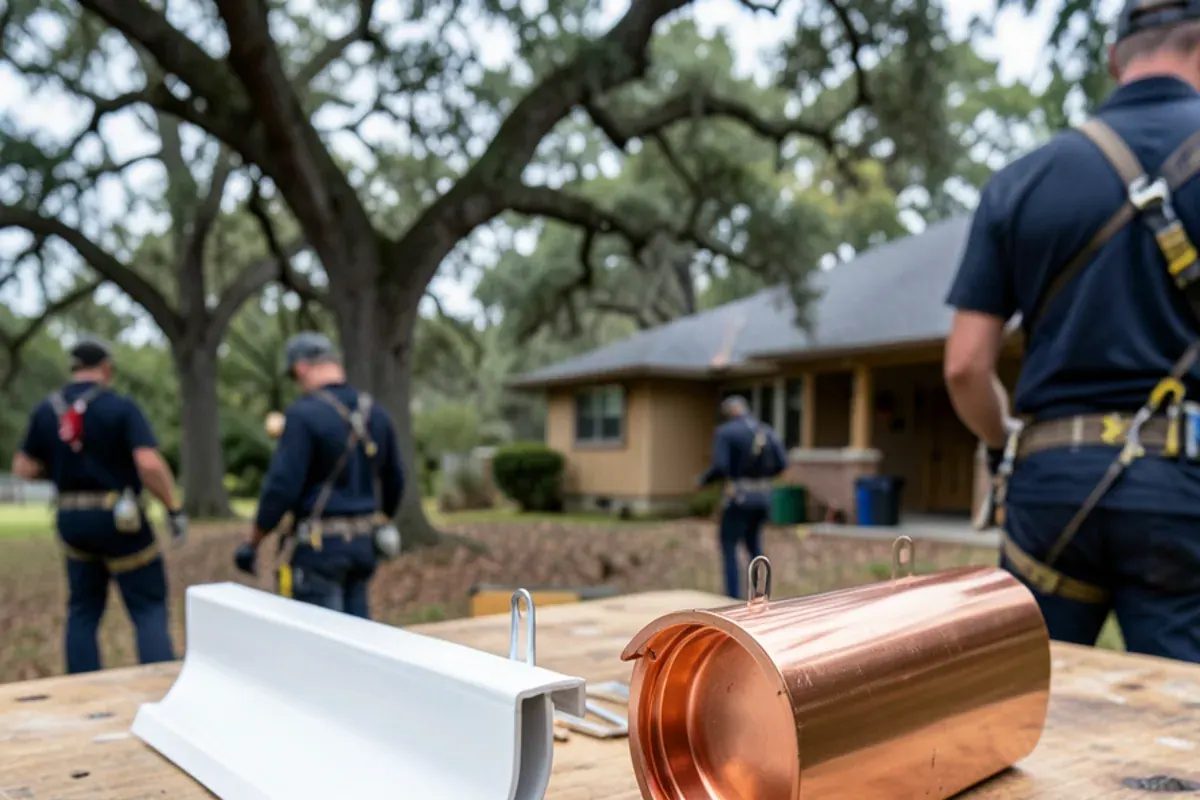
| Galvanized steel | Typically above aluminum | Heavier sections that take longer to hang | Stronger, but rusts once the coating wears |
| Copper, half-round or K-style | Several times aluminum | Soldered seams, copper hangers and matching downspouts | Develops a patina; often chosen for historic or high-end homes |
Footage is the multiplier behind every row. Because gutters are priced by the measured foot, a long, broken-up eave line costs more in any metal, and the gap between aluminum and copper widens as the run gets longer. Your gutter installation estimate will reflect your measured footage and the condition of the wood behind the old gutters.
How downspouts, fascia and guards change the total
The gutter run is only part of the bill. These line items often decide whether two quotes are close or far apart:
- Downspout installation cost: each downspout needs an outlet cut into the gutter, elbows, straps and an extension or a tie-in to a drain line. Larger 3x4 downspouts clog less often under oaks and redwoods but cost more in material.
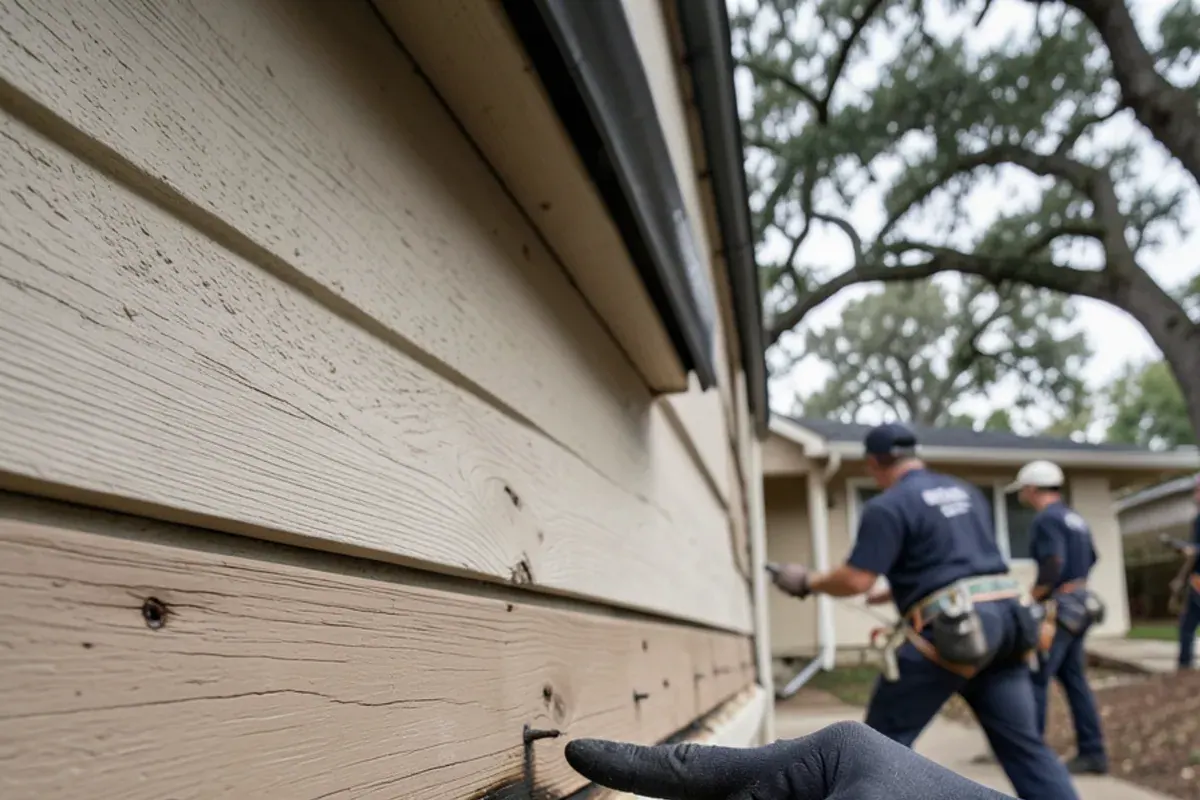
- Fascia and soffit repair: old gutters hide rot. Boards that crumble when the spikes come out must be replaced, and that cost is hard to pin down until removal day.
- Gutter guard cost: guards range from basic screens to stainless micro-mesh. Basic plastic or perforated metal screens sit at the low end; fine stainless mesh in a rigid frame costs noticeably more per foot. Ask for the guard brand and mesh type in writing.
- Drain lines: some older homes have buried clay or plastic lines that are cracked or packed with roots. Tying new downspouts into a failed line moves the problem underground.
- Paint and color: factory-finished coil comes in many colors. Custom painting copper or matching an unusual trim color adds labor.
If your street has heavy tree cover, ask for gutter guards to be priced as a separate option so you can see what they add and decide on your own.
How big should gutters and downspouts be for South Bay rain?
Gutter size follows the roof area draining into each run and how hard rain falls in a short burst. The SMACNA Architectural Sheet Metal Manual and the plumbing code's storm-drainage tables both size gutters from square feet of roof and a design rainfall rate in inches per hour. San Jose averages about 15 inches of rain a year, but one atmospheric-river band can dump much of a month's total in an afternoon, and that peak overflows gutters.
Where 6-inch gutters and 3x4 downspouts earn their cost
- Valleys emptying into one corner, where a 5-inch gutter often overshoots first.
- Upper roofs draining onto lower roofs, so one gutter carries both.
- Heavy tree litter, since a 3x4 drop passes leaves that jam a 2x3.
For downspouts, a common trade rule of thumb is one per 30 to 40 feet of gutter. Runs are pitched toward each outlet, often about a quarter inch per 10 feet, so a long run needs a drop at each end or a high point in the middle. Every drop is a line item on the quote.
Worked example: how linear footage adds up on a ranch roofline
Footage and parts are easy to count yourself, and counting them makes any quote easier to check. Take a single-story ranch house about 60 by 30 feet at the eaves.
| Roof shape | Eaves that need gutter | Approx. linear feet | Corners | Likely downspouts |
|---|---|---|---|---|
| Gable roof | The two long sides | About 120 | None (end caps only) | 4 |
| Hip roof | All four sides | About 180 | 4 outside miters | 4 to 6 |
| Hip roof plus a garage wing | All four sides plus about 40 ft of garage eave | About 220 | 4 outside, 2 inside | 5 to 7 |
The hip roof needs half again as much gutter as the gable on the same floor plan, plus mitered corners. Overhangs and bump-outs shift every number, so trust a tape measure on site over a figure from aerial imagery.
From our roof visits: where gutter estimates change
The fascia is the biggest unknown on almost every gutter replacement. From the ground, a painted board looks fine. Once the old gutter comes down, we can see whether water has been running behind it for years. So we take photos of the boards as they come off and share them before any extra work is added.
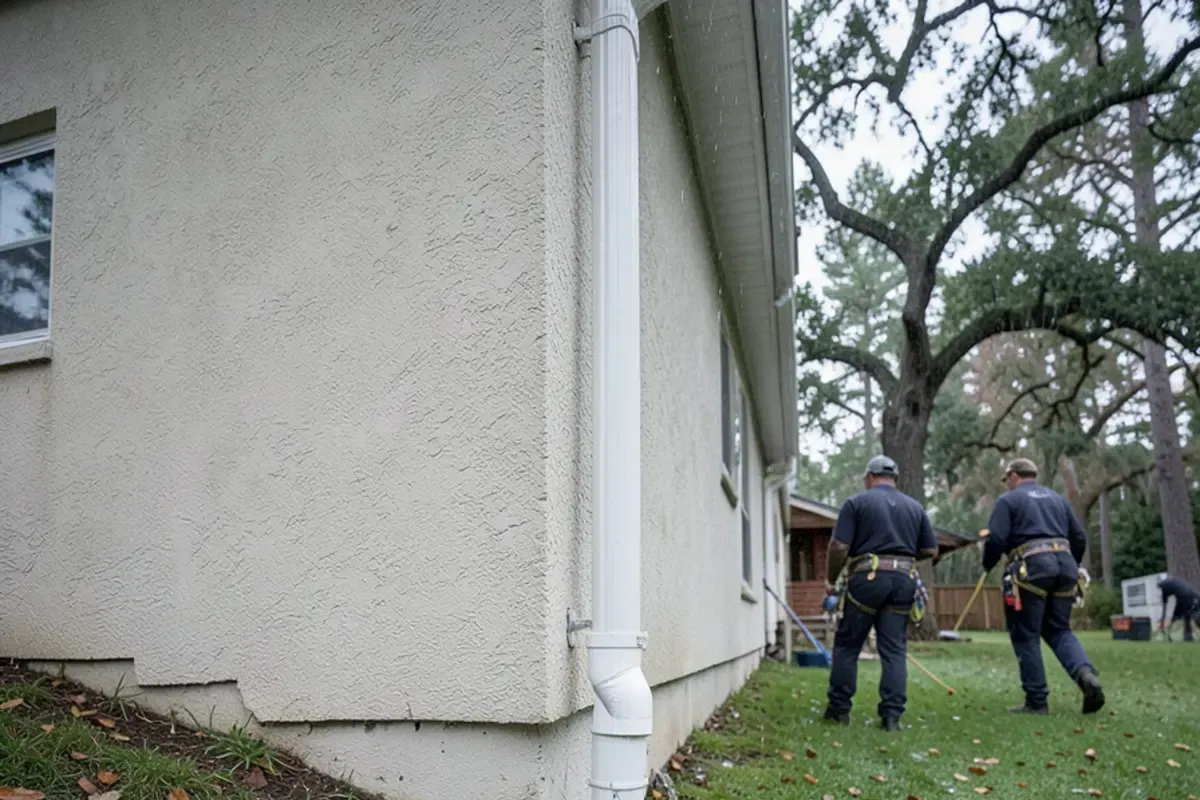
Downspout placement matters as much as gutter size. A downspout that empties onto a patio or against the foundation will cause trouble no matter how good the gutter is. We look at where every drop will discharge and whether the ground slopes away from the house.
Tree species change the plan. Oak tassels and redwood needles mat in different ways, and pine needles slip through coarse screens. The right guard depends on what actually falls on your roof, not on what is easiest to sell.
The hardware has honest trade-offs. Hidden hangers screwed into fascia hold far better than old spike-and-ferrule hangers, but only in sound wood, so on soft boards we replace the wood or tell you the gutter will be only as strong as its backing. Six-inch gutters carry more water but look heavy on a low ranch fascia. Copper runoff can streak light stucco, and copper must never touch aluminum or galvanized parts, which corrode where the metals meet.
Is a gutter replacement worth doing with a new roof?
Often, yes. During a reroof the drip edge and the first course of roofing are already off, so the fascia is fully exposed. Replacing gutters at the same time avoids hanging new metal on old wood and keeps the roof edge and gutter working as one system. If your gutters are under ten years old and in good shape, they can usually be removed and rehung instead. Either way, it should be spelled out on the roof replacement estimate.
A code detail sits behind this advice. The California Residential Code calls for drip edge at the eaves and rakes of asphalt shingle roofs, and that metal must lap over the gutter's back flange. When roof and gutters go on months apart, that lap is where water starts running down the fascia.
How should you compare gutter quotes in Santa Clara County?
Quotes only compare fairly when they describe the same job. Before you sign, line them up against this checklist:
- Same gutter size and profile, and the same aluminum thickness.
- Measured linear feet written on the estimate.
- Downspout count, size and the discharge point for each one.
- Hanger type and spacing (hidden hangers every two feet or so is common practice).
- A clear fascia allowance, so hidden rot does not become a surprise.
- Guards priced as a separate line, if offered.
- Removal, haul-away and daily cleanup included.
- Workmanship terms written on the estimate, and material warranty from the manufacturer under its own terms.
We work across Santa Clara County from our base in Campbell, and every gutter estimate we write is itemized so you can check it line by line.
Before you book a gutter estimate: what to notice first
Most of what sets the price is visible from the yard, so note these before the visit:
- In the next steady rain, note where water spills over and which downspouts stay dry.
- Look for peeling paint or dark streaks on the fascia below the gutter.
- If a reroof is a few years out, plan gutters and drip edge together.
Planning to send downspouts to rain barrels or a rain garden? Check Valley Water's current rebate programs before the drop locations are set.
Want every foot, drop and fascia board listed before you decide? Call (725) 745-8803 for a free gutter estimate.
Call (725) 745-8803