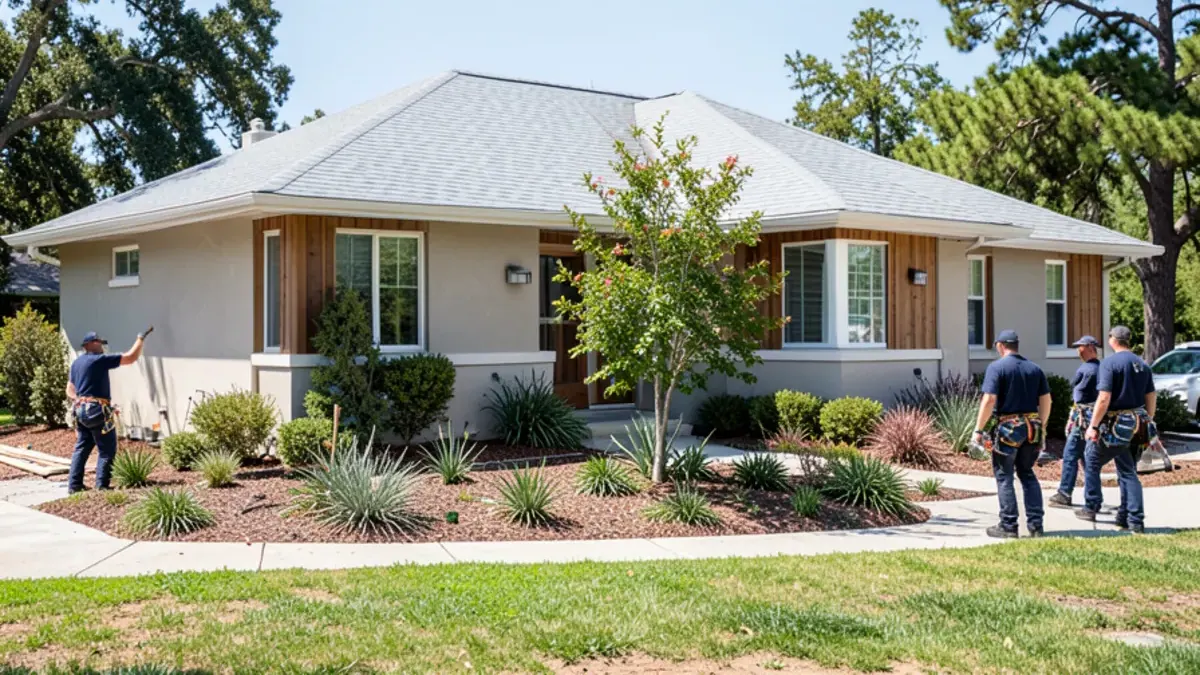
When does Title 24 call for a cool roof on a Campbell reroof?
California's Title 24, Part 6 (the Energy Code) includes cool-roof requirements that can apply when an existing roof is replaced, not only on new homes. Whether they apply to your project depends on three things:
- Climate zone. Campbell is in California Energy Commission Climate Zone 4, which is included in some of the reroof provisions.
- Slope. Low-slope roofs (flat or nearly flat sections) face the strictest reflectance targets and are the most common trigger. Steep-slope rules are milder and depend on the code edition.
- Share of the roof replaced. Small repairs do not trigger the rule; replacing a large portion of the roof can.
The code is updated every few years and has exceptions, so we check the edition in force when your permit is filed and confirm what the City of Campbell's plan review expects. If your parcel is in an unincorporated pocket, check with the Santa Clara County Planning and Development Department instead. Our article on Title 24 cool roof rules for Campbell reroofs explains the provisions in more depth.
Reading a cool roof rating label
The Cool Roof Rating Council (CRRC) tests and lists cool roof products, and Title 24 relies on its published values. When we compare products, these are the numbers on the label:
| Term | What it measures | Why it matters |
|---|---|---|
| Initial solar reflectance | Share of sunlight reflected when new | Shows performance on day one |
| Aged solar reflectance | Reflectance after three years of weathering | The figure energy rules usually use |
| Thermal emittance | How readily the surface releases absorbed heat | High emittance lets the roof cool off after sunset |
| Solar Reflectance Index (SRI) | A combined score of reflectance and emittance | Some code paths accept SRI instead of separate values |
A product only counts if the exact color and line is listed. Two shingles from the same maker in different colors can rate very differently.
Questions about cool roofs?
Call first for the quickest answer, or request a free written estimate below.
Request a free written estimate
Fastest answer: call (725) 745-8803. Or send the details below and we will call you back.
Cool roof shingles, tile and metal in colors that are not white
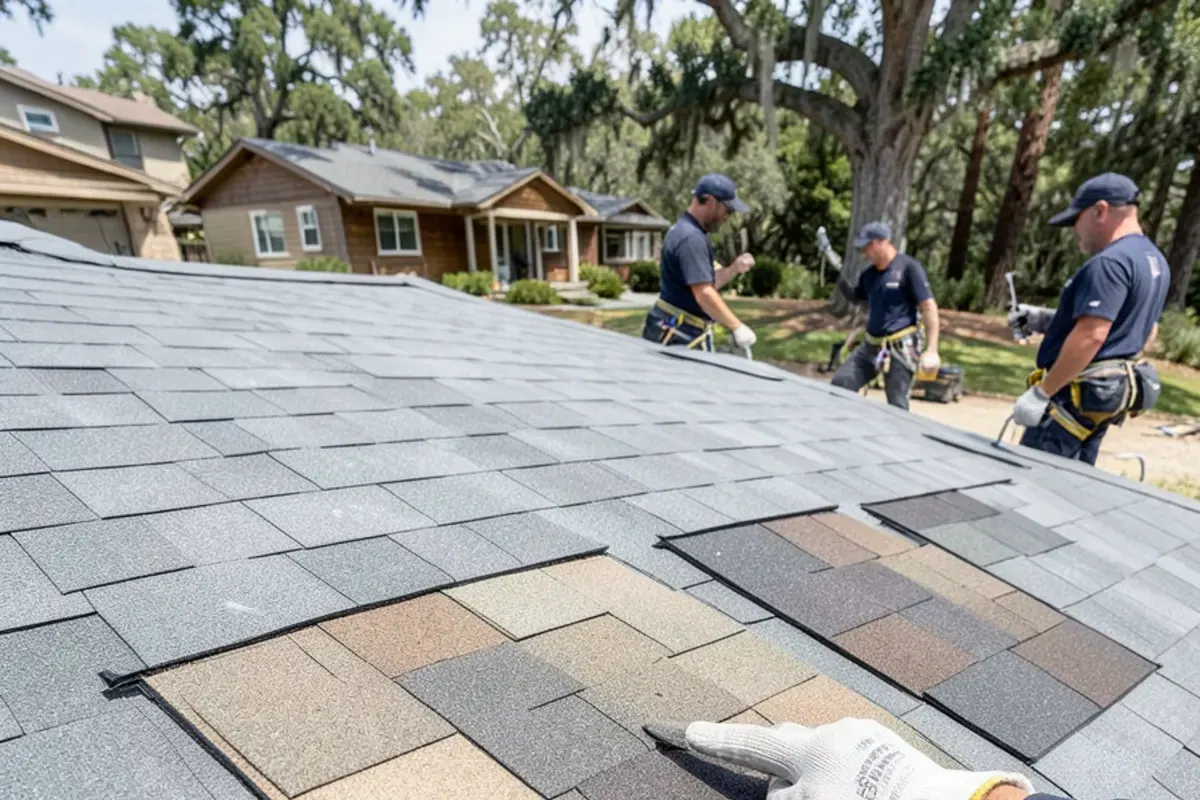
White is the most reflective color, but it is rarely the right look for a pitched roof on a ranch house. Manufacturers now make reflective versions of earth tones.
- Cool roof shingles: reflective granules in grays, tans and browns. Past shingle jobs have used Owens Corning TruDefinition Duration Cool Plus. More on shingle choices is on our asphalt shingle roofing page.
- Cool-rated tile: many clay and concrete tile colors rate well because tile is naturally light and holds an air gap beneath.
- Painted metal: reflective pigments in factory finishes; bare Galvalume reflects strongly when new.
- Synthetic shake: some lines offer cool-rated colors for owners leaving cedar.
What our cool roof work covers
- Cool-rated reroofs in shingle, tile, metal and synthetic shake
- Reflective membranes and coatings on low-slope porches, additions and flat wings
- Title 24 scope checks and CRRC listing lookups at the estimate
- Attic ventilation balancing and optional radiant barrier sheathing
- Coordination with your solar company where panels are planned
Specifying and installing a cool roof, step by step
A cool roof is installed like any reroof; the difference is in the choices made before the first bundle arrives.
- Scope check. At the free estimate we measure each plane, mark the low-slope ones and work out what share of the roof is being replaced, the inputs Title 24 looks at.
- Product match. We pull the CRRC listing for each candidate line and color and weigh the aged values against your HOA list or the look of the street.
- Permit. The rated product is noted with the reroof permit so the inspection has a clear reference.
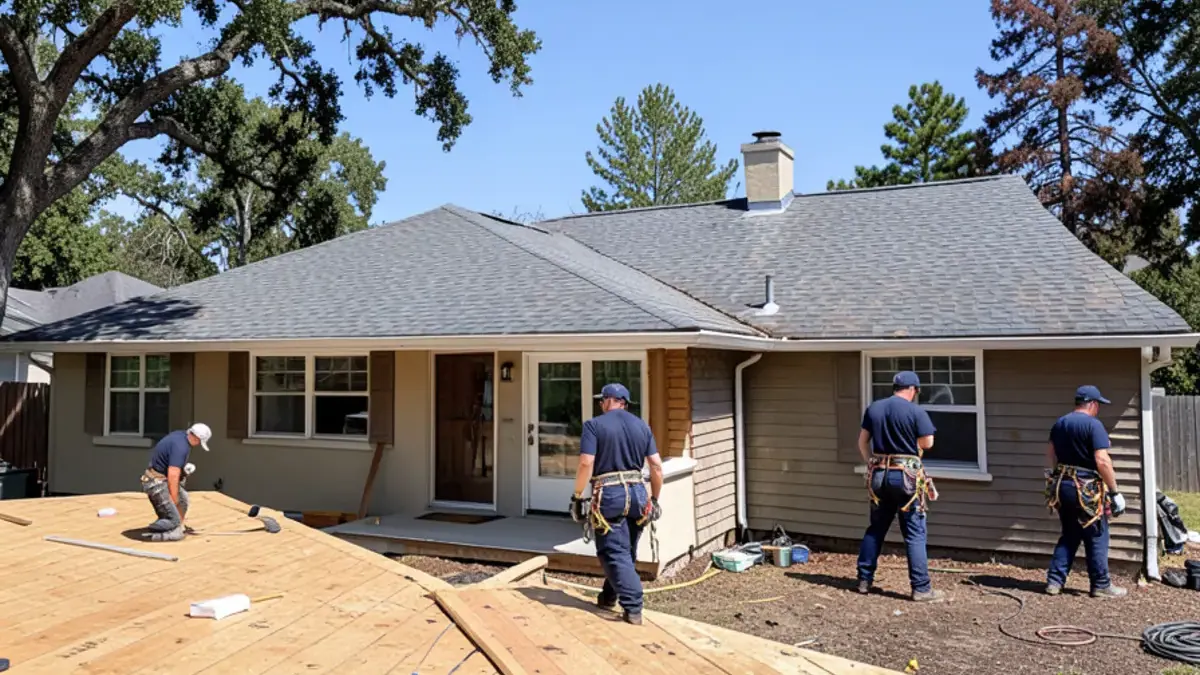
- Tear-off and deck. Old roofing comes off, dry rot is replaced and the city checks the sheathing nailing.
- Ventilation, then the surface. Intake and exhaust are balanced before the rated shingle, tile, metal or membrane goes on, because a reflective surface cannot vent a hot attic by itself.
- Labels and final. Product labels stay available for the inspector, the yard is cleaned, and the final inspection closes the permit.
Cool roof coating on low-slope sections
Many South Bay homes combine a pitched main roof with flatter sections: a porch, a rear addition, a patio cover or the low-slope wing of an Eichler-era design. Those surfaces get the full afternoon sun and are where Title 24 reflectance targets are toughest.
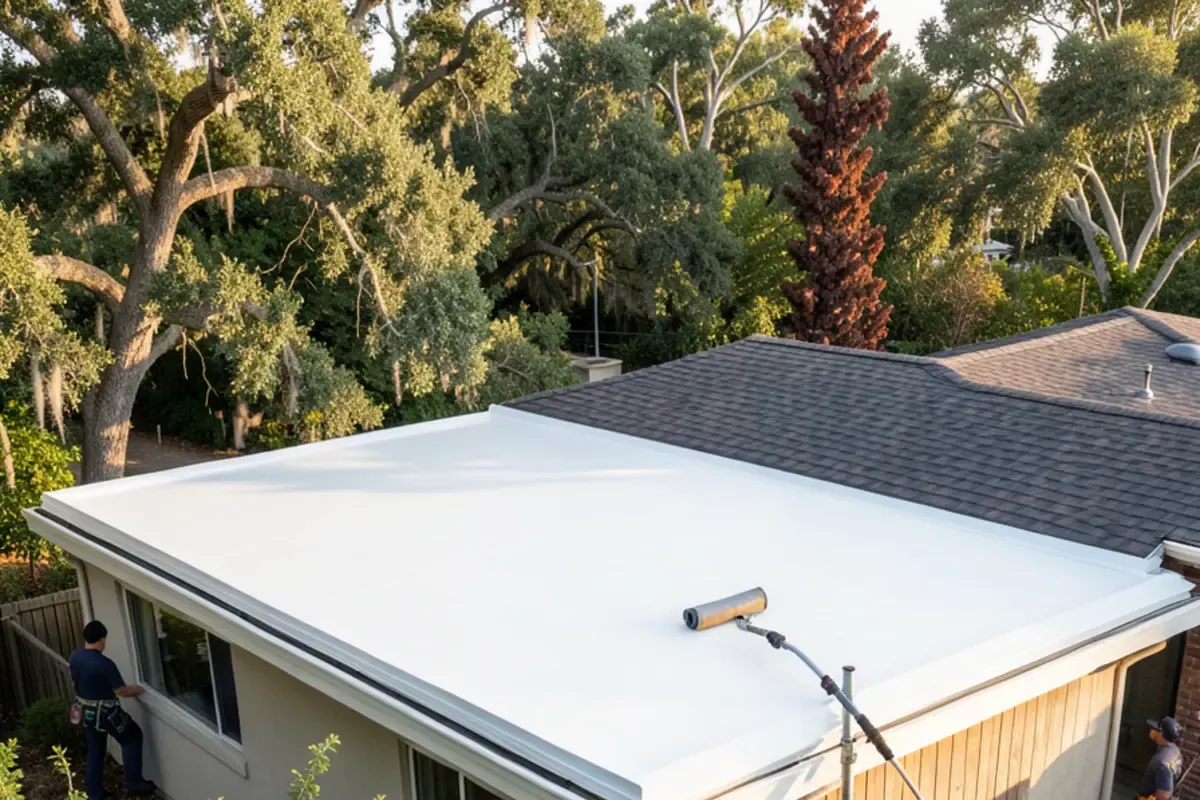
A reflective coating over a sound low-slope membrane can raise its reflectance, and white or light single-ply membranes are rated cool from the factory. Coatings are not a fix for a failing roof, though; the membrane underneath must be dry and well adhered, and ponding areas need to drain first. We look at the condition before recommending one.
What changes the cost of a cool-rated roof?
We publish no prices, but your written estimate shows how these variables play out on your roof:
- Which line is rated in the color you want. A listed color can mean a different shingle line or tile blend than the one you first liked.
- Low-slope area. Porches and additions may need a new cool-rated membrane, or only a coating if the existing membrane is sound.
- Ventilation upgrades, like a new ridge vent or extra soffit intake.
- Radiant barrier sheathing where deck boards are being replaced anyway.
- Roof size, pitch and tear-off layers, the drivers of any reroof price.
If Title 24 requires a cool surface for your scope, the rated product is not optional on those planes, so we price only listed products there and show any optional upgrades on separate lines.
Does an energy efficient roof lower bills in a Campbell summer?
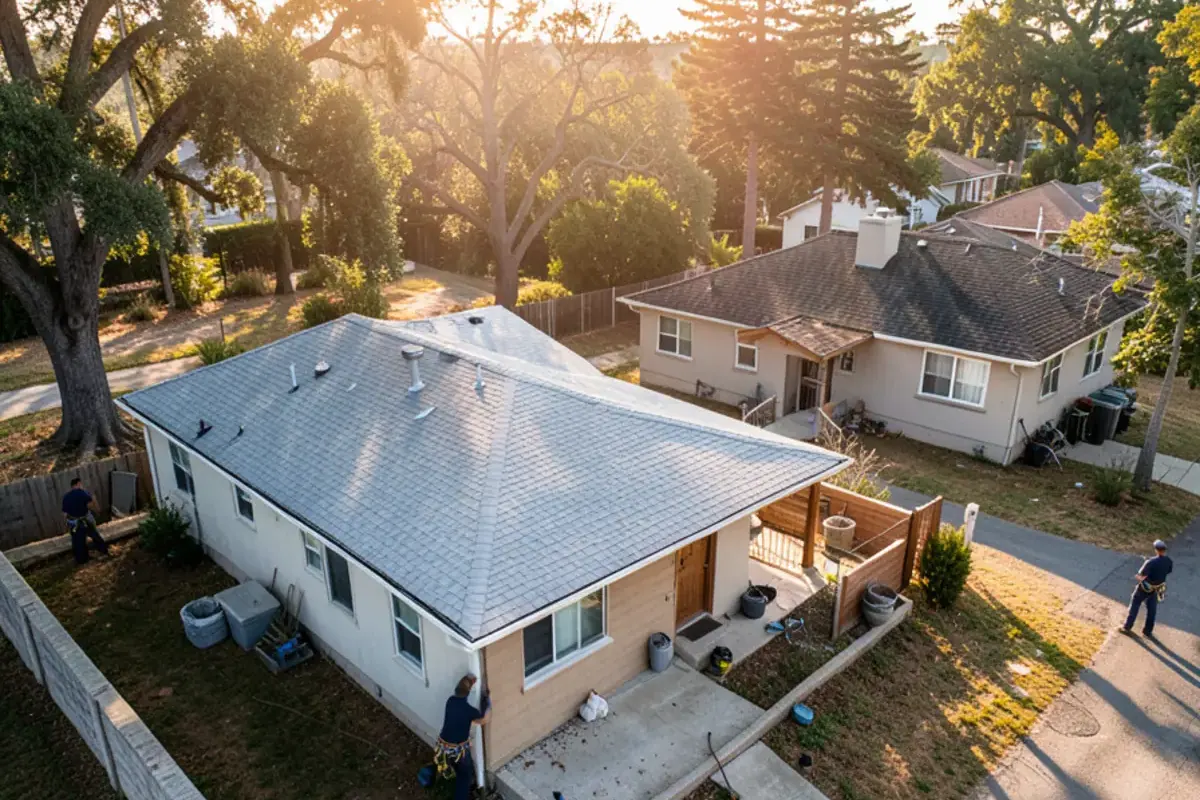
A cool roof reduces how much heat the roof surface pushes into the attic. The benefit shows up most where the attic matters to the living space:
- Air-conditioning ducts or the air handler sit in the attic, as they do in many 1960s and 1970s Campbell homes
- Ceiling insulation is thin or compressed
- Bedrooms are under west- or south-facing slopes
- The house has little tree shade
Savings vary with all of these, so we do not promise a number. Under heavy oak or redwood shade, the gain is smaller. Pairing a reflective roof with balanced attic ventilation and adequate insulation usually does more than any one change alone.
Why owners rely on our cool roof advice
We are family-run, and the free estimate includes photos of each slope and the attic, so you can see where sun and heat actually hit your house. We say plainly when shade makes a cool surface a poor buy, and the written estimate separates the rated product from the ventilation work so you can judge each one. Crews clean up daily, and small add-ons such as coating a porch roof fit into the same job.
Should a solar reflective roof be planned around panels?
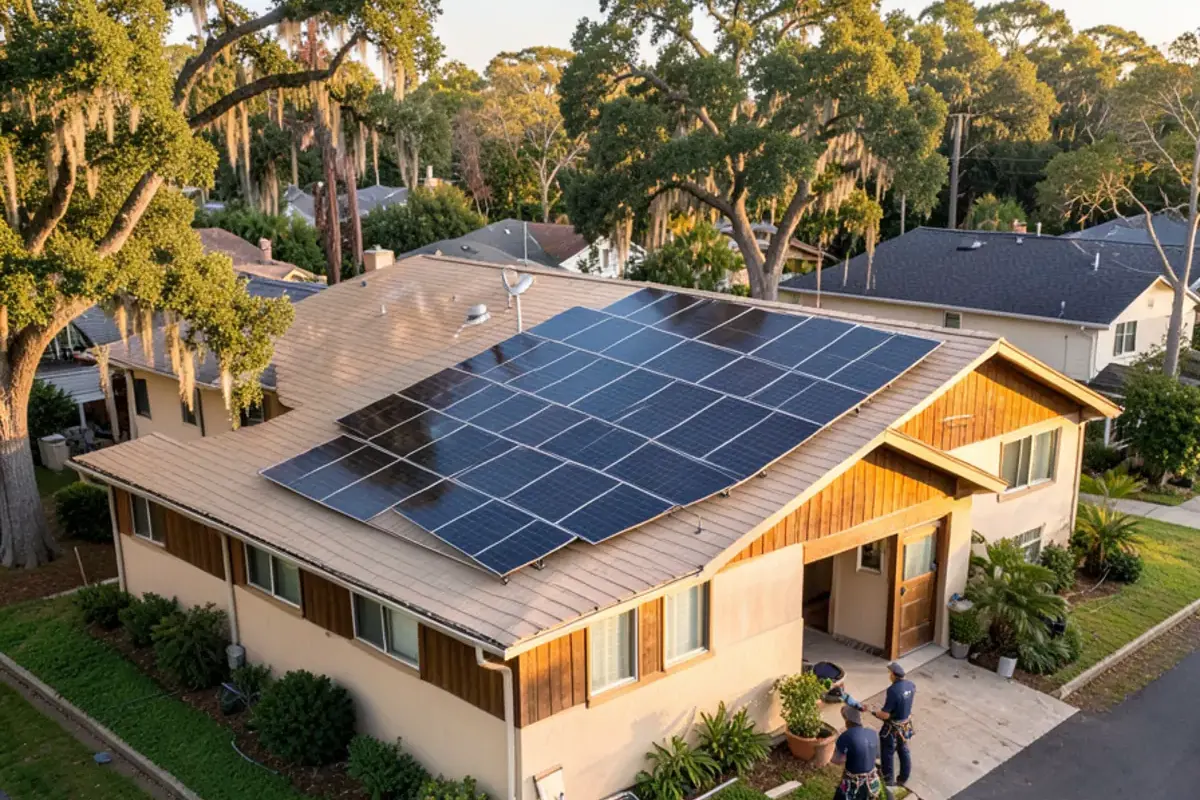
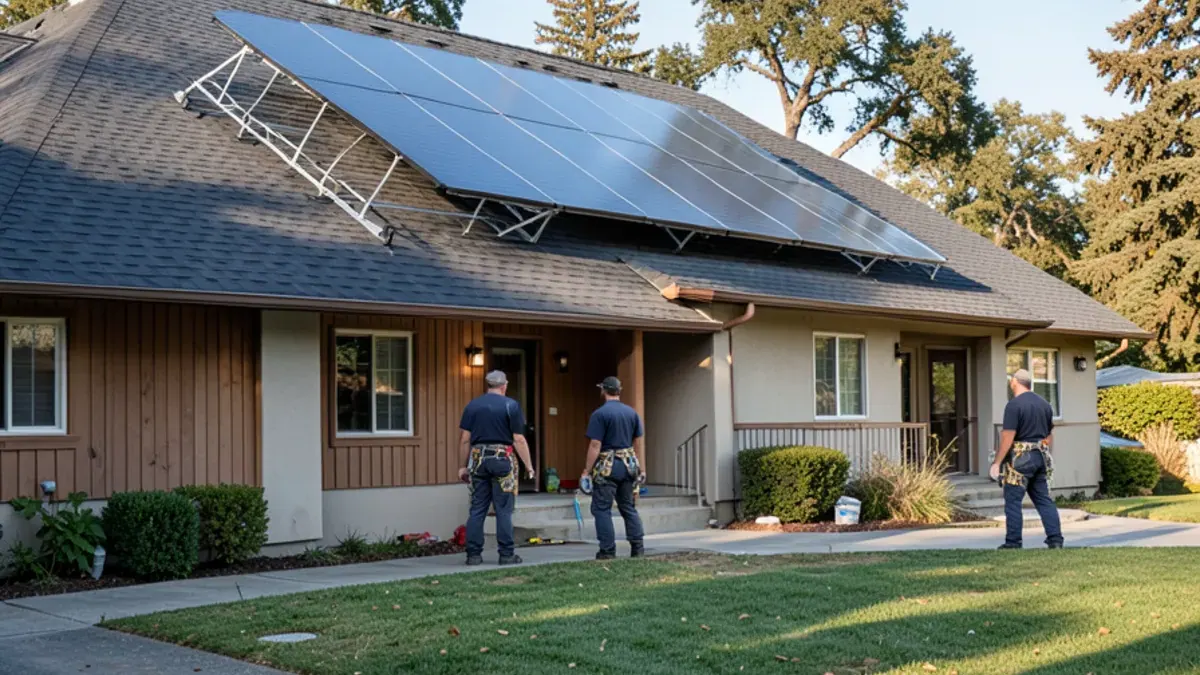
Silicon Valley homes add solar at high rates, and panels change the cool roof picture. The area under an array is shaded, so reflectance there matters less, while the exposed slopes still benefit. We check how the current energy code treats roof area under your planned array and coordinate the material choice with the solar layout.
If panels are coming, replacing the roof first avoids paying to remove and reinstall them later. Our roof replacement before solar page covers scheduling with your solar company.
Want to know if your reroof triggers Title 24 cool roof rules? We check it at the free estimate.
Call (725) 745-8803