Why composition shingle suits so many Campbell houses
Much of Campbell was built as single-story ranch housing in the 1950s through the 1970s, with simple gables and hips at moderate pitch. A composition shingle roof fits that framing without structural changes, comes in hundreds of colors, and is the material most neighbors already have, which keeps a street looking consistent.
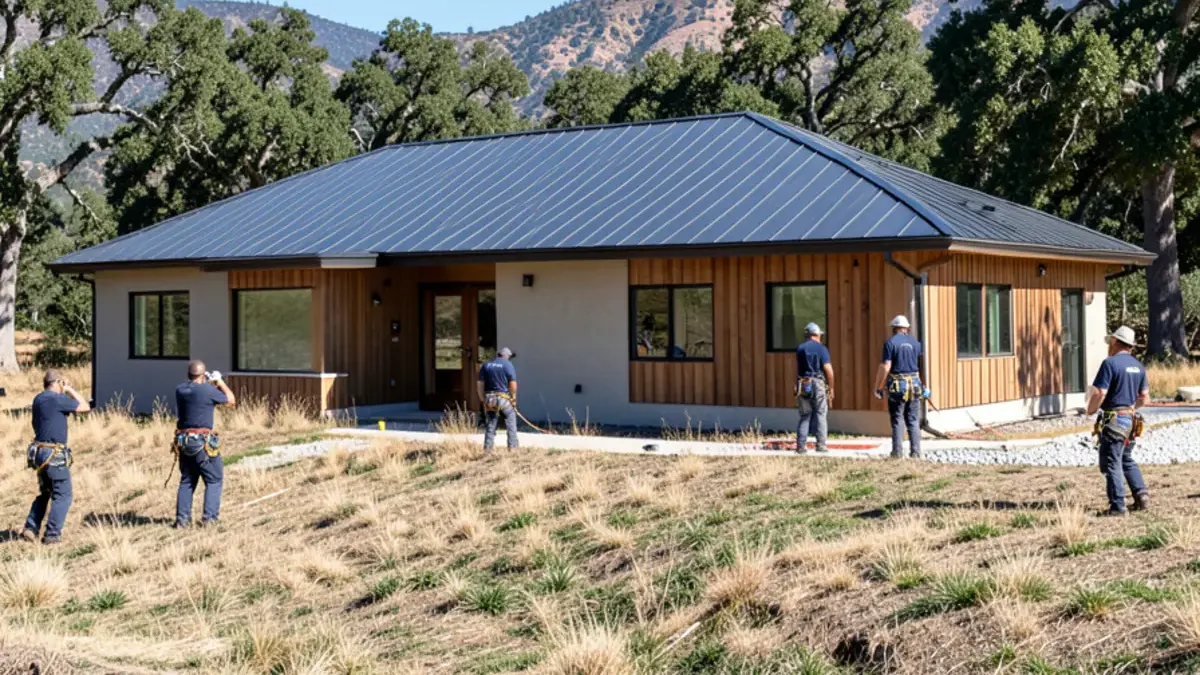
Shingles are also light. Moving from shingle to tile roofing can mean an engineer's review of the rafters; staying with shingle does not. Homeowners who want a longer service life or a fire-zone assembly often compare shingles with metal roofing before deciding.
Signs your shingle roof is worn out, not just leaking
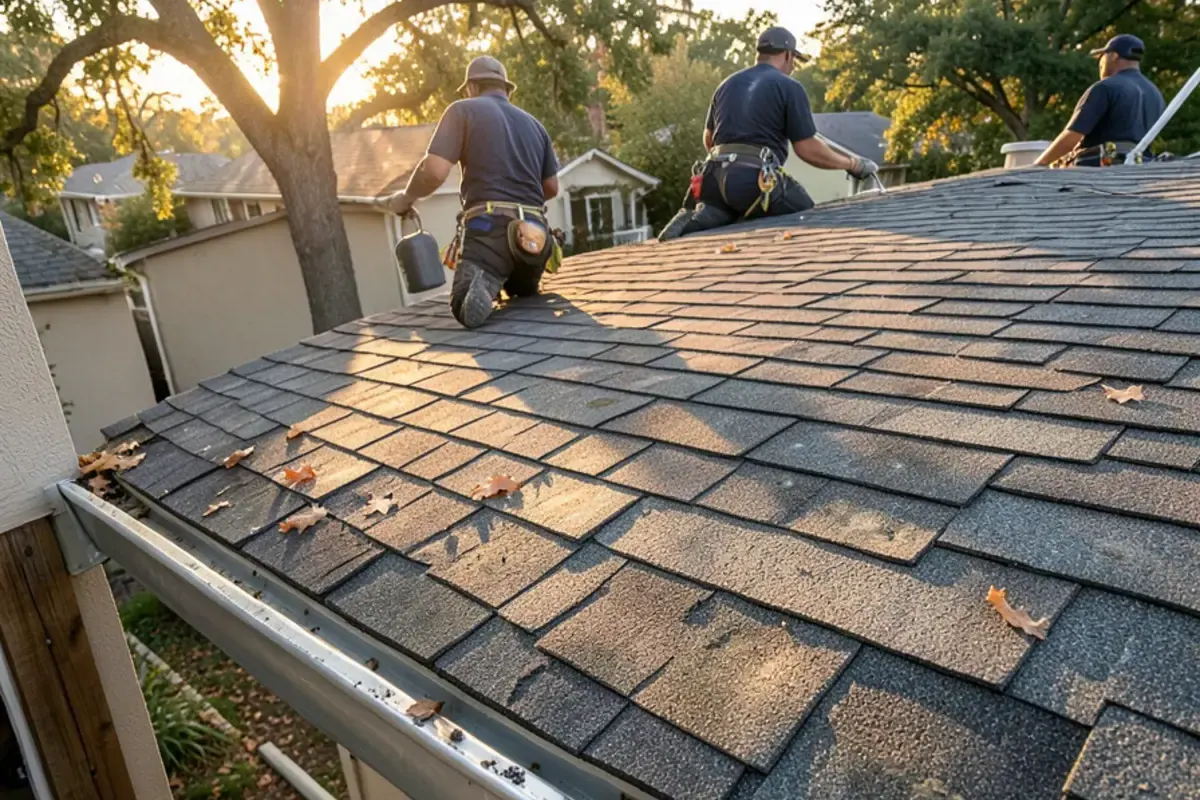
One blown-off tab is a repair. A shingle roof is finished when wear spreads across whole slopes, usually the south and west faces that bake from May to October.
- Granules piling up at downspout outlets, leaving shingles smooth, dark or bald in patches.
- Curled or cupped edges that lift in gusts and let wind-driven rain under the course above.
- Cracks across the tabs, a sign the asphalt has dried out and lost its flex.
- Nail heads backing out through the shingles, often over a deck that has shrunk and dried.
- Mismatched old patches, or a second layer already laid over the first.
Leaves and needles left in valleys all winter hold moisture against the shingles and speed this up. Two or more of these signs together is the time to book an inspection with photos.
Questions about asphalt shingle roofing?
Call first for the quickest answer, or request a free written estimate below.
Request a free written estimate
Fastest answer: call (725) 745-8803. Or send the details below and we will call you back.
Architectural shingles in Campbell versus old 3-tab
Most roofs we tear off here are flat 3-tab shingles installed decades ago. Their replacements are almost always architectural (also called dimensional or laminated) shingles.
| Feature | 3-tab | Architectural |
|---|---|---|
| Construction | Single layer with cut-out tabs | Two or more laminated layers |
| Look | Flat, uniform rows | Shadow lines and texture |
| Wind resistance | Lower rated | Higher rated on most lines |
| Availability | Shrinking product range | Main line from every major maker |
| Hiding deck flaws | Shows waves and dips | Texture masks minor unevenness |
Owens Corning and GAF shingles: choosing a line
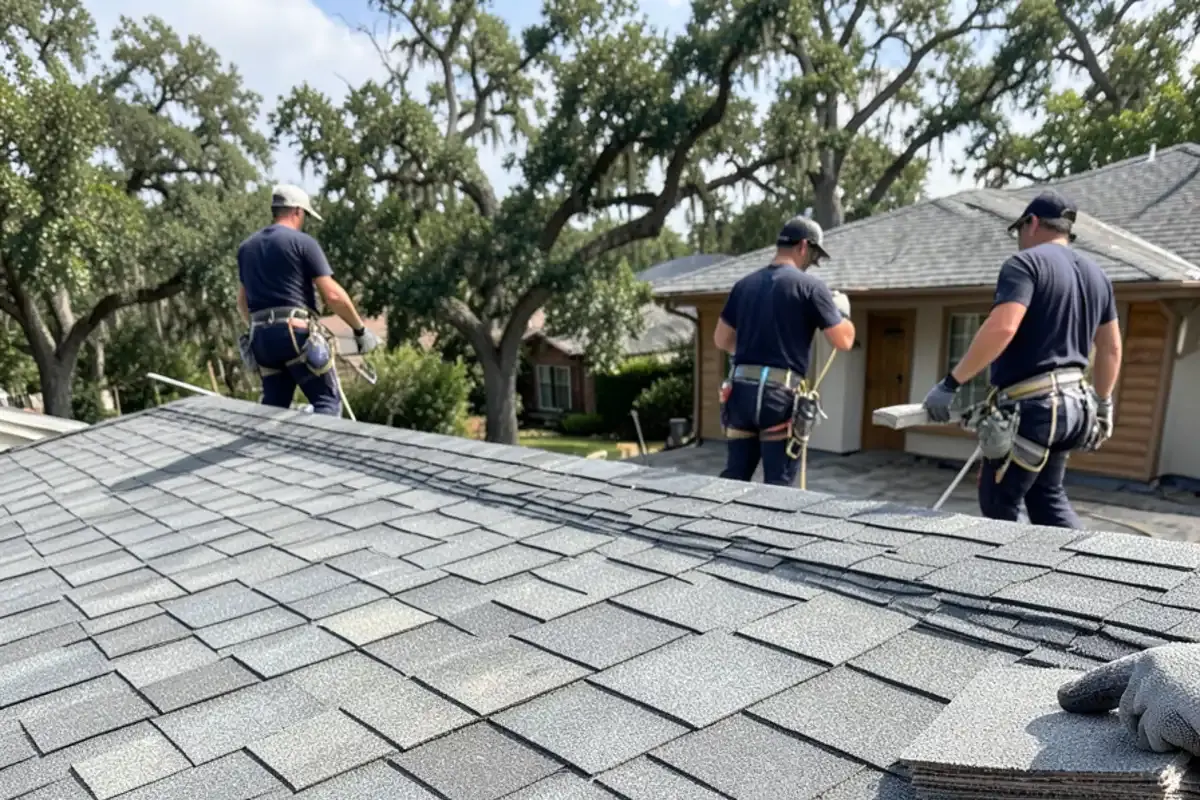
Our past shingle jobs have used Owens Corning lines, including Duration and TruDefinition Duration Cool Plus. GAF and other major manufacturers make comparable architectural lines, and if you have one in mind, bring it to the estimate and we will compare the specs side by side.
- Color: look at full-size samples on your own roof in daylight; small chips read darker than a whole slope.
- Reflectance: cool-rated versions of many colors reflect more summer sun.
- Algae resistance: helpful on shaded north slopes under oaks and sycamores.
- Matching accessories: hip and ridge caps, starter strips and underlayment from the same maker keep the system consistent with its warranty terms.
Material warranties come from the shingle manufacturer under its own terms. Workmanship terms for our installation appear in writing on the estimate.
What goes under the shingles on a shingle roof replacement?
The shingles you see are the last layer. Leaks usually start in the parts underneath, so the estimate spells each one out.
- Deck: old roofing removed to the boards, dry rot and delaminated plywood replaced, then the city's sheathing nailing inspection.
- Drip edge: metal at eaves and rakes so water drops into the gutter instead of wicking behind the fascia.
- Underlayment: synthetic underlayment across the deck, with self-adhered membrane in valleys and around penetrations.
- Flashing: new step and counter flashing at walls and chimneys, new pipe jacks and valley metal where the design calls for it.
- Starter and field shingles: nailed to the manufacturer's pattern, which matters for wind ratings during winter storms.
- Ventilation: ridge vent or roof vents sized to the soffit intake, so the attic does not cook the shingles from below.
Do cool roof shingles make sense on your house?
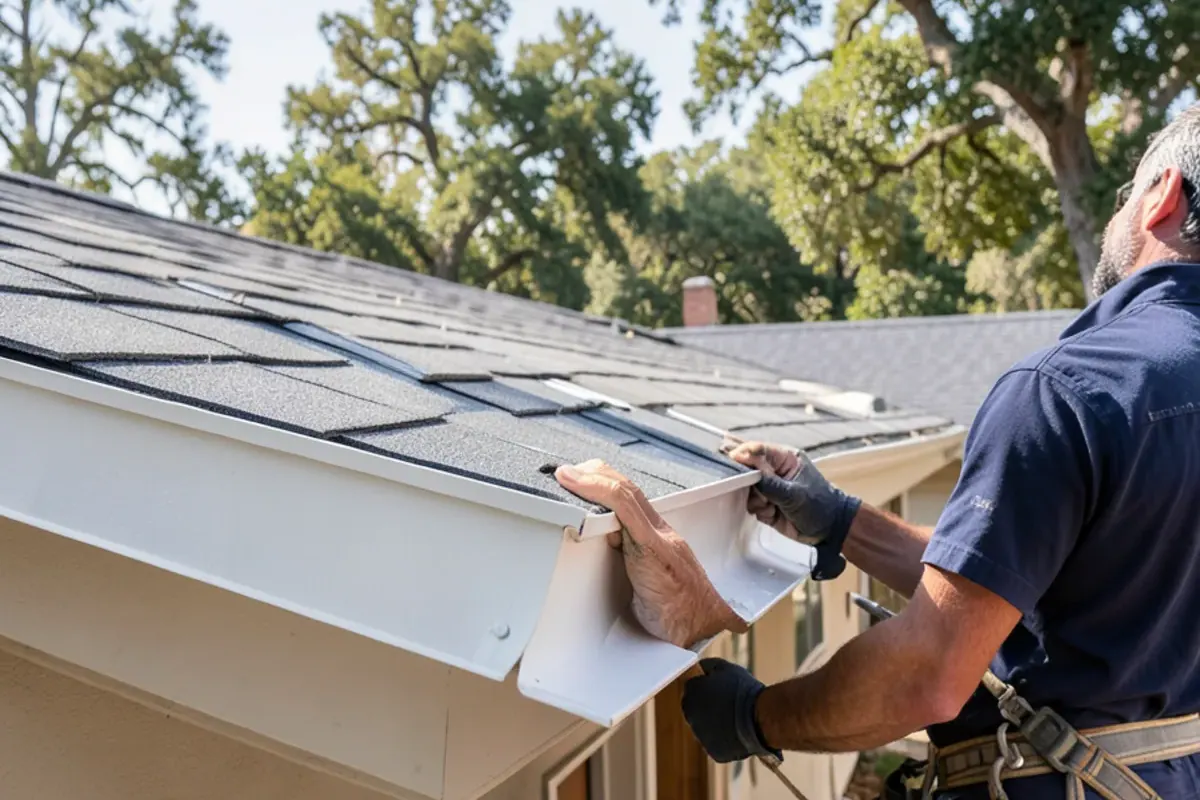
Cool roof shingles use reflective granules to bounce back more sunlight, so the roof deck and attic run cooler on a hot August afternoon. They come in mid-tone grays, tans and browns, not just white.
California's Title 24, Part 6 energy code can require a cool-rated surface on some reroofs; the triggers are the climate zone (Campbell sits in Zone 4), the roof's slope and the portion being reroofed. If your scope triggers the rule, we choose from rated colors and note it on the permit. Even where it is optional, a cool shingle is worth considering over a west-facing bedroom wing or ducts in the attic.
How long will a new shingle roof hold up in South Bay weather?
Our climate is hard on shingles in two ways. Long, dry summers with strong UV dry out the asphalt and loosen granules, especially on south and west slopes. Then almost all the year's rain arrives between November and March, often in multi-day atmospheric-river storms with gusty wind that tests every loose tab.
What extends a shingle roof here is unglamorous: correct nailing, real attic ventilation, gutters kept clear of leaves, and a quick look after big storms. Manufacturer life ratings assume those basics are in place.
From estimate to final inspection: a shingle reroof step by step
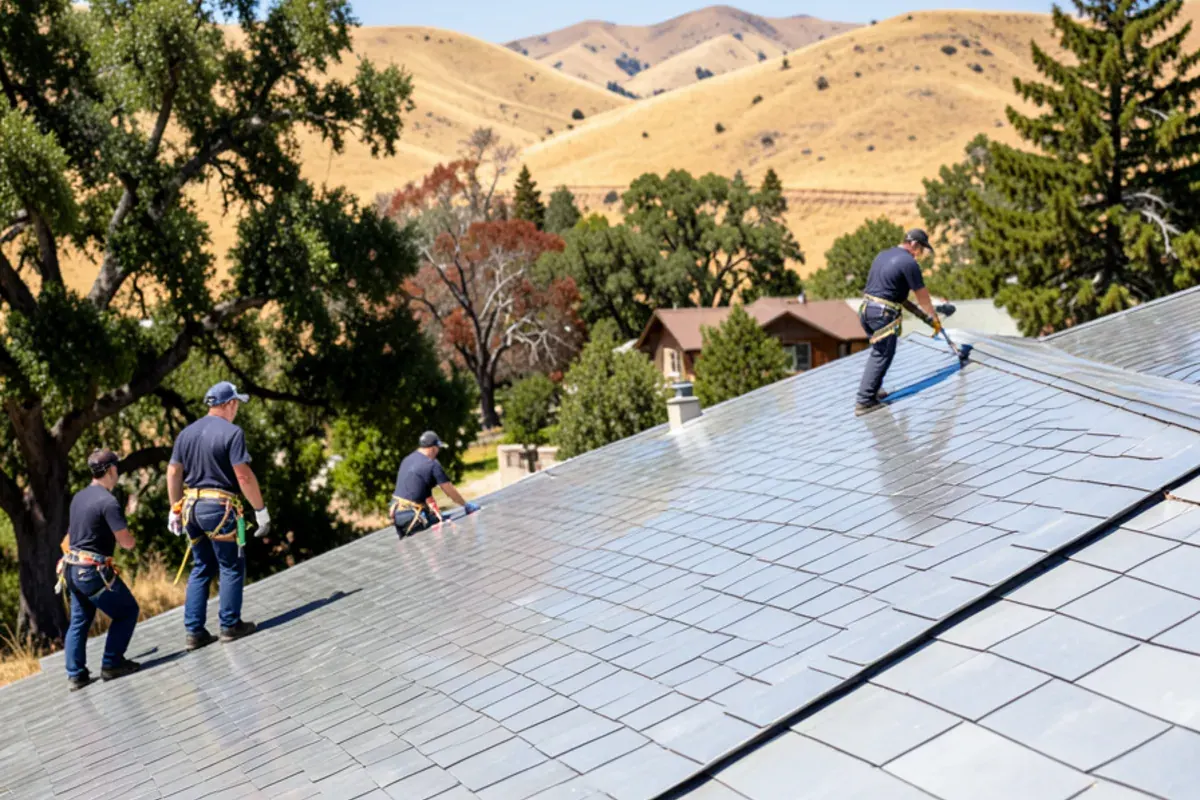
A single-story shingle job here runs in this order, with photos at the start and two city inspections along the way.
- Roof walk and attic look. We photograph worn slopes, flashing and vents, and check the underside of the deck for old stains.
- Estimate and shingle pick. You choose a line and color from full-size samples; the written estimate lists layers, underlayment, flashing and a sheathing allowance.
- Permit and delivery. Once the permit is issued, bundles are staged by each slope.
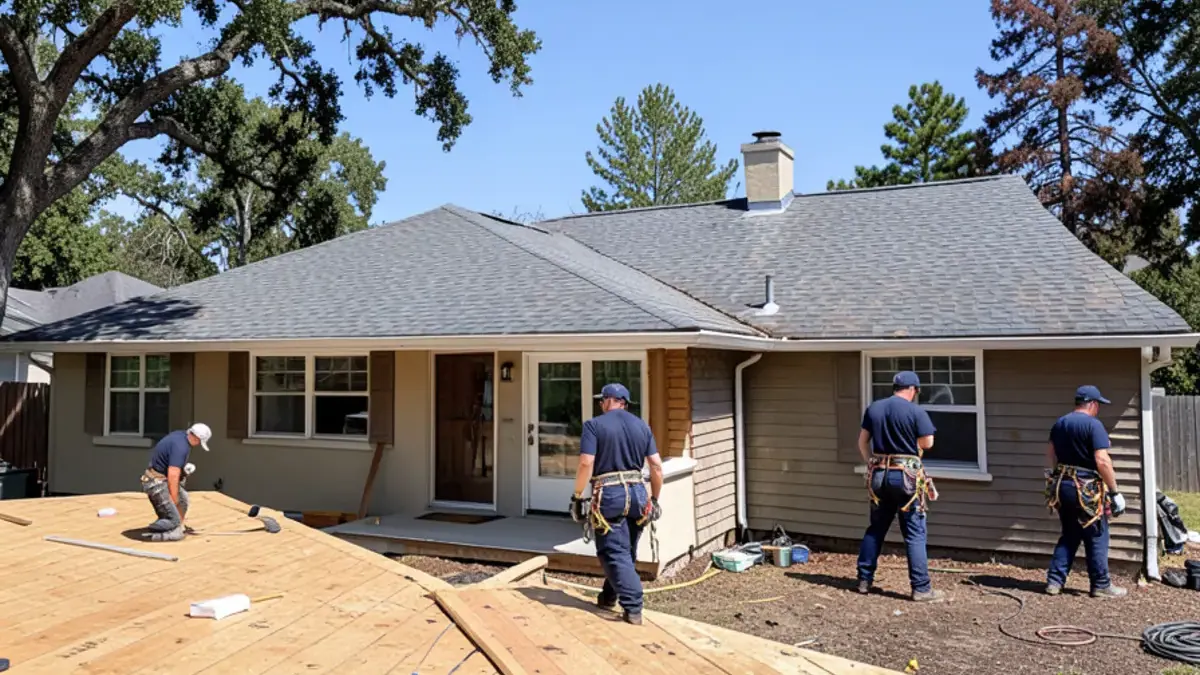
- Tear-off and nailing inspection. Shingles come off a section at a time, soft plywood is swapped, and the city checks the fastening before it is covered.
- Dry-in and shingling. Underlayment, drip edge and flashing first, then starter, field courses and ridge caps nailed to the maker's pattern.
- Nail sweep and final. Debris hauled off, the yard swept for nails, then the final inspection.
Permits, licensing and code for shingle work
In Campbell, a C-39 contractor or the owner-builder files the reroof permit on MyGovernmentOnline, one per building. Unincorporated addresses are permitted by the County instead. The California Residential Code allows asphalt shingles only on slopes of 2:12 or steeper, with double underlayment from 2:12 up to 4:12, which catches low porch roofs and ranch additions. Most fiberglass-mat shingle lines are listed Class A, the rating wildfire-area rules expect in CAL FIRE-mapped hazard zones. Whoever you hire, look up the license on the CSLB site.
Shingle roof cost in Campbell: line items worth comparing
Two shingle bids can look far apart because they are not pricing the same roof. Compare them on these points rather than the bottom line alone:
- Number of existing layers being removed and the dump fees that go with them
- Allowance for sheathing replacement, stated per sheet or per board foot
- Shingle line and grade, plus whether matching hip and ridge caps are included
- Underlayment type and whether valleys get self-adhered membrane
- New flashing versus reused flashing at walls, chimneys and skylights
- Ventilation work, such as cutting in a ridge vent or clearing blocked soffits
- Permit and inspection handling
Some factors belong to the house, not the bid: a two-story hip roof with several valleys, oaks limiting where the trailer parks, or a detached garage that needs its own permit.
Why owners choose us for a shingle reroof
We are family-run, and the free estimate is a roof walk, not a guess from the curb: photos of your slopes, flashing and vents, then a written, itemized price. If a section repair will buy you a few seasons, we tell you. Crews clean up daily, and small extras such as custom flashing pieces fit into the same visit.
Comparing shingle bids? We will put every item in writing so the numbers line up.
Call (725) 745-8803