Single ply roofing, explained without the sales pitch
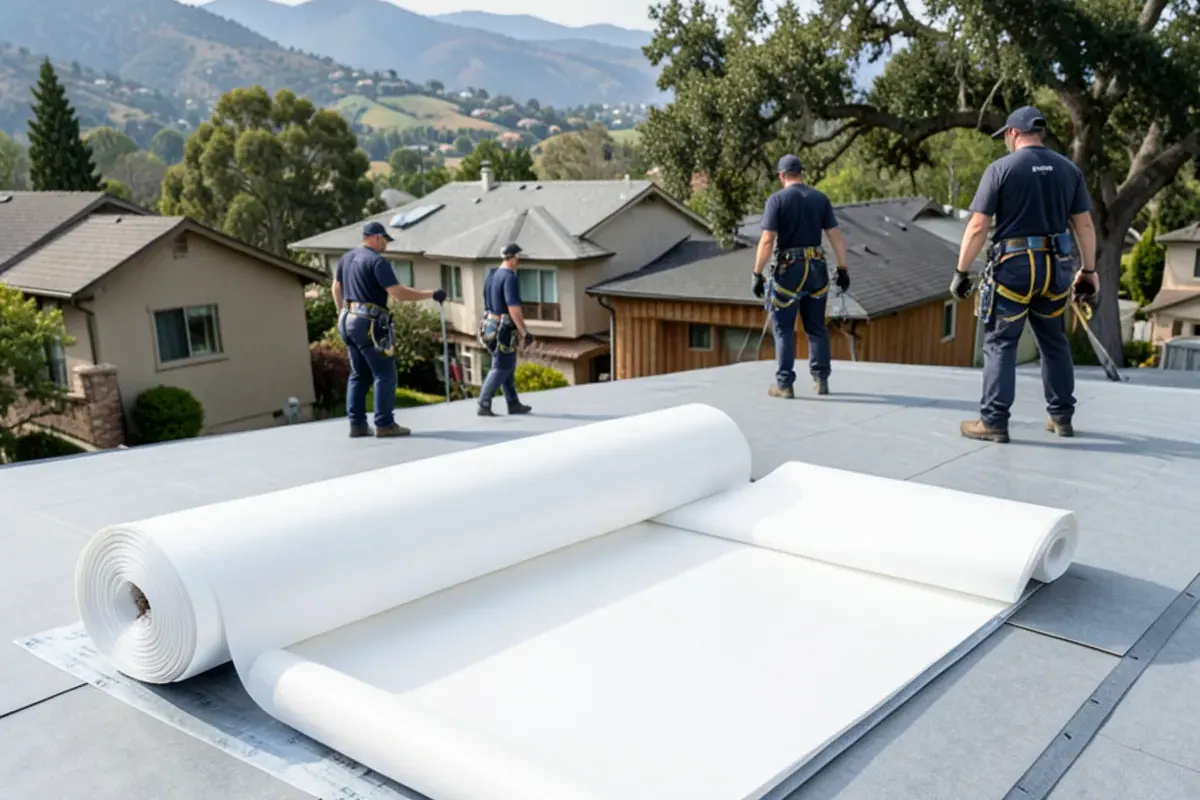
Single-ply means one factory-made sheet, usually 45 to 80 mils thick, reinforced with a polyester scrim and laid over insulation or a cover board. Where a torch-down roof builds waterproofing out of stacked layers, a single-ply roof relies on the sheet itself and on its seams. Get the seams and the edges right and the field of the roof rarely gives trouble.
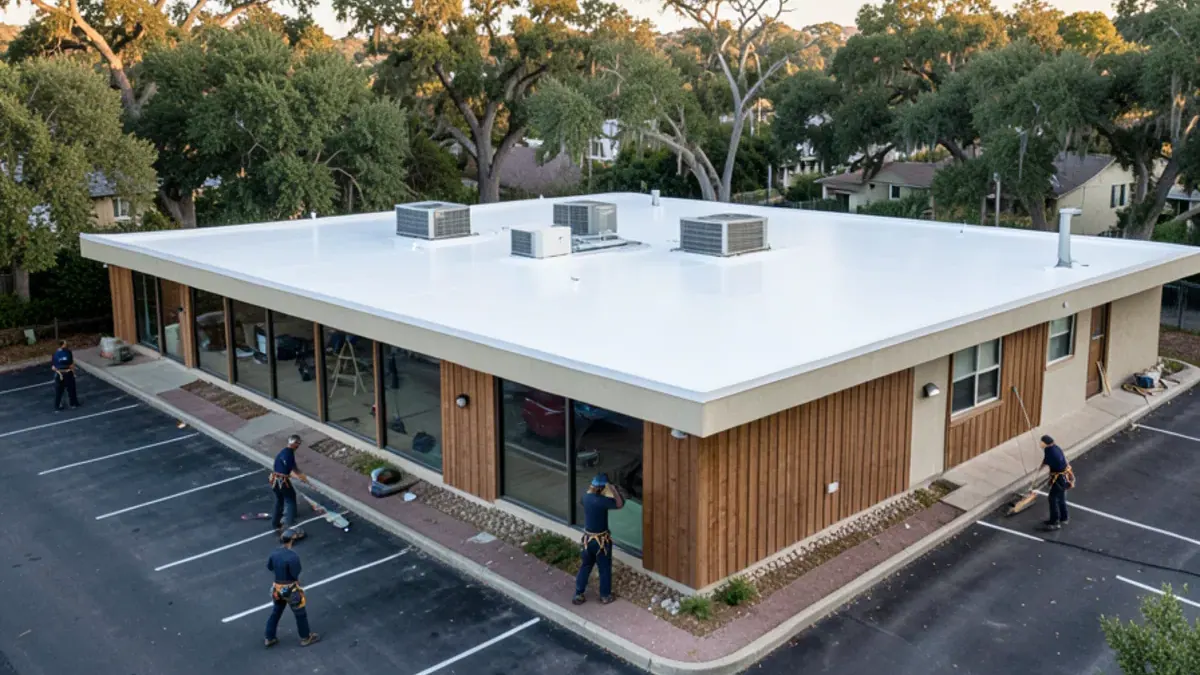
Most single-ply in the South Bay is white or light gray. On a long, dry Campbell summer that matters: a reflective roof stays far cooler than a black one, which helps the rooms below and slows heat aging of the membrane.
A single-ply project with us can include:
- Tear-off, or a cover-board recover over a dry, sound roof.
- Flat or tapered insulation boards.
- TPO, PVC or EPDM, fully adhered or mechanically fastened.
- Welded corners, pipe boots and curb wraps.
- Membrane-clad edge metal, drains and scuppers.
Signs your low-slope roof is a candidate for single-ply
Single-ply is not the answer for every flat roof, but certain conditions point straight at it. These are the ones we run into most around Campbell and the wider valley:
- Rooms under the roof run hot: a dark cap sheet over a family room or ADU that bakes every August afternoon.
- A reroof that brings in Title 24: low-slope replacements are where cool-roof rules most often apply.
- Grease or exhaust on a commercial roof: restaurant fans along busy corridors call for PVC.
- Many penetrations: HVAC curbs, vents and skylights are easier to seal with welded, pre-formed flashings than with layered patches.
- Large, simple areas: wide sheets leave fewer seams than rolled goods.
Local causes of single-ply trouble are just as specific: sprinkler overspray and oak litter holding moisture against seams, tools dropped by other trades servicing rooftop units, and branches scraping the sheet in winter wind.
Questions about tpo & pvc roofing?
Call first for the quickest answer, or request a free written estimate below.
Request a free written estimate
Fastest answer: call (725) 745-8803. Or send the details below and we will call you back.
TPO vs PVC: where each membrane earns its place
| TPO | PVC | EPDM | |
|---|---|---|---|
| Material | Thermoplastic polyolefin | Polyvinyl chloride with plasticizers | Synthetic rubber |
| Seams | Hot-air welded | Hot-air welded | Primer and seam tape or adhesive |
| Color | White, gray, tan | White, gray, other colors | Mostly black; white available |
| Strong suit | Reflective, economical, widely used | Resists grease, oils and many chemicals | Flexible, simple on plain rectangles |
| Weak spot | Older sheets can be harder to weld in repairs | Usually priced above TPO | Taped seams and black surface age in heat |
| Where we use it | Homes, ADUs, offices, warehouses | Restaurant and food-service roofs, exhaust areas | Simple roofs with few penetrations |
For most houses and ADUs, TPO is the practical pick. PVC roofing in Campbell earns its higher material cost on retail buildings along busy corridors where restaurant exhaust fans drop grease onto the roof, because grease softens many other membranes.
Is EPDM rubber roofing still worth considering?
Sometimes. EPDM has been around for decades, handles temperature swings without cracking and is easy to lay on a plain rectangle with no rooftop equipment. It is a reasonable choice for a detached shop or a simple porch roof.
Its drawbacks show up here, though. Black EPDM gets hot in the sun, which works against Title 24 cool-roof goals, and its glued or taped seams depend on adhesives that age. On roofs crowded with vents, skylights and curbs, we lean toward a welded membrane instead.
TPO roofing in Campbell, CA: how a TPO roof installation comes together
- Prep: remove the old roof, or confirm it is dry and sound enough to cover, then repair the deck.
- Insulation and cover board: flat or tapered boards go down first, fastened in the pattern the manufacturer specifies for the roof zone.
- Attachment: sheets are mechanically fastened in the seam laps or fully adhered with bonding adhesive; fully adhered is quieter in wind and common on homes.
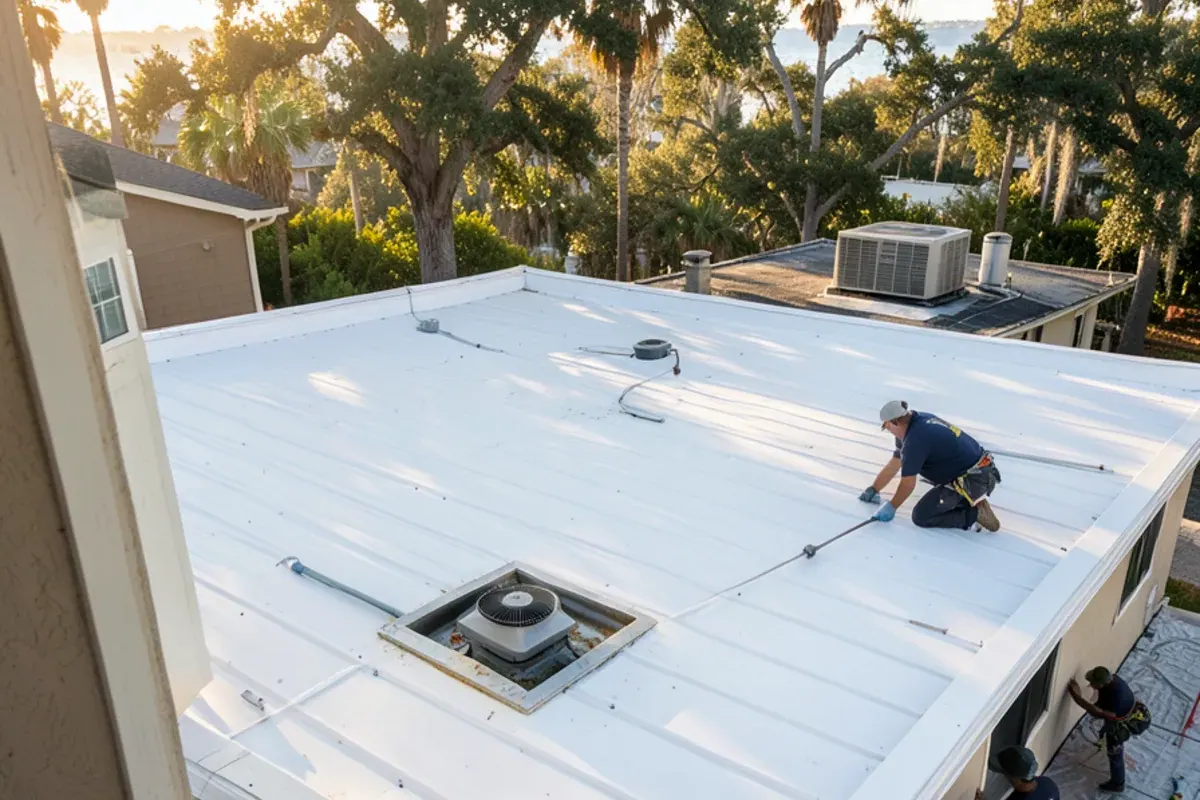
- Welding: overlapping edges are fused with a hot-air welder, and every seam is probed with a hand tool to find gaps.
- Detailing: pre-formed corners, pipe boots and curb wraps are welded in; walls get membrane flashing terminated under a metal bar and counterflashing.
- Edges and drains: membrane-clad edge metal and new drain assemblies finish the roof.
Why does a white membrane roof matter in South Bay summers?
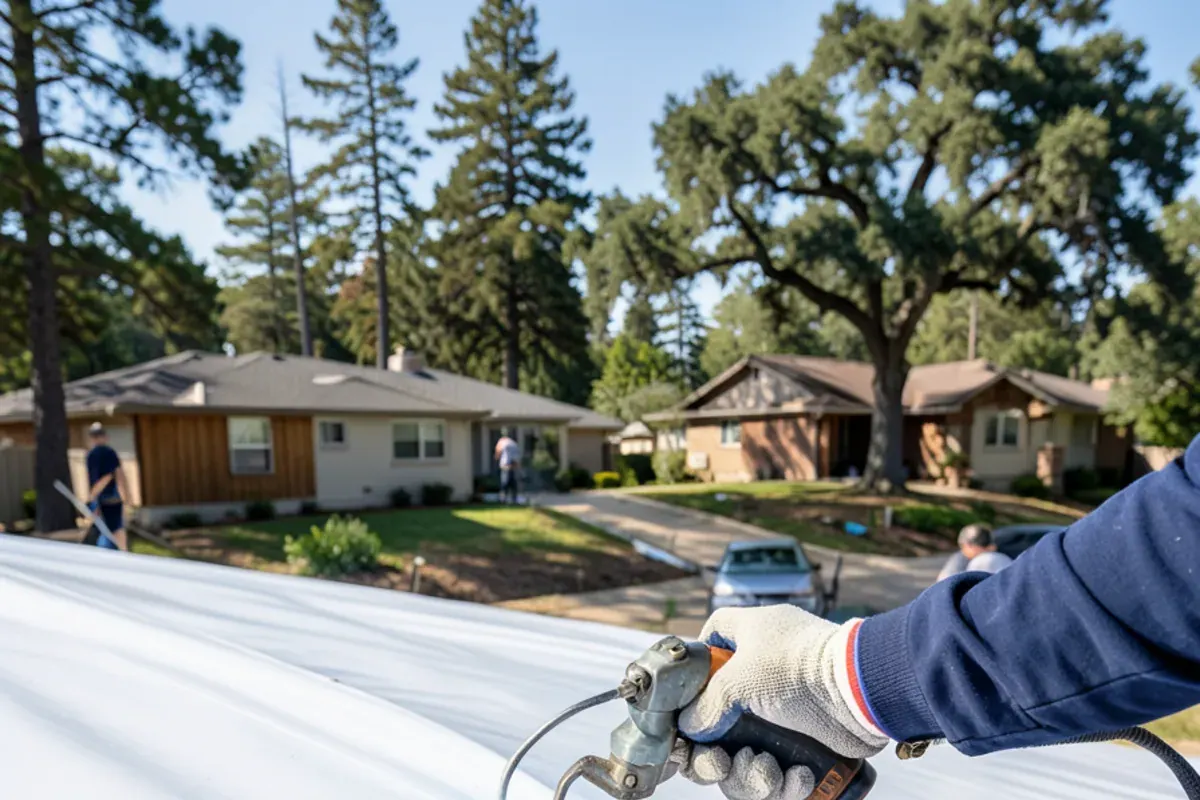
Summer afternoons in the Santa Clara Valley regularly run hot, and a dark low-slope roof soaks that heat straight into the ceiling. A white membrane reflects much of it. On Eichlers and other homes without an attic, where the roof deck is the ceiling, the difference is felt directly in the living room.
Reflectivity also helps with code. When a low-slope roof is replaced, California's Title 24, Part 6 may call for a cool-rated surface; whether it does turns on the climate zone (Campbell is Zone 4) and how much of the roof the job covers. Many TPO and PVC products carry Cool Roof Rating Council ratings, and we verify the rule with the plan checker before picking one.
On commercial buildings, the Energy Code's prescriptive path for an altered low-slope roof calls for an aged solar reflectance of at least 0.63 and a thermal emittance of 0.75, with an alternative allowed when the roof assembly carries enough insulation. Every TPO or PVC reroof also needs a building permit from the City of Campbell or the County, and whoever pulls it should hold a C-39 license you can verify with the CSLB.
TPO roof repair and keeping welded seams sound
Most single-ply leaks come from a few places: a seam that was never fully fused, a puncture from a dropped tool or a branch, a pipe boot that split, or flashing that pulled loose at a wall. The repair is a welded patch of the same membrane, with rounded corners, extending well beyond the damage.
- Old TPO has to be scrubbed with membrane cleaner before a patch will weld; very weathered sheets may need a special primer or a different repair approach.
- PVC welds readily even when older, as long as it is clean.
- EPDM repairs use primer and pressure-sensitive tape, not heat.
- Sealant alone is a short-term fix on any single-ply roof.
Coated or patched-over membranes that keep leaking may be better served by a roof coating system or a new sheet; we photograph the roof so you can see which.
Which factors move the price of a TPO or PVC roof?
Our written estimate breaks a single-ply job into the parts that change the number. Square footage matters less than most people expect; detail work and what sits under the old roof usually matter more.
- Membrane and thickness: TPO or PVC, and 45, 60 or 80 mil sheets.
- Insulation and cover board: flat or tapered, and how much height the edges and door thresholds allow.
- Tear-off or recover: stripping old layers and any gravel, versus covering a dry, sound roof.
- Attachment: mechanically fastened or fully adhered.
- Penetrations and curbs: every pipe, skylight and HVAC stand gets its own flashing.
- Access and staging: hoisting rolls onto a two-story building or carrying them through a side yard.
Can single-ply go over the roof you already have?
A recover, laying new single-ply over the existing roof with a cover board between, can save tear-off cost. It only works when the old roof is dry, well attached and the building code's layer limit has not been reached. We check for wet insulation before recommending it, because sealing moisture under a new membrane rots the deck from the inside.
A recover is rarely right for gravel roofs or Eichlers. Gravel has to go, and on a mid-century house the roof thickness and edge line matter, which is why our Eichler roofing page handles those homes separately.
Why owners choose us for welded membrane work
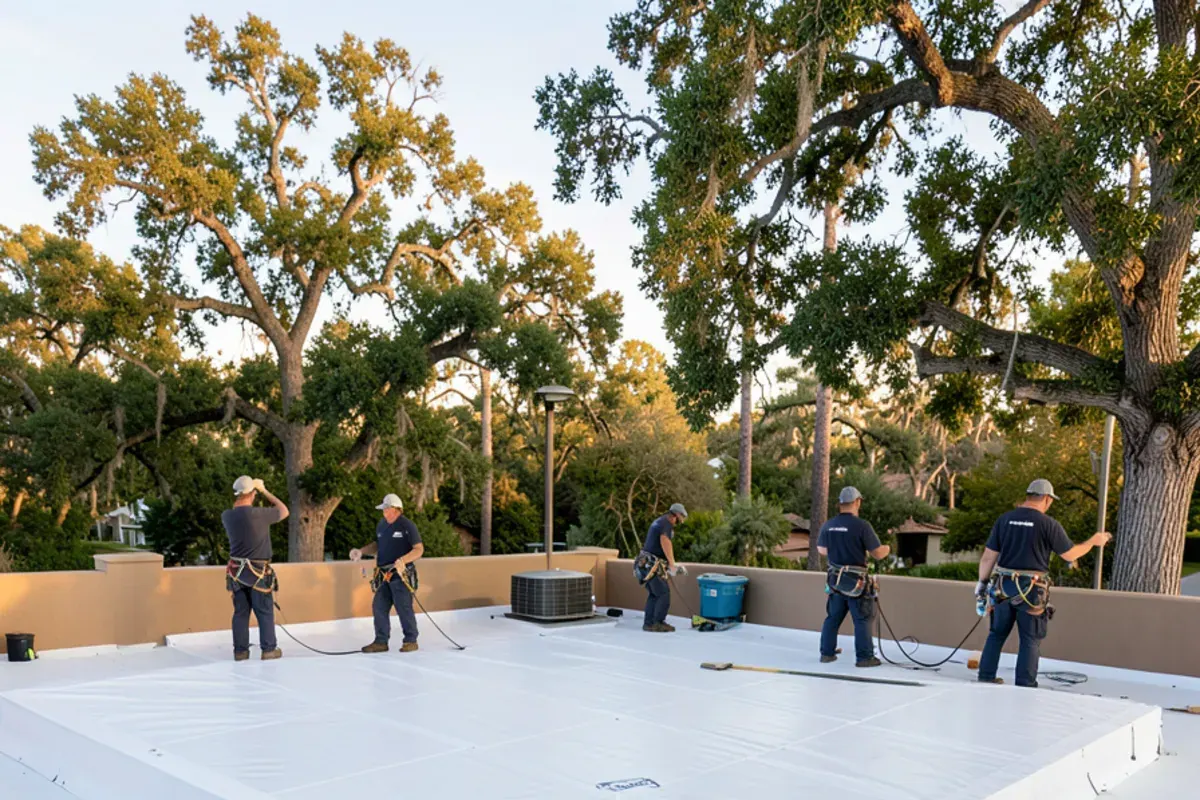
We are a family-run roofing company. A free estimate starts on the roof, with photos of seams, curbs and edges, and a written, itemized price that compares TPO, PVC and any sensible alternative, including a coating when the existing roof is sound. We probe every seam we weld, clean up each day and haul off the old roof. Small single-ply jobs, such as one split pipe boot or a loose wall flashing, get the same care.
Thinking about a white membrane for your home or building? Call (725) 745-8803 to talk through TPO, PVC or EPDM for your roof.
Call (725) 745-8803