Signs a weathered flat roof is ready for a coating
The best time to coat is when the roof looks tired but the deck below is still dry. Long, high-UV summers here dry out asphalt and chalk older coatings years before the roof actually leaks. Watch for:
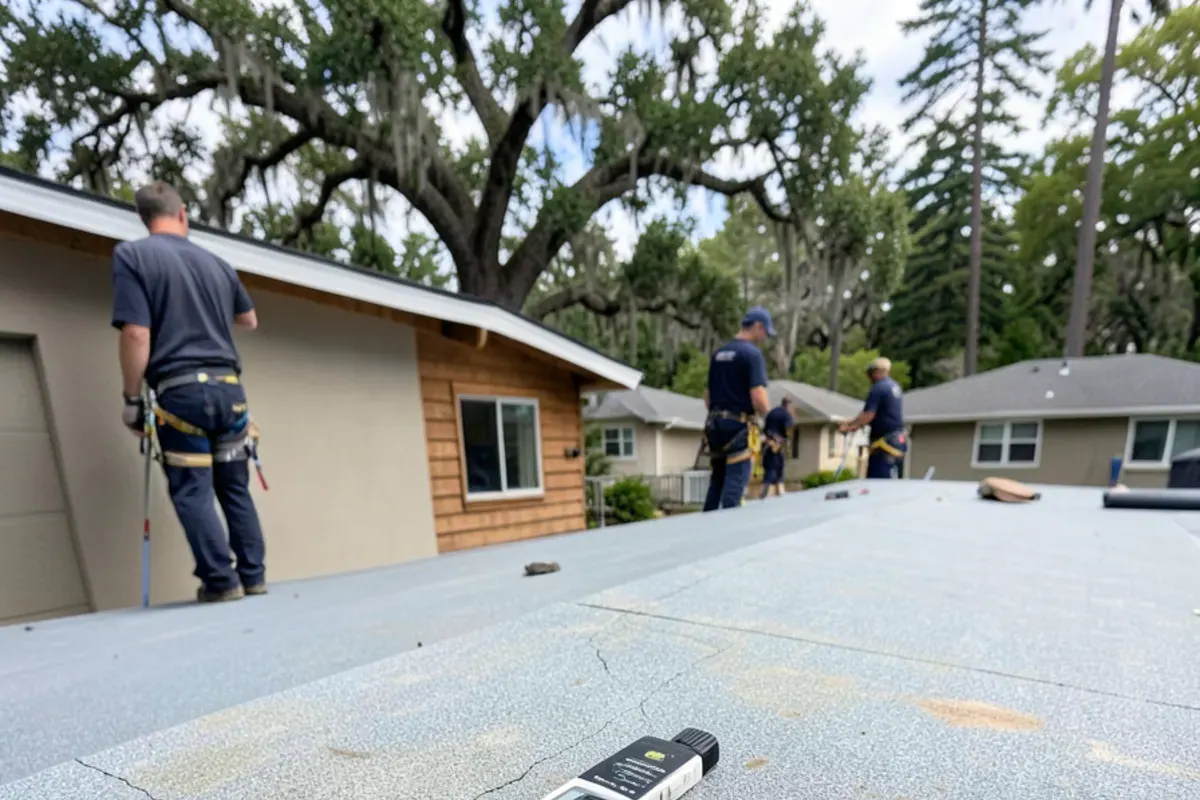
- Granules worn off a cap sheet, with black asphalt showing through.
- Fine surface crazing, but no splits through the membrane.
- An old coating that rubs off chalky on your hand.
- Rooms or offices below that run hot every summer afternoon.
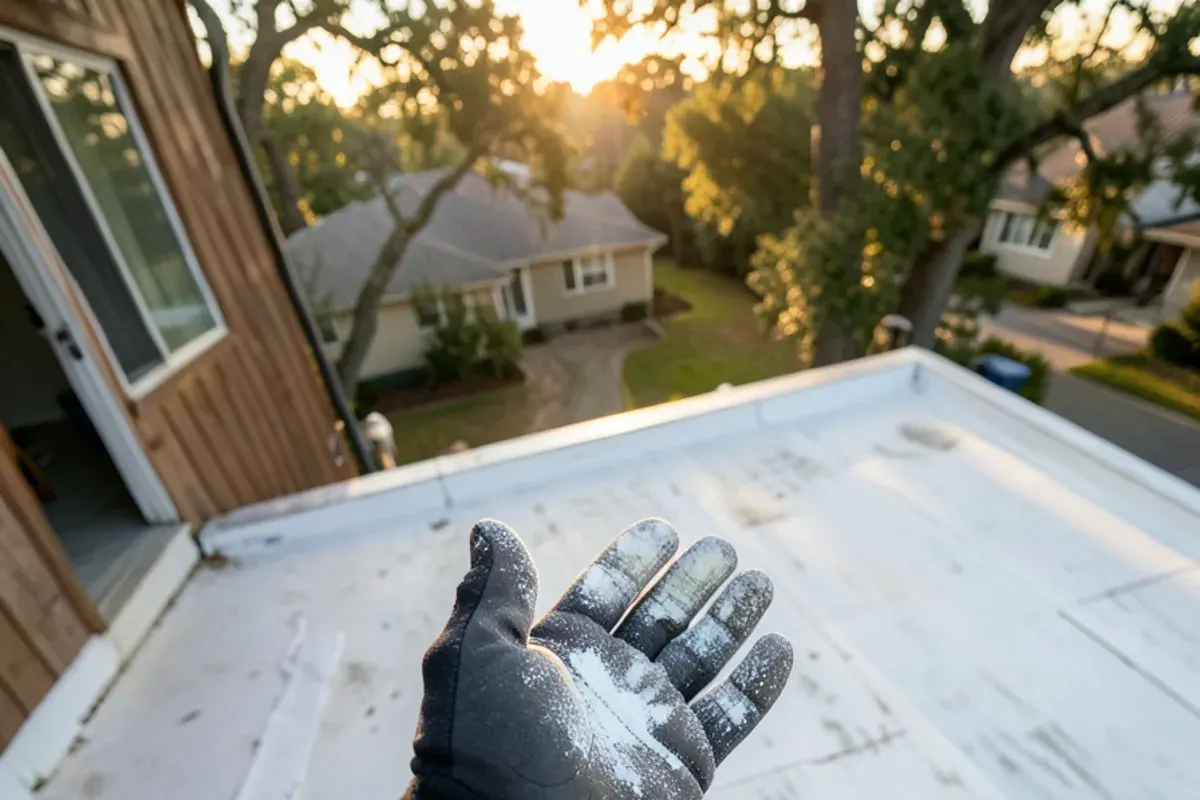
Roof coating in Campbell, CA: is your roof a good candidate?
A coating is a maintenance strategy, not a cure. It renews the surface layer of a roof whose body is still sound. Before we quote one, we check:
- Moisture: the insulation and deck must be dry. A coating over wet layers locks the water in.
- Adhesion: existing membranes, old coatings and seams must be firmly stuck down; we pull test patches when in doubt.
- Surface type: modified bitumen, single-ply, metal, spray foam and many older coatings accept the right product; loose gravel does not.
- Drainage: some acrylics break down under standing water, so ponding areas are fixed or a silicone product is chosen.
- Remaining life: a roof with widespread blistering or splitting is past the point where a coating pays off.
Questions about roof coatings?
Call first for the quickest answer, or request a free written estimate below.
Request a free written estimate
Fastest answer: call (725) 745-8803. Or send the details below and we will call you back.
Silicone roof coating vs. acrylic and other elastomerics
| Coating | Good at | Limits | Common use |
|---|---|---|---|
| Silicone | Tolerates ponding, stays flexible, resists UV | Collects dirt; few materials stick to it later except more silicone | Commercial flat roofs, aged single-ply and modified bitumen |
| Acrylic | Bright white, economical, easy to recoat | Weak under standing water; needs dry, warm days to cure | Well-drained residential roofs and foam |
| Polyurethane | Hard, impact- and traffic-resistant | Higher odor and cost; often used as a base coat | Roofs with foot traffic and equipment service |
| Asphalt-based / aluminum | Compatible with older bitumen roofs | Less reflective than white coatings | Short-term upkeep of older asphalt roofs |
Elastomeric roof coating is the umbrella term for all of these: they stretch and recover as the roof heats and cools. On a South Bay roof that swings from cool fog mornings to hot afternoons, that flexibility is the whole point.
How a roof restoration coating goes on
- Power-wash or scrub the roof and let it dry fully; dust and chalky old coating stop adhesion.
- Repair first: cut out blisters, replace wet sections, re-secure loose seams and flashings.
- Reinforce seams, penetrations and transitions with fabric embedded in coating.
- Apply primer where the manufacturer calls for it, which depends on the substrate.
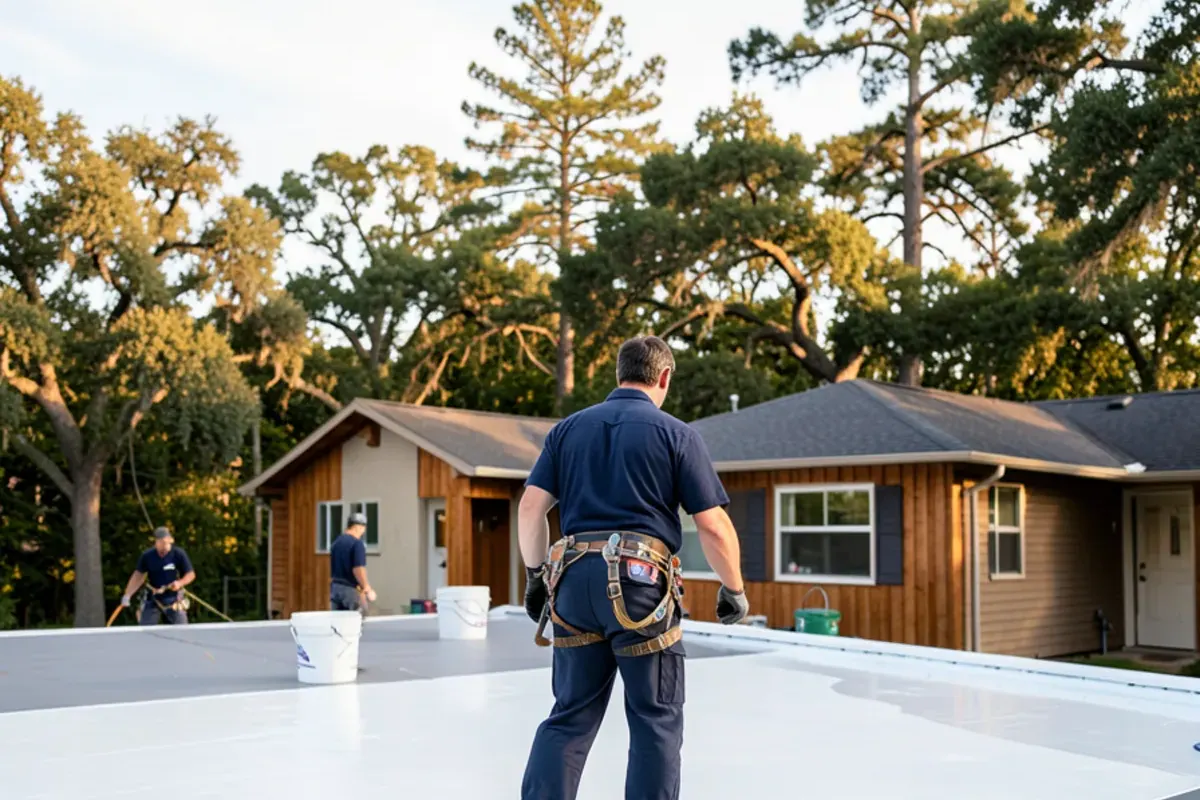
- Roll or spray the base and top coats to the specified thickness, checking wet-film thickness as we go.
- Clear drains and scuppers, then photograph the finished roof for your records.
Weather sets the calendar. Coatings need dry surfaces and a cure window without rain, so most of this work happens between late spring and early fall in Campbell.
Foam roof recoat cycles on Eichlers and spray-foam homes
Spray polyurethane foam insulates and waterproofs at once, which made it popular on mid-century homes without attics. Its weakness is sunlight: bare foam degrades quickly under UV, so the protective coating is not optional. When that coating wears thin, the foam underneath starts to erode and absorb water.
A foam roof recoat restores that skin before the foam is harmed. We look for exposed foam, chalking and shallow pits, repair damaged foam, then recoat. Owners of mid-century houses can read more on our Eichler roofing page, which covers foam, insulation and edge details on those homes.
What drives the cost of a roof coating?
Coating prices follow prep and thickness more than square footage. The written estimate itemizes:
- Prep and repairs: washing, blister cut-outs and wet sections replaced first.
- Product: silicone, acrylic or polyurethane, plus any primer the substrate needs.
- Dry-film thickness: more mils cost more and last longer.
- Detailing: fabric reinforcement at every curb, vent and lap.
- Access and occupancy: working around tenants and air intakes on a commercial building.
Coatings, Title 24 and air-district rules
When a coating is used to meet a Title 24 cool-roof requirement, the Energy Code expects it to cover the whole roof at the maker's specified thickness and meet recognized standards, such as ASTM D6083 for acrylic or ASTM D6694 for silicone. The Bay Area Air Quality Management District also limits the VOC content of roof coatings used here. Whether a recoat needs a permit depends on scope, so check with the City of Campbell or the County, and once labor and materials reach $1,000, the roofer must hold a CSLB license.
A coating upkeep plan that keeps the roof in service
| When | What to do | Why |
|---|---|---|
| Each fall, before the rains | Clear drains, scuppers and gutters; remove leaves and debris | Ponding and clogged outlets shorten coating life |
| After big storms | Look for punctures from branches and lifted flashings | Small damage spreads under a coating if left |
| Every year or two | Professional walk-through with photos | Catches thinning, cracking and seam stress early |
| On the maker's schedule | Clean and apply a renewal coat | Restores thickness and reflectivity before the base roof is exposed |
Renewal intervals vary with product, thickness and exposure; the manufacturer's data and its material warranty terms set the target, and we write the plan to match.
Will a coating stop an active leak?
Not by itself. A coating seals hairline cracks and porous surfaces, but a leak means water is getting past the roof somewhere specific: a split seam, a failed pipe boot, a gap at a wall. That spot is repaired first, with membrane and flashing, and the coating then goes over the repaired roof.
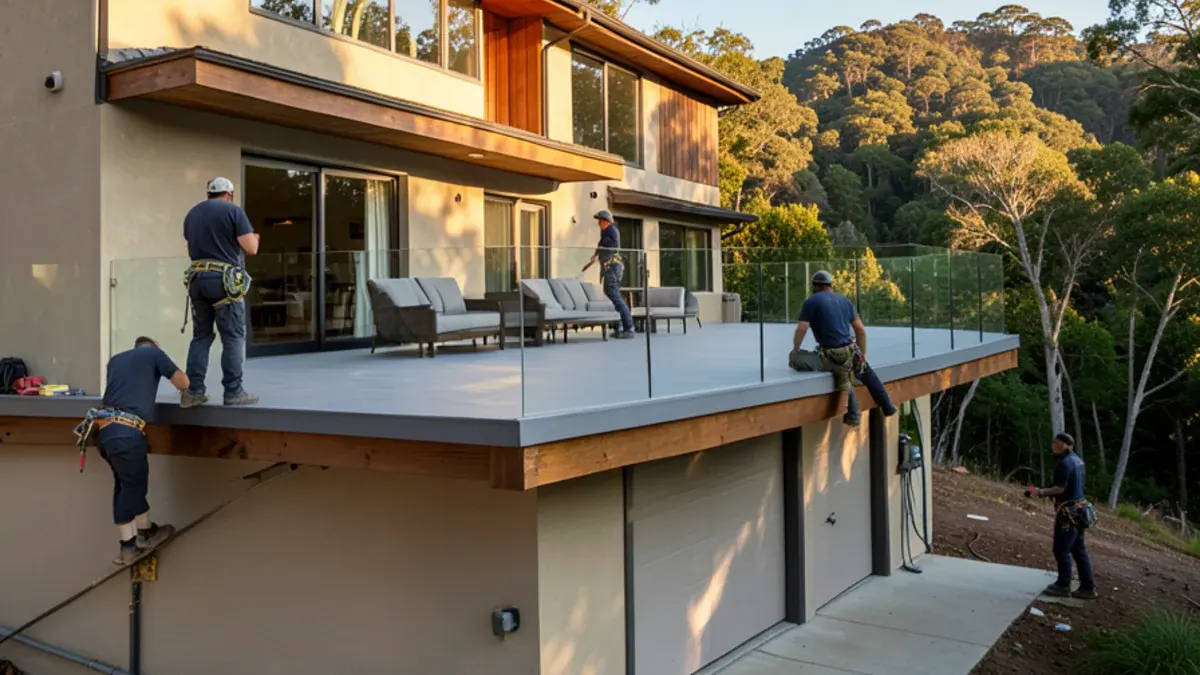
Coatings are also the wrong answer on surfaces people walk and entertain on. A balcony or rooftop deck needs a membrane built for traffic, which is why we handle those through roof deck and balcony waterproofing instead.
Commercial roof coating in Campbell for offices and shops
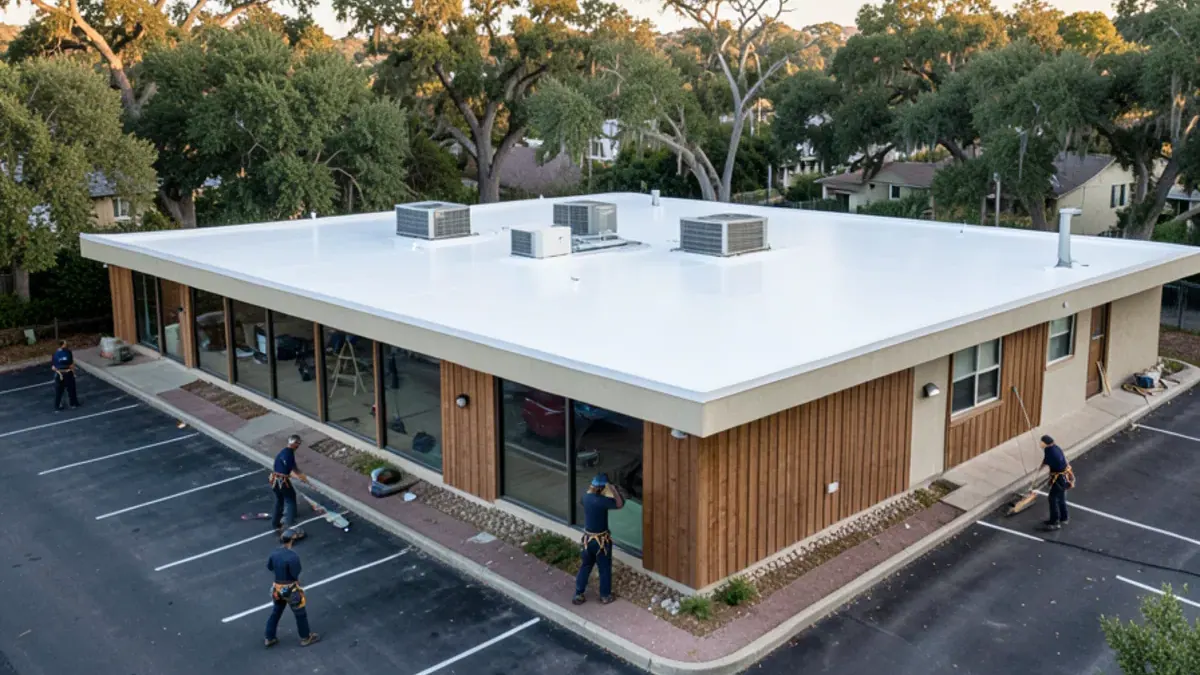
Coatings make the most financial sense on large, simple commercial roofs: offices, medical buildings and retail along Winchester Boulevard and Hamilton Avenue, where tearing off thousands of square feet would disrupt tenants. Our commercial work has included silicone-coating a flat office roof in Campbell.
We work around open businesses, keep material and fumes away from air intakes, and stage the job so occupied areas below are not left exposed. We are family-run; each coating quote comes free and in writing, line by line, along with photos of the roof as it stands. If moisture checks rule a coating out, we say so before you spend money on it.
Wondering if a coating can buy your roof more years? Call (725) 745-8803 for a roof check.
Call (725) 745-8803