
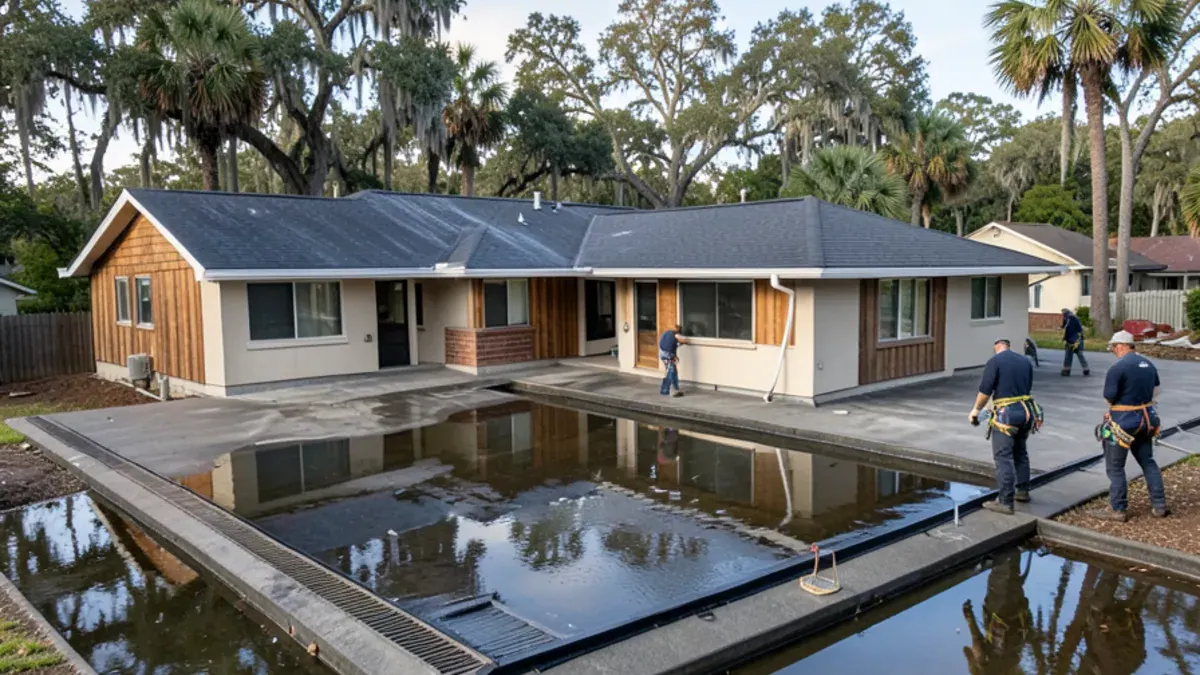
When does standing water on a roof become a problem?
Across the roofing industry, a common rule of thumb is that water still sitting on a low-slope roof about 48 hours after rain counts as ponding. Shorter-lived puddles are usually just slow drainage. Longer ones cause trouble in several ways:
- Membrane wear: repeated wet and dry cycles in the same spot break down coatings, seams and granule surfaces faster.
- Leak risk: any small defect under a pond is under constant water pressure instead of brief runoff.
- Weight: water is heavy, and a deeper pond can deflect the deck further, which makes the low spot deeper.
- Debris and growth: silt and leaves settle in the pond and hold moisture after it dries.
- Manufacturer terms: some membrane warranties exclude damage from ponding, so check the maker's terms.
Puddles still on your flat roof two days after a storm? We can check the drains and slope and show you the photos.
Call (725) 745-8803What causes ponding water on a flat roof?
Ponding nearly always traces back to one of five causes, and many roofs have two at once.
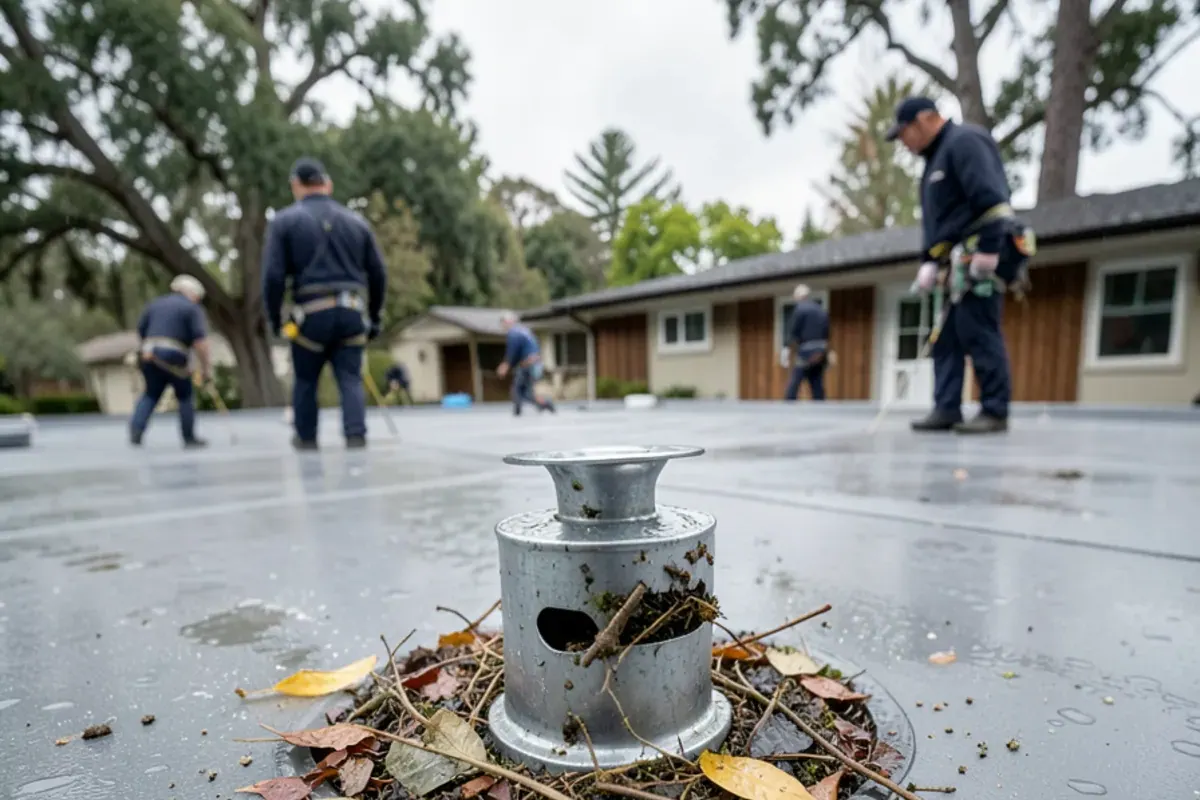
- Blocked drains, scuppers or gutters. Leaves and roof grit pack the outlet so water backs up behind it.
- Too little built-in slope. Older roofs were often framed dead level, relying on water to evaporate.
- Deck deflection. Joists sag over time, or water damage softens the sheathing, creating a bowl.
- Compressed or wet insulation. Foot traffic and trapped moisture crush insulation boards and leave dips.
- Things that dam water. HVAC curbs, added layers of roofing and poorly placed patches block flow toward the drain.
Flat roof drainage fixes, from small to structural
The right fix depends on why the water is there. Start with the cheapest step that addresses the cause.
| Fix | What it does | When it fits |
|---|---|---|
| Clear drains and scuppers | Restores the outlets the roof already has | Ponds form near a drain that is clogged |
| Add a scupper or drain | Gives trapped water a new exit | A low area sits far from any outlet |
| Roof cricket (saddle) | A small sloped build-up that splits water around an obstacle | Water pools behind an HVAC curb or chimney |
| Tapered insulation | Factory-sloped boards that create fall toward drains | Reroof of a dead-level roof with widespread ponding |
| Deck repair | Replaces rotted sheathing or reinforces sagging framing | The bowl comes from the structure itself |
| Full membrane replacement | New roof built with proper slope from the start | The membrane is near the end of its life anyway |
Pouring coating or patching material into a low spot to fill it rarely lasts. It adds weight, cracks as it cures thick, and leaves the cause untouched.
Tapered insulation and crickets, explained
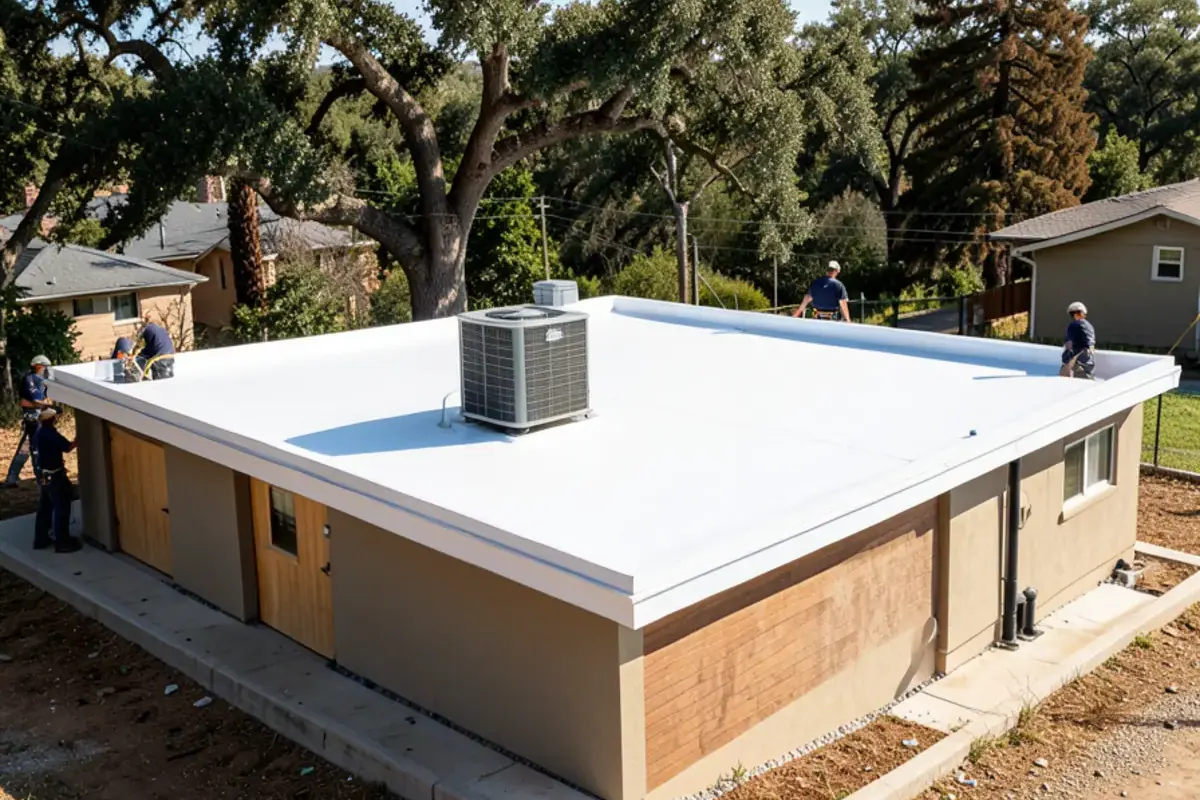
Tapered insulation is the standard way to add slope to a flat roof without reframing it. The boards are cut thinner at the drain and thicker away from it, so the finished surface falls toward the outlets. Because it means a new membrane over the top, it is usually done during a flat roof replacement.
Crickets are the smaller tool. A cricket is a little ridge built behind an obstruction, such as the uphill side of an HVAC curb or a chimney, that steers water around it. Crickets can often be added during a flat roof repair without replacing the whole roof.
Adding height at the edges affects drip edges, scuppers and gutters, and on some reroofs California's Title 24 energy rules apply to the insulation and roof surface. Those details belong in the written plan before work starts.
How heavy is a pond on your roof? A worked example
Water weighs about 62.4 pounds per cubic foot, which works out to roughly 5.2 pounds on every square foot of roof for each inch of depth. That number makes the risk easy to estimate from a photo and a ruler.
| Pond size | Average depth | Approximate weight |
|---|---|---|
| 5 ft x 5 ft (25 sq ft) | 1 inch | About 130 lb |
| 10 ft x 10 ft (100 sq ft) | 1 inch | About 520 lb |
| 10 ft x 10 ft (100 sq ft) | 2 inches | About 1,040 lb |
| 10 ft x 20 ft (200 sq ft) | 2 inches | About 2,080 lb |
A few hundred pounds spread across a sound deck is not a collapse risk. The concern is the cycle engineers call ponding instability: the weight bends the deck slightly, the dip holds more water next storm, and the extra water bends it further. The building code requires structural designers to check roofs for this, and the rain-load chapter of the ASCE 7 standard covers how. On an older house, the warning signs are a pond that gets wider or deeper year over year, or a ceiling below that has started to sag.
What the building code says about slope and drainage
The familiar 48-hour rule is not just folklore. The California Residential Code defines positive roof drainage as a roof where loading deflection has been considered and enough slope added for the roof to shed its water no later than 48 hours after rain.
The quarter-inch minimum and the reroof exception
For new low-slope roofs, the code's membrane sections, from built-up and modified bitumen to TPO, PVC and spray foam, generally call for a design slope of at least a quarter inch per foot, or 2 percent. A reroof does not always have to reach that number, but the code's reroofing section still expects the finished roof to provide positive drainage. In practice, that means a reroof over a dead-level deck usually needs tapered insulation or crickets to pass muster and to last.
- New roof or addition: plan for at least a quarter inch per foot of fall toward drains.
- Reroof of an existing flat roof: the finished surface must still drain within about two days.
- Title 24 cool-roof rules: may apply to the new low-slope surface, depending on scope; confirm with your building department.
Measuring the problem: a homeowner checklist
You can gather useful evidence without walking on the roof. Use a window, a second-story view or a ladder at the edge, and never climb onto a wet roof.
- Note the date and time the rain stopped.
- Photograph the roof from the same spot the next day and two days later.
- Mark on a simple sketch where each pond sits relative to drains and equipment.
- Check the drain or scupper outlets for leaves, grit or a missing strainer.
- Look indoors under the ponded area for stains, sagging or a musty smell.
- Keep the photos together; they make the inspection faster and the estimate clearer.
From our roof visits: ponding patterns we see
The drain is usually not the lowest point. Over decades, decks settle and roofs get patched until the lowest spot sits a few feet from the outlet. Water collects there and never reaches the drain. That is why we look at the pattern of the stain rings on a dry roof, not just at the drains.
Low-slope sections on ranch homes and additions around Campbell and Santa Clara often pond behind a later addition, where an old roof edge became a low valley. Those spots need a cricket or new slope, not just cleaning.
Short-lived puddles after a storm do not automatically mean a new roof. Plenty of flat roofs pond a little and stay watertight for years when the membrane is in good shape and the drains are kept clear. We tell owners when that is the case.
Every slope fix has a cost beyond the price. Tapered insulation raises the roof edge, so drip edge, scuppers and wall flashing often need to be rebuilt to match, and a door threshold onto a roof deck can end up too low. Adding a new interior drain means running pipe through the ceiling below. A cricket solves the pond behind one curb but does nothing for a sag in the middle of the field. We show you which problem each option actually solves before you pay for it.
Matching the fix to your ponding
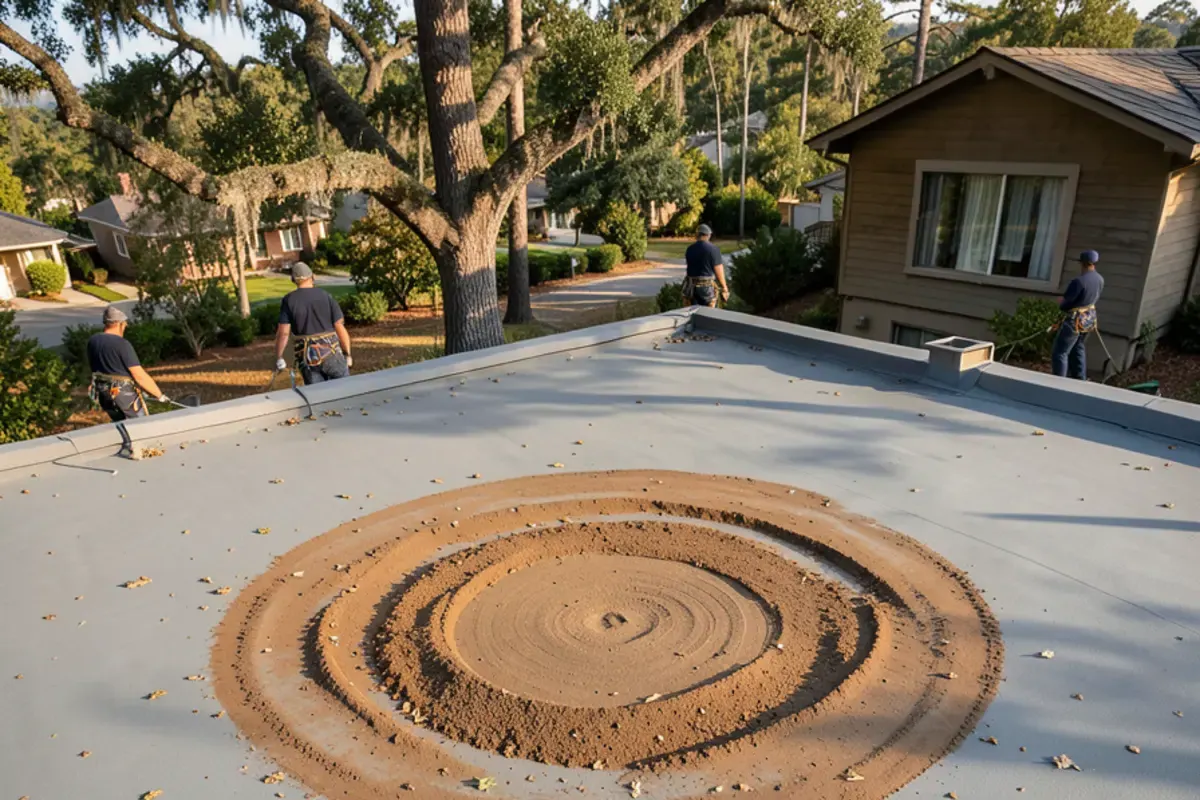
Most ponding falls into one of three groups, and each points to a different level of work:
- Ponds next to a clogged outlet that drain once it is cleared: maintenance, plus strainers and a fall cleaning schedule.
- A pond behind equipment or a later addition: a cricket or an added scupper during a repair.
- Wide, deepening ponds across a tired membrane: a reroof with tapered insulation and deck repair, planned before the next wet season.
Whichever group yours is in, photos taken one and two days after a storm make the conversation faster and the estimate more accurate.
Send us your ponding photos or book a roof walk, and we'll tell you which fix fits before quoting it.
Call (725) 745-8803