
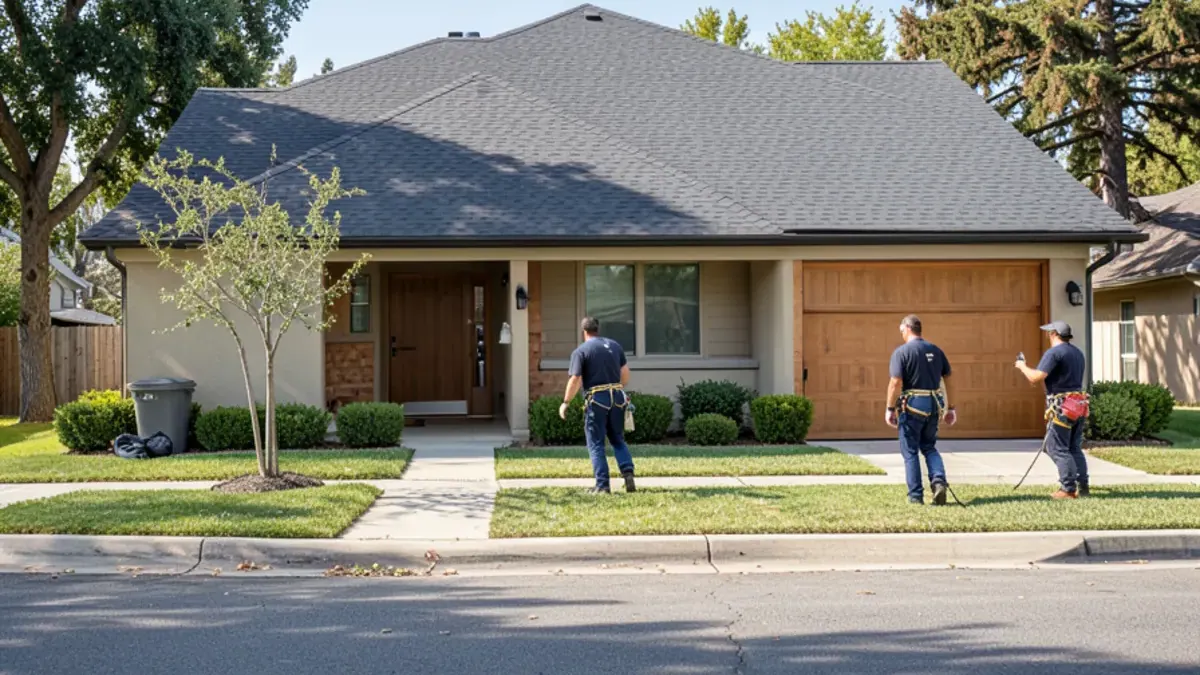
How do you know if your roof will outlast the panels?
Start with three facts: the roof's age, its material, and its current condition. Age alone misleads, since a well-ventilated roof on a shaded lot can be in better shape than a younger roof on a hot, south-facing slope. A roof inspection with photos of each plane where panels will sit gives you a real answer.
| Roof situation | Typical recommendation | Why |
|---|---|---|
| New or recent shingle roof in good shape | Install solar now | The roof should have plenty of life left under the array |
| Shingle roof in mid-life with worn spots | Repair or reroof the solar planes first | Fixing it later means removing and reinstalling panels |
| Shingle roof near the end of its life | Reroof before solar | The panels would likely need to come off for the replacement |
| Tile roof with old underlayment | Replace underlayment where panels go, or reroof | Tile often outlasts its underlayment, which fails out of sight under the array |
| Flat or low-slope roof | Check membrane age and drainage before racking | Ballasted or attached racks sit on the membrane for years |
Getting solar quotes and unsure about your roof? Call (725) 745-8803 and we'll inspect the planes your installer plans to use.
Call (725) 745-8803How long will the panels stay up, and why does that change the math?
The reroof decision is really a comparison of two clocks: the roof's remaining life and the array's working life. The second clock usually runs longer than people expect.
Panel life and slow degradation
Panel makers commonly back their power output for 25 years under their own warranty terms, and research by the National Renewable Energy Laboratory has put the median output loss of crystalline silicon panels at roughly half a percent per year. A panel still producing most of its rated power at year 25 is unlikely to be pulled early, so the roof underneath needs to last at least that long or be planned for a removal in between.
Billing rules and payback
The California Public Utilities Commission's Net Billing Tariff applies to new PG&E solar customers whose interconnection applications were submitted on or after April 15, 2023. Exported power earns less under it than under older net metering, so payback periods tend to stretch and many owners pair panels with a battery. A longer payback is one more reason to start with a roof that will not need replacing halfway through.
A worked example
Say an inspection finds a shingle roof with roughly ten good years left, and the panel warranty runs 25. Installing now means the array almost certainly comes off around year ten for a reroof, with a removal and reinstall bill, new permits and weeks of lost production. Reroofing the solar planes first resets the roof clock to match the panels. If the same inspection showed a five-year-old roof in good shape, the answer flips: install now and keep the roof maintained.
What does removing and reinstalling panels involve?
If the roof needs replacing after solar is on, the array has to come off first. That means a solar contractor disconnecting and removing the panels and racking, storing them on site, then reinstalling and recommissioning the system after the new roof is down. The roofing and solar crews must line up their schedules, and the system produces no power in between.
- Two contractors, two scopes: the solar company handles panels and wiring; the roofer handles the roof and the flashing at each mount.
- Equipment warranties: ask your solar provider how removal affects the panel and inverter warranties under the maker's terms.
- Permits: the reroof and the solar reinstall may each need permits from your building department.
- Down time: expect days to weeks without solar production, depending on scheduling.
Doing the reroof first avoids all of that. Our solar-ready roofing work plans the new roof with the array in mind.
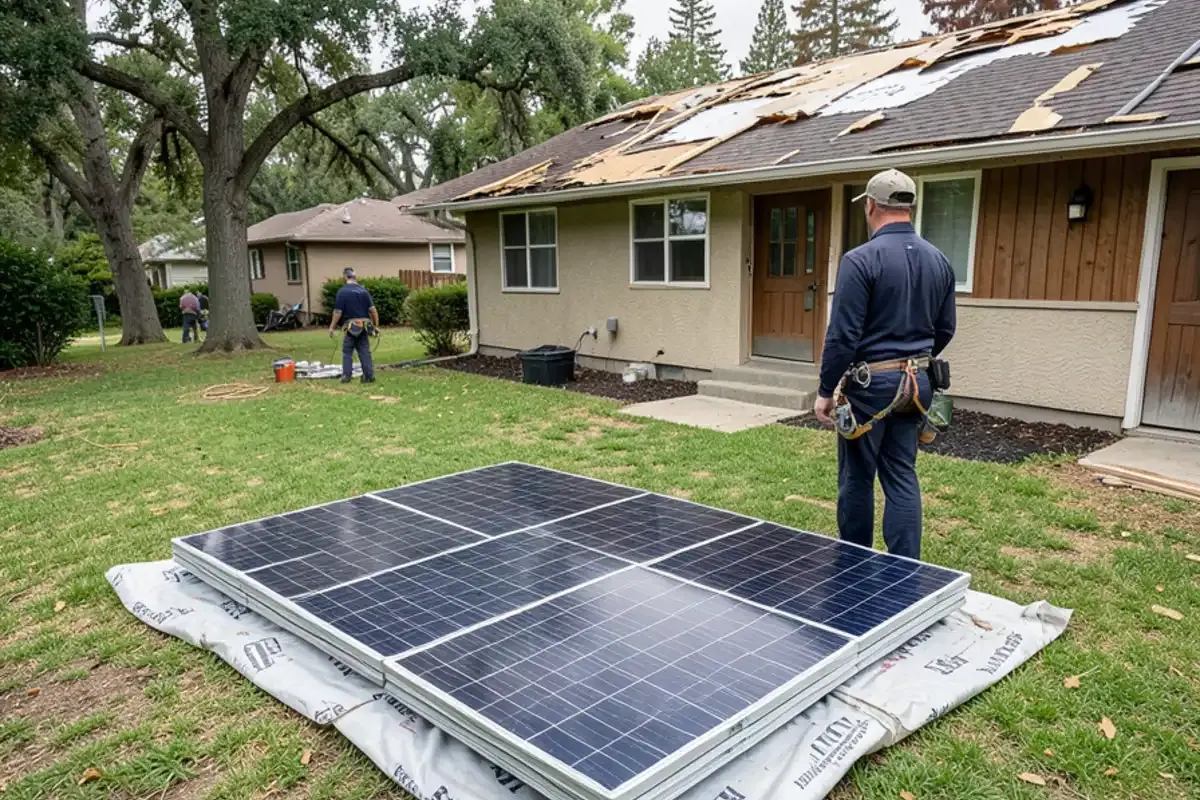
Why mount flashing matters more than the panels
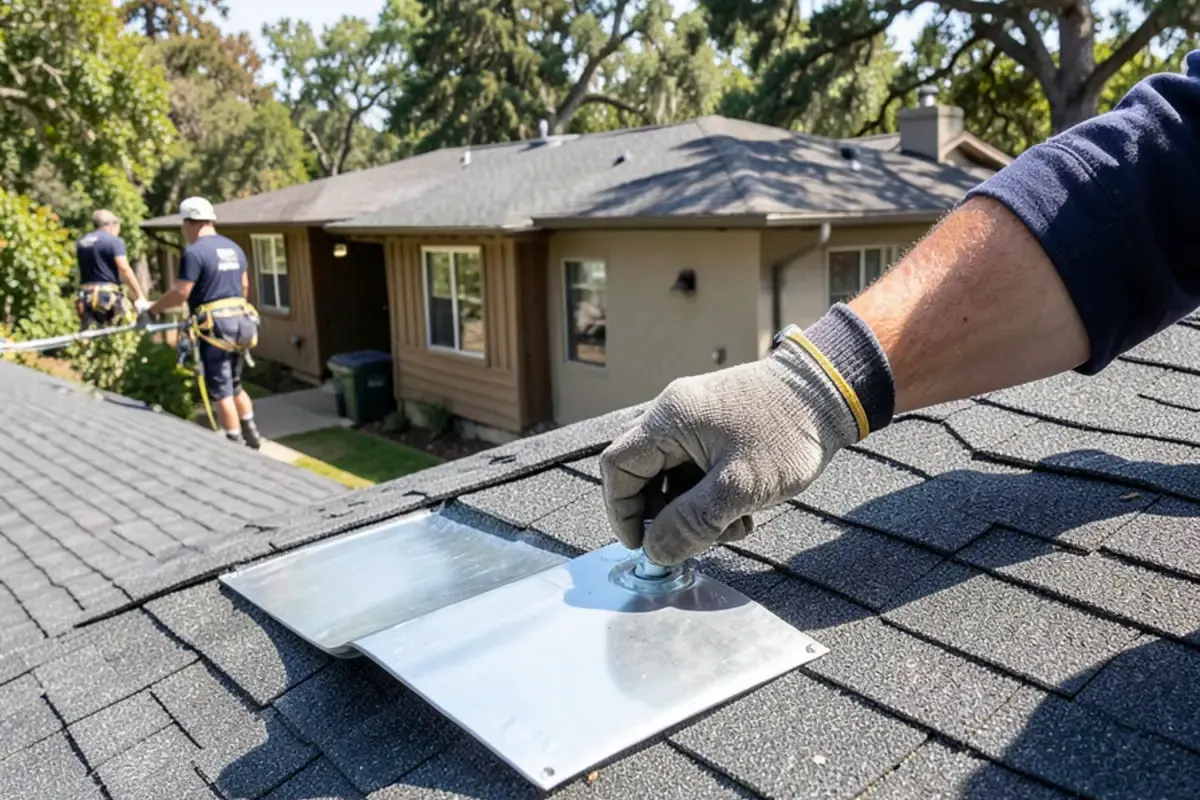
Every attached solar array puts dozens of penetrations into the roof. Each mount is a potential leak if it is not flashed correctly. Leaks under panels are hard to find because the array hides the roof surface, and water can travel along the deck before it shows on a ceiling.
On a new roof, mounts can be placed into rafters and flashed as the roofing goes on. We coordinate with your installer on mount type and layout so the flashing is integrated with the shingles or tile rather than sealed on top of them.
Should you reroof before solar in Cupertino, Sunnyvale and San Jose?
Many homes in Cupertino and Sunnyvale date from the 1950s through the 1970s, and quite a few are on aging roofs, including Eichler flat roofs and older tile. For those homes, reroofing the solar planes first is often the more economical sequence over the life of the system. On newer roofs, it rarely makes sense to replace a sound roof just because solar is coming.
Also check fire code access rules. California's fire code generally calls for clear pathways and setbacks around arrays on residential roofs, which affects layout. Your solar installer and the local fire and building departments can confirm what applies to your roof.
What the access pathways look like on a typical roof
The California Residential Code, built on the International Residential Code, generally calls for at least two 36-inch pathways from eave to ridge on separate roof planes, and a clear strip at the ridge of 18 inches when the array covers no more than a third of the roof's plan area, or 36 inches when it covers more. Local fire authorities can apply their own versions, so the layout your installer draws should come back approved before we place mounts.
From our roof visits: what we find under and around arrays
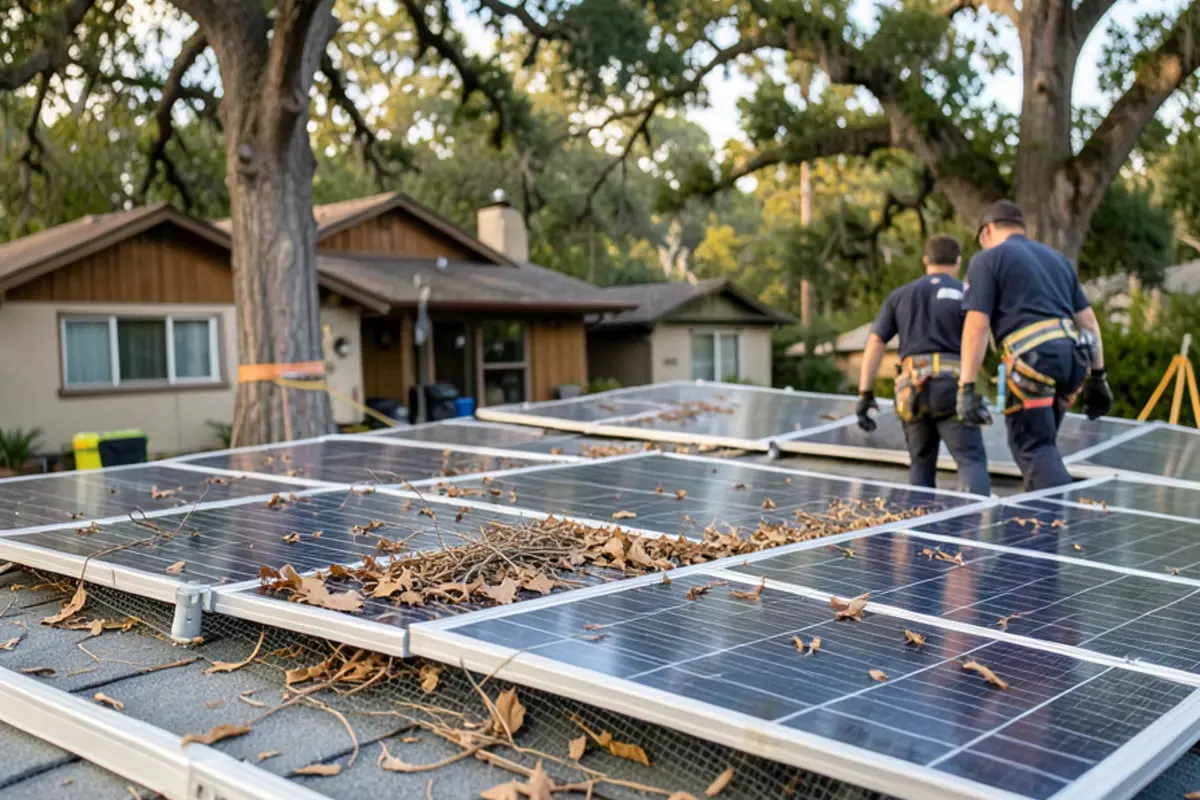
- Leaves, needles and nests collect under panels where nobody can see them, blocking water flow.
- Mounts sealed only with surface sealant tend to leak once the sealant ages in the sun.
- Pigeons nest under arrays unless critter guards are fitted around the edges.
- Shingles under panels often age more slowly than exposed shingles beside them, because they are shaded.
- Conduit runs across the roof surface sometimes trap debris and need clearance during cleaning.
None of this means solar is hard on roofs. It means the roof and the array need to be planned together and checked from time to time.
Planning roof and solar together still involves trade-offs:
- Reroofing early gives up the remaining years of the old roof. On a roof with real life left, that is money spent ahead of need.
- Bird guards around an array keep pigeons out but have to be unclipped whenever the panels are serviced. Where birds already moved in, animal damage roof repair may be needed before new guards go on.
- Tile roofs take replacement tiles or flashed hooks at each mount, and tiles crack when walked on during the solar install, so spare tiles should be set aside.
- Coordinating two contractors can leave a gap of days or weeks between the new roof and the panels, which suits dry-season scheduling best.
How the sequence works when you do both
- Have the roof inspected and share the report with your solar installer.
- Agree on panel layout, mount type and timing between the roofer and the installer.
- Pull the reroof permit and complete the tear-off, deck repairs and new roofing.
- Set or flash mounts as the roofing goes on, or leave clear notes for the installer.
- Let the solar contractor install and commission the system under its own permit.
- Keep the roof estimate, product data and solar paperwork together for future reference.
Comparing options for a full roof replacement first can also show whether a lighter or cooler material suits the array.
The deciding question is simple: will this roof outlast the panels going onto it? If an inspection says no, reroof the solar planes first and let the mounts be flashed into new roofing. If it says yes, go ahead with solar and keep an eye on the roof around and under the array.
Collecting solar bids? Have us inspect the roof planes first, and you'll get photos and a free written estimate to share with your installer.
Call (725) 745-8803