
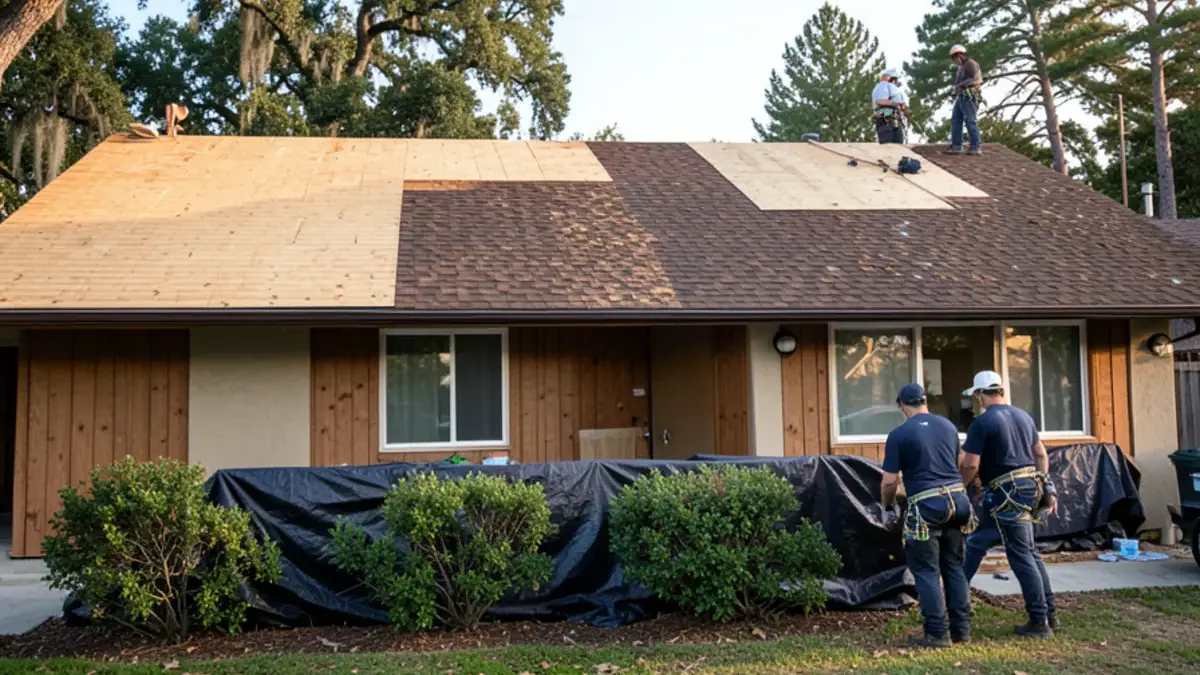
When is a roof overlay allowed in California?
California's residential building code, adopted by the Building Standards Commission from the International Residential Code, permits a new roof covering over an existing one only in limited cases. The model code's roof recover rules generally do not allow a new layer when:
- The roof already has two or more layers of any kind.
- The existing roof is water-soaked or deteriorated to the point it cannot serve as a sound base.
- The existing roof is wood shake, slate, clay or concrete tile, which cannot provide a flat, stable base.
- The decking below is damaged, sagging or rotted, which an overlay would simply cover.
Local rules can add conditions, and the energy code applies to reroofs either way. Before deciding, check with your city or county building department. In Campbell, reroof applications go in online via MyGovernmentOnline, and rotted or damaged sheathing has to be swapped out before the city's reroof inspection.
Where the recover rule sits in the code
In the International Residential Code, these limits appear in Section R908.3.1.1, "Roof recover not permitted," inside the chapter on reroofing. California's version keeps that structure in the California Residential Code, Title 24, Part 2.5. Quoting the section number to an estimator who suggests a second layer over two existing ones usually ends the conversation quickly.
Flat roofs use the word "recover"
On low-slope roofs the same question is called a recover: a new membrane over one existing roof, normally with a cover board between them. The test is the same, a dry and well-attached existing roof, and it starts with a moisture survey. Our flat roof replacement page explains when a recover is reasonable and when the old system has to come off.
Not sure whether your roof can take a second layer? Phone (725) 745-8803 to have the layers and decking checked and written up.
Call (725) 745-8803Roof overlay vs. tear-off, side by side
| Factor | Overlay (second layer) | Tear-off to the deck |
|---|---|---|
| Upfront cost | Lower; no removal or disposal | Higher; includes removal, haul-away and deck repair |
| Decking | Not inspected; rot stays hidden | Fully exposed; damaged sheathing replaced |
| Flashing | Often reused or layered over | Replaced at walls, chimneys, skylights and valleys |
| Underlayment | Old felt stays; new layer goes on top | New underlayment over the whole deck |
| Weight on framing | Added load of a second roof | One roof's weight |
| How shingles lie | Can telegraph bumps and curls below | Flat, even surface |
| Heat buildup | Two layers can hold more heat | Ventilation can be corrected |
| Next reroof | Two layers to remove later | One layer to remove later |
The upfront saving is real, but most of it comes back at the next reroof, when two layers have to be stripped and hauled instead of one.
What a tear-off reveals about the deck
Many Campbell and Sunnyvale houses date from the post-war decades up to the mid-1970s, and some originally carried wood shakes over spaced board sheathing. When those roofs were later converted to shingles, plywood or oriented strand board was often added over the boards. A tear-off is the only time anyone sees how that deck is holding up.
The usual finds are dry rot along eaves where gutters overflowed, soft spots around old chimneys and skylights, and delaminated sheathing under long-term leaks. Replacing those sections before new roofing goes on is what Campbell's sheathing nailing inspection is designed to confirm. Our roof replacement estimates list decking repair as a unit price, so the cost of hidden rot is clear before work starts.
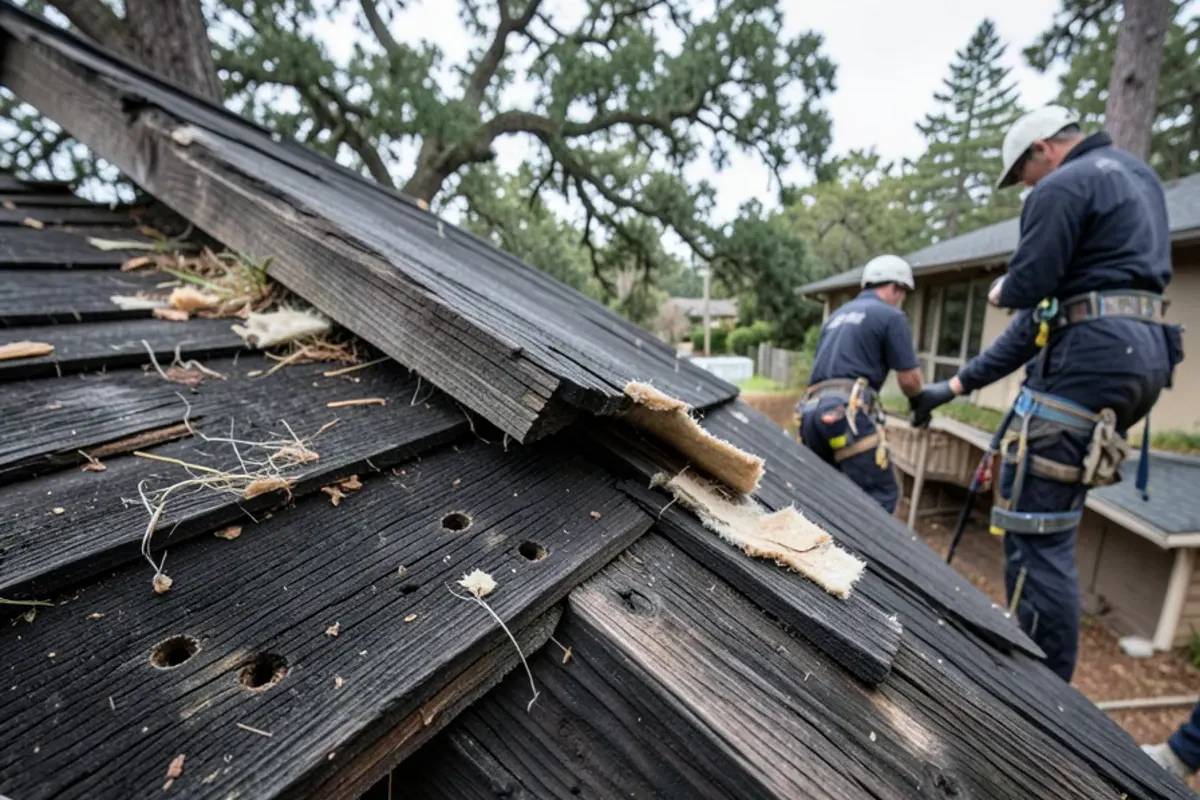
What does a second layer add to the framing?
Weight is the part of an overlay that nobody sees. A layer of architectural shingles commonly weighs a couple of hundred pounds or more per square, and thicker designer lines weigh more. On a 20-square ranch roof, a second layer can add several thousand pounds of dead load spread over rafters that were sized decades ago for one light roof.
Most framing tolerates that without visible change, but the margin it uses up is the same margin that handles a wet winter, a heavy solar array or a seismic event. A tear-off resets the roof to a single layer and lets the crew look at rafter tails and ridge lines while the deck is open.
How a tear-off day runs
- Protect landscaping, walls and windows with tarps before any shingles come off.
- Strip only the area the crew can dry-in with underlayment the same day.
- Walk the bare deck, mark soft or delaminated sheathing and photograph it for the owner.
- Replace damaged sheathing, then re-nail the deck to the schedule the inspector will check.
- Install underlayment, flashing and edge metal, then sweep for nails before leaving.
In the South Bay, the dry months from late spring into fall are the easy window for that rhythm, though a crew that dries-in daily can work around an early-season shower.
Do overlays affect shingle warranties?
Material warranties come from the shingle manufacturer, under the manufacturer's written terms. Some makers set different terms or extra installation requirements for shingles applied over an existing roof, and some enhanced coverage programs require a tear-off. Read the specific product's warranty document before you choose an overlay to save money.
Workmanship terms are a separate promise from the installer and should be written on the estimate. Ask whether those terms change for an overlay. For product choices, colors and cool-rated options, see our page on asphalt shingle roofing.
When can an overlay still be reasonable?
An overlay can be a fair choice when the house has exactly one layer of flat-lying shingles, the deck feels solid when walked, there are no active leaks, and the owner expects to sell or redevelop within a few years. Even then, a careful overlay replaces the flashing and edge metal rather than burying it. Ask any estimator these questions before agreeing to one:
- How many layers are on the roof now, and how did you confirm it?
- Did you walk the whole roof and check for soft decking?
- Will flashing at walls, chimneys and skylights be replaced or covered?
- How will attic ventilation be handled with the new layer?
- What do the manufacturer's terms say about overlay installs?
In Sunnyvale and other cities with large mid-century tracts, low-slope additions and patio covers are often tied into the main roof, and those transitions usually make a tear-off the cleaner route.
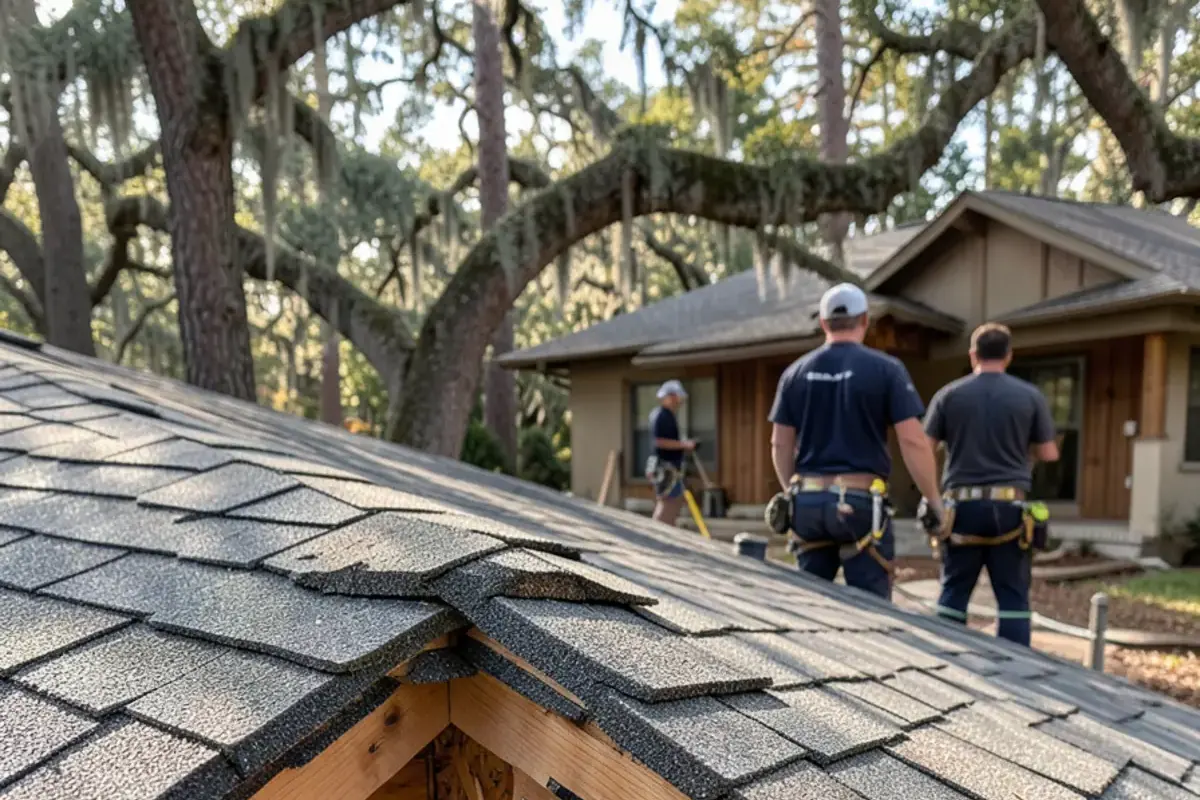
From our roof visits: what turns up under old shingles
Old flashing layered under roofing cement, nails driven into gaps between deck boards, and felt that has turned brittle and torn are the ordinary finds. Bathroom fans vented into the attic instead of through the roof show up as darkened sheathing above them. None of that is visible from the shingle surface, and an overlay leaves all of it in place.
We also see second-layer roofs where the bumps of the first layer show through within a few summers, especially on the sunny sides. Homeowners who want a clear look at their deck before deciding can ask for photos from the attic and from the roof edge. For any roofing project in Campbell, the written estimate should say plainly whether the price includes a tear-off.
To be fair to overlays, the trade-off cuts both ways. An overlay is quicker, quieter and costs less today, and on a one-layer, flat-lying roof on a house that will be sold or rebuilt soon, it can be a reasonable call. The price of that saving is everything left unseen: the deck, the old flashing, the vents. A tear-off costs more now and takes an extra day or two, but it is the only option that ends with a roof we can describe fully in writing, from the deck up.
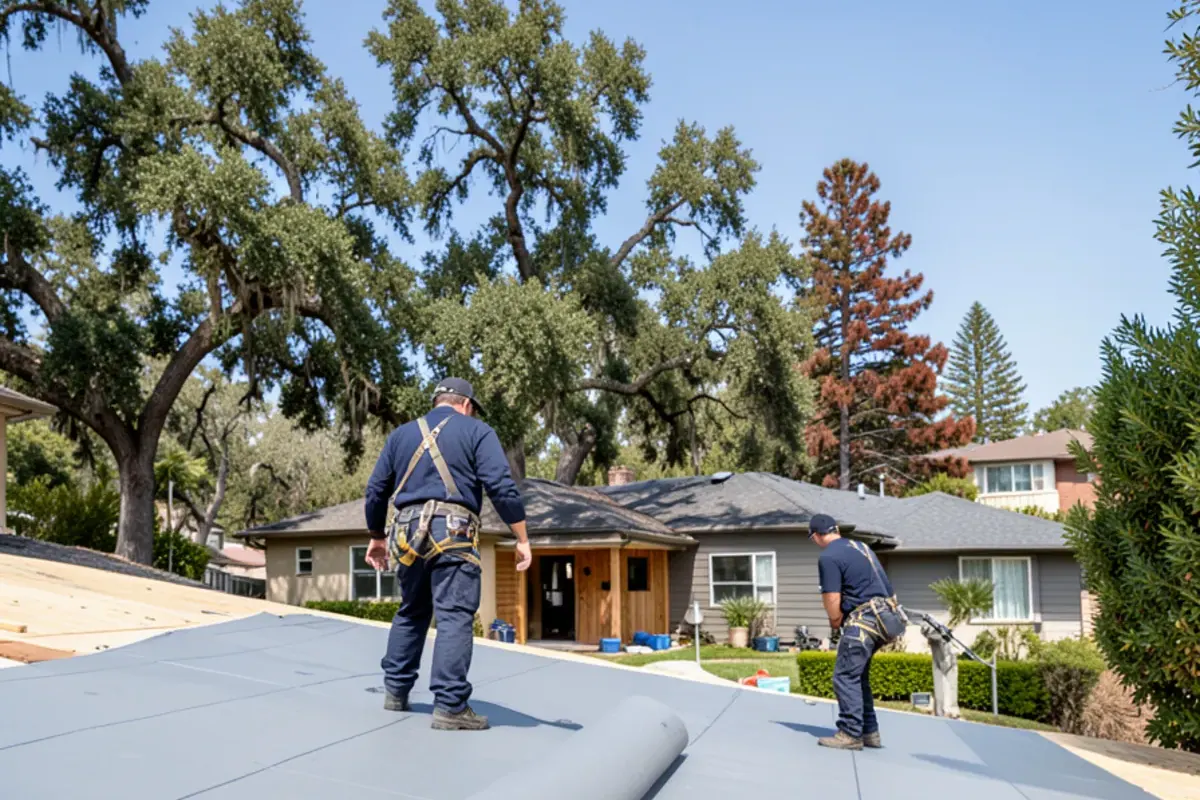
Making the overlay or tear-off call
Put the choice through a few plain tests before comparing prices:
- Count the layers. Two or more, or any shake or tile underneath, means tear-off.
- Walk the deck. Soft spots or attic stains point to rot an overlay would bury.
- Look at the flashing and vents. If they need replacing anyway, much of an overlay's saving disappears.
- Think about your timeline. Staying ten years or adding solar favors a tear-off.
If the roof passes every test and you plan to move soon, an overlay may be worth pricing. Otherwise, a tear-off is the better-value roof.
Want to know what is under your shingles before you choose? Ask Xylo Fix Roofers for a written estimate with attic and roof-edge photos.
Call (725) 745-8803