
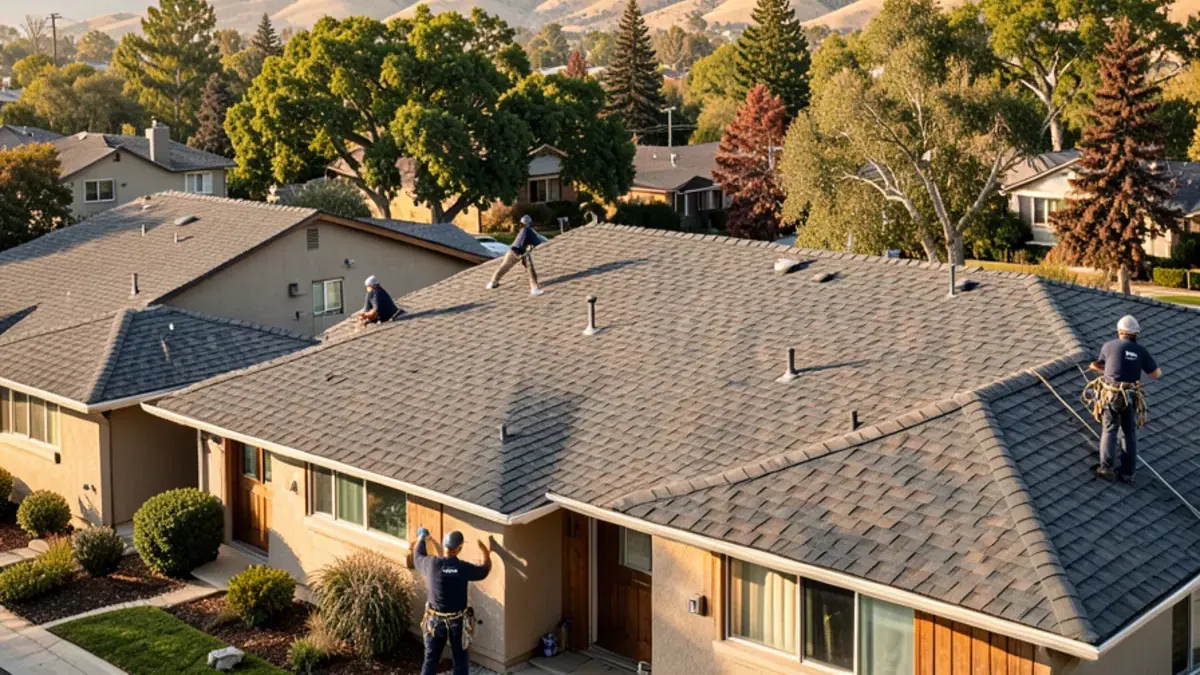
How does Santa Clara County weather wear a roof through the year?
The county has a Mediterranean climate. Nearly all the rain falls between November and March, with January usually the wettest month, while summers run long, dry and sunny. That rhythm means a roof spends most of the year baking and a short stretch soaking.
| Season | Main stress | What it does |
|---|---|---|
| June to September | Strong UV, heat, little rain | Dries out asphalt, cracks sealants and pipe boots, chalks coatings, bakes flat roofs |
| October | First winds, leaf drop | Fills gutters and valleys just before the rain starts |
| November to March | Rain, atmospheric-river storms, gusty wind | Drives water under damaged flashing, lifts loose shingles, brings down branches |
| April and May | Drying out, spring pollen and oak leaf drop | Leaves damp debris in valleys; moss on shaded faces slows down but stays |
Wondering how your roof came through last winter? Call (725) 745-8803 to schedule a look before the next storm season.
Call (725) 745-8803How UV and heat wear shingles down
Asphalt shingles depend on oils in the asphalt to stay flexible and on mineral granules to shield that asphalt from sunlight. Years of strong summer sun slowly drive off the oils and loosen granules, so the shingle turns brittle. South- and west-facing slopes usually show it first.
- Granules collecting at downspout outlets
- Shingle edges that curl or cup
- Cracks across tabs, especially on the sunny side
- Rubber pipe boots that split around the vent pipe
- Caulked joints at flashing that have pulled away
Tile handles sun well, but the underlayment beneath it does not last as long as the tile. Flat roofs take the most direct heat, which is why reflective coatings and light-colored membranes are popular on low-slope roofs here.
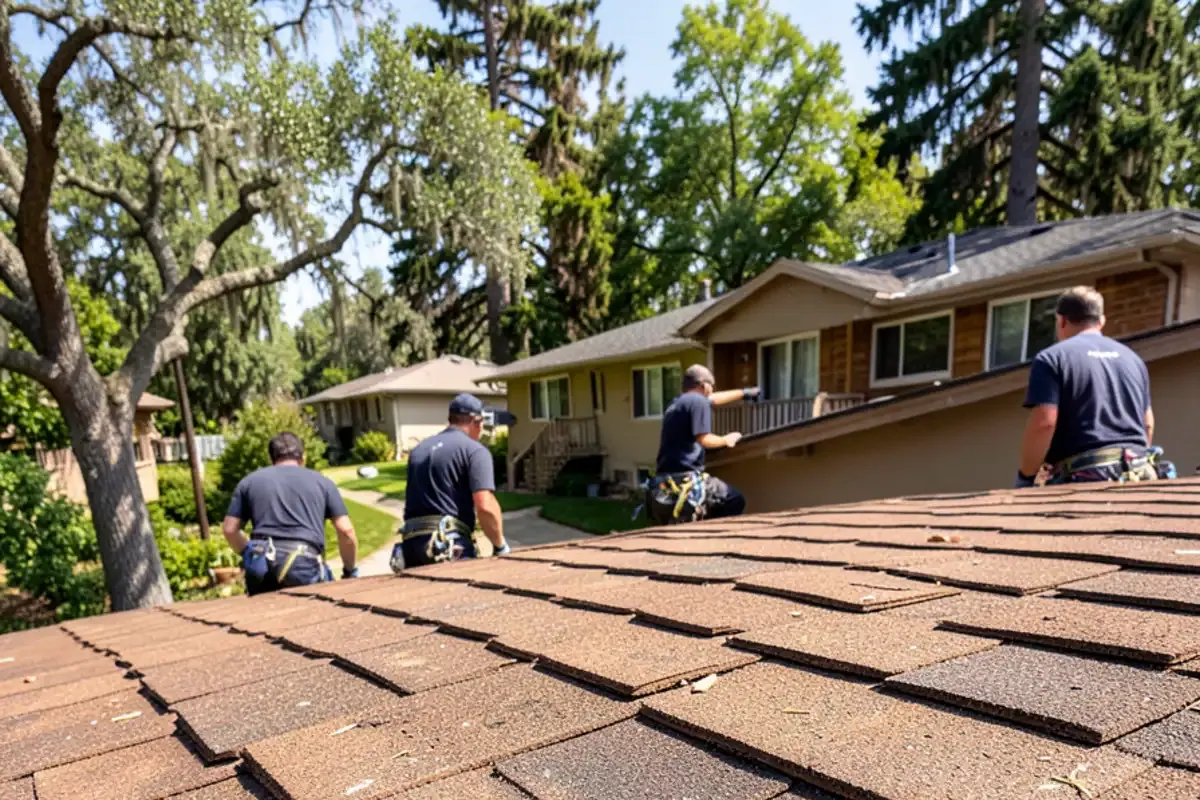
Why winter storms do the fast damage
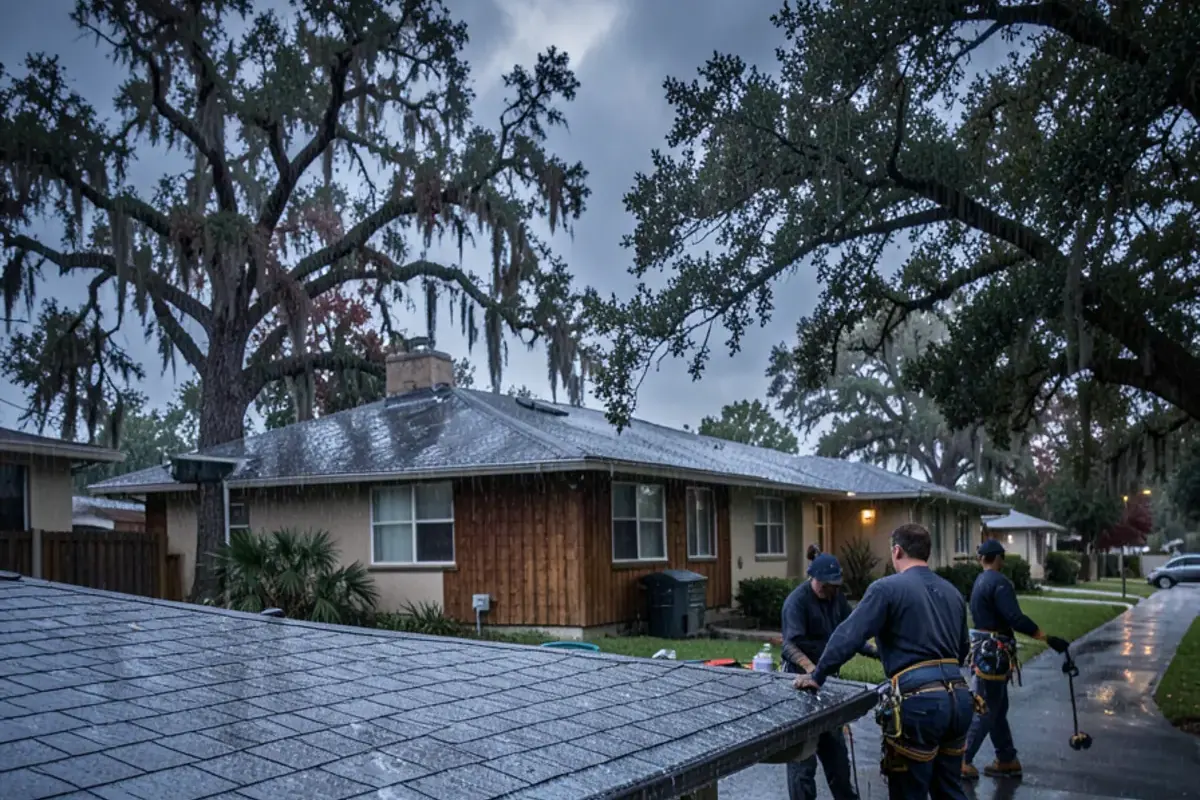
A dry roof can hide its problems for months. The first long storm tests every seal at the same time. Atmospheric rivers, long plumes of moisture off the Pacific, can bring heavy rain and wind for days. The series that ran from late December 2022 into January 2023 toppled trees, flooded streets and damaged roofs in both Santa Clara and Santa Cruz counties.
Wind-driven rain enters at places that stay dry in light showers: under lifted shingles, through cracked mortar on ridge tiles, behind step flashing and at clogged gutters that back water under the roof edge. Falling limbs add impact damage on tree-lined streets.
Water that gets past the roofing in one storm keeps returning in the next. Wet sheathing softens, nails rust, and stains spread across ceilings long after the rain stops. That is why a leak noticed in December is worth a temporary fix right away and a permanent repair as soon as the roof dries.
Heat cycling and rain swings: the numbers behind the wear
Two measurements explain most of what we see. The first is surface temperature. The U.S. EPA notes that conventional dark roofs can reach 150°F or more on a sunny summer afternoon, then cool off sharply after dark. That swing makes shingles, metal flashing and sealant expand and contract once a day for the whole dry season, which is why caulked joints and nail heads work loose even when nothing has hit the roof.
The second is how much the rain total moves from one year to the next. Calendar-year rainfall at San Jose, compiled from NOAA records by Current Results, was about 16 inches in 2019 and about 5 inches in 2020. A run of dry years lets small defects go unnoticed. One wet winter then exposes all of them at once, which is how the 2022–23 storm series caught so many roofs out.
How each roof type shows local weather
| Roof type | Main local stress | First sign to look for |
|---|---|---|
| Asphalt shingles | Summer UV and heat | Granule loss and curling on south and west slopes |
| Concrete or clay tile | Underlayment aging beneath the tile; winter wind | Slipped or cracked tiles, stains near valleys and eaves |
| Wood shake | Sun drying followed by damp shade | Split or cupped shakes, moss on north faces |
| Torch-down and other flat membranes | Direct heat and standing water | Blisters, open seams, alligatored surface |
| Metal | Daily thermal movement | Loose fasteners, worn washers, gaps at trim |
A tired flat section is often a coating candidate rather than a replacement, as long as the membrane underneath is still sound and dry. Our roof coating page explains how that call gets made.
Fog, shade and the hills: local differences inside the county
Weather on the valley floor in Campbell and San Jose is not the same as in the foothills. Homes toward the Santa Cruz Mountains get more rain and more shade from oaks and redwoods, so moss and debris become bigger concerns than sun. Homes on the open valley floor see more of the heat and UV wear described above.
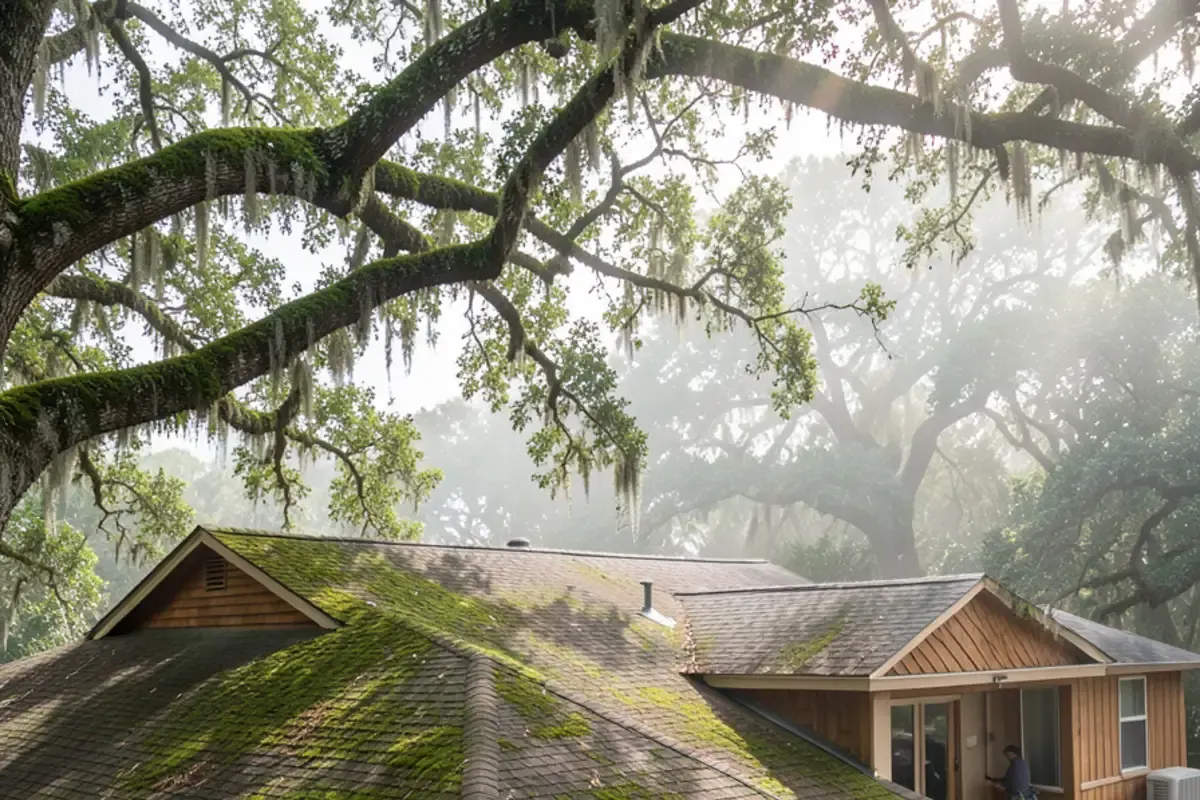
Morning fog that reaches parts of the county keeps shaded north slopes damp longer. That favors moss and algae on asphalt and wood shake. If you live near the hills, our Santa Clara County roofing page covers how conditions shift from town to town.
From our roof visits: weather wear patterns across the valley
Some patterns repeat on roofs across the valley:
- The sunny slope of a roof often looks years older than the shaded slope of the same roof.
- Leaks reported in the first storm of the season often trace back to items that dried out over summer, such as pipe boots, sealant and skylight seals.
- Flat sections over garages and patios tend to show heat blistering and cracked seams before the main roof shows wear.
- Leaks that appear only in long, wind-driven storms usually point to flashing or roof edges rather than the shingles themselves.
The fixes for weather wear carry trade-offs of their own:
- Trimming trees back cuts moss and debris but puts a once-shaded slope in full sun, so expect it to start aging like the sunny side.
- Lighter and cool-rated colors keep the roof cooler but show dirt and staining sooner.
- Resealing flashing buys time. It does not replace flashing that has rusted through, and layer after layer of sealant can hide the real condition.
How can you slow weather wear?
You cannot change the climate, but you can change the timing. A late-summer or early-fall roof inspection catches what the sun did before the rain exploits it. Scheduled roof maintenance then handles the small items: resealing flashing, replacing pipe boots, clearing valleys and gutters.
When it is time to reroof, choose for the exposure. Cool-rated or lighter materials reduce heat on sunny valley roofs, while Class A materials and good debris control matter more in wooded foothill areas. For homeowners in Campbell, most roofs see far more sun than shade, so UV resistance deserves weight in the decision.
The short version: sun sets the pace of aging, and storms decide when that aging becomes a leak. Inspect after the dry season, fix the small items before November, and keep gutters and valleys clear so winter rain has a clean path off the roof.
Want to know how much life the summers have left in your roof? Ask us for a free written estimate with photos of each slope.
Call (725) 745-8803