
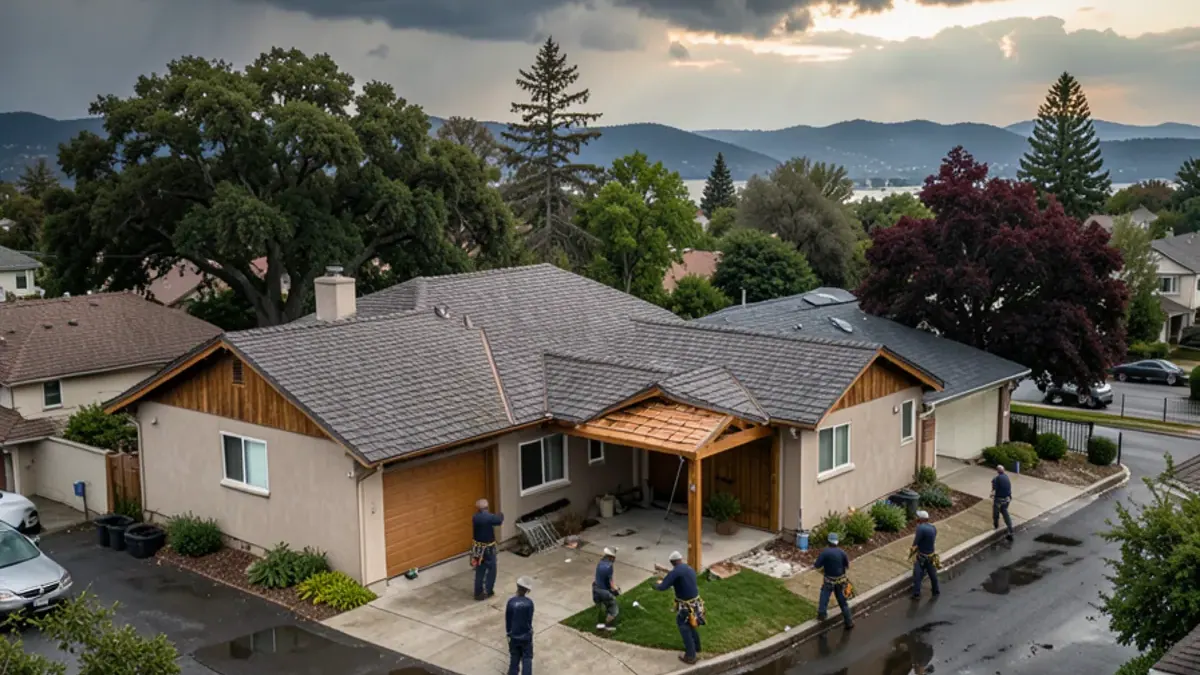
Why does a multi-day storm hit roofs harder than one big rain?
An atmospheric river is a long, narrow band of moisture that can park over the Bay Area for days. The National Weather Service tracks these events because they deliver heavy rain in waves, often with strong gusts between bands. The late-December 2022 through January 2023 series brought down trees and caused flooding and storm damage across Santa Clara and Santa Cruz counties.
Roofs suffer in three ways. Repeated soaking finds every weak seam. Gusts between bands lift shingles that have already lost their seal. And saturated ground lets trees topple that would have stood through a single storm.
Reading the forecast: the AR scale
Researchers at the Center for Western Weather and Water Extremes rank atmospheric rivers from AR 1 to AR 5, based on how much water vapor the band carries and how long it lingers over one place. The low end is mostly beneficial rain; the top two categories are mostly hazardous. When a forecast calls for a long-duration, higher-category event, assume every weak spot on the roof will be tested and do the pre-storm checks below a few days early.
Found something on the checklist? Call (725) 745-8803 and we'll tell you when a crew can get there to look.
Call (725) 745-8803Ground-level walk-around checklist
Do this from the yard and sidewalk with binoculars or a phone zoom. Stay off the roof.
- ☐ Shingle pieces, tile fragments or granules in the yard, driveway or gutters
- ☐ Dark rectangles on the roof where a shingle or tab is missing
- ☐ Ridge caps out of line or missing along the peak
- ☐ Flashing at the chimney or walls bent, lifted or hanging
- ☐ Branches resting on the roof or tangled in the service wires
- ☐ Trees leaning more than before, or soil heaved at the base
- ☐ Gutters sagging, separated at seams or pulled from the fascia
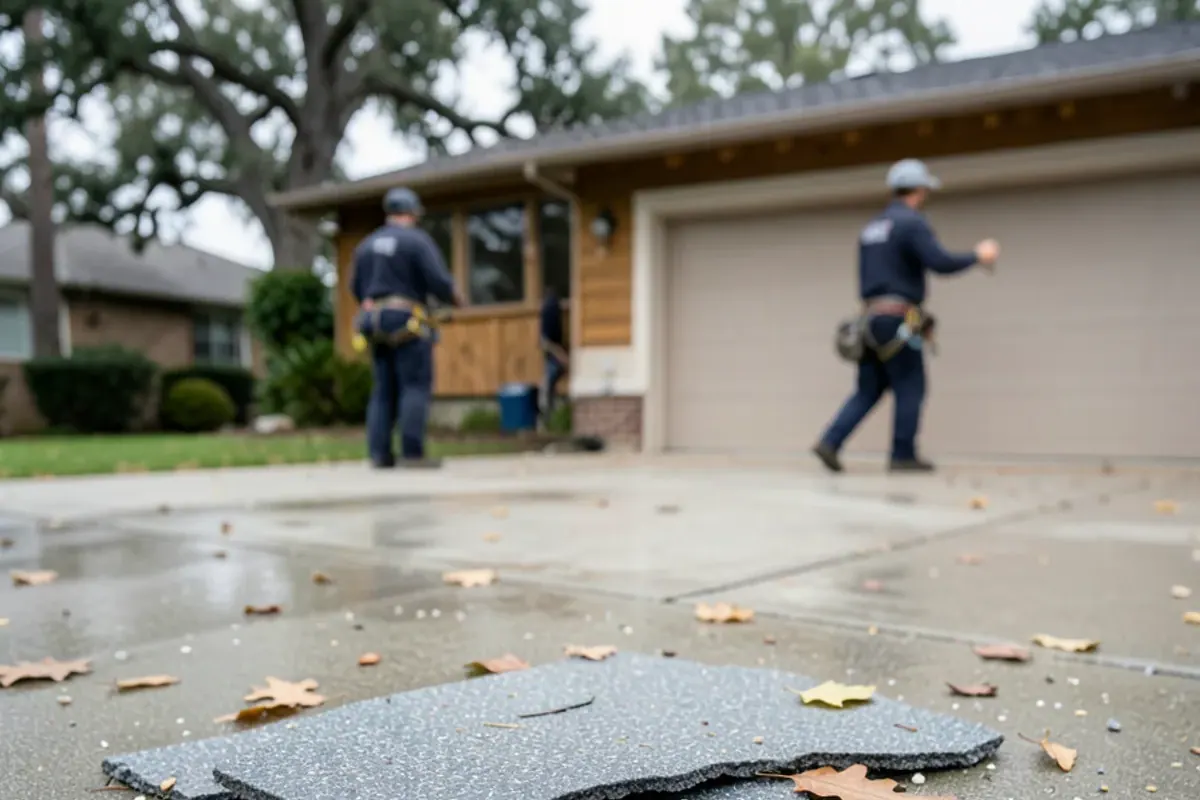
Gutters and downspouts: did they keep up?
Long storms reveal drainage problems that a single shower never does. Look for these signs:
- Overflow stains or splash marks on siding and windows below the gutter line
- Washed-out soil or mulch where water poured over the edge instead of through a downspout
- Water in the crawlspace or against the foundation near a downspout outlet
- Peeling paint or soft wood on the fascia board behind the gutter
A gutter that overflowed for three days may have pushed water behind the drip edge and into the eave. Loose hangers, split seams and rotted fascia are covered by our gutter repair service.
If the downspouts drain onto splash blocks, check that the blocks did not wash away. Water dumped at the foundation for days can show up as a damp crawlspace or a garage slab stain, and homeowners sometimes mistake that for a roof leak.
Attic and ceiling checks after the rain stops
- Check ceilings in every room, including closets, for new stains, bubbles in paint or a musty smell.
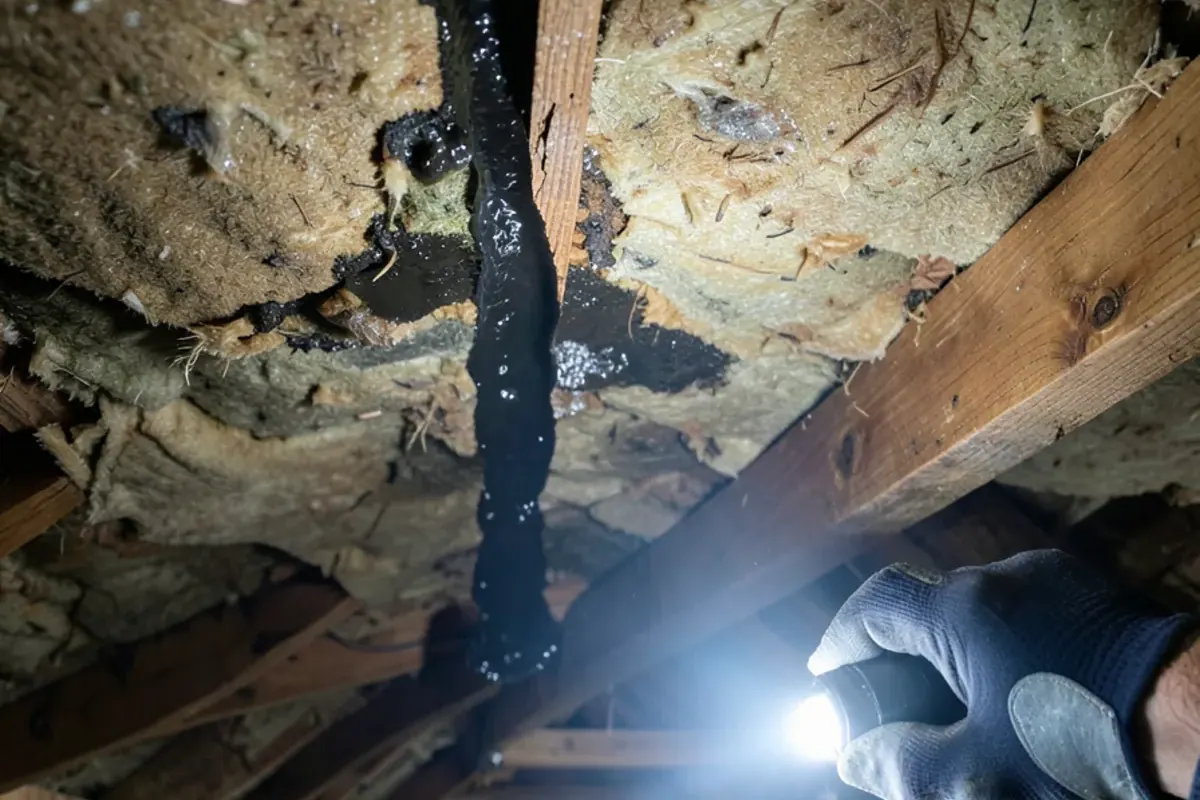
- Open the attic hatch on a dry day and scan the underside of the roof deck with a strong flashlight.
- Look for darkened wood, water trails down rafters, and nail tips that are rusty or dripping.
- Press insulation near the eaves and below valleys; it should be dry and fluffy, not matted.
- Note anything you find with a photo and a rough location so a roofer can match it to the outside.
Between storm bands: a short, safe to-do list
Storm series often give a lull of a few hours to a day between bands. Use it for ground-level work only; the roof itself stays off limits until the series is over.
- Keep a storm log. Date, rough rainfall, wind direction and where any drip appeared. A roofer can match a south-wall leak to south-facing gusts.
- Extend downspout outlets away from the foundation with a temporary extension or a splash block you put back in place.
- Empty attic catch trays and buckets before the next band arrives, and check that the wet area has not grown.
- Move cars and outdoor furniture away from trees that are leaning or have lifted soil at the base.
- Photograph new damage before you tidy it up, including torn shingles that blew into the yard.
Which atmospheric river roof damage needs a roofer first?
Not everything on the checklist is urgent. Use this triage to decide what to schedule now and what can wait for a routine inspection.
| What you found | Priority | Why |
|---|---|---|
| Active drip or wet ceiling | Call now | Water is already reaching the interior |
| Missing shingles or tiles | Call now | The next band of rain goes straight to the underlayment |
| Tree or large limb on the roof | Call now | Weight and punctures can affect framing |
| Lifted flashing at chimney or wall | Schedule soon | A common leak path in wind-driven rain |
| Gutter pulled away from fascia | Schedule soon | Overflow can rot fascia and eaves |
| Granules in gutters, no other signs | Routine check | Can reflect normal aging rather than storm damage |
For anything marked call now, our storm damage roof repair work starts with photos of what we find and a written, itemized estimate.
From our roof visits: what long storms leave behind
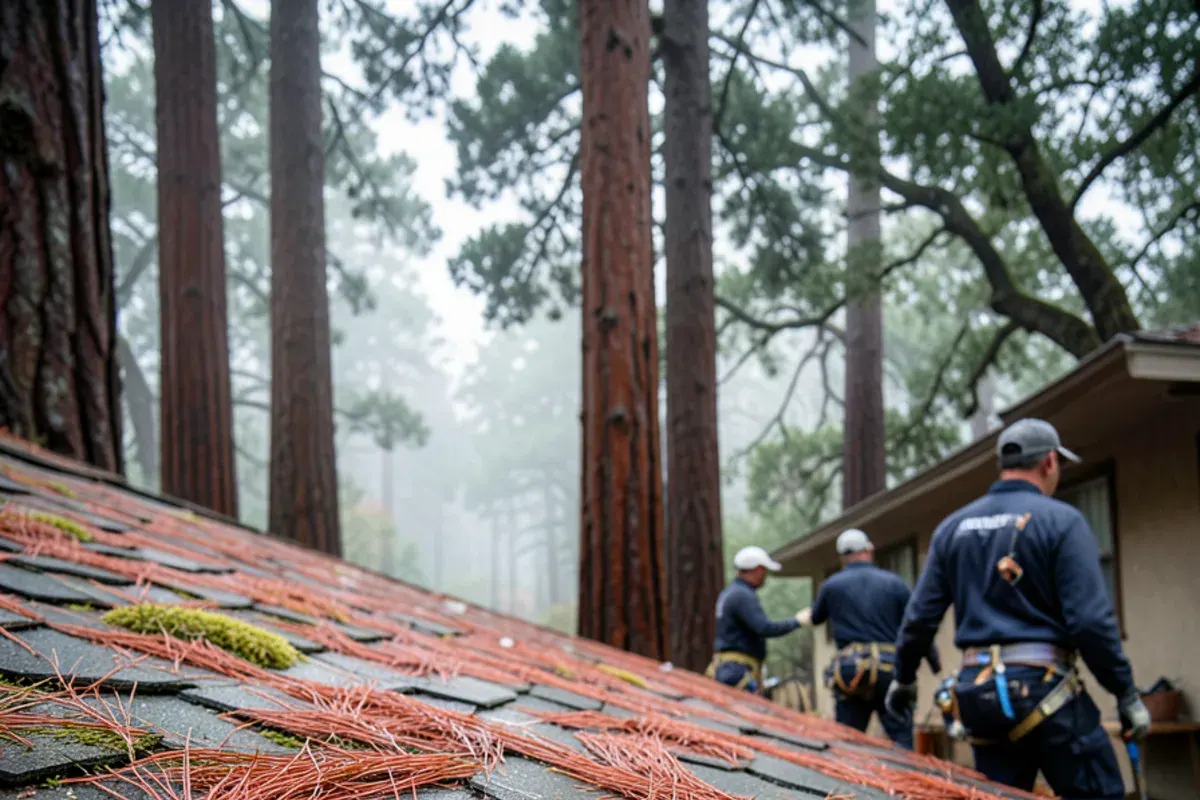
After a storm series, we often find that the damage was not one dramatic event but small failures that added up. A shingle that lost its seal in summer heat gets lifted on day two and torn off on day four. A valley packed with redwood needles or oak leaves acts like a dam until water climbs under the shingles.
Mountain homes see this most. Properties across Santa Cruz County sit under tall trees and take more rain than the valley floor, so moss, needle buildup and branch strikes are routine there. On the flatlands around Campbell, clogged gutters and lifted ridge caps come up more often than tree strikes.
What we weigh when the next band is a day away
Between storms there is a choice to make: a quick, temporary fix now or a proper repair once the series ends. A tarp or a resealed flashing edge can carry a roof through two more bands, but it adds a visit and a cost that disappear into the permanent repair. If the gap is only a few missing tabs on a sound roof, we may replace them on the dry day and skip the tarp. If the deck is wet and soft, we cover it and wait, because new shingles nailed into saturated plywood do not hold well and trap the moisture underneath.
Before the next storm series: steps that pay off
Most of the damage on the triage list starts as maintenance that slipped. A dry-season visit is the cheapest point to catch it, before the November-to-March rains begin.
- Clear valleys and gutters of needles and leaves in late fall, and again after the first big storm if trees overhang the roof.
- Replace cracked pipe boots and reseal flashing while the roof is dry and the repair can bond.
- Trim limbs that overhang the ridge or rub the roof surface.
- Book a [roof inspection](/roofing-contractor/roof-inspection/) if the roof is past its midpoint or came through the last series with repairs.
Storm series over and something on the list worries you? Call (725) 745-8803 to get it inspected and written up.
Call (725) 745-8803