
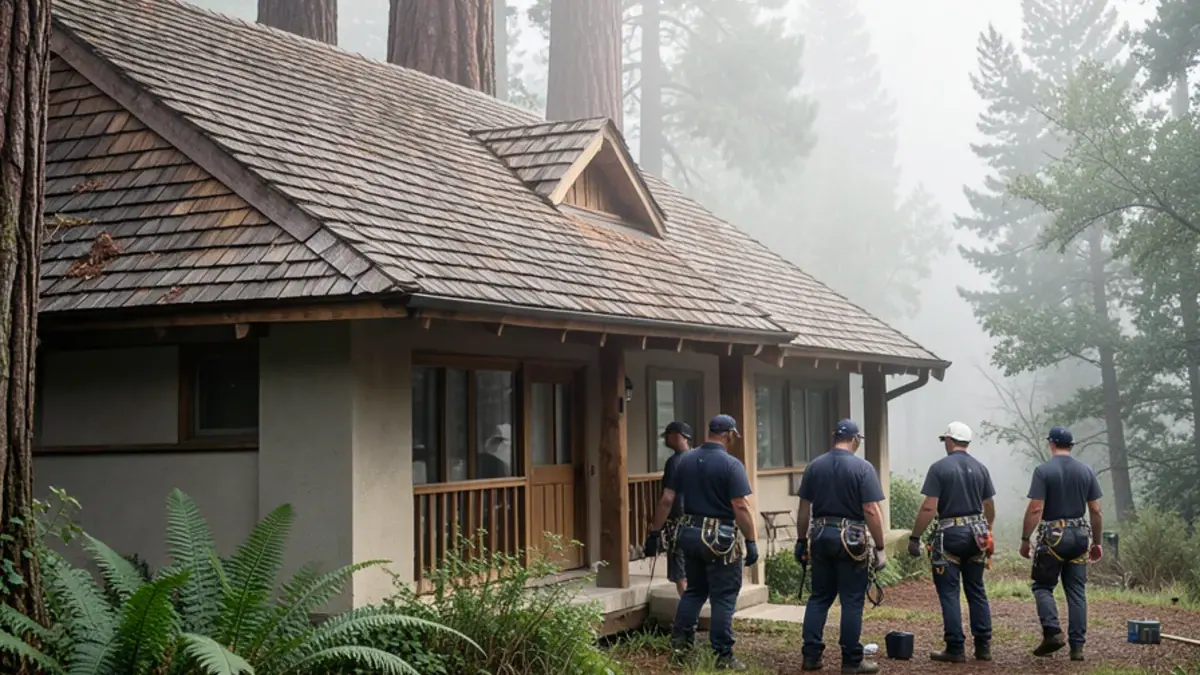
Why are mountain roofs harder on materials?
A house under redwoods lives in a different climate from a house down on the valley floor in Campbell. The canopy keeps roofs shaded and damp, the ridges pull much more rain out of Pacific storms than the valley floor receives, and the trees drop material all year. Add steep driveways, narrow roads along Highway 9 and Highway 17, and limited staging space, and even simple jobs need more planning.
Needles and duff
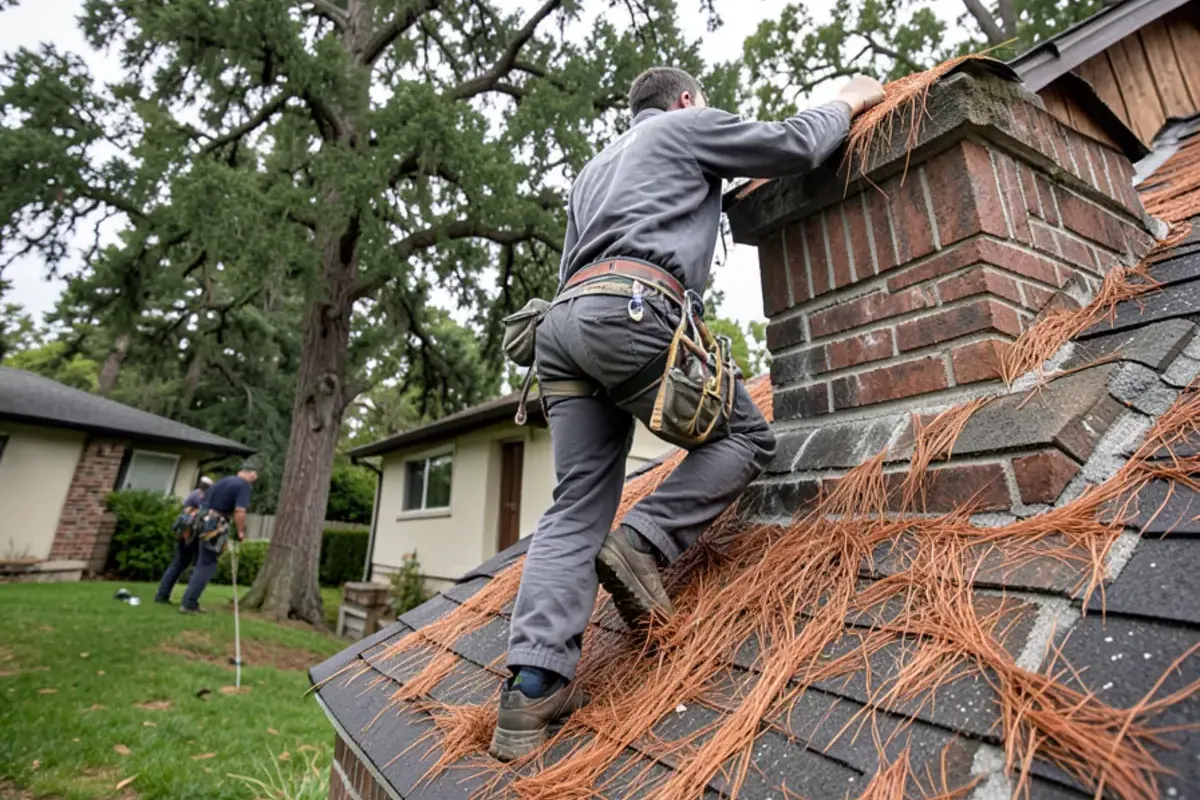
Redwoods shed old branchlets mostly in fall, while pines and oaks add their own drop through the year. That material packs into valleys, behind chimneys and in gutters, where it holds water against the roof and turns into a soil layer that plants can root in.
Moss and shade
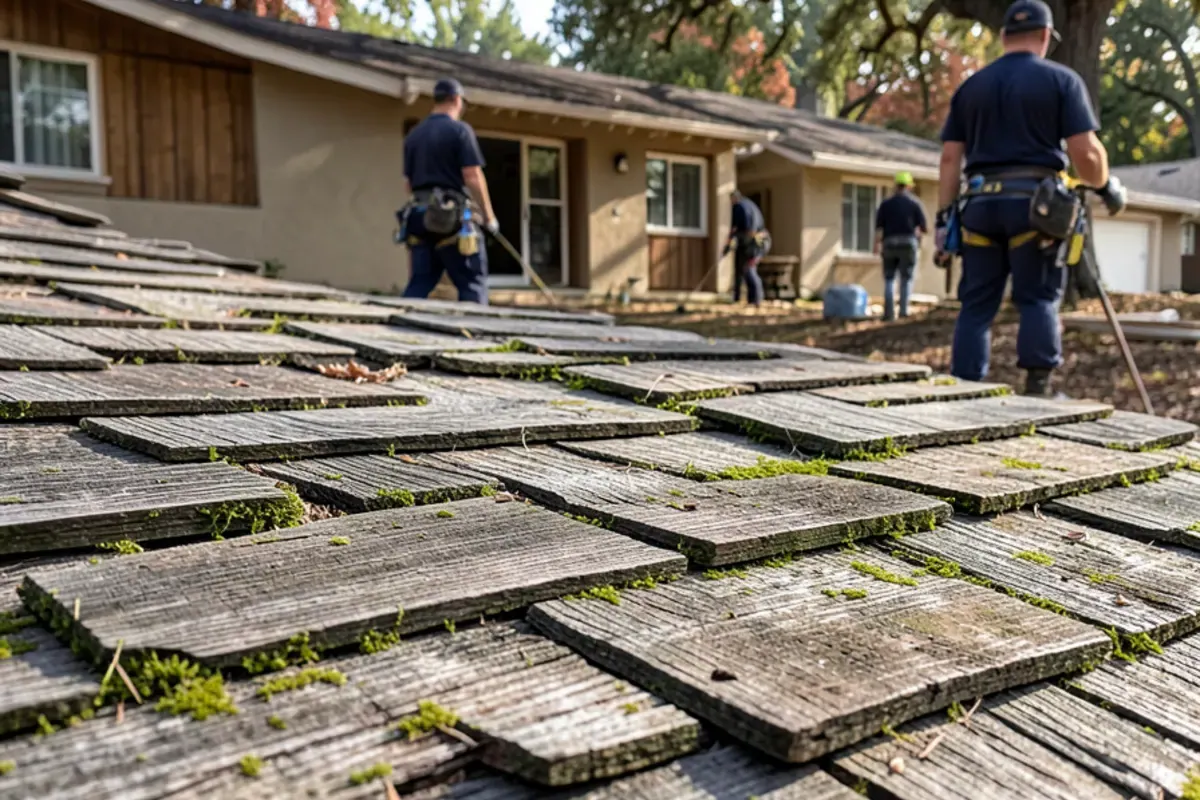
Moss lifts shingle edges and wood shakes, letting wind-driven rain run underneath. It thrives on north faces and under dense canopy.
Fire exposure
The 2020 CZU Lightning Complex fire burned through the Santa Cruz Mountains, destroying homes in Bonny Doon and forcing evacuations across the San Lorenzo Valley. Many mountain parcels sit in CAL FIRE-mapped Fire Hazard Severity Zones, where reroofs call for Class A assemblies and ember-resistant vents.
Live under the redwoods and haven't had the roof checked since last winter? Call (725) 745-8803 to book a visit, and we'll let you know when a crew can make the drive up.
Call (725) 745-8803A yearly care calendar for Santa Cruz Mountains roofing
| Time of year | Task | Why |
|---|---|---|
| September to October | Clear gutters, valleys and roof-to-wall corners | Redwood and oak drop is heavy, and the first storms are close |
| After the first big storm | Walk the property and check ceilings and attic | Finds slow leaks while repairs are still easy to schedule |
| January to February | Clear gutters again if trees overhang | Mid-season drop clogs downspouts during the wettest months |
| April to May | Moss treatment and gentle cleaning | Roof is drying out and treatments work better in mild weather |
| June | Trim limbs back from the roof and chimney | Reduces debris and fire risk before the dry season |
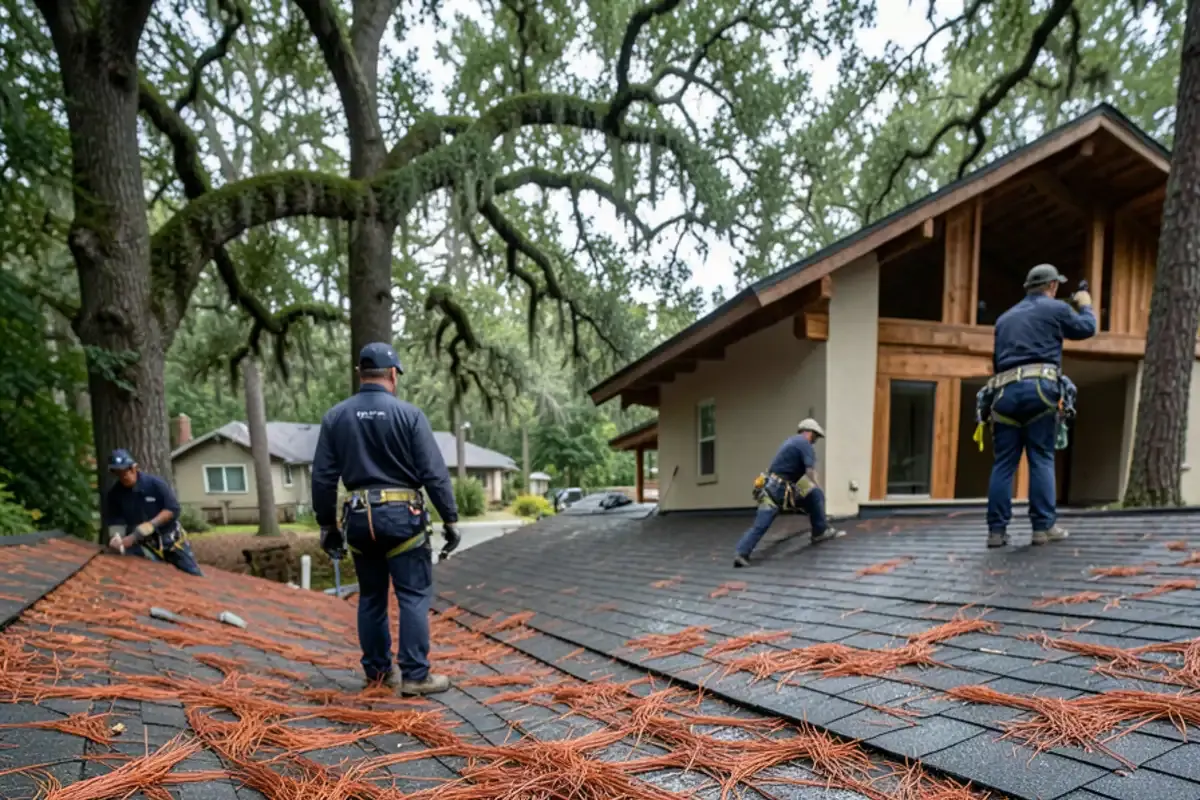
What does a wood shake roof need in the redwoods?
Cedar shake is common on older mountain homes and suits the setting, but shade and moisture shorten its life. Shakes that stay wet grow moss, cup, split and eventually rot at the butts. Replacing individual split or rotted shakes, clearing keyways between them and fixing flashing at chimneys and skylights keeps a sound shake roof working longer. Our wood shake roof repair service handles that kind of selective work.
When the shake is past repair, the fire rules matter. Untreated shake does not meet Class A, so many owners move to treated shake over a rated assembly, synthetic shake, Class A shingles or metal. Ask your permit office what your parcel requires before choosing.
Choosing a roof for a redwood lot after the CZU fire
The CZU Lightning Complex started with lightning strikes in August 2020 and was contained that September after burning 86,509 acres and destroying 1,490 structures, according to CAL FIRE's incident record. Rebuilt homes in the San Lorenzo Valley went up under the wildland-urban interface rules, and older homes nearby now weigh the same question at reroof time: which Class A covering also copes with shade, needles and heavy rain?
| Covering | Under redwood shade | Debris and needles | Fire rating path |
|---|---|---|---|
| Class A asphalt shingles | Moss and algae take hold on north faces | Needles catch on the textured surface and in valleys | Most fiberglass shingles are Class A on their own |
| Standing seam metal | Little for moss to root in | Sheds needles well, but they still collect at ridges and behind penetrations | Class A over the tested underlayment |
| Synthetic shake | Resists rot better than cedar | Holds debris in the keyways like real shake | Depends on the specific product listing |
| Treated cedar shake | Stays damp and grows moss | Needles pack between shakes | Only over a specific rated assembly; check local limits |
| Concrete tile | Moss grows in the tile laps | Open ends need bird stops and fire-stopping | Class A, often as an assembly |
Getting material up a mountain driveway
Supply trucks that set bundles straight onto the roof need room to park and swing a boom. On a narrow, steep drive off Highway 9, materials sometimes have to be dropped at the road and carried in, and the tear-off bin may need to sit on a neighbor-approved turnout. That adds labor and days, so ask for access to be written into the estimate rather than discovered on delivery morning.
Who issues roofing permits in the mountains?
It depends which side of the county line you are on. Boulder Creek, Ben Lomond, Felton and Bonny Doon are unincorporated Santa Cruz County, so the County of Santa Cruz permits roof work there. Lexington Hills is unincorporated Santa Clara County, which means the County Planning and Development Department handles it. Check with the right office before tear-off starts.
Homeowners in Boulder Creek and Ben Lomond often ask us to coordinate the permit timing with weather, since a reroof is best started in the dry months.
Expect the inspector to look at the same things as on the valley floor: damaged sheathing replaced before the new roof goes on, correct nailing, and flashing at every wall and chimney. In fire hazard areas, vents and edge details get extra attention.
From our roof visits: what mountain roofs teach us
- A gutter can look clear from the driveway while the downspout below is packed solid with needles.
- Valleys under redwoods fill faster than gutters do, and a blocked valley sends water sideways under shingles.
- Moss does the most harm where it bridges the joints between shingles or shakes.
- Pressure washing a mossy roof usually strips granules or splits shakes, so we avoid it.
- Chimneys and skylights downhill of a big tree collect a dam of debris on their uphill side, a classic leak spot.
None of these need a new roof. They need someone on the roof once or twice a year, and roof repair done promptly when a problem shows.
Most mountain fixes come with a trade-off worth knowing up front:
- Zinc or copper strips near the ridge slow moss on the slope below them. They do not remove moss already there, and under dense canopy the effect is modest.
- Fine-mesh gutter cleaning visits get easier with guards on, but redwood needles mat on top of mesh and still need brushing off.
- Taking out a big tree dries the roof quickly, yet it can need a County permit, and it changes summer shade on the house for good.
Keeping a redwood roof ahead of the weather
Mountain roofs reward a routine more than a big project. Keep needles out of valleys and gutters in fall and again mid-winter, treat moss in spring, trim limbs before fire season, and fix split shakes or lifted shingles while they are still small. When the roof does reach the end, pick a Class A covering that also sheds debris, and plan the job for the dry months with access worked out ahead of time.
Planning upkeep or a reroof for a home under the redwoods? We can fold the roof, the gutters and the drive up into one free written estimate.
Call (725) 745-8803