
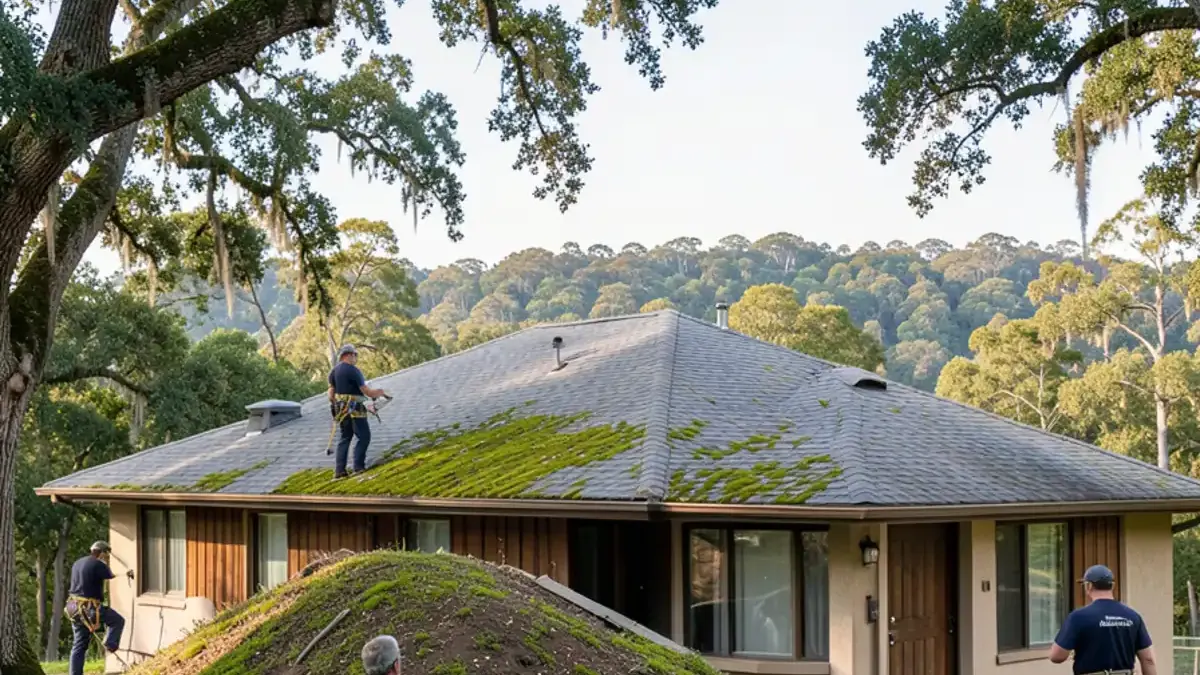
Is it moss, algae or lichen?
They look alike from the street but behave differently on a roof. Knowing which one you have tells you how urgent the problem is.
| Growth | Looks like | Harm to the roof | Urgency |
|---|---|---|---|
| Moss | Green, cushiony clumps, often along shingle edges and joints | Holds water, lifts shingle edges and shakes, can let wind-driven rain under | Remove before the rainy season |
| Algae | Dark streaks running down the slope | Mostly cosmetic; can hold a little moisture | Clean when convenient |
| Lichen | Flat, crusty gray-green or yellow patches | Grips the surface tightly; scraping it off removes granules | Treat and let it wear off; do not scrape |
Seeing green clumps on a shaded roof slope? Call (725) 745-8803 and we'll tell you whether it needs removal or just treatment.
Call (725) 745-8803Why does moss grow on some roofs and not others?
Moss needs steady moisture and shade. In the South Bay, that means north-facing slopes, roofs under oaks and redwoods, and homes in foggier pockets or up against the hills. Debris speeds things along, since leaves and needles hold water and break down into a thin layer of soil on the roof.
- North-facing slopes that never get direct winter sun
- Roofs under dense tree canopy
- Valleys and roof edges where debris collects
- Wood shake, which holds moisture longer than other materials
- Low-slope sections where water drains slowly
This is why homeowners in the hills around Los Gatos and in the San Lorenzo Valley see far more moss than those on open valley-floor lots.
Why pressure washing a roof does more harm than good
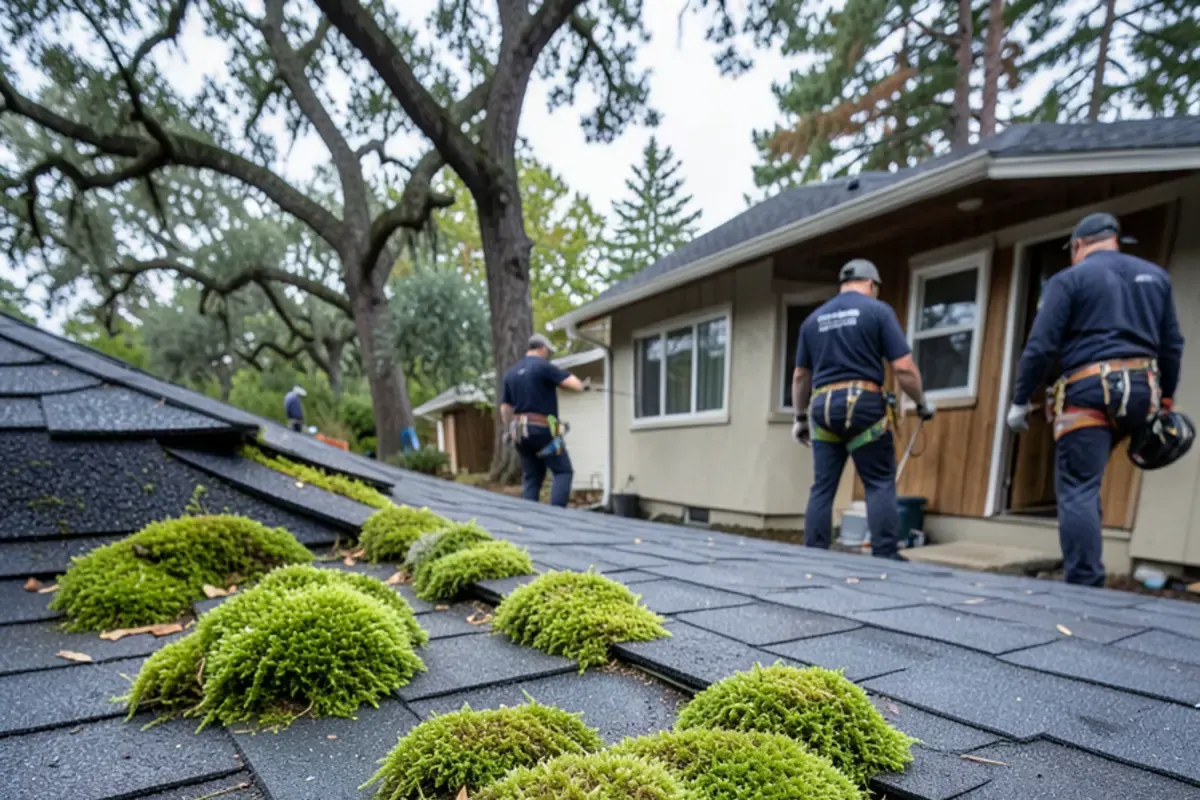
A pressure washer removes moss quickly, and it removes the roof along with it. On asphalt shingles, the spray strips the mineral granules that protect the asphalt from sunlight, shortening the roof's life. It can also drive water up under shingle edges and into the deck. On wood shake, high pressure tears the soft wood fibers and splits weakened shakes. On tile, it can crack old tiles and wash out mortar at ridges.
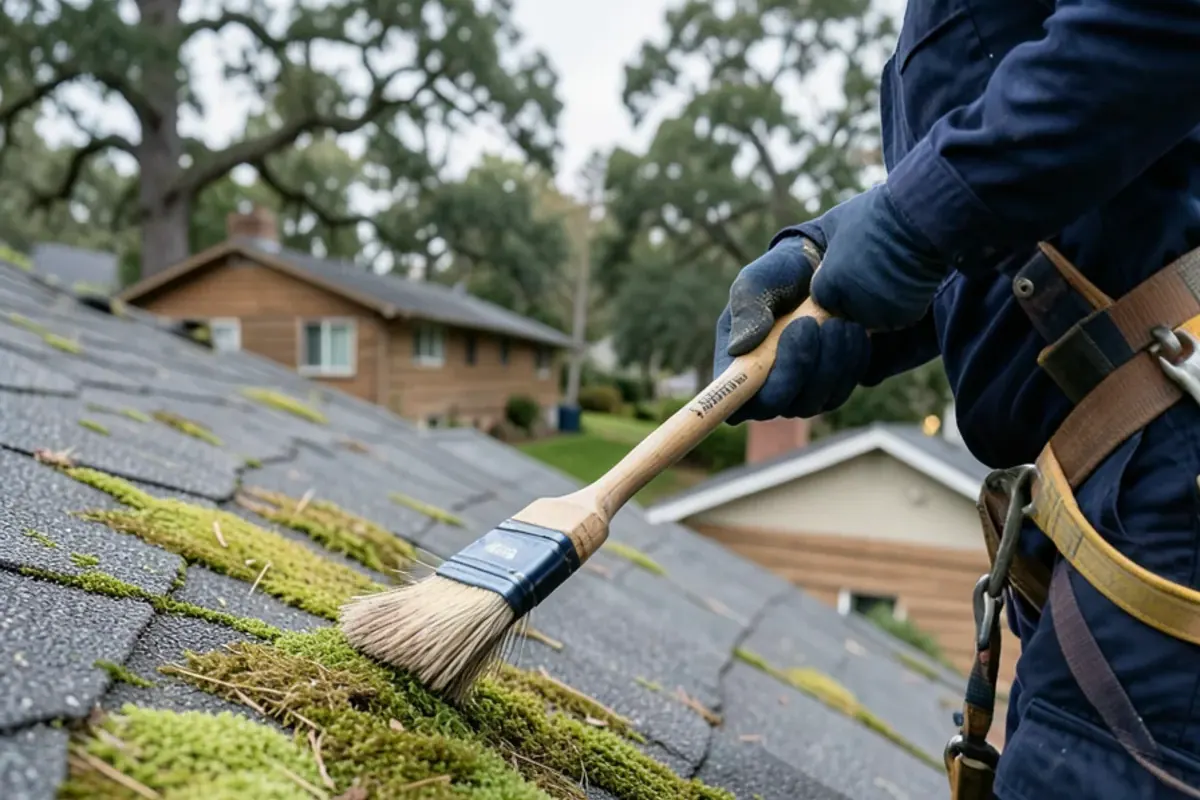
Scraping is a close second for damage. Metal scrapers and stiff wire brushes gouge shingles and pull up granules along with the moss, and on tile they scratch the surface finish. Patience works better: brush off what comes away easily, treat the rest and let rain finish the job.
Which moss and algae treatments fit which roof?
Roof moss and algae products are pesticides, registered with the U.S. EPA and, for sale here, with the California Department of Pesticide Regulation. The label sets the dilution, the surfaces it is meant for and the precautions, and following it is a legal requirement, not a suggestion. Within that, the common active ingredients behave differently.
| Treatment type | Works best on | Trade-off |
|---|---|---|
| Soap-based (potassium salts of fatty acids) | Moss on shingles and tile | Acts fast but may need a repeat application in heavy shade |
| Zinc-based products | Moss on shingles and shakes | Lasts longer, but zinc runoff is toxic to aquatic life and can stain |
| Oxygen bleach (sodium percarbonate) | Dark algae streaks | Gentler on plants than chlorine bleach, slower to show results |
| Chlorine bleach solutions | Algae streaks | Fast, but harms plants, corrodes metal and must stay out of storm drains |
Why runoff matters in Santa Clara County
Campbell is one of the member agencies of the Santa Clara Valley Urban Runoff Pollution Prevention Program, and its storm drains run to local creeks and on to San Francisco Bay without treatment. Rinse water carrying moss killer counts as a discharge. Plug or block the downspout outlet during treatment, direct rinse water onto landscaping that the label allows, and never wash residue into the gutter at the street.
A worked example: a north slope under an oak
Picture a north-facing shingle slope with a coast live oak over it and moss along every shingle edge. In September, the limbs over the roof are trimmed and the valleys cleared. On a dry day the loose moss is brushed downslope and a labeled treatment goes on the rest. The dead moss turns brown and washes off through the winter rains, and the gutters get a check in January. A zinc strip at the ridge then slows regrowth on the upper part of the slope.
Safe roof moss removal, step by step
- Work on a dry, mild day from a ladder or with fall protection; never walk on wet moss.
- Clear leaves and needles from valleys, gutters and the roof surface first.
- Brush moss downslope with a soft brush, working with the overlap of the shingles, never against it.
- Apply a moss treatment labeled for roofs, following the label for dilution and safety.
- Protect plants below and keep runoff out of storm drains; check your city's stormwater guidance.
- Let the remaining moss die back and wash off with the winter rain rather than scraping it.
Our roof maintenance visits handle this as part of debris clearing and include photos of any shingles or shakes that lifted under the moss.
How to keep moss and algae from coming back
Prevention is mostly about light, airflow and drainage. Trim branches to let sun reach the roof. Keep gutters and valleys clear so water drains quickly. Then consider metal strips: zinc or copper strips installed just below the ridge release small amounts of metal with each rain, which discourages growth on the slope below. They work best on the area closest to the strip.
When it is time to reroof, algae-resistant shingles with copper-containing granules help keep streaks away on shaded slopes. On older shake roofs, moss damage is often the reason for wood shake roof repair, replacing split or rotted shakes once the moss is gone.
From our roof visits: what moss leaves behind
- Shingle tabs that no longer lie flat after thick moss was underneath them for a few seasons.
- Shakes with rot at the butt ends, hidden until the moss is brushed off.
- Gutters filled with dead moss and granules after a winter of rain.
- Clean roofs right next to mossy ones on the same street, usually separated by a single large tree.
- Bright, clean stripes below old flashing or copper vents, where metal runoff kept growth away.
In wooded areas like Ben Lomond, a yearly check after the rains end catches new growth before it takes hold.
The trade-offs we explain before anyone starts:
- Zinc and copper strips slow growth, but they work by putting metal into roof runoff, and copper is a pollutant the Bay Area already works to reduce.
- A treated roof often looks worse for a few months, with brown dead moss in place, before the rain clears it.
- Removing thick moss from older shingles can reveal lifted or cracked tabs that need repair, so cleaning sometimes turns into a small repair job.
- Cutting back trees is the most lasting fix, yet it also removes summer shade that keeps the house cooler.
A moss plan that holds up through the wet season
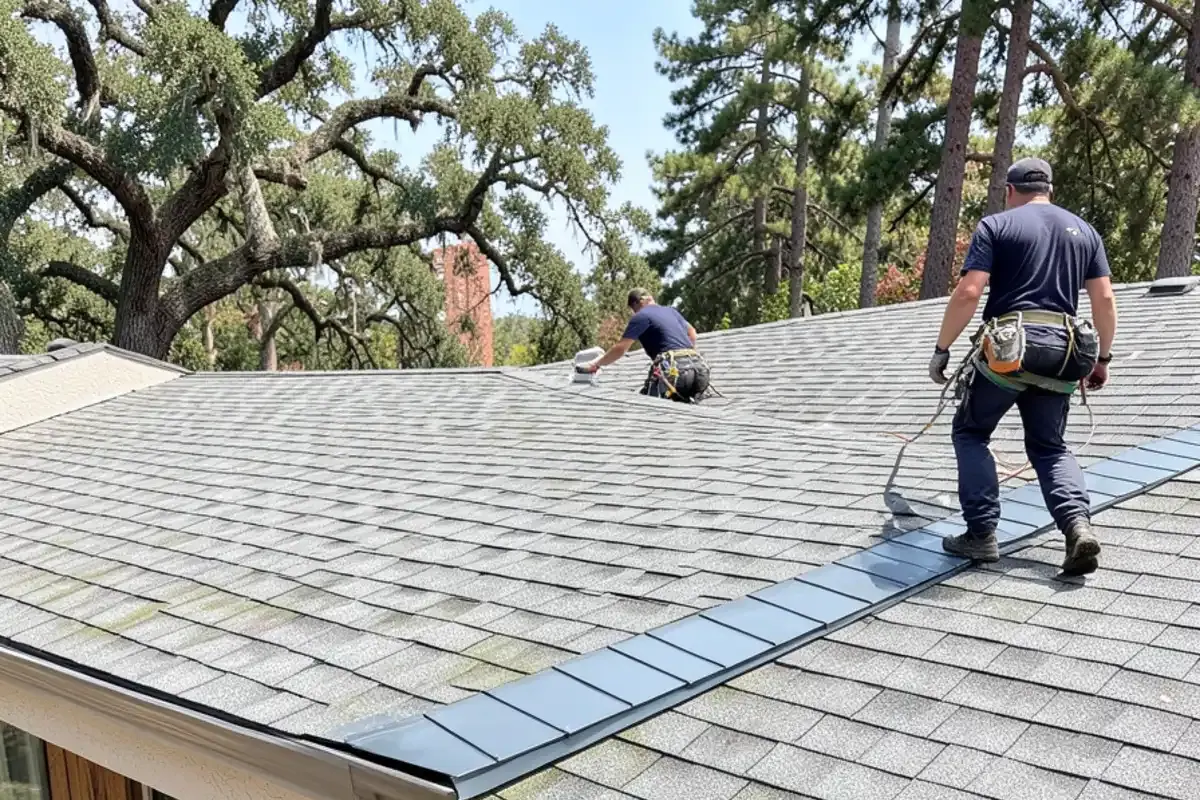
Remove what lifts the roofing, treat what is left with a labeled product, and change the conditions that let it grow: more light, cleaner valleys and faster drainage. Then look again each spring. Dead moss and granules end up in the gutters, so pair the work with gutter cleaning before the first big storm.
Moss taking over a shaded slope? We'll price removal, any lifted shingles and a prevention plan on one free written estimate.
Call (725) 745-8803