
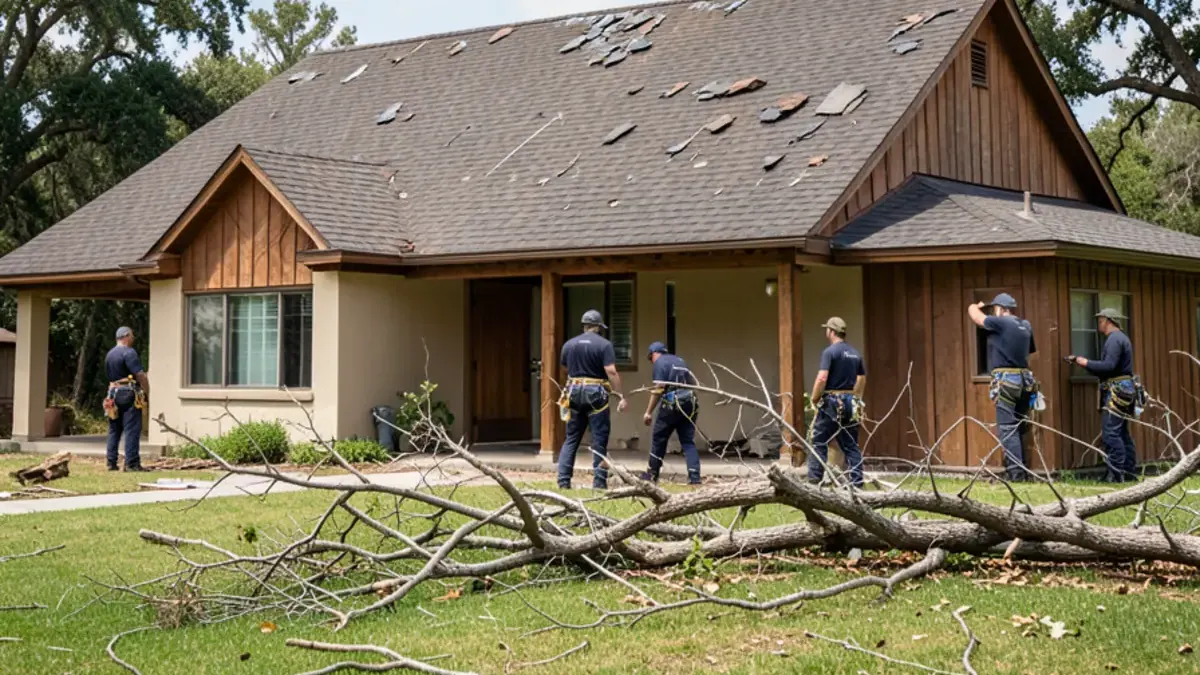
How does a roof insurance claim for wind damage unfold?
- Report the loss to your insurer or agent and get a claim number.
- Prevent further damage with a tarp or temporary repair, and keep receipts.
- Document everything with photos, video and notes before cleanup.
- Get a roofer's inspection and a written, itemized estimate.
- Meet the adjuster, ideally with the roofer present or with the roofer's photos in hand.
- Review the insurer's estimate against the roofer's, line by line.
- Complete the repair and submit final invoices if the policy releases further payment after work is done.
Need storm damage documented before the adjuster visits? Call (725) 745-8803 to book an inspection with photos.
Call (725) 745-8803Day one: protect the house and start the record
Most policies expect you to take reasonable steps to limit further damage after a loss. That usually means a tarp over open areas, buckets and fans inside, and moving belongings out of wet rooms. Keep every receipt.
- Write down the date, time and what you saw or heard: a gust, a crack, a limb coming down.
- Save local weather reports or alerts for that day from the National Weather Service.
- Photograph the roof from the ground on all sides before any tarp goes on.
- Keep damaged pieces: torn shingles, broken tiles, a bent gutter section.
- Do not sign any agreement that assigns your claim rights to a contractor without reading it carefully.
If a tree came down, call the tree service before the roofer can do much (our page on fallen tree roof damage covers the order of trades), and ask them to photograph the trunk and break point as they cut. Those pictures help answer questions later about the tree’s condition before the storm.
What evidence makes a wind or tree claim clear?
Adjusters look for a link between a specific event and specific damage. Good evidence ties the two together.
| Evidence | Why it helps |
|---|---|
| Dated photos of each slope and the impact area | Shows the damage before cleanup or temporary repairs |
| Attic photos of decking and rafters | Reveals framing damage that cannot be seen from outside |
| Interior photos of stains and damaged belongings | Links the roof opening to water damage inside |
| Weather records for the date of loss | Confirms high winds or the storm in question |
| Tree service invoice and stump photos | Documents removal cost and the condition of the tree |
| Written, itemized roofer estimate | Gives the adjuster a scope to compare against |
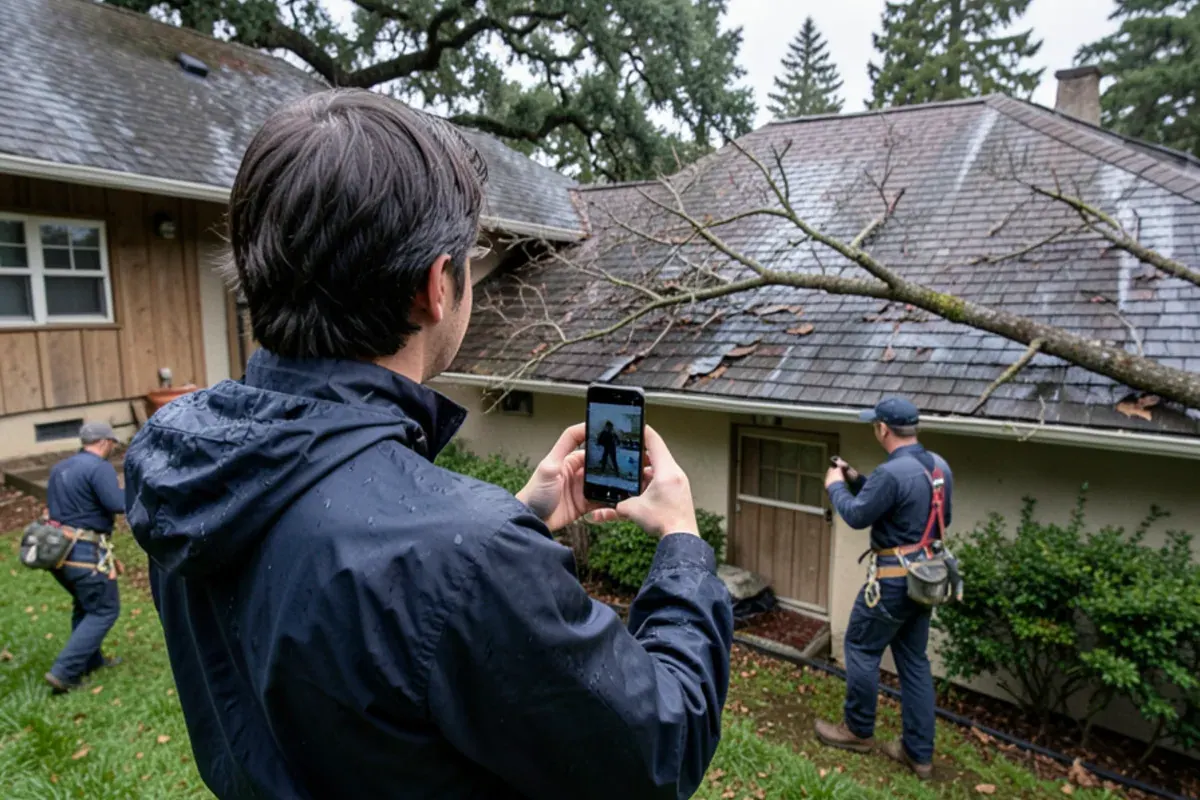
Meeting the adjuster on the roof
The adjuster will inspect the roof, sometimes in person and sometimes with drone or photo tools, and write an estimate. Having your roofer's findings ready makes it easier to point out items the adjuster might miss, such as creased shingles away from the main damage, loosened flashing or cracked rafters in the attic.
A frequent point of disagreement is whether damage came from the storm or from age. Our guide to wind damage vs normal wear explains the signs adjusters weigh. Through our roof insurance claim help, we provide photos and an itemized scope so the conversation is about evidence. We do not negotiate coverage or promise outcomes; that decision rests with the insurer.
Claim timelines California sets for insurers
California's Fair Claims Settlement Practices Regulations and the Insurance Code put clocks on several stages of a property claim. Knowing them helps you tell a normal wait from a stalled one. These are the State's rules as published; the Department of Insurance can confirm how they apply to your claim.
| Stage | What the rule requires | Where it comes from |
|---|---|---|
| After you report the loss | The insurer acknowledges the claim, provides forms and begins investigating in 15 calendar days | Cal. Code of Regulations, title 10, section 2695.5(e) |
| After you submit proof of claim | The insurer accepts or denies the claim, in whole or part, in 40 calendar days | Section 2695.7(b) |
| If the insurer needs more time | It must explain why in writing and update you every 30 days | Section 2695.7(c)(1) |
| Mismatched replacement materials | Where replaced items do not reasonably match, the insurer replaces items in the area for a reasonably uniform appearance | Section 2695.9(a)(2) |
| Collecting replacement cost after repairs | At least 12 months from the first actual-cash-value payment, and 36 months for losses in a declared state of emergency | Insurance Code section 2051.5 |
When you and the adjuster disagree on the amount
A dispute over how much a covered loss costs is different from a dispute over whether it is covered. For amount disputes, California homeowners policies include an appraisal provision in which each side names an appraiser and an umpire settles differences. Before that step, most disagreements over roof scope are resolved with a re-inspection and added evidence: attic photos, a measured square count and a line-by-line comparison of the two estimates.
From our roof visits: claims stall on missing details
When a claim slows down, it is often because something was not recorded before cleanup. A tree is hauled away before anyone photographs where it hit. Damaged shingles go in the trash. A tarp covers the opening before the slope is photographed. None of these sink a claim on their own, but each one makes the adjuster's job harder.
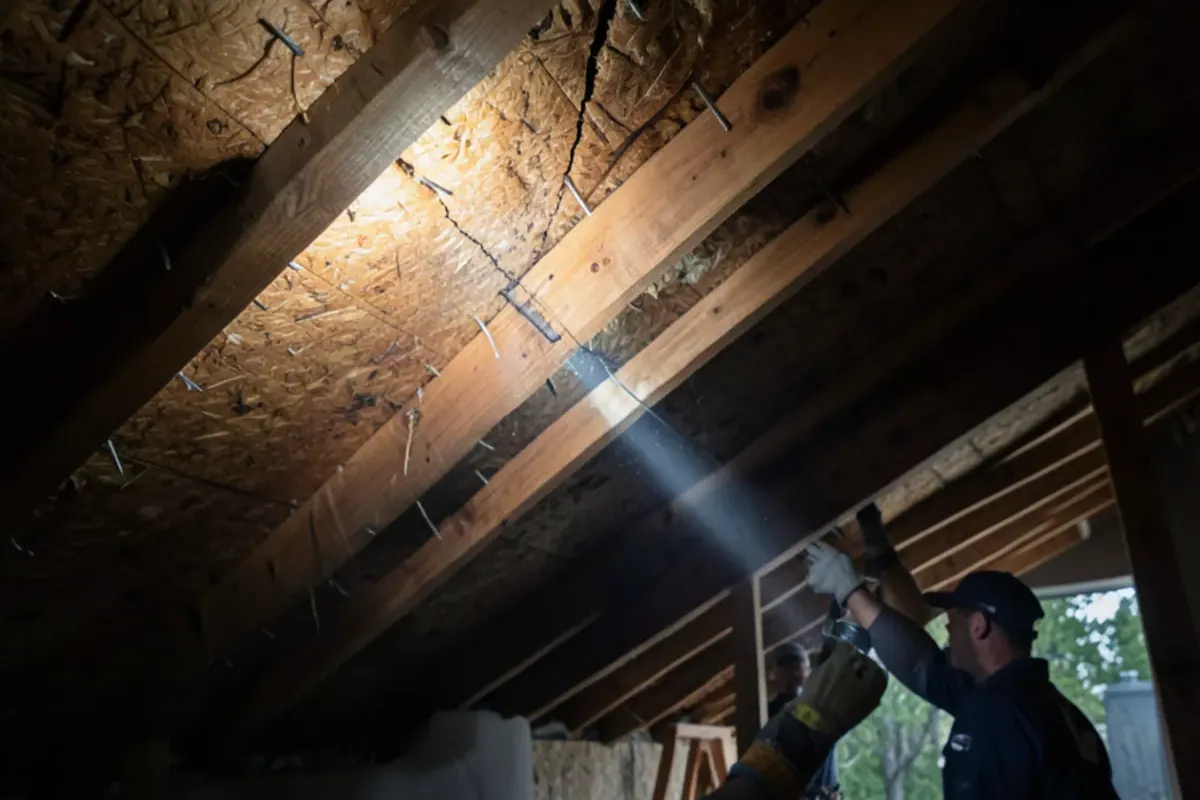
Another common gap is the attic. Wind and tree impacts can crack rafters or push nails out of the decking without obvious signs from outside. Photos from inside the attic, taken soon after the storm, help show that the damage is new.
Trade-offs worth weighing before you file
Not every storm loss is worth a claim. If the written estimate lands close to your deductible, a claim may cost more in future premiums than it pays; your agent can tell you how the insurer treats small claims. On larger losses, being at the adjuster's inspection takes a few hours of your time, but in our experience it is the single best chance to point out damage away from the obvious impact. And supplements for hidden damage found during the repair are legitimate, but each one adds a review step, so a thorough first inspection with attic photos usually gets the job finished sooner.
After the decision: estimates, depreciation and timelines
Compare the insurer's estimate with your roofer's. Differences often come down to quantities, matching materials, or items such as drip edge and underlayment. Ask the adjuster about any line that is missing; a supplement can be requested when hidden damage is found during the repair.
Some policies pay the depreciated value first and release the rest after repairs are finished and invoiced. California's Fair Claims Settlement Practices Regulations set deadlines for insurers to acknowledge and respond to claims; the California Department of Insurance explains them and accepts complaints if a claim stalls. Our storm damage roof repair work across Santa Clara County follows the approved scope, with daily cleanup and photos of the finished roof.
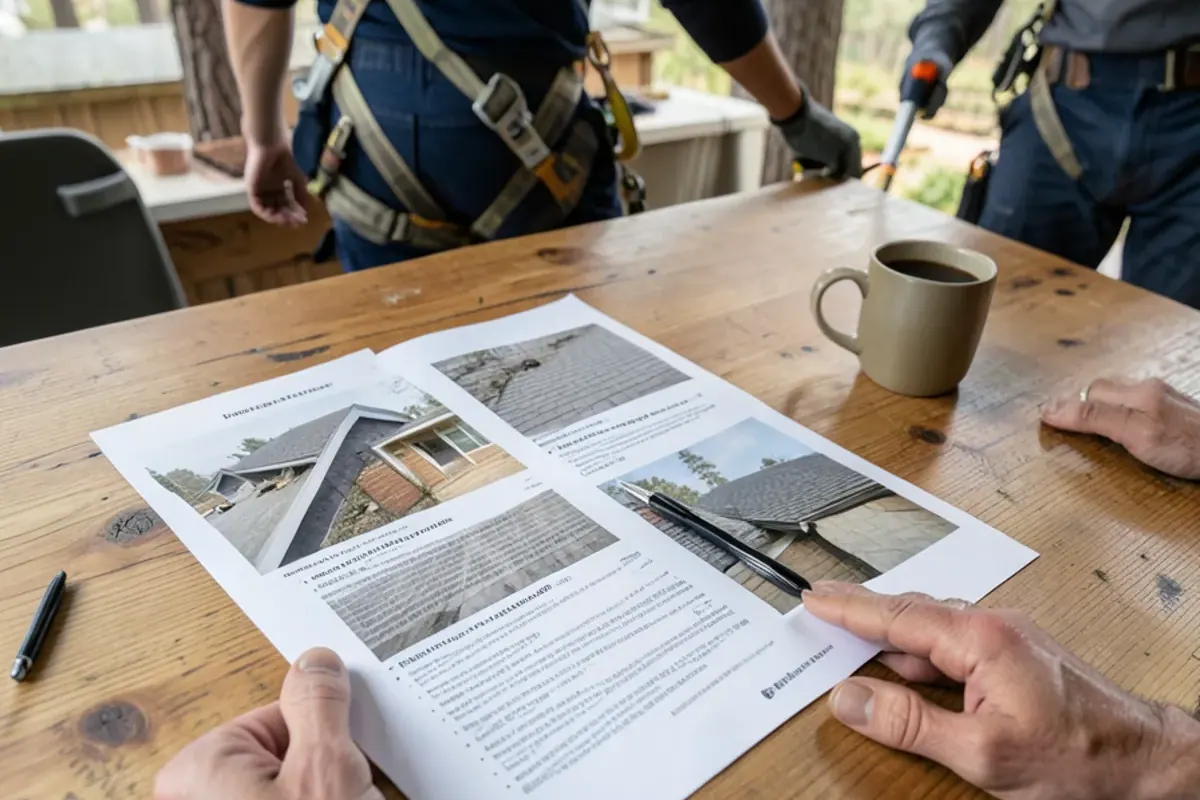
Keep the claim file going until the last payment clears: the final invoice, photos of the finished roof and any correspondence about withheld depreciation. A complete file is also what the next buyer's inspector or your next insurer will ask to see.
Wind or tree damage to document for an adjuster? Call (725) 745-8803 for an inspection, photos and an itemized scope.
Call (725) 745-8803