
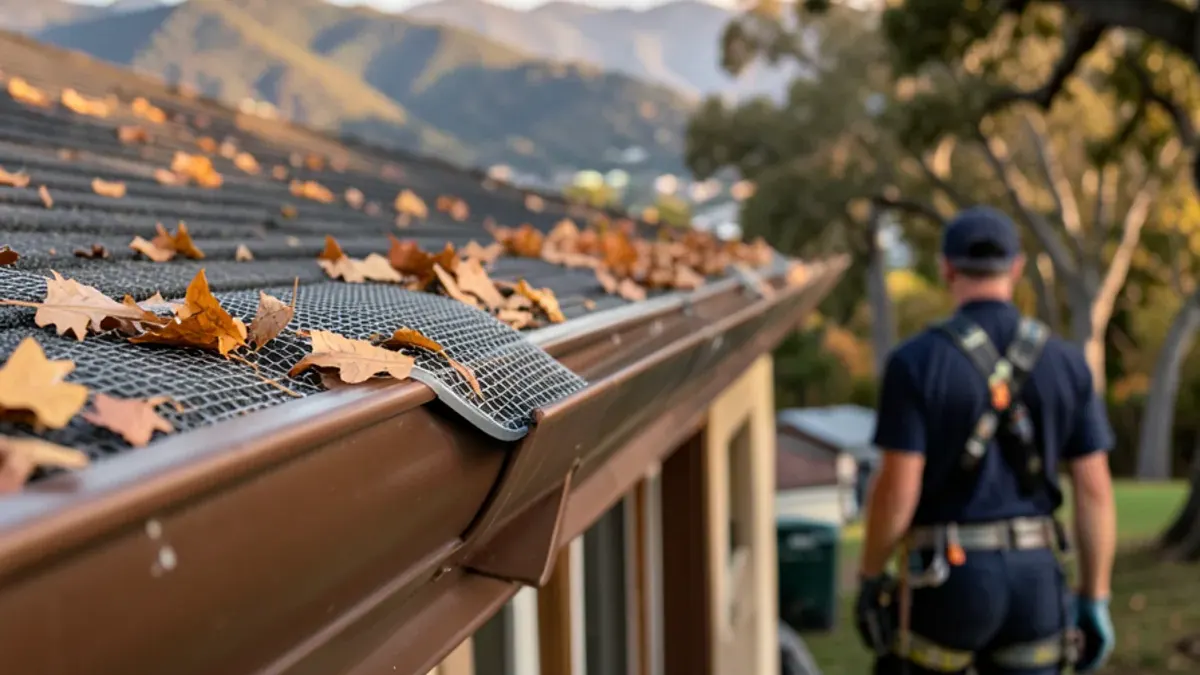
What are the best gutter guards for oak, pine and redwood litter?
The right guard depends on what falls on your roof. Broad oak and sycamore leaves are easy to stop; pine needles and the fine, stringy litter from redwoods slip through anything with large openings. The table rates each type against the debris we see most around Los Gatos, Los Altos and the foothills.
| Guard type | Oak and sycamore leaves | Pine needles | Redwood litter | Heavy rain | Upkeep |
|---|---|---|---|---|---|
| Stainless micro-mesh | Stops | Stops | Stops most | Good if kept clean | Brush or rinse the top |
| Perforated metal screen | Stops | Many pass through | Many pass through | Good | Clear top and gutter |
| Reverse-curve cover | Sheds well | Some slip in | Some slip in | Can overshoot on steep roofs | Hard to clean inside |
| Plastic snap-in screen | Stops | Pass through | Pass through | Fair | Warps and cracks in sun |
| Foam or brush insert | Catches on top | Tangles in | Tangles in | Fair | Pull out and clean |
Want guards matched to the trees over your roof? Call (725) 745-8803 for a gutter and roof-edge check.
Call (725) 745-8803How each gutter guard type works
Micro-mesh
A fine stainless steel mesh stretched over a rigid frame. Water clings to the mesh and drops through, while debris sits on top and blows or washes off. Quality varies widely: look for stainless mesh rather than aluminum or plastic, and a frame that fastens to the gutter rather than slipping under the shingles.
Perforated screens
Aluminum or steel sheets punched with holes. They are sturdy, inexpensive and good under oaks. Needles and seed pods fit through the holes, so gutters under pines still fill, just more slowly.
Reverse-curve covers
A solid hood that curls over the gutter edge, relying on water following the curve into a slot. Leaves slide off. In the hardest atmospheric-river rain, water on steep or long roofs can run past the curve and spill over, and debris that does get in is hard to reach.
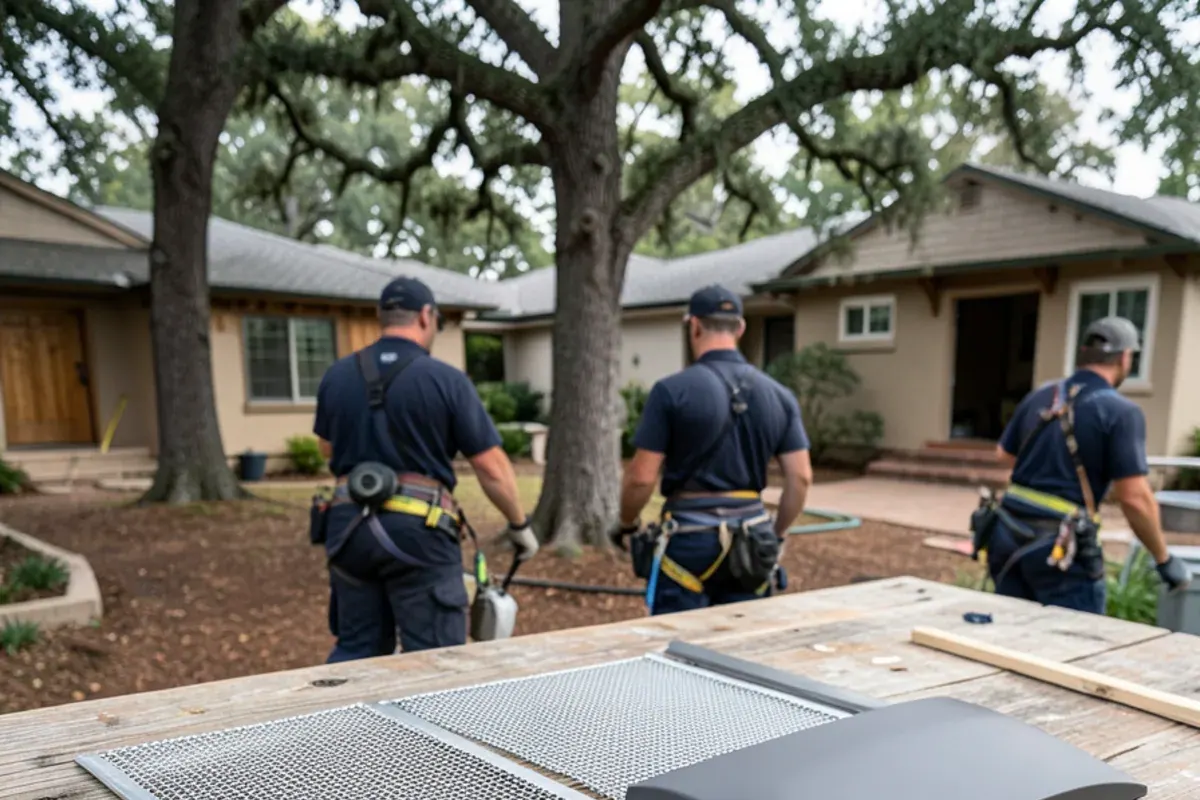
Are gutter guards worth it?
Guards pay off when the alternative is frequent cleaning or overflow damage. They are rarely worth it on a house with no overhanging trees. Consider them when:
- Gutters need cleaning more than twice a year to keep water flowing.
- The roof is two stories or steep, so every cleaning means a tall ladder.
- Overflow has stained fascia or soaked the foundation during winter storms.
- Pine needles or redwood litter clog downspouts, not just gutters.
- The home sits in a mapped fire hazard zone, where dry debris in gutters is an ember risk.
Skip them, or fix the gutters first, if the gutters sag, slope the wrong way or are rusted through. Guards on failing gutters just hide the problem. Our gutter guards page covers fitting guards to existing gutters versus replacing both together.
Gutters, embers and fire hazard zones
Dry leaves in a gutter are kindling sitting at the roof edge. California's wildland-urban interface building rules, which apply in CAL FIRE's mapped Fire Hazard Severity Zones, address roof edges and gutters as part of keeping embers from catching. Parts of Los Gatos, Saratoga and Los Altos Hills, plus much of the mountain country toward Santa Cruz, sit in those zones.
In fire-prone areas, choose metal guards over plastic or foam, which can melt or burn, and keep up with clearing the top surface during the dry season. Homes in Los Gatos and the oak-lined streets of Los Altos see heavy leaf drop in fall, right before the first rains and at the end of fire season. Check with your local fire department or building department for requirements that apply to your address.
What the wildfire code says about gutters
Section R337.5.4 of the California Residential Code, part of the wildfire chapter, says roof gutters shall be provided with the means to prevent the accumulation of leaves and debris in the gutter. It applies to new buildings and permitted work in designated wildland-urban interface areas, and it does not name a product. The UC Agriculture and Natural Resources Fire Network points out the catch: a guard keeps debris out of the gutter, but leaves can still pile up on the roof behind it, so the roof edge still needs clearing in fire season.
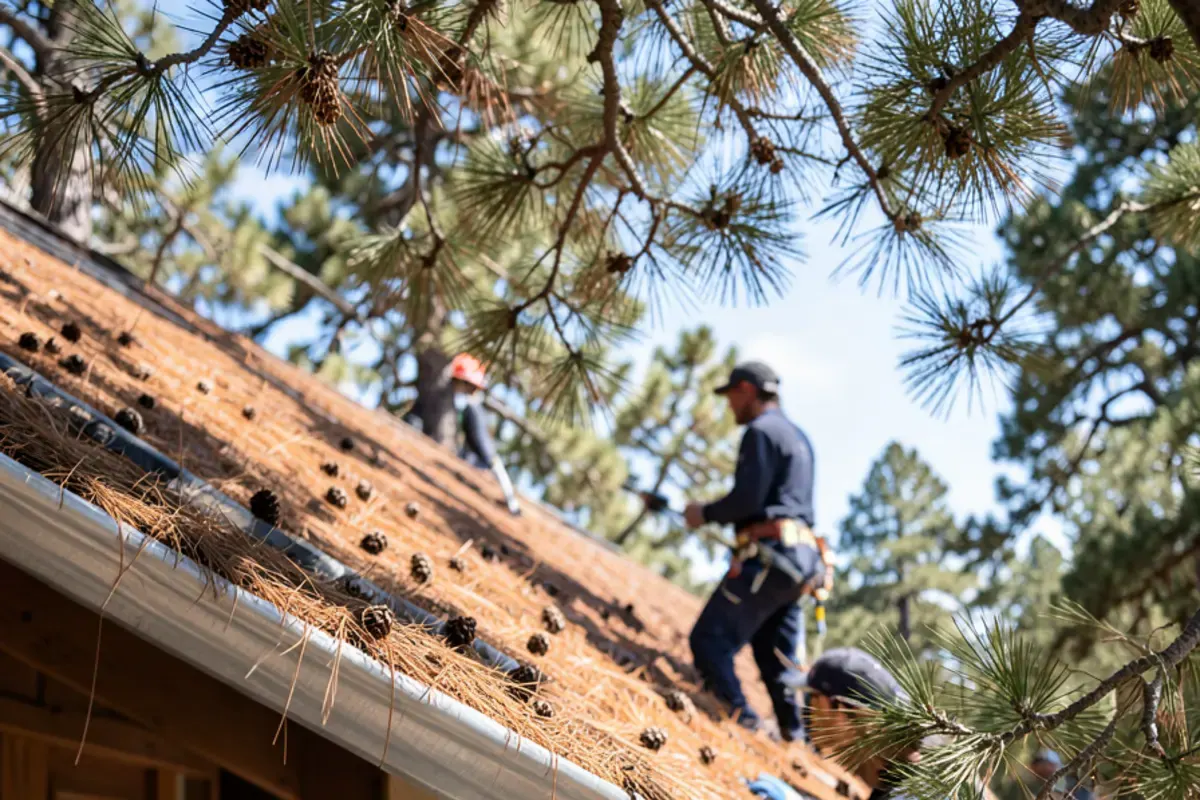
Fitting guards to tile, metal and low-slope roofs
The roof edge decides which guards will even fit. A product that works on a shingle ranch house can be the wrong choice one street over.
Tile roofs
Concrete and clay tile cannot be lifted to tuck a guard under, and the curved profile leaves gaps at the eave. Guards for tile roofs fasten to the gutter lip and the fascia or hangers, and the eave closure or bird stop has to stay in place so animals do not move into the gap.
Standing seam metal
Water leaves a metal roof fast and in sheets. Reverse-curve covers are most likely to overshoot here, so a flush-mounted micro-mesh with the gutter set close under the drip edge usually performs better.
Eichler and other low-slope edges
Flat roofs drain slowly through a few scuppers or a long, low edge. Debris collects at the outlet rather than along the whole run, so a strainer or screen at each scupper and outlet often does more than a full-length guard.
- Before you buy, ask: what is the mesh made of and how fine is it?
- How does it attach to my gutter, without lifting roofing?
- Does it fit my gutter size and shape, whether 5-inch, 6-inch or half-round?
- How is it cleaned, and can a section be lifted to check the gutter below?
From our roof visits: how gutter guards fail
The most common problem is installation, not the product. Guards slid under the first row of shingles can lift the shingle edges and may conflict with the shingle maker's installation instructions. Guards fastened to gutters that were already sagging pool water at the low spots. And a guard does nothing for a downspout already packed with needles below it.
Pine pitch and fine pollen can film over micro-mesh, so water sheets off instead of passing through; a soft brush clears it. Downspout outlets and the first few feet of gutter near tall trees fill fastest and deserve the closest look. For gutters that need repair or new runs before guards go on, see our gutters and downspouts services.
The trade-offs are worth stating plainly. Micro-mesh stops the most debris, costs more and needs its surface brushed when pollen or pitch films it over. Perforated screens are tougher and lower in cost but let needles pass. Hood covers hide the gutter well and shed big leaves, yet when something does get inside, cleaning means removing sections. On lots with little leaf fall, a scheduled gutter cleaning twice a year can cost less over time than any guard.
- Check the guard surface after leaf drop in fall and brush off mats of debris.
- Run a hose at the far end of each run once a year and watch the downspout.
- Look for overflow streaks on fascia after the first big storm.
- Lift one section a year to confirm the gutter beneath is clean.
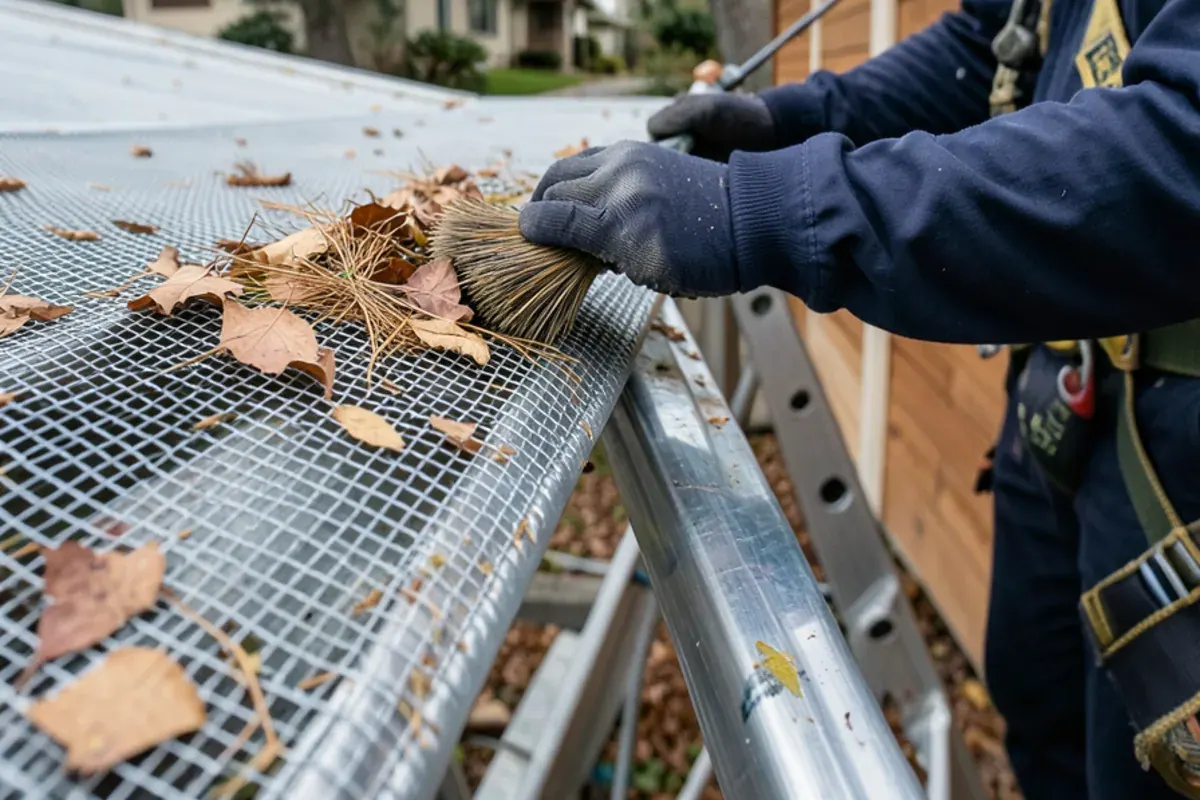
Choosing a gutter guard for your trees and roof
Start with the trees, then the roof, then the gutters themselves. Under pines or redwoods, only micro-mesh keeps the gutter clear. Under oaks alone, a sturdy perforated screen may be enough. On tile, metal or flat roofs, choose a guard that attaches to the gutter, not the roofing. And if the gutters sag, leak at the seams or pitch the wrong way, fix or replace them before any guard goes on.
Not sure which guard suits the trees over your house? Ask Xylo Fix Roofers to check the roof edge and gutters before you buy.
Call (725) 745-8803