

Why does timing matter so much here?
Campbell and the rest of the valley go from months of dry weather to steady rain in a few weeks. A roof that has spent the summer drying out has stiff sealants, cracked pipe boots and gutters filled with the first leaf drop. The first long storm finds those weaknesses all at once, and every roofer's calendar fills the same week.
Doing the work in October gives you dry days for repairs and time to schedule help before demand spikes.
Fall is also the season when small summer damage becomes visible. Granules in the gutters, a shingle tab lifted by the first wind or a pipe boot that has finally split are all easier to spot once leaves start falling and you are looking up at the roof anyway.
Want a pro to run this checklist on your roof before the rains? Call (725) 745-8803 and we'll schedule a visit as quickly as the calendar allows.
Call (725) 745-8803The ten-point fall roof maintenance checklist
- Gutters: remove leaves and needles, then run water to confirm flow toward the downspouts.
- Downspouts: flush each one and make sure the outlet carries water away from the foundation.
- Valleys: clear debris where two roof planes meet, the busiest water path on any roof.
- Pipe boots: look for split rubber collars around plumbing vents; summer sun cracks them.
- Flashing: check chimney, sidewall and roof-to-wall flashing for gaps or loose counterflashing.
- Skylights: inspect seals and the flashing around the frame, and look inside for stains.
- Vents: confirm screens are intact and caps are secure on roof and gable vents.
- Damaged roofing: spot missing, cracked or lifted shingles and slipped tiles.
- Trees: trim branches touching the roof and dead limbs that could fall in wind.
- Attic: with a flashlight, look for daylight, damp insulation or old stains under the roof deck.

How to run the checklist in one afternoon
The ten items go faster in a set order, and the order keeps you off the ladder until you know what you are looking for.
- Attic first, around midday. With the attic lights off, look for pinpoints of daylight, then switch on a flashlight and check the deck around vent pipes, the chimney and skylight shafts for dark rings or damp insulation.
- Walk the house with binoculars. Go slope by slope and photograph each one from the same spot every year, so you can compare.
- Hose test the gutters. Run water at the far end of each run and watch where it goes: out the downspout, over the front edge or behind the gutter.
- Check the ceilings inside under bathrooms, skylights and the chimney.
- Write a short list of anything that needs roof access, with the photos, and book that work for a dry week.
Sorting what you find by urgency
| Finding | How soon | Usual next step |
|---|---|---|
| Split pipe boot or lifted shingles | Before the first storm | Replace the boot or reseat and seal the shingles |
| Damp insulation or an active stain in the attic | Right away | Trace the source; protect the ceiling below |
| Clogged downspout or overflowing gutter | Before the first storm | Clean and flush; check the gutter pitch |
| Heavy granules in the gutters | This season | Have the shingles assessed for remaining life |
| Moss on shaded slopes | Spring | Gentle treatment once the roof dries out |
| Old dry stain with no fresh moisture | Monitor | Mark its edge and recheck after a storm |
Ladder rules if you clean your own gutters
- Set the ladder at a 4-to-1 angle: one foot out from the wall for every four feet of height.
- Extend the ladder at least 3 feet above the roof edge if you need to step off it.
- Keep three points of contact, and never stand above the step the maker marks as the highest safe one.
- Look up before you raise the ladder; the electric service line often runs to the roof edge.
Which checks can you safely do yourself?
Ladders and roofs cause serious injuries every year. If you are not comfortable working at height, keep your part of the job on the ground and in the attic.
| Check | From the ground or attic | Needs roof access |
|---|---|---|
| Gutters and downspouts | Watch flow during a hose test or light rain | Cleaning on two-story homes |
| Valleys | Spot debris with binoculars | Clearing packed debris |
| Pipe boots and vents | Look with binoculars for cracks or missing caps | Replacing boots and screens |
| Flashing | Look for stains on interior walls near chimneys | Resealing or replacing flashing |
| Skylights | Check the inside frame for staining | Reflashing or reseal work |
| Damaged roofing | Count missing shingles from the yard | Any repair |
| Attic | Fully doable from inside | Not needed |
For the roof-level items, our roof maintenance visits cover the full list and come with photos of what we found.
What about gutter cleaning before rain?
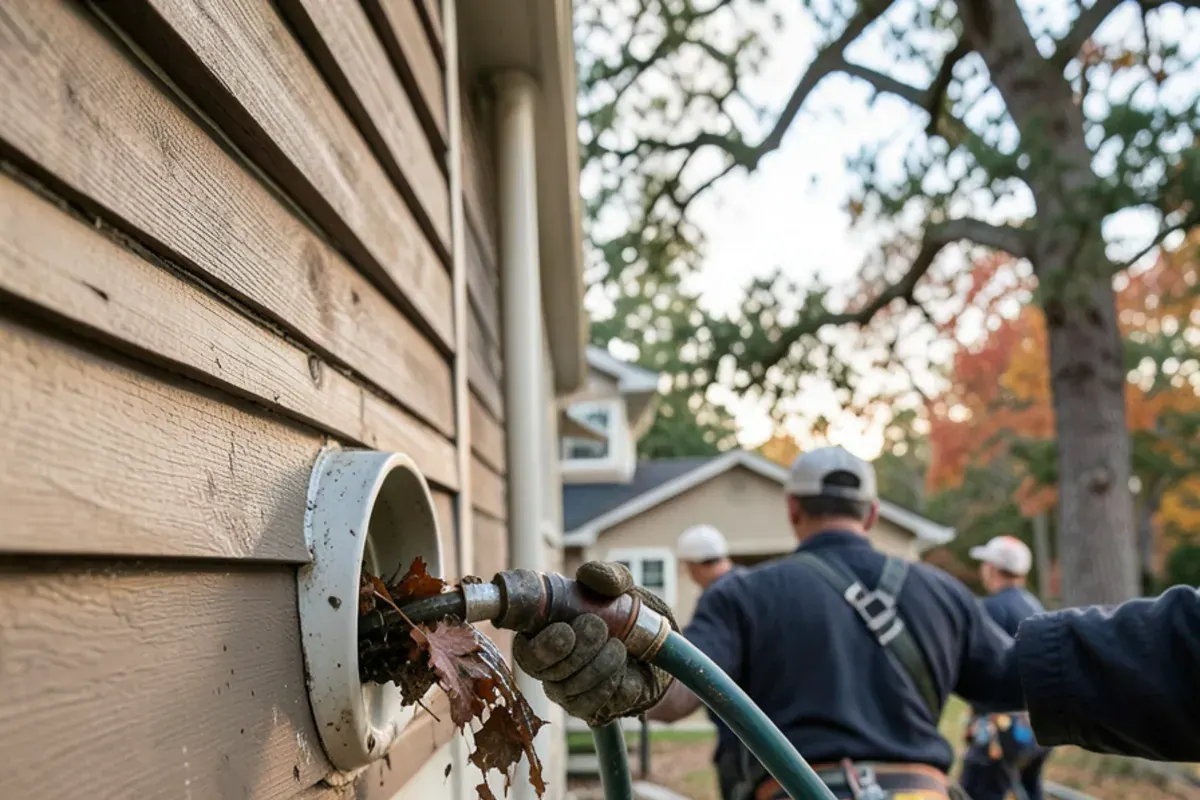
Gutters deserve their own mention because they fail first. A clogged gutter overflows at the corners, soaks the fascia and can push water back under the lowest row of shingles. On streets with mature oaks, sycamores and liquidambars, gutters can refill within weeks of cleaning.
If your trees drop late, consider two passes: one in October and another after the last leaves fall. Professional gutter cleaning includes flushing downspouts, which is where many clogs actually sit.
From our roof visits: what fall inspections usually turn up
- Pipe boots with a crack on the sunny side, often the cause of a small ceiling stain the following January.
- Gutters that look clean along the run but have a clog right at the downspout drop.
- Valleys holding a mat of leaves that has started to compost in place.
- Skylight frames with sealant that has shrunk away from the glass or curb.
- Exposed nail heads on ridge caps that have backed out over summer.
Most of these are small, quick repairs in October. In January, the same items come with wet insulation and a stained ceiling.
The quick fixes have limits we explain on the spot:
- Sealant smeared over a cracked pipe boot is cheap and fast, but it rarely lasts a full season. A new boot is the real repair.
- On brittle older shingles, lifting tabs to change a boot can crack the shingles around it, so a small repair can grow a little once we start.
- Trimming a big tree back from the roof cuts debris for years, but check your city's tree rules first and use an arborist for anything over the house.

Foothill homes need a little more
Homes up against the hills in Los Gatos and Saratoga get more rain, more tree cover and more debris than valley homes. Add a second gutter and valley cleaning in midwinter, and check for moss on shaded slopes. If your home is in a mapped fire hazard zone, keep gutters clear year-round so dry leaves never sit at the roof edge.
Before the first storm: the short version
If you only get to part of the list, clear the gutters and downspouts, look at the pipe boots and check the attic. Those three catch most of the leaks we are called to in the first week of real rain. Everything else on the checklist is easier to schedule while the weather is still dry, and a yearly roof inspection adds photos you can compare from one fall to the next.
Out of time for the ladder this fall? Let us run all ten checks and send you photos with a free written estimate for anything that needs fixing.
Call (725) 745-8803